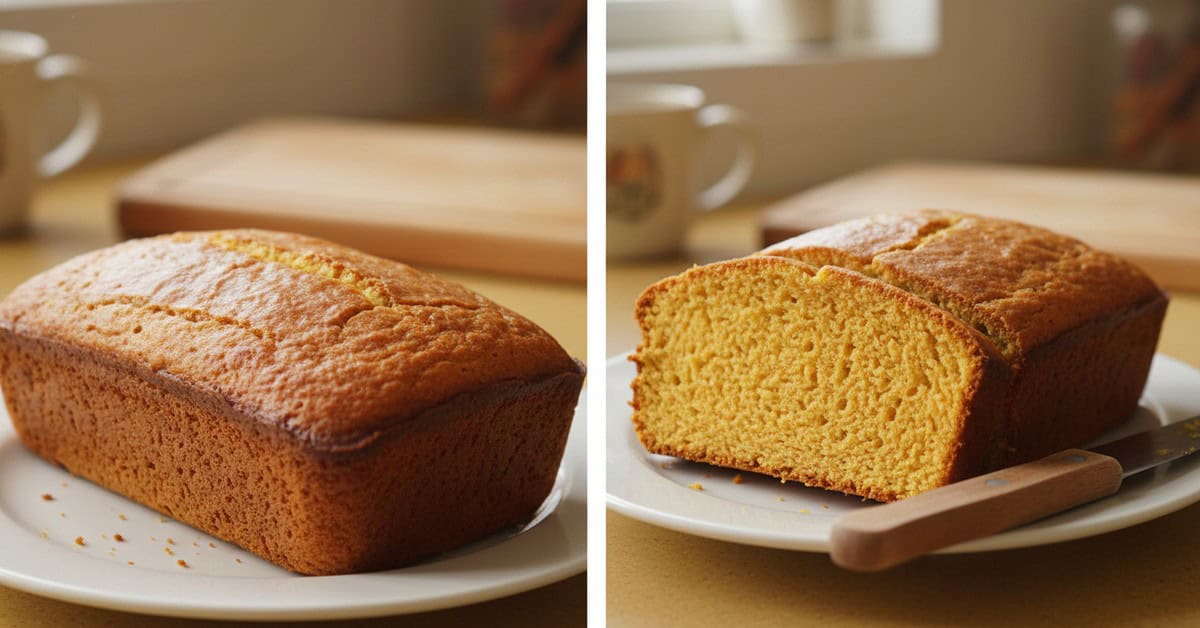

New England pumpkin bread is a moist, fragrant loaf made with pumpkin purée, sugar, fat, and warm spices such as cinnamon, nutmeg, and ginger. Add nuts, maple syrup, or a streusel topping to complement its soft crumb.
Few things smell cozier than a spiced pumpkin loaf in the oven. Here’s a simple New England–style pumpkin bread, with tips for a moist crumb and variations for breakfast or dessert.
Ingredients for sweet New England pumpkin bread
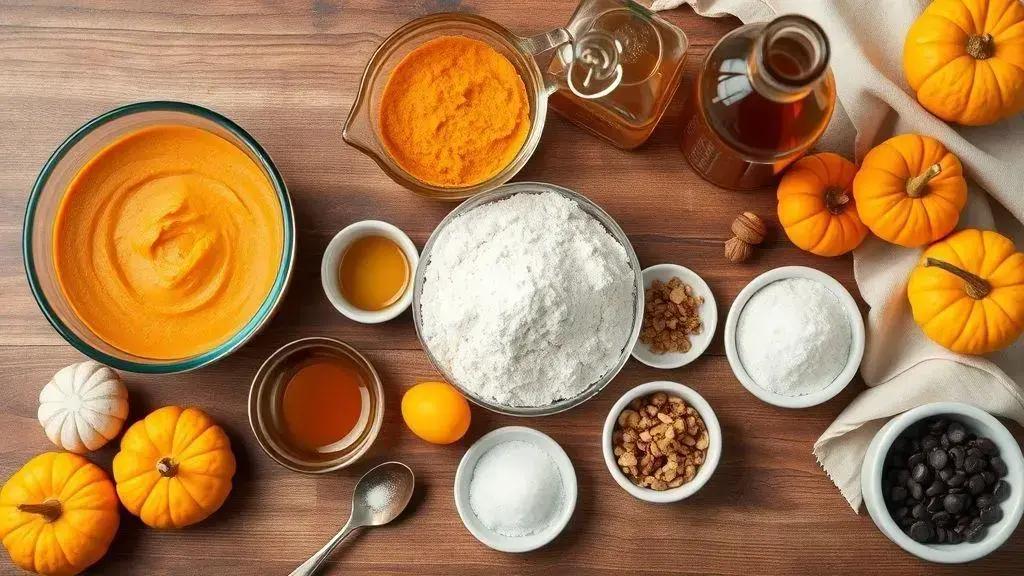
For this sweet pumpkin loaf, gather the following ingredients.
Ingredients
- 1 cup (240 g) pumpkin purée. Use plain canned pumpkin or roasted, mashed pumpkin. Substitute 1 cup mashed sweet potato if desired.
- 2 cups (250 g) all-purpose flour. For a gluten-free loaf, use a 1-to-1 gluten-free flour blend.
- 1 cup (200 g) granulated sugar. Reduce to ¾ cup if you like it less sweet.
- ½ cup (100 g) brown sugar for a caramel note. Coconut sugar is an alternative.
- 2 large eggs at room temperature for structure.
- ½ cup (120 ml) vegetable oil or ½ cup (115 g) melted butter. For a lower-fat loaf, use ½ cup unsweetened applesauce.
- 1 teaspoon (5 ml) vanilla extract, optional, to bring out the flavors.
- 1 teaspoon (5 g) baking soda for lift.
- ½ teaspoon (2 g) baking powder for extra lightness.
- 1 teaspoon ground cinnamon, the classic pumpkin bread spice. The original lists 5 g; use the spoon measure for the spice balance in the method.
- ½ teaspoon (about 2 g as listed) grated nutmeg, adjusted to taste.
- ½ teaspoon (about 2 g as listed) ground ginger for gentle, warming spice.
- ¼ teaspoon (about 1 g) ground cloves, optional. Use sparingly.
- ½ teaspoon (3 g) salt to balance the flavors.
- ½ cup (60 g) chopped walnuts or pecans, optional. Use almonds or omit for a nut-free loaf.
- ½ cup (90 g) chocolate chips or raisins, optional.
- 2 tablespoons (30 ml) maple syrup for a New England touch, optional. Honey also works.
Ingredient notes
Use a 1-to-1 gluten-free blend in place of wheat flour, melted butter in place of oil, or applesauce instead of oil to reduce fat. For deeper flavor, replace part of the white sugar with brown sugar. Adjust the spices to taste.
How to make New England pumpkin bread

- Preheat the oven to 175°C (350°F) with a rack in the center. Grease a 22 × 12 cm (approximately 9 × 5 inch) loaf pan with butter or cooking spray. Line with parchment, leaving an overhang for lifting.
- In a medium bowl sift together 2 cups (250 g) flour, 1 teaspoon baking soda, ½ teaspoon baking powder, 1 teaspoon cinnamon, ½ teaspoon nutmeg, ½ teaspoon ginger, ¼ teaspoon cloves, and ½ teaspoon salt. Whisk to combine.
- In a large bowl, whisk 1 cup (240 g) pumpkin purée, 1 cup (200 g) granulated sugar, ½ cup (100 g) brown sugar, 2 large eggs, ½ cup (120 ml) oil or 115 g melted butter, and 1 teaspoon vanilla until smooth. If using maple syrup in the batter, add it with the liquids.
- Fold the dry ingredients into the wet with a spatula just until no streaks of flour remain. Overmixing makes a heavy loaf.
- Gently fold in ½ cup (60 g) chopped walnuts or pecans and/or ½ cup (90 g) chocolate chips or raisins.
- The batter should be thick and moist. If too stiff, briefly stir in 1–2 tablespoons milk or buttermilk.
- Transfer the batter to the prepared pan, smooth the surface, and scatter a few nuts on top if desired.
- Bake for 55–65 minutes. A skewer inserted in the center should come out with moist crumbs and no wet batter.
- If the top browns too soon, tent loosely with foil and continue baking until the center is done.
- Let the loaf rest in the pan for 10–15 minutes so it holds together when you lift it out.
- Use the parchment to lift the loaf onto a rack. Cool completely for at least 1 hour before slicing for a set crumb and neat slices.
- For an optional maple glaze, stir ½ cup (60 g) powdered sugar with 1–2 tablespoons maple syrup until smooth. Drizzle over the cold loaf and let set for 15–20 minutes.
- Slice with a serrated knife and serve at room temperature. Keep the plain loaf airtight at room temperature for up to 4 days, or freeze individually wrapped slices for up to 3 months.
Quick tips for success
- Mix just until combined. Overmixing gives the loaf a dense crumb.
- Choose a thick canned or roasted pumpkin purée without excess water to avoid thinning the batter.
- Grate the nutmeg just before baking for a stronger aroma.
- In humid weather, try reducing the oil by 1–2 tablespoons or the sugar by 1 tablespoon.
Tips for a tender, moist crumb
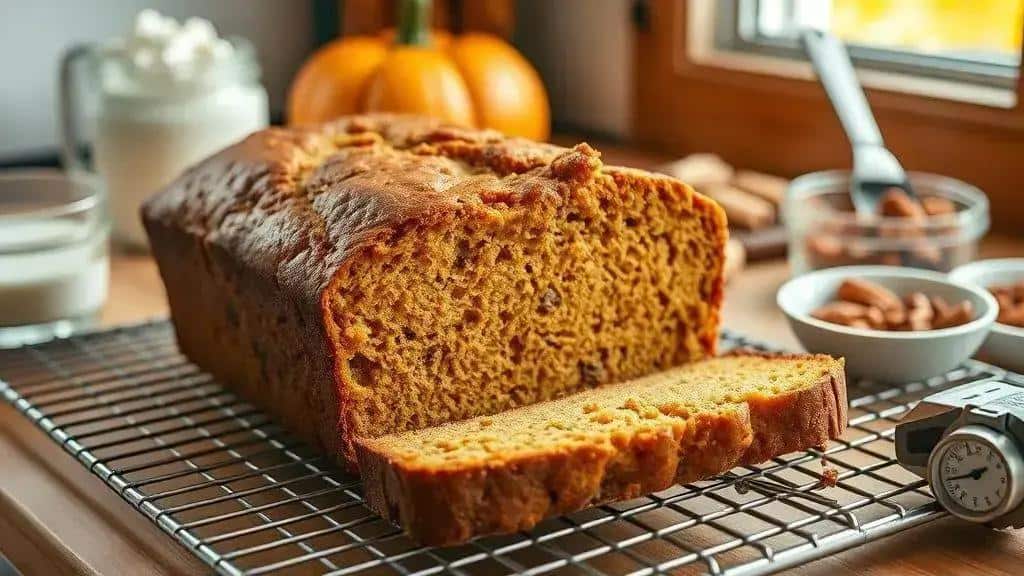
- Spoon flour into the cup and level with a knife. The recipe uses 2 cups (250 g). Packing in more can make the bread dry.
- Use 1 cup (240 g) thick pumpkin purée. Drain or cook down a watery purée before measuring it.
- Mix the dry ingredients into the wet just until incorporated. Working the batter too much develops gluten and makes the loaf tough.
- ½ cup (120 ml) oil or 115 g melted butter keeps the loaf moist. Try ½ cup applesauce for less fat.
- A tablespoon of buttermilk or plain yogurt helps tenderize the crumb. Its acidity reacts with the baking soda to lighten the loaf.
- Bake at 175°C (350°F) and start checking at 50 minutes. The skewer should carry moist crumbs but no raw batter.
- If the top colors quickly, tent loosely with foil and continue until the center is baked.
- Cool on a rack for at least 1 hour before slicing. Warm bread can crumble.
- Fresh cinnamon, freshly grated nutmeg, and ground ginger heighten the aroma and complement the moist crumb.
- In humid weather, reduce the oil by 1–2 tablespoons. In dry weather, add 1 tablespoon honey or maple syrup for extra moisture.
Quick troubleshooting
- Dry loaf. Next time add a little yogurt or 1–2 tablespoons oil and check the loaf sooner to avoid overbaking.
- Dense loaf. Check that the baking powder and soda are fresh. Avoid packing the batter into the pan. Lightly beating the eggs with the sugar introduces some air.
- Moist add-ins. Try ¼ cup applesauce, 2 tablespoons honey, or ½ cup chopped fruit to add texture and moisture.
New England pumpkin bread variations
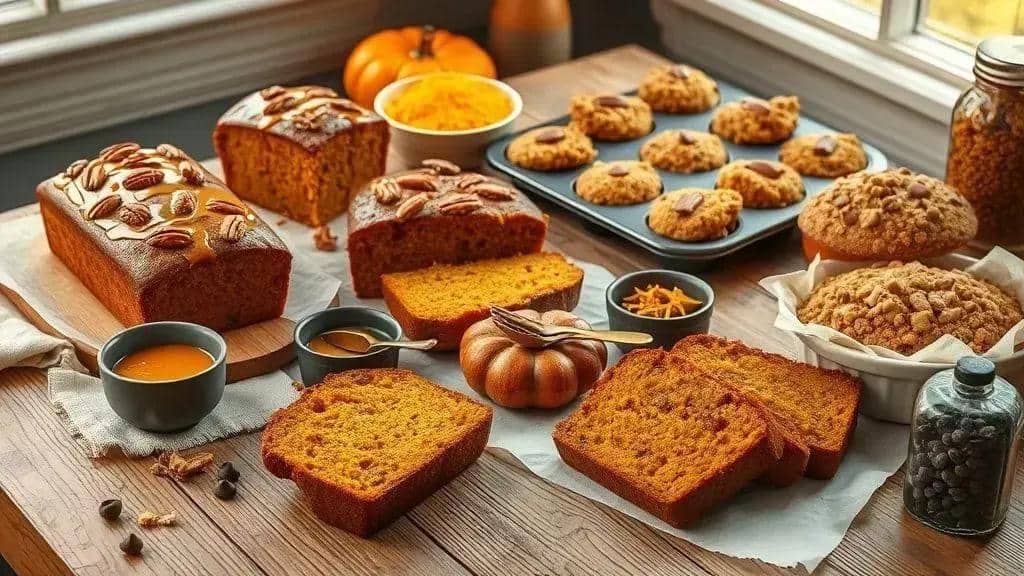
- Vegan and dairy-free. For 2 eggs, mix 2 tablespoons ground flaxseed with 6 tablespoons water and let gel for 5–10 minutes. Use ½ cup (120 ml) vegetable oil or melted vegan butter. For a plant-based buttermilk variation, prepare ½ cup plant yogurt or ½ cup plant milk with 1 tablespoon vinegar, adding only as needed for a thick batter. Bake at the same temperature and check a few minutes early.
- Gluten-free. Use 2 cups of a 1-to-1 gluten-free blend. If it contains no xanthan gum, add ½ teaspoon. You may need 1–2 tablespoons less flour or 1 tablespoon more liquid to keep the loaf moist.
- Maple pecan. Replace ¼ cup sugar with ¼ cup maple syrup. Fold in ½ cup chopped toasted pecans, reserving a few for the top. For a simple glaze, mix ½ cup powdered sugar with 1–2 tablespoons maple syrup.
- Chocolate orange. Add 1 teaspoon orange zest and ½ cup semisweet chocolate chips. Toss the chips lightly with flour before folding them in to help keep them suspended. Citrus and chocolate complement the pumpkin.
- Cinnamon streusel. Rub together ⅓ cup (70 g) brown sugar, ¼ cup (30 g) flour, 3 tablespoons (45 g) cold butter, and ½ teaspoon cinnamon. Scatter the crumbs over the batter before baking for a crisp, caramelized top.
- Mini loaves or muffins. The batter makes about 12 muffins or 2 mini loaves. Bake muffins for 18–22 minutes or mini loaves for 35–45 minutes, checking the center with a skewer.
Tips for adapting the variations
- Check the batter with a spatula. It should be thick and moist. Add 1–2 tablespoons plant milk if it seems too stiff.
- Fold in nuts, chocolate, or fruit gently to preserve the air in the batter.
- Adjust cinnamon and nutmeg to taste. For a milder loaf, use about 25% less spice.
- Smaller pans bake faster. Start checking for doneness 5 minutes before the suggested time.
- Toast pecans or walnuts for 5–7 minutes to bring out their aroma and preserve their crunch.
Pumpkin and New England baking traditions
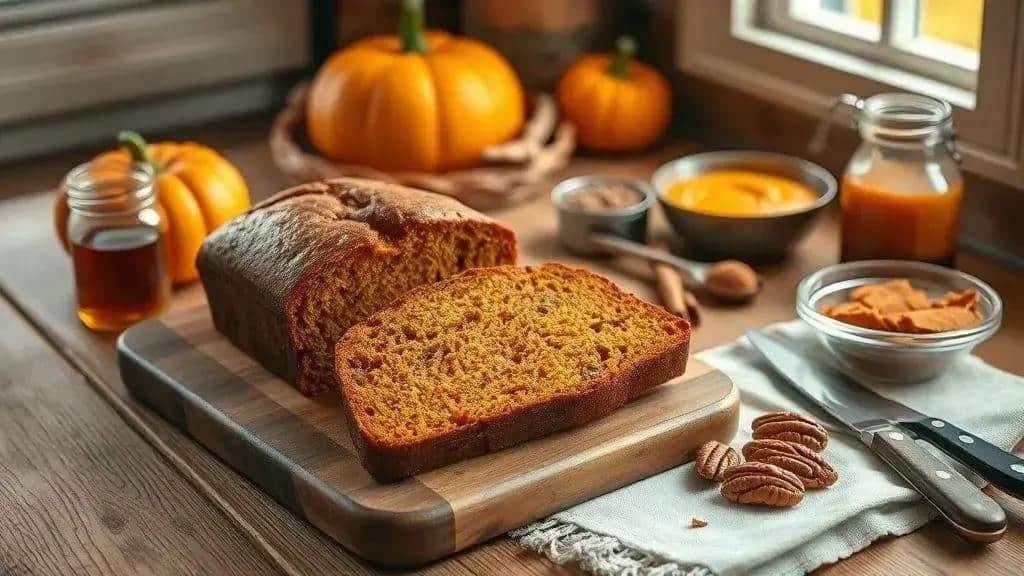
- Indigenous peoples of North America cultivated and ate pumpkins long before European settlers arrived.
- Traditional preservation included roasting and drying pieces of pumpkin for storage over several months. Related practices carried into colonial cooking.
- Small sugar pumpkins, also called pie pumpkins, have sweet, dense flesh suited to pies and quick breads. Large carving pumpkins tend to have a milder flavor.
- Cinnamon, nutmeg, cloves, and ginger reached New England kitchens through colonial trade routes.
- Maple syrup is a traditional New England ingredient that complements pumpkin in batters and glazes.
- Molasses was also an affordable sweetener in New England, lending deep flavor to breads and cakes.
In the modern kitchen
- Canned purée made pumpkin easier to use in the 20th century, helping pumpkin breads and pies become popular in American homes.
- Pumpkin supplies vitamin A and fiber. The finished loaf’s nutritional profile also depends on the amount of fat and sugar and the portion size.
- Beyond quick bread, pumpkin works in muffins, waffles, malasadas, and soups in regional cooking.
- The pumpkin variety and moisture in the purée affect the tenderness of the loaf. Adjust the liquids as needed.
- A New England combination pairs pumpkin with maple syrup and toasted nuts, sometimes with streusel or a simple glaze.
Storage and serving suggestions

- Once fully cool, wrap the plain loaf in parchment and store airtight at room temperature for up to 4 days. Slice as you serve to help it stay moist.
- For a plain loaf, refrigerate airtight for up to 7 days, especially in hot weather. Refrigerate a loaf topped with homemade milk or cream cheese frosting at 4°C (40°F) or colder within 2 hours and eat within 3–4 days. Take only the serving portion out 30–60 minutes in advance.
- Wrap individual slices in plastic and then foil, or put in a freezer bag with the air pressed out. Freeze for up to 3 months. A whole loaf can be wrapped and frozen the same way.
- Keep homemade milk or cream cheese frosting separately in a covered container in the refrigerator at 4°C (40°F) or colder and add at serving time. Use the frosting within 3–4 days.
Warming slices and refreshing the crumb
- Heat plain slices in a 150°C (300°F) oven for 8–10 minutes, or a whole plain loaf for 12–15 minutes, covered with foil to keep it moist.
- Warm slices in a toaster oven for 4–6 minutes, until lightly golden.
- Microwave one slice on medium for 10–20 seconds with a damp paper towel under it to help prevent drying.
- Heat slices in a nonstick skillet with a little butter for 1 minute per side for crisp edges and a soft center.
- Thaw overnight in the refrigerator, or thaw plain, unfrosted slices for 1–2 hours at room temperature. Warm as above for a softer texture.
Practical serving ideas
- Unsalted butter, whipped cream cheese, mascarpone, or a spoonful of maple syrup complements the New England flavors.
- Top with toasted walnuts or pecans for crunch.
- Filter coffee, chai latte, hot apple cider, or black tea pairs well with the spices.
- Use a serrated knife to cut slices 1.5–2 cm (about ⅝–¾ inch) thick for even portions that reheat easily.
- For gifts, wrap individual plain slices in parchment with a ribbon. Add a card with simple warming instructions if you like.
To finish
New England pumpkin bread brings pumpkin, warm spices, and an optional touch of maple together in a soft, fragrant loaf. Adjust the recipe and variations to suit your taste and kitchen.
Thanks for reading! Follow us on social media for more recipes, photos, and kitchen tips. Visit the Mestre das Receitas blog to keep up with the latest.
Take photos, share your versions, and tag us. We love seeing your baking and learning from your ideas.
Frequently asked questions about New England pumpkin bread
What’s the best pumpkin for this loaf?
Use sugar pumpkin purée or roasted, well-drained winter squash. Plain canned pumpkin containing 100% pumpkin is a convenient alternative.
Can I replace the oil with butter or applesauce?
Yes. Replace ½ cup vegetable oil with 115 g melted butter or ½ cup unsweetened applesauce for less fat.
How can I avoid a dry or dense loaf?
Measure the flour carefully, mix lightly, and use thick pumpkin purée without excess water. Add 1 tablespoon buttermilk or plain yogurt if the batter needs moisture.
Can I make a vegan or gluten-free loaf?
Yes. For a vegan loaf, replace the eggs with soaked ground flaxseed and use plant-based butter or yogurt where needed. For a gluten-free loaf, use a 1-to-1 blend and add ½ teaspoon xanthan gum if it doesn’t already contain any.
How long should I bake it, and how do I check?
Bake in a 9 × 5 inch loaf pan at 175°C (350°F) for 55–65 minutes. A skewer should come out with moist crumbs and no raw batter. Reduce the baking time for smaller pans.
What’s the best way to store and reheat slices?
Store a loaf without perishable frosting airtight for up to 4 days at room temperature or 7 days in the refrigerator. Refrigerate a milk- or cream cheese–frosted loaf and eat within 3–4 days. Freeze slices for up to 3 months. Warm unfrosted slices at 150°C (300°F) for 8–10 minutes or microwave for 10–20 seconds.