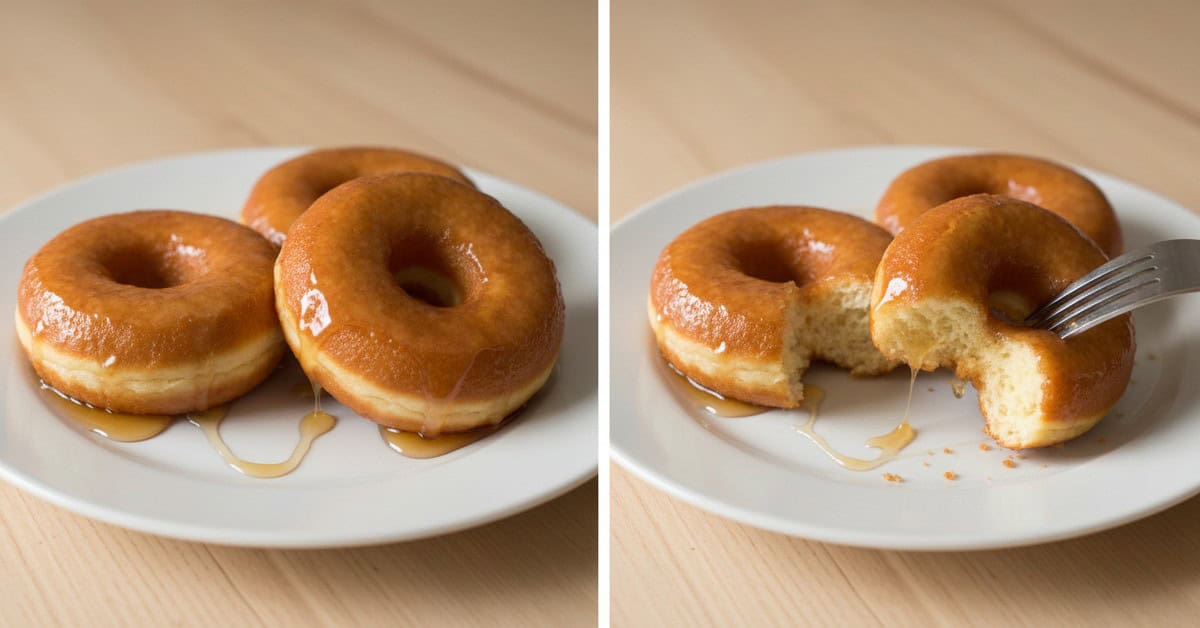

Maple donuts are golden outside and soft inside, with a pure maple syrup glaze that gives them a caramel-like flavor. Fry or bake them, vary the toppings with pecans or spices, and follow the storage and reheating tips to keep their texture.
Maple donuts are hard to resist: sweet glaze, pure syrup, and tender dough. Here’s how to make these New England favorites at home, with practical techniques for frying, baking, and glazing.
Ingredients for maple-glazed donuts
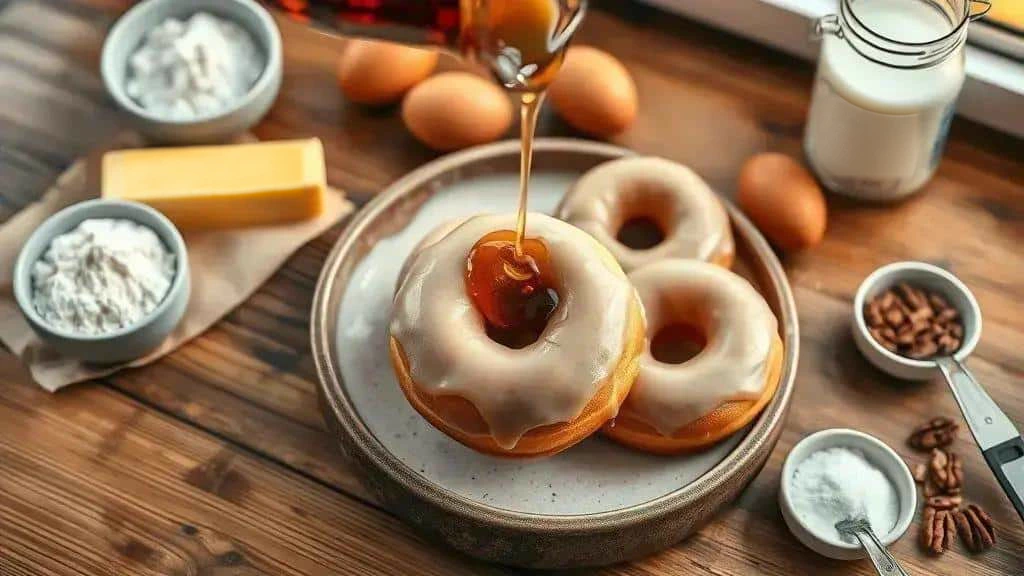
Measure out these ingredients for tender dough and a glossy maple glaze.
- 360 g (3 cups) all-purpose flour, sifted for a light texture. For whole wheat flour, start with one-quarter less.
- 150 g (3/4 cup) granulated sugar. Alternatively, use 140 g brown sugar for a deeper flavor.
- 12 g baking powder (about 2 teaspoons as measured in the original recipe; use the weight for accuracy).
- 1/2 teaspoon baking soda for extra lift and color.
- 1/2 teaspoon salt to bring out the flavors.
- 1 teaspoon ground cinnamon, optional, for warmth. Grated nutmeg to taste is an alternative.
- 180 ml (3/4 cup) milk for a soft dough. Buttermilk makes it fluffier, and plant milk is a lactose-free alternative.
- 2 large eggs, lightly beaten.
- 60 g (4 tablespoons) melted butter for richness, or vegetable oil if preferred.
- 1 teaspoon vanilla extract to bring out the maple flavor.
- About 1.5–2 liters neutral frying oil, such as canola or sunflower. For baked donuts, use a 200°C (400°F) oven for 10–12 minutes.
- 180–200 g (about 1½ cups) powdered sugar for the glaze.
- 60–80 ml pure maple syrup, preferably Grade A. That’s 4 tablespoons to 5 tablespoons plus 1 teaspoon. For a different flavor, combine maple syrup with honey.
- 2–3 tablespoons milk to adjust the glaze. Use plant milk if needed.
- A pinch of salt for the glaze to balance the sweetness.
- 50 g chopped pecans, optional, for topping. Almonds or walnuts also work.
Quick tips
- Level the dry ingredients in measuring cups and measure liquids in a liquid measuring cup for consistent results.
- Mix only until the dry ingredients are incorporated. Overmixing toughens the doughnuts.
- Adjust the syrup and milk until the glaze looks glossy and flows easily enough for dipping.
- For a gluten-free version, use a gluten-free cake flour blend and add 1/2 teaspoon xanthan gum if needed.
How to make maple donuts
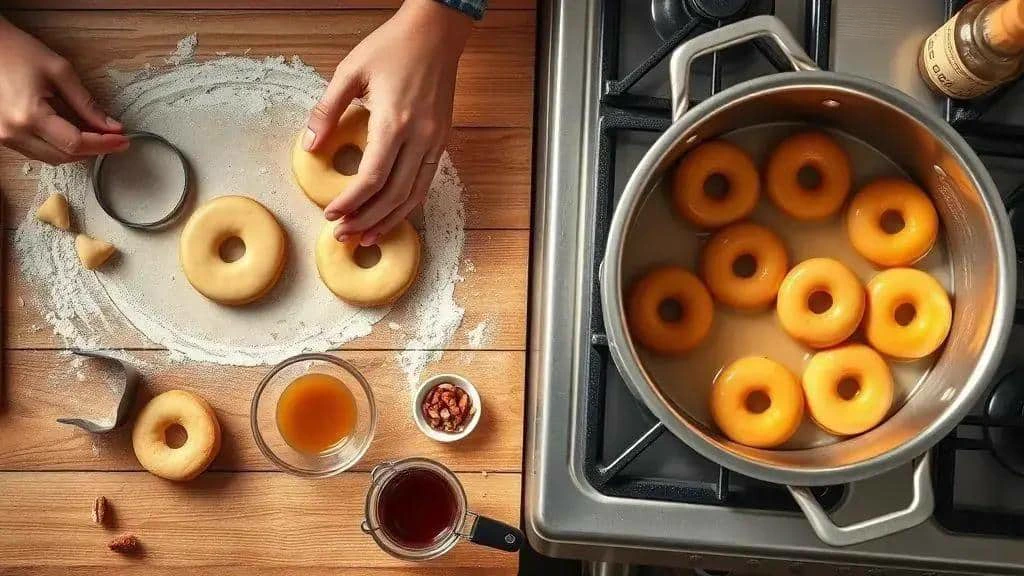
- Sift 360 g flour, 150 g sugar, 12 g baking powder, 1/2 teaspoon baking soda, and 1/2 teaspoon salt into a medium bowl. Stir to combine, adding cinnamon if using.
- In another bowl, whisk 180 ml milk, 2 eggs, 60 g melted butter, and 1 teaspoon vanilla until smooth.
- Use a spatula to fold the wet mixture into the dry ingredients just until no dry flour remains. The dough should be soft and slightly sticky.
- Lightly flour the counter and knead the dough for just 5–10 seconds. Roll to 1.5 cm (about ⅝ inch) thick. Cut with a donut cutter or two different-sized glasses and place on a floured baking sheet.
- Let the rings rest for 10–15 minutes until slightly puffy. They don’t need a long rise.
- Heat neutral oil in a deep pot to 175°C (350°F). Use a thermometer if available. A small scrap of dough should bubble and brown in about 40–60 seconds.
- Fry a few donuts at a time for 1–2 minutes per side until evenly golden. Turn with a slotted spoon and keep the oil temperature steady.
- Transfer to a rack set over paper towels and drain for 2–3 minutes so the outside can firm up.
- Sift 180–200 g powdered sugar into a bowl. Add 60–80 ml maple syrup, 2–3 tablespoons milk, and a pinch of salt. Stir until smooth and glossy, adjusting with milk or sugar as needed.
- Dip the slightly warm donuts in the glaze, let the excess drip into the bowl, and transfer to a rack. Scatter chopped pecans over the glaze before it sets for crunch.
- For baked donuts, preheat the oven to 200°C (400°F). Bake for 10–12 minutes until golden, then brush with glaze while still slightly warm.
- Store in an airtight container for up to 48 hours for best texture; refrigerate donuts with the homemade milk glaze. Warm in a 170°C (340°F) oven for 5–7 minutes or microwave for 8–12 seconds to soften.
Quick tips
- Keep the oil between 170 and 180°C (340–355°F) so the donuts don’t turn greasy or burn.
- Avoid overmixing to keep the crumb soft rather than dense.
- The glaze should coat without running off. More syrup intensifies the maple flavor, and more powdered sugar firms it up.
Texture options: fried, baked, or yeast-raised
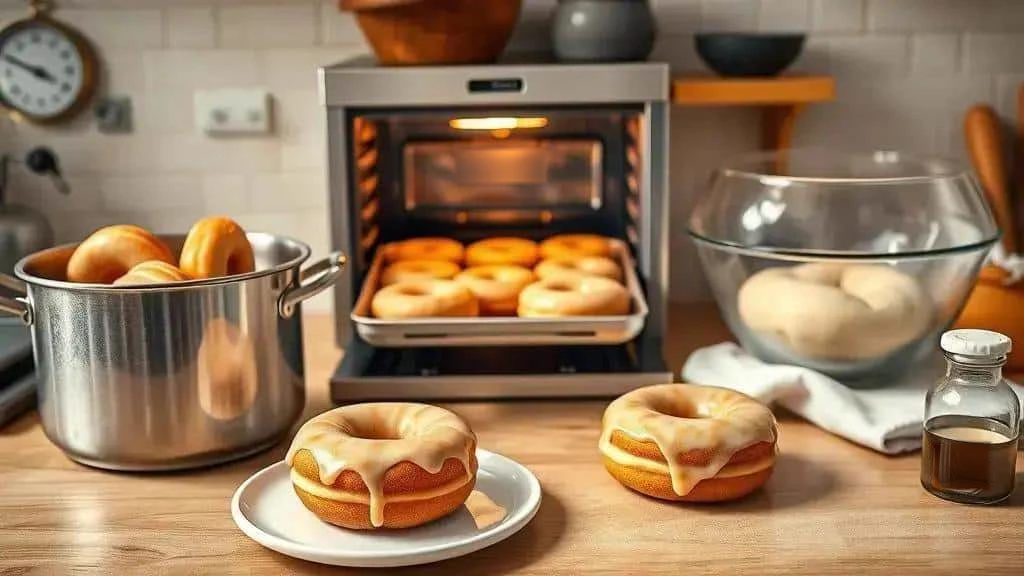
The method determines whether the donut has a crisp shell, a cake-like crumb, or a springier, yeast-raised center.
Frying
For a golden crust and light center, use at least 5 cm (2 inches) of neutral oil in a deep pot. Maintain 170–180°C (340–355°F) and fry a few donuts at a time so the oil stays hot.
- Fry for about 1–2 minutes per side until golden.
- Roll the dough 1.2–1.8 cm (about ½–¾ inch) thick so the center cooks before the outside overbrowns.
- A small scrap of dough should bubble and brown in about 50 seconds.
- Drain on a rack set over paper towels to keep the surface crisp.
Baking
Baking is convenient for a lighter, more cake-like donut. Use a donut pan or place cut rings on a nonstick baking sheet.
- Preheat the oven to 200°C (400°F).
- Bake for 10–12 minutes, rotating the pan if needed for even color.
- Brush with melted butter straight from the oven, then dip in maple glaze for shine.
- Baking uses less fat and makes it easier to prepare large batches.
Yeast-raised dough
Yeast develops flavor and gives a springier crumb. Baking powder makes a quick donut with a finer texture.
- For a yeast dough, use 7–10 g active dry yeast per 500 g flour. Let rise until doubled, about 60–90 minutes at 24°C (75°F).
- After cutting the rings, proof them for another 30–45 minutes for a light center.
- For deeper flavor, give the yeast dough a cold rise in the refrigerator for 8–12 hours.
- For the quick baking powder version, use 12 g baking powder per 360 g flour. It doesn’t need a yeast proof.
Comparing the results
Fried donuts have a crisper shell and light center. Baked donuts are more cake-like and less oily. Yeast-raised donuts have a springy crumb and deeper flavor.
Practical texture tips
- Keep the dough slightly sticky. Dry dough makes dense donuts.
- Knead only until smooth. Overworking develops too much gluten and makes the dough tough.
- Check the oil with a thermometer. A change of 10°C (18°F) makes a noticeable difference.
- Use the same cutter and an even thickness for uniform frying or baking.
- Let the oil return to temperature between batches.
Ideas to try
- A yeast dough with a small amount of baking powder can give a lighter crumb and quicker lift.
- Use buttermilk or yogurt in the dough for tenderness. Reduce the other liquid slightly if it becomes too soft.
- Skim crumbs from the oil between batches for a more even crust.
Toppings and variations: glaze, nuts, and spices
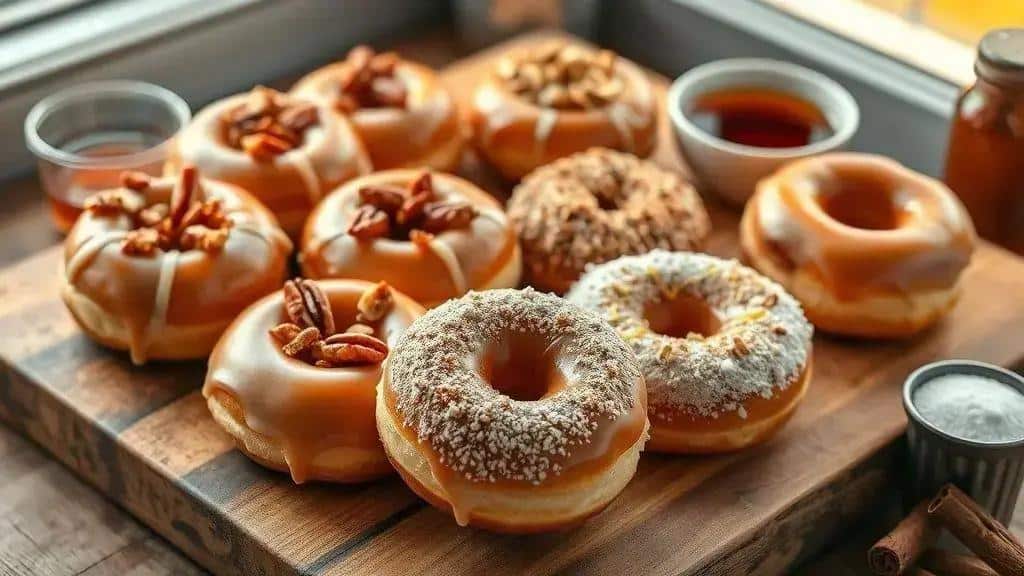
Different toppings add shine, crunch, and new flavors to maple donuts.
Basic maple glaze
A simple glaze highlights the maple without weighing down the donut.
- 180–200 g powdered sugar, sifted to remove lumps.
- 60–80 ml pure maple syrup, adjusted for the intensity you prefer.
- 2–3 tablespoons milk, added gradually for consistency. Plant milk works too.
- A pinch of salt to balance the sweetness.
- Sift the powdered sugar into a bowl and add the maple syrup.
- Add the milk a little at a time until the glaze is glossy and coats the donut without running off.
- Apply to slightly warm donuts so the glaze sticks.
Crunchy nut toppings
Nuts give texture and aroma. Pecans go especially well with maple.
- 50–70 g chopped pecans, lightly toasted for flavor.
- 50 g walnuts or almonds for an alternative topping.
- For a crunchy praline, combine 50 g caramelized sugar with chopped nuts.
Spices and citrus
A small amount of spice can change the flavor without complicating the recipe.
- 1 teaspoon ground cinnamon in the dough or glaze adds warmth.
- 1/4 teaspoon nutmeg gives depth. Use sparingly.
- 1/4 teaspoon ground cardamom adds a fragrant twist.
- Orange zest brings freshness and pairs well with maple.
Suggested combinations
- Maple glaze and toasted pecans for a balanced classic.
- Cinnamon-maple glaze and powdered sugar for a comforting finish.
- Maple and nut praline for crunch and a sweet-salty contrast.
- Maple, orange zest, and almonds for a bright citrus finish.
Glazing and presentation
- Let the donuts cool for 2–3 minutes. The glaze sticks best when they are just warm.
- Hold each donut by the edge, dip the top in glaze, and let the excess drip for 2–3 seconds.
- Add nuts or spices right after dipping, before the glaze dries.
- Set the donuts on a rack and let the glaze firm for 10–15 minutes before stacking.
Practical tips
- For stronger maple flavor, add more syrup and reduce the milk to keep the glaze thick enough.
- Lightly toasting the nuts intensifies their aroma and helps them stay crisp on the glaze.
- Add spices a little at a time so they don’t overwhelm the maple.
Maple syrup and New England

It takes about 40 liters of sap to make 1 liter of maple syrup. Sugaring in New England has a long history.
Origins and history
Indigenous peoples of North America tapped maple trees and concentrated the sap by boiling it. European colonists adapted these techniques, and late-winter sugaring became a regional tradition.
How maple syrup is made
- Tapping. A small hole and spout let the sap run into buckets or through tubing, sometimes under vacuum.
- Concentrating. Producers boil the sap in evaporators to remove water until it reaches the proper density.
- The sap-to-syrup ratio is about 40:1, depending on the tree and the season.
Color and flavor grades
Maple syrup is graded by color and taste. Lighter syrups taste delicate; darker ones have stronger caramel notes. Choose a light syrup for delicate desserts and an amber or dark one for cooking and glazing.
New England’s maple culture
- Vermont, New Hampshire, Maine, and Massachusetts are among the New England states known for sugarhouses and springtime visits.
- Sugaring season comes with cold nights and warmer days, typically between February and April.
- Small producers sell pure syrup. Local events and handmade maple products attract visitors.
Quick maple facts
- New England is closely associated with maple syrup, but Quebec in Canada is the world’s leading producing region.
- Many commercial pancake syrups use corn syrup and flavorings. They taste different from pure maple syrup.
- Refrigerate pure maple syrup after opening. It keeps for months, and freezing extends its life.
- Maple syrup contains minerals such as manganese and small amounts of vitamins, but it is still a caloric sweetener.
A handy tip
When using maple in a donut glaze, cut back the other sugars slightly to let its flavor stand out.
How to store and reheat maple donuts
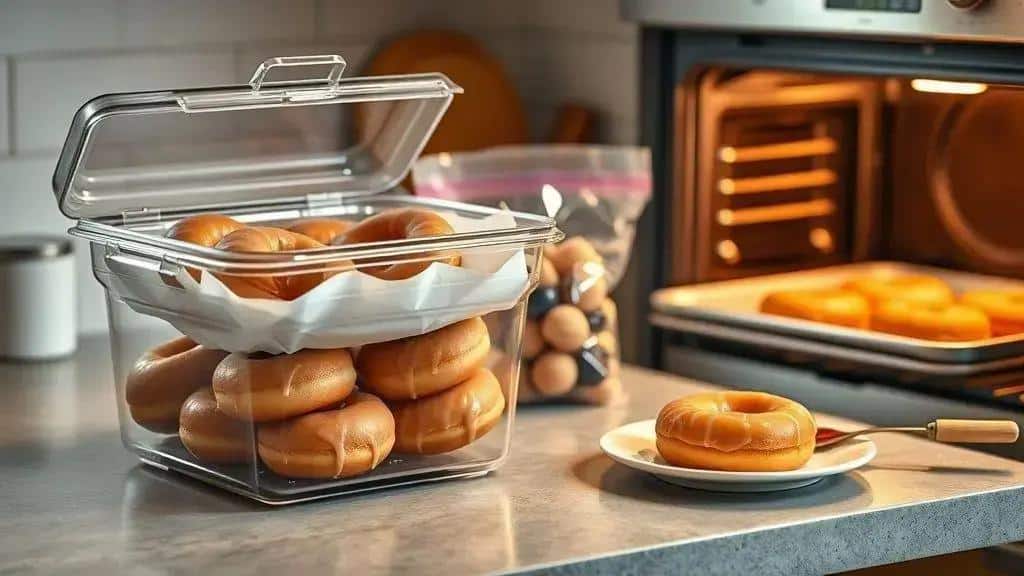
Good storage and gentle reheating help preserve the texture and maple flavor.
Room-temperature storage
- Place plain donuts in an airtight container in one layer or with parchment between layers to prevent sticking.
- Keep plain, unfilled donuts in a cool, dry place for up to 24 hours for the best freshness.
- Keep away from direct sunlight and open air, which dry out the dough.
Refrigeration
- Refrigerate filled donuts and those with a homemade milk glaze, or when storing for a longer period.
- Use a closed container and separate layers with parchment.
- Aim to eat refrigerated donuts within 3–4 days for the best texture and flavor.
- Take the portion you plan to serve out 15–30 minutes before serving or warming to soften the glaze.
Freezing
- Wrap donuts individually in plastic wrap or parchment, then seal in a freezer bag with as little air as possible.
- Freeze for up to 2 months for good flavor.
- Thaw overnight in the refrigerator. Plain, unfilled donuts without milk glaze can also thaw at room temperature for 1–2 hours before warming.
Ways to reheat
- Preheat the oven to 170°C (340°F). Place the donuts on a rack over a baking sheet for 5–7 minutes to refresh the crust without melting too much glaze.
- In an air fryer, warm in one layer at 160–170°C (320–340°F) for 3–4 minutes, checking so they don’t dry out.
- Microwave one donut for 8–12 seconds on medium-low power. Too long can make it rubbery.
- To heat from frozen, allow 8–10 minutes in a 160–170°C (320–340°F) oven, checking after 6 minutes.
Keeping the texture right
- Warm the donuts on a rack so air can circulate underneath.
- If the glaze loses its shine, warm a little maple syrup and brush it over the top just before serving.
- Avoid stacking warm donuts, which can stick together and squash the glaze.
- Warm one donut first to check the time and temperature before reheating a batch.
Pairings and serving ideas

Serve maple donuts with contrasting sweet, tart, or bitter notes to bring out the flavor of the syrup.
Classic pairings
- Espresso or medium-roast filter coffee cuts through the sweet glaze and complements a crisp donut.
- A latte or cappuccino adds a creamy contrast to the soft crumb and glossy glaze.
- Earl Grey tea offers citrusy bergamot notes that balance maple.
- Apple cider, served cold or warm, has a natural tartness that works with the caramel notes.
- Brown ale or a light-bodied porter brings roasted flavors that go with nuts and praline.
- Cold milk makes a simple, traditional pairing for all ages.
Practical serving ideas
- Serve slightly warm for the best aroma and texture.
- Allow 1–2 donuts per person with coffee, or 2–3 per person for a dessert to share.
- Arrange on a rustic platter with parchment between layers so the glaze won’t stick.
- Brush with a little extra syrup or add toasted nuts just before serving.
- Offer small pieces with different glazes, such as extra maple, cinnamon, or praline, for a tasting.
Savory and creative combinations
- Crisp bacon or smoked ham gives a salty contrast to sweet maple.
- Soft cheeses such as Brie or Camembert have a creamy texture that complements the glaze.
- For a brunch board, serve with scrambled eggs, fresh fruit, and yogurt.
Variations for diets and events
- For a vegan version, use plant milk, plant-based butter, an egg replacer, and pure maple syrup without added ingredients.
- For gluten-free donuts, use a gluten-free cake flour blend and adjust the liquid to its absorbency.
- For a party, set out a topping station with pecans, orange zest, and cinnamon.
Final quick tips
- Choose a bitter or tart drink to balance the sweetness.
- Taste the glaze before serving and adjust how strongly the maple comes through.
Final thoughts
Now you can make maple donuts at home, whether fried, baked, or yeast-raised. Try the different methods to find your favorite.
Small changes to the glaze and toppings make a difference. Try pecans, cinnamon, or orange zest next time you have guests.
Thanks for reading! Follow us on social media for easy recipes and tips, and visit the Mestre das Receitas blog for more recipes and news.
If you enjoyed the recipe, leave a comment and share your version. We’d love to see what you make.
Frequently asked questions about maple donuts
How should I store maple donuts to keep their texture?
Keep plain, unfilled donuts in an airtight container at room temperature for up to 24 hours. Refrigerate milk-glazed or filled donuts, or store refrigerated for up to 3–4 days. Individually wrapped donuts freeze for up to 2 months.
What’s the difference between fried and baked donuts?
Frying produces a crisper shell and light center. Baking gives a more cake-like texture and uses less fat.
Can I replace maple syrup with another sweetener?
Honey can replace it, though the flavor will change. Use good-quality pure maple syrup for the original flavor. Artificially flavored syrups won’t give quite the same aroma.
How can I make vegan or gluten-free donuts?
For vegan donuts, use an egg replacer with plant-based butter and milk. For gluten-free donuts, choose a gluten-free cake flour blend and adjust the liquid as needed.
Why did my donuts turn out greasy?
The oil may have been too cool or the dough too wet. Maintain 170–180°C (340–355°F) and fry in small batches so the temperature doesn’t drop.
What’s the best way to reheat them?
Warm in a 170°C (340°F) oven for 5–7 minutes or in an air fryer at 160–170°C (320–340°F) for 3–4 minutes. A microwave works quickly but can make the dough rubbery.