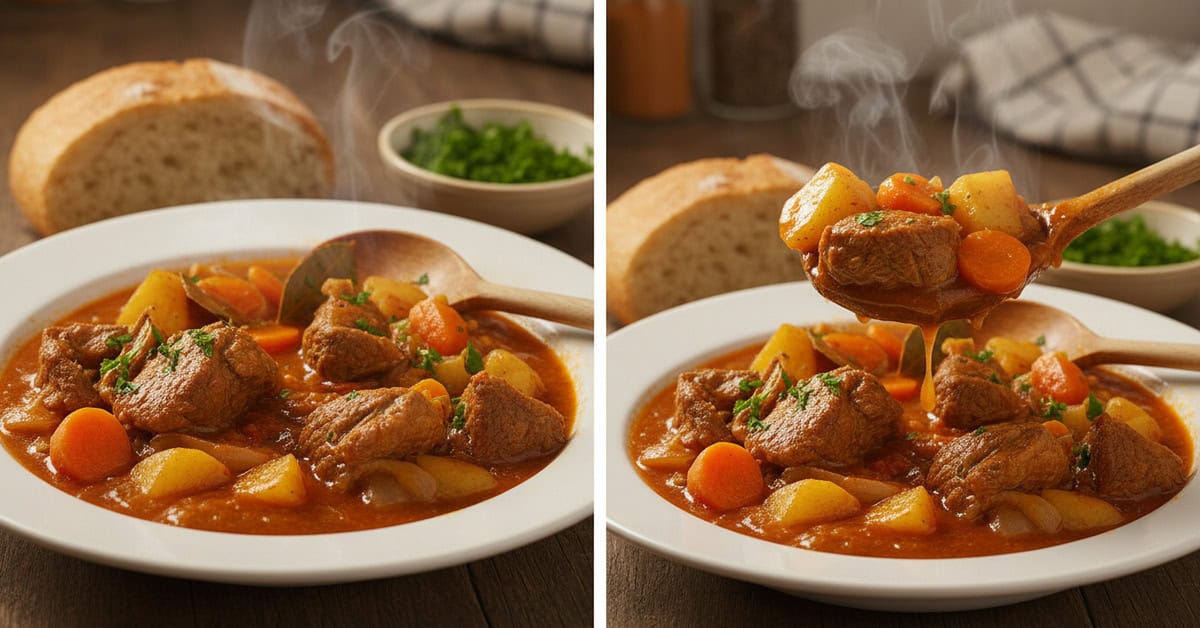

Mutton stew is a traditional dish full of flavour, made with mutton, fresh vegetables and a few seasonings. Serve it with mashed potatoes or rice for a warming family meal on a cold day.
With its rich, comforting flavour, mutton stew has a place in the cooking traditions of many countries. A pot of stew is a lovely way to bring the family together around the table. This recipe takes you through the ingredients and each stage of cooking so you can make it at home.
Ingredients for mutton stew

For a flavourful mutton stew, start with good-quality fresh ingredients. Here’s everything you’ll need.
- 1 kg of mutton shoulder or leg, cut into cubes
- 2 large onions, chopped
- 4 garlic cloves, crushed
- 3 ripe tomatoes, chopped
- 2 carrots, cut into rounds
- 3 medium potatoes, cubed
- 1 green pepper, chopped
- 2 tablespoons of cooking oil or olive oil
- 1 bay leaf
- Salt and pepper to taste
- Enough water to cover all the ingredients
- Chopped fresh herbs to finish
These ingredients give the stew its rich flavour. Choose fresh mutton for the best results.
How to make mutton stew
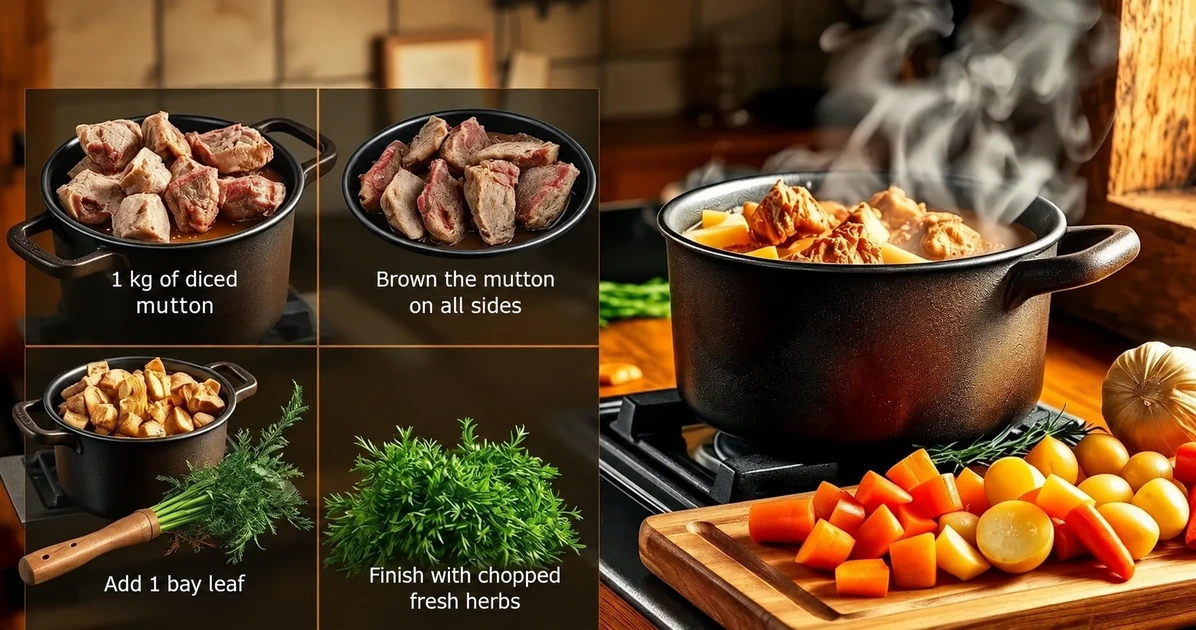
Follow these steps to make a flavourful mutton stew.
- Heat the oil in a large pan over a medium heat. Add the chopped onions and garlic and fry gently until soft and golden.
- Add the cubed mutton to the pan and cook until browned on all sides.
- Add the chopped tomatoes and green pepper. Cook for a few more minutes until the tomatoes release their juices.
- Carefully stir in the carrots and potatoes, then pour in enough water to cover all the ingredients.
- Season with salt and pepper and add the bay leaf. Taste and adjust the salt as the stew cooks.
- Let the stew simmer over a low heat for about 60 to 90 minutes, until the meat is tender. Stir occasionally to prevent it from sticking to the bottom of the pan.
- Scatter the chopped fresh herbs over the stew just before serving to bring out its flavour.
Follow these steps for a rich, flavourful mutton stew that’s fit for any occasion.
A little background on mutton stew
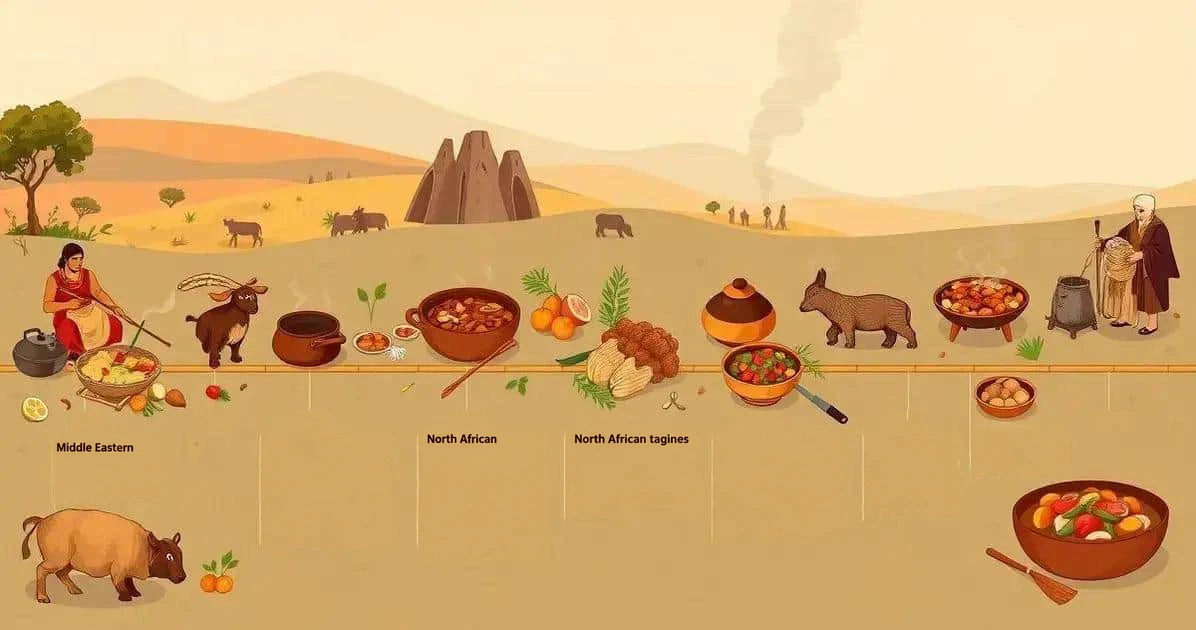
Mutton stew is steeped in history and tradition and is enjoyed in many cultures around the world.
- Origins of the dish – Mutton stew has roots in several culinary traditions, including those of the Mediterranean and the Middle East, where mutton is widely used.
- Regional variations – Each region has its own way of making mutton stew. In Greece, cooks often add herbs such as rosemary, while in Turkey the stew is often served with rice.
- Nutritional benefits – mutton is an excellent source of protein, vitamins and minerals, particularly iron and B vitamins, which are important for good health.
- Festive traditions – Mutton stew is often prepared for celebrations and festivals, where it symbolises the pleasure of coming together with family and friends.
- Cooking tip – The secret to a good stew is a long, slow simmer. This gives the meat time to become tender and take on the flavours of the seasonings and vegetables.
These traditions show just how much history and cultural significance there is in a dish as delicious as mutton stew.
What to serve with mutton stew

Mutton stew tastes even better with the right accompaniments. Here are a few that go particularly well with it.
- Creamy mashed potatoes are a classic choice. Their smooth texture complements the rich stew.
- Plain white rice is always a good choice for soaking up the flavourful gravy.
- A fresh green salad of lettuce, rocket and tomatoes makes a light, refreshing contrast to the stew.
- Fresh homemade bread is perfect for mopping up every last drop of gravy.
- Roast vegetables such as carrots, courgettes and peppers make a healthier accompaniment and add flavour and colour to the meal.
These accompaniments turn your mutton stew into a memorable meal for any occasion.
How to serve mutton stew

The way you serve mutton stew can bring out its flavours and make the meal more inviting. Here are a few ways to present it.
- Serve the stew in an earthenware pot or a deep bowl to keep it warm and give the table a rustic touch.
- Finish with a scattering of chopped fresh herbs, such as parsley or coriander, for colour and freshness.
- Serve the mashed potatoes or rice in separate dishes so guests can help themselves to as much as they like.
- Don’t overfill the bowls. A generous helping of stew is enough. Leave the side dishes on the table so guests can help themselves.
- Set the table with good bread, such as a baguette or a rustic loaf, and a bottle of red wine that pairs well with mutton.
With these simple touches, your mutton stew will look as good as it tastes.
Ready to enjoy your mutton stew?
Now that you know how to make a delicious mutton stew, it’s time to get cooking and surprise your friends and family. This dish is more than a meal. It’s a celebration of flavour and tradition.
Thanks for joining us! We hope you’ve enjoyed these tips and will come back for more special recipes. Remember to follow our Mestre das Receitas cookery website on social media to keep up with our latest news. Come and share the pleasure of cooking with us!
Frequently asked questions about mutton stew
What are the main ingredients in mutton stew?
The main ingredients are mutton, onions, garlic, tomatoes, carrots and potatoes, with seasonings such as salt and pepper.
How long does mutton stew take to make?
Mutton stew usually takes between 1 and 1½ hours to cook, depending on the size of the pieces of meat.
Can I adapt the mutton stew recipe to make it healthier?
Yes. You can replace some of the meat with vegetables, or use less oil and add more vegetables for a lighter stew.
What goes well with mutton stew?
Mashed potatoes, white rice, a green salad and fresh bread all go well with the stew.
How can I tell when the mutton is cooked?
The meat should be tender and come apart easily when pressed. A meat thermometer should read at least 70 °C.
Can I freeze mutton stew?
Yes. It’s best to freeze the stew in individual portions and seal them well to preserve the flavour.