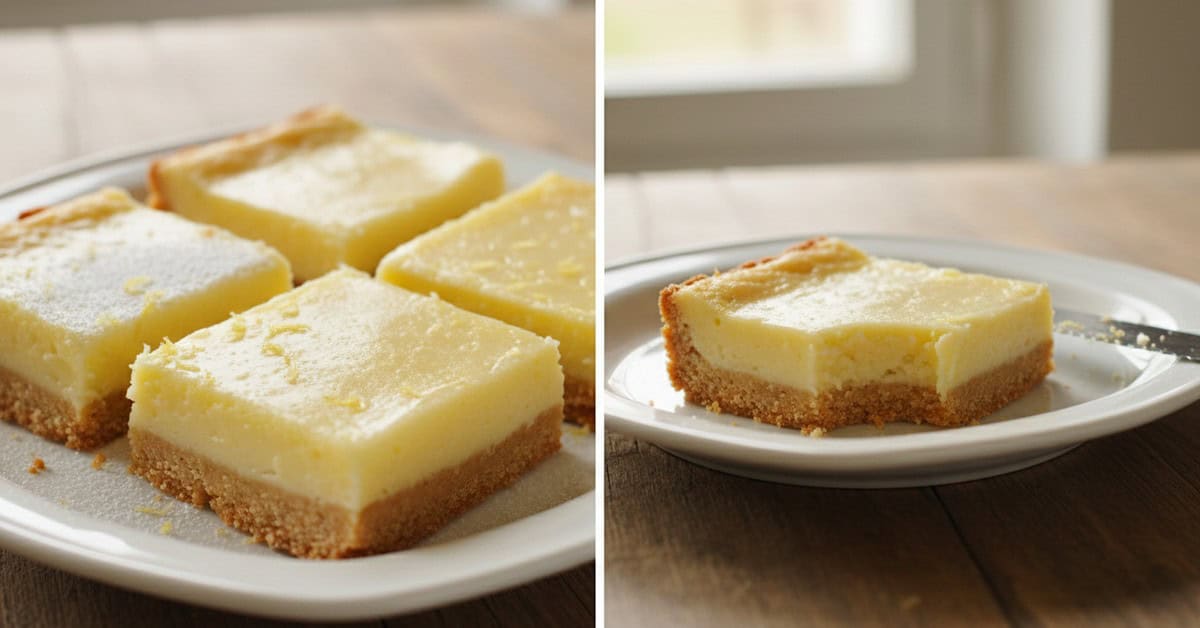

Lemon bars have a buttery base and a creamy lemon filling. To make them, you’ll need butter, flour, eggs, sugar, lemon juice and zest. Bake the base first, then add the filling and bake until the centre is just set. Chill the bars before cutting to preserve their texture and keep them fresh.
Lemon bars strike just the right balance between sweet and sharp. Fancy making a batch with a taste of coastal California? I’ll share an easy recipe, a few shortcuts that deliver on flavour and some variations that work well at home.
Ingredients for lemon bars
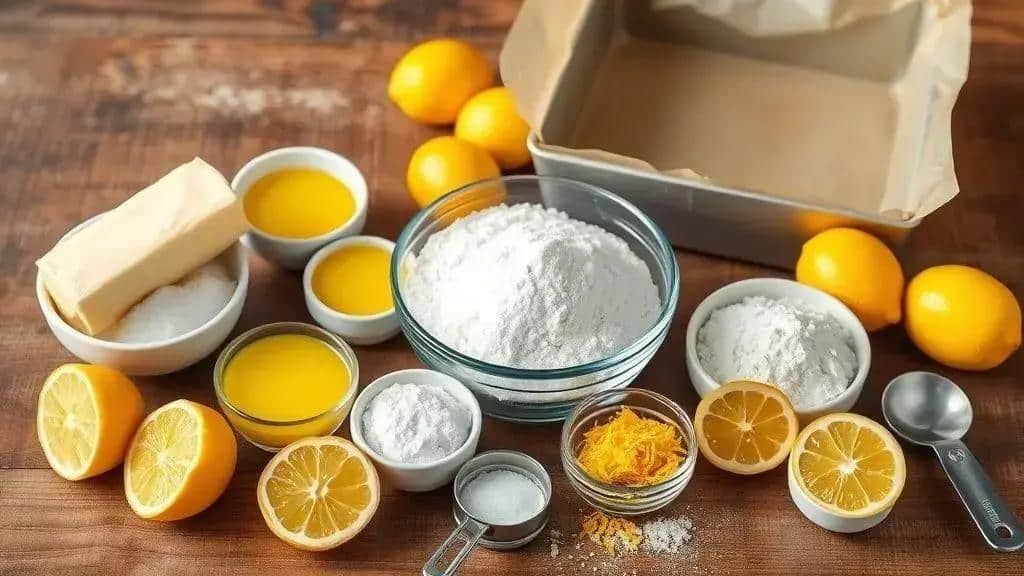
Here’s what you’ll need for the lemon bars, starting with the buttery base and then the filling.
- 1 cup (226 g) unsalted butter, softened. You can use vegan margarine or solid coconut oil, though the texture may vary.
- 1/2 cup (100 g) granulated sugar for the base. You can substitute demerara sugar or use erythritol in a 1:1 ratio. This will change the colour and texture.
- 2 cups (250 g) plain flour for the base. You can substitute a 1:1 gluten-free flour blend.
- 1/4 teaspoon salt to bring out the flavour.
- 1 1/2 cups (300 g) granulated sugar for the filling. Coconut sugar or erythritol will also work, though the flavour and colour will change.
- 4 large eggs, at room temperature so they mix in more easily.
- 1/4 cup (30 g) plain flour to help the filling set. For a lighter texture, use 30 g of cornflour instead.
- 2/3 cup (160 ml) of freshly squeezed lemon juice, from about 3–4 Sicilian lemons. Fresh juice is preferable to concentrate.
- 2 tablespoons lemon zest for a pronounced citrus aroma. Adjust to taste.
- Icing sugar for dusting before serving (optional).
Ingredient notes and tips
Use fresh lemons whenever possible. Their juice and zest give the bars their bright, tangy flavour. Refined sugar tends to give the filling a more translucent finish, while less refined sugars give it a darker colour.
Room-temperature butter helps the dough come together evenly. If the dough feels too soft, chill it for 10 minutes before baking. For a gluten-free version, use a ready-made gluten-free flour blend and adjust the consistency if needed.
Measure carefully for consistent results. Use measuring cups and spoons, and level each cup of flour with a knife. For less sweet bars, reduce the sugar in the filling by 2 to 3 tablespoons and adjust the lemon juice to taste.
How to make lemon bars step by step
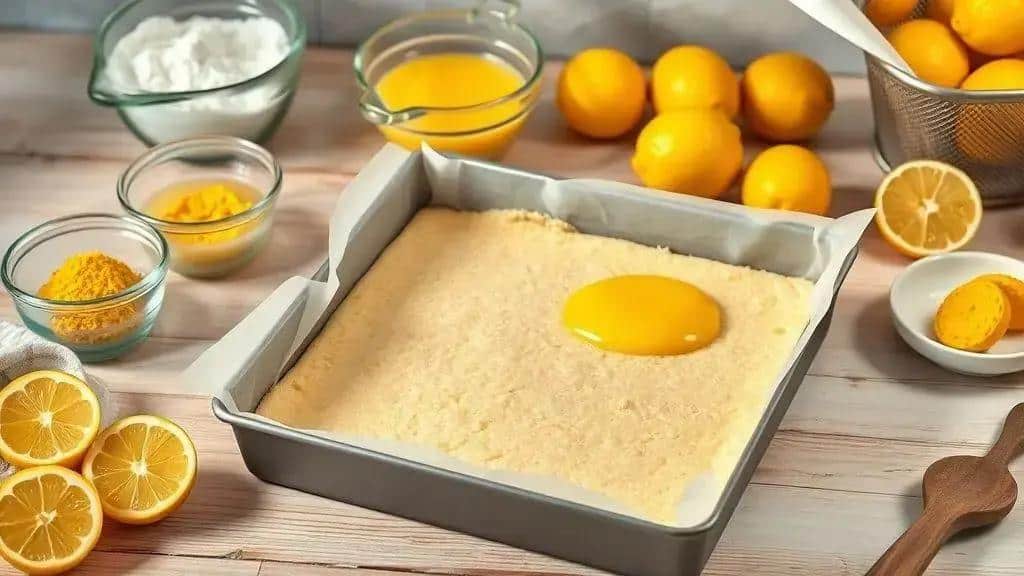
Follow these steps for lemon bars with a creamy filling and a crumbly base.
- Preheat the oven to 175°C (350°F). Line a 22 × 22 cm (9 × 9 in) square baking tin with baking parchment, leaving an overhang at the sides so you can lift the bars out easily.
- Make the dough. In a medium bowl, beat 1 cup (226 g) of softened unsalted butter with 1/2 cup (100 g) of granulated sugar until creamy. Add 2 cups (250 g) of plain flour and 1/4 teaspoon of salt. Mix with a spatula until the dough comes together evenly.
- Press the dough evenly over the bottom of the tin, using the back of a spoon or the flat bottom of a measuring cup to level it. Chill for 10 minutes to firm up before baking.
- Bake the base for 15–20 minutes, or until the edges are lightly golden. Remove the tin and leave the oven on at the same temperature for the next step.
- Make the lemon filling. In a large bowl, whisk 4 large eggs with 1 1/2 cups (300 g) of granulated sugar until smooth. Add 1/4 cup (30 g) of plain flour, 2/3 cup (160 ml) of fresh lemon juice and 2 tablespoons of lemon zest. Mix until well combined.
- Carefully pour the filling over the base while it’s still hot and return the tin to the oven. Bake for 18–25 minutes, until the centre is set but still has a slight wobble when you gently shake the tin.
- Remove the tin from the oven and leave it on a wire rack for 1–2 hours to cool. This stops the filling cooking further and helps prevent cracks.
- Once cool, refrigerate for at least 2 hours or overnight. This gives the filling time to set properly and makes the bars easier to cut.
- Use the overhanging parchment to lift the whole slab out of the tin. Dip a sharp knife in hot water and dry it before slicing. Wipe the blade between cuts for neat edges. Cut into 16 or 24 squares, as you prefer.
- Dust with icing sugar just before serving, if you like. Store in an airtight container in the fridge for up to 4 days, or freeze for up to 1 month with baking parchment between the layers.
Quick tips and substitutions
- For gluten-free bars, replace the flour with a gluten-free blend in a 1:1 ratio and adjust the baking time if needed.
- For a vegan alternative to butter, use firm vegan margarine or chilled coconut oil. The texture of the base may change slightly.
- For a less sweet filling, reduce the sugar by 2–3 tablespoons. Taste a bar after baking.
- To check whether the filling is ready, look for set edges and a slightly soft centre. It will firm up as it cools.
Tips for a perfect base and a creamy filling
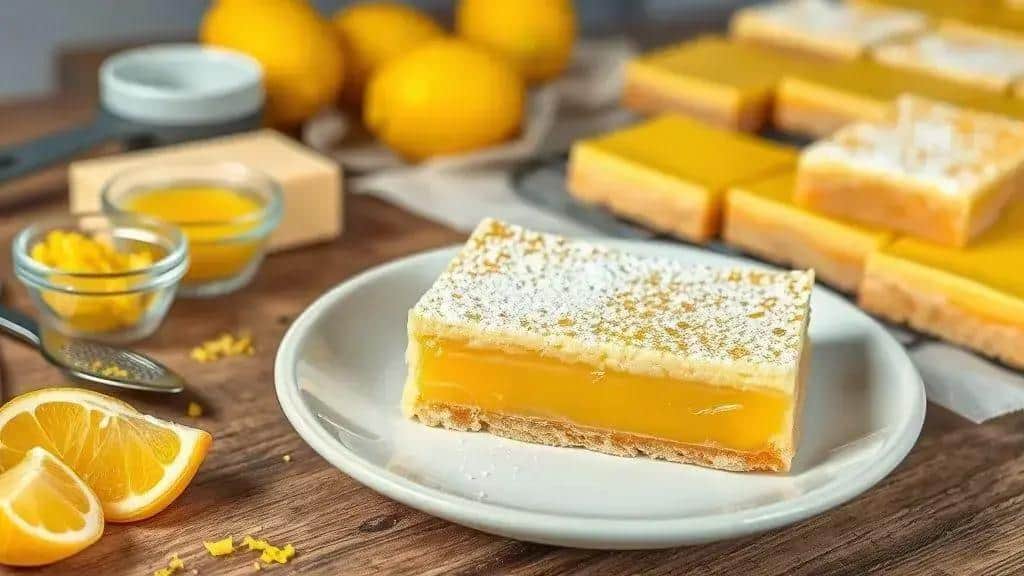
A few small details make the difference between an ordinary lemon bar and a perfect one. Here’s how to get a crisp base and a silky filling.
How to get the base just right
- Measure the flour carefully. Level the cup with a knife, as too much flour will make the base dry.
- Use softened butter. It helps the dough bind without becoming greasy, so take care not to let it melt.
- Mix the dough just until it comes together. Overworking it develops the gluten and makes the base tough.
- Press the dough down firmly and evenly with the flat bottom of a measuring cup to stop it bubbling up in the oven.
- Part-bake the base until the edges are lightly golden. This helps stop the filling soaking into it.
- Line the tin with baking parchment to protect the edges and make the bars easier to remove. Leave enough overhang to lift them out once cool.
How to get a smooth, creamy filling
- Use room-temperature eggs. They blend more easily and help give the filling a smooth texture.
- Squeeze the lemons just before you use the juice. Concentrated juice changes the flavour and texture.
- Use a suitable thickener. For example, 1/4 cup of flour or 30 g of cornflour helps the filling set without drying it out.
- Mix just until smooth. Beating in too much air can cause the filling to crack as it bakes.
- Take the bars out while the centre still has a slight wobble. Don’t wait for it to set completely in the oven, as it will firm up as it cools.
- For an extra-smooth filling, strain the mixture through a sieve if needed before pouring it over the base.
Common problems and how to fix them
- If the filling is too runny, reduce the lemon juice by 1–2 spoonfuls or use a little more thickener.
- If the base falls apart, press the dough down more firmly and bake it for a few extra minutes before adding the filling.
- To prevent cracks in the filling, avoid overbaking and let the bars cool gradually out of the oven before refrigerating.
Finishing and storing the bars
- Dust the bars with icing sugar just before serving so the coating looks fresh.
- Use a warm knife for neat slices. Dip the blade in hot water and dry it between cuts.
- Store the bars in an airtight container in the fridge for up to 4 days, or freeze for up to 1 month with baking parchment between the layers.
Lemon bar variations and substitutions
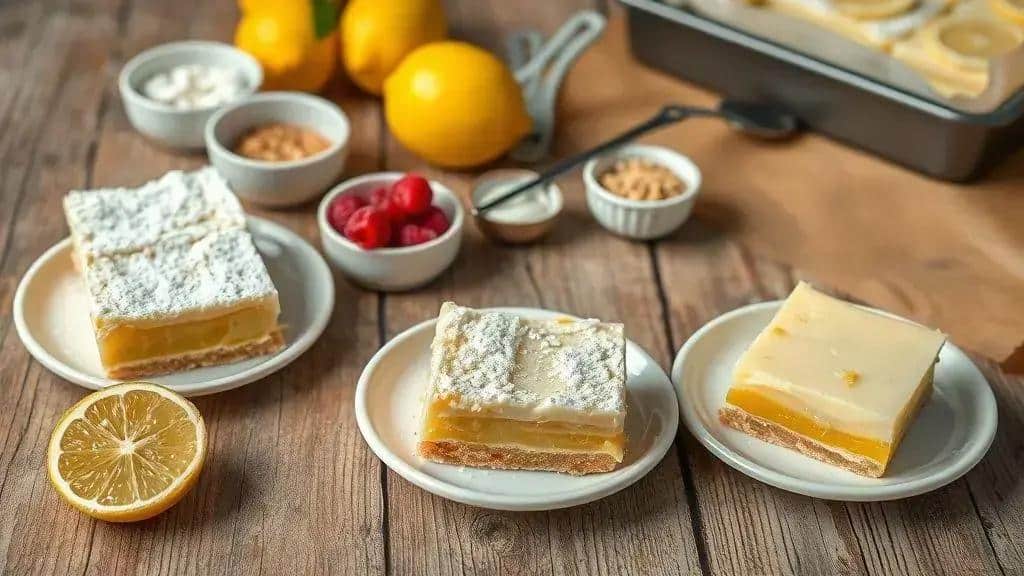
Adapt your lemon bars to different tastes and dietary needs while keeping their flavour and texture.
Gluten-free lemon bars
These simple swaps keep the base crisp for anyone avoiding gluten.
- 2 cups (250 g) of a 1:1 gluten-free flour blend to replace the plain flour. If the blend doesn’t contain xanthan gum, add 1/4 teaspoon of it.
- 1 cup (226 g) unsalted butter, the same amount as for the original base.
- For the filling, keep the 4 eggs and the remaining ingredients. The filling can set just as well with the gluten-free flour or the cornflour specified in the recipe.
Vegan lemon bars
Use the following quantities and substitutions to make the bars vegan.
- For the base, replace 1 cup (226 g) of butter with 1 cup (220–226 g) of firm vegan margarine or solid coconut oil.
- For an egg-free filling, whisk 1 cup (240 ml) of aquafaba until frothy. Combine with 1/3 cup (40 g) of cornflour, 1 1/2 cups (300 g) of sugar and 2/3 cup (160 ml) of lemon juice. Cook gently until thickened.
- Use 2 tablespoons of lemon zest to give the filling a strong lemon aroma.
Fruit and flavour variations
Pair lemon with other fruits for a sweeter filling or a seasonal variation.
- For a raspberry version, add 1/2 cup (120 g) of raspberry purée. To allow for the extra liquid, use 2 tablespoons less lemon juice. The recipe gives no separate sugar quantity for this version. Taste the bars after baking to decide whether you’d prefer less sugar in your next batch.
- For mango or passion fruit bars, replace up to 1/3 of the lemon juice with fruit purée for a tropical flavour.
- For a floral note, add 1/2 teaspoon of dried lavender flowers, using them sparingly. For a fresh mint aroma, use 1 tablespoon of finely chopped mint leaves instead.
Alternative bases
These alternative bases change the texture of the bars and the intensity of their savoury notes.
- For a graham cracker base, mix 2 cups (200 g) of graham cracker crumbs with 6 tablespoons (85 g) of melted butter. Press into the tin and bake for 10–12 minutes.
- For a wholegrain or oat base, blitz 2 cups (200 g) of fine rolled oats, 1/4 cup (50 g) of sugar and 6–8 tablespoons of butter until the mixture resembles crumbs, then press it firmly into the tin.
Adjusting the sweetness and sharpness
How to balance the lemon and sugar while keeping the texture of the filling.
- For a less sweet version, use 2–3 tablespoons less sugar in the filling. See how you like the result after baking.
- For a sharper filling, add an extra 1–2 tablespoons of lemon juice. Alternatively, replace some of the lemon juice with Sicilian lemon juice for a more fragrant flavour.
- If you reduce the sugar and want to soften the tartness, add 1 tablespoon of light honey or agave syrup. Either will sweeten the filling.
Tips for trying variations
- Start with a small batch. Make half the recipe when trying a substantial change to the ingredients.
- Note down the proportions, baking times and any adjustments so you can repeat what works.
- If the filling is too runny, add an extra 1–2 tablespoons of cornflour. If it’s too firm, shorten the baking time by 3–5 minutes.
Facts about lemon bars and California lemons
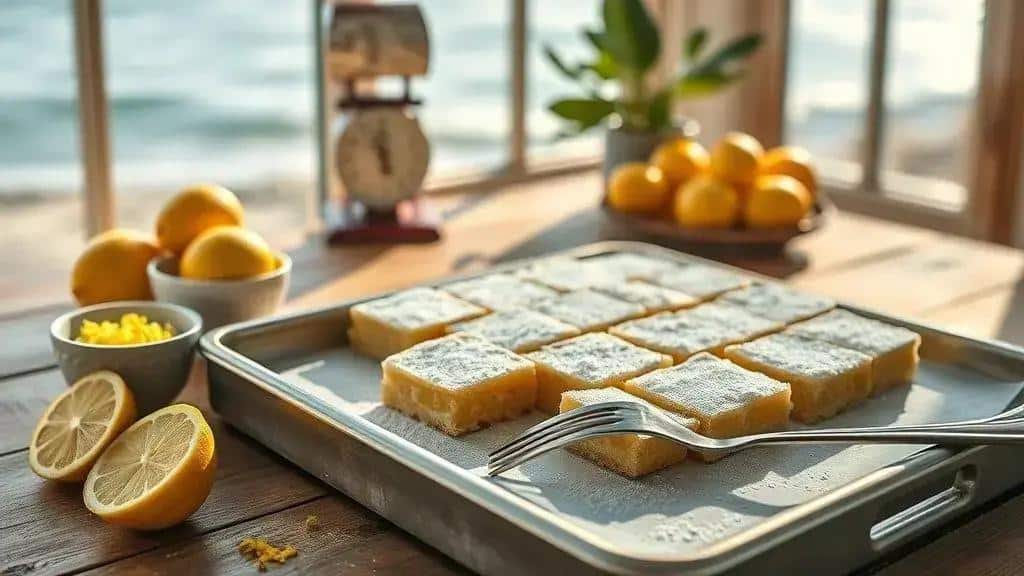
The history of lemon bars and California lemons offers a few clues to this dessert’s enduring appeal.
Where lemon bars came from and how they became popular
Recipes for lemon tartlets appeared in the United States in the twentieth century (XX). The tartlets became popular at family gatherings, at fairs and in cafés. Their appeal lay in the simple, delicious combination of buttery pastry and a glossy lemon filling.
What is a California lemon?
When we talk about California lemons, we often mean Meyer lemons, a sweeter, more fragrant variety that has adapted well to California’s climate. The lower acidity and floral aroma of the juice bring out the creaminess of the filling.
A few quick facts
- Part of the appeal of lemon bars is the contrast between the crumbly base and the silky filling.
- The acidity of the lemon helps the filling keep for a few days in the fridge while retaining its bright flavour.
- The name ‘lemon bars’ comes from their handy shape, which makes them easy to serve at parties and in cafés.
- The filling also works as a topping for cakes or as a filling for small tarts.
A few baking facts
- Using the zest as well as the juice gives a stronger lemon aroma with little change to the texture.
- A small amount of flour or starch thickens the filling so it doesn’t stay runny after baking.
- California bakers often use Meyer lemons or combine lemons with local fruit for seasonal variations.
Things to try at home
Try making the bars with ordinary lemons and then with Meyer lemons to taste the difference. Reduce the sugar slightly to bring out the fresh citrus flavour, and use a warm knife for neater slices.
See you next time, and enjoy!
If you enjoyed this recipe, try the variations and tips to find your favourite version.
Thank you! Follow us on Instagram, Facebook and Pinterest for more easy recipes and daily inspiration.
You can also visit Mestre das Receitas blog for the latest updates, collections and tried-and-tested recipes.
Lemon bar FAQs
How should I store lemon bars, and how long will they keep?
Store them in an airtight container in the fridge for up to 4 days. To freeze, cut into portions, separate the layers with baking parchment and freeze for up to 1 month.
Can I use bottled lemon juice instead of fresh lemons?
Yes, although bottled lemon juice usually has a less vibrant flavour and aroma. Once you’ve tasted the baked bars, adjust the sugar to your liking in your next batch.
How do I stop the filling making the base soggy?
Part-bake the base until the edges are lightly golden and let it cool a little before pouring in the filling. When lining the tin with the dough, press it down firmly for a compact base.
Can I make gluten-free lemon bars?
Yes. Replace the flour with a 1:1 gluten-free flour blend. If the blend doesn’t contain xanthan gum, add about 1/4 teaspoon to help the bars hold together. Adjust the baking time if needed.
Can I make the bars ahead for a party?
Yes. Bake the bars and leave them to cool completely, then refrigerate for a few hours or overnight. Wait until you’re ready to serve before dusting with icing sugar so the bars look their best.
How can I tell when the filling has finished baking?
The filling should be set around the edges but still wobble slightly in the centre when you gently shake the tin. Don’t wait for it to set completely. It will firm up as it cools and then set further in the fridge.