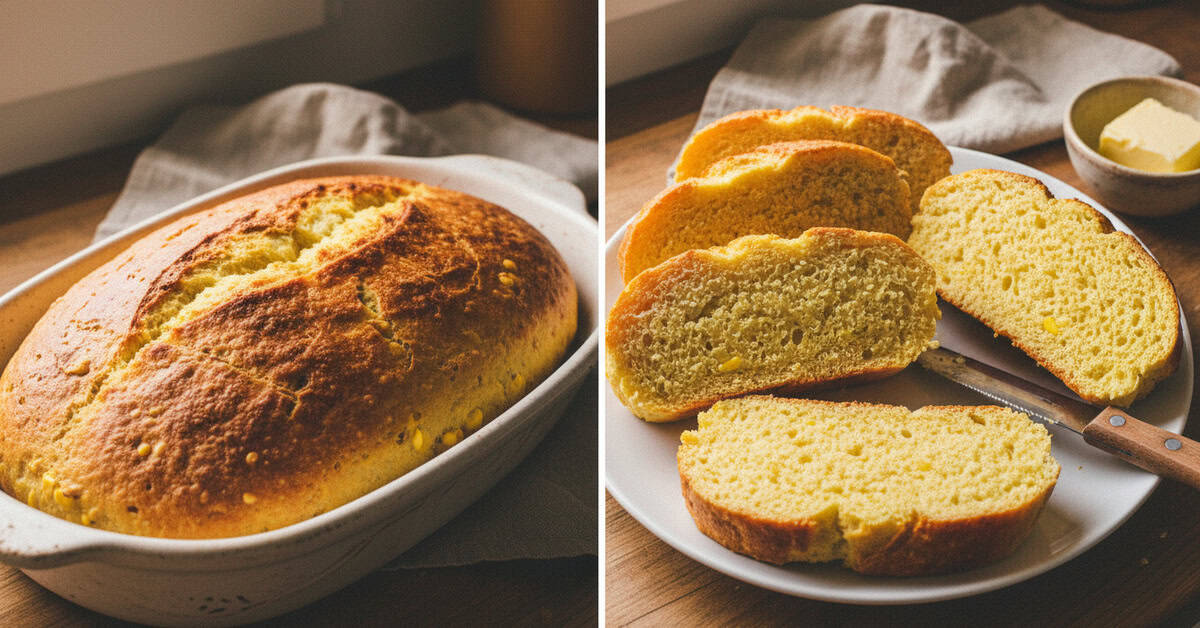

Midwestern cornbread has a crisp crust and a moist crumb. It is made with medium-ground cornmeal, buttermilk, eggs and butter. Fold the batter together gently and bake it in a cast-iron frying pan for a golden crust. Gluten-free and vegan versions may need a little longer in the oven.
Homemade Midwestern cornbread is crisp on top and soft inside. Serve it with a barbecue, a bowl of soup or a simple supper. Here is how to make it, with a few tips for getting the texture right every time.
Ingredients for Midwestern cornbread

- 1 cup (150 g) yellow cornmeal, preferably medium-ground. You can use finely ground cornmeal or the same quantity of a gluten-free flour blend.
- 1 cup (120 g) plain flour for structure. For a gluten-free version, use 1 cup gluten-free flour blend and 1 teaspoon xanthan gum.
- 2 tablespoons (25 g) sugar, adjusted to taste. Alternatively, use 2 tablespoons honey or maple syrup.
- 1 tablespoon (15 g) baking powder to lighten the crumb. If you replace it with bicarbonate of soda, you will also need to adjust the acidic ingredients.
- 1 teaspoon (5 g) salt to bring out the flavour.
- 2 large eggs, at room temperature. For a vegan substitute, stir 2 tablespoons ground flaxseed into 6 tablespoons water and leave for 5 minutes.
- 1 cup (240 ml) buttermilk for a tender crumb and tangy flavour. For a quick substitute, stir 1 tablespoon cider vinegar or lemon juice into 1 cup milk and leave for 5 minutes.
- ¼ cup (60 ml) melted butter, or ¼ cup vegetable oil. A little bacon fat adds a traditional savoury flavour.
- ½ cup (120 ml by volume) sweetcorn kernels for texture. Use fresh, thawed frozen or drained tinned sweetcorn.
- ½ cup (50 g) grated Cheddar (optional) for a creamy, savoury version. Grated mozzarella or Parmesan also works.
Quick tips and substitutions
If you like sweeter cornbread, increase the sugar to 3–4 tablespoons. For a denser crumb, use slightly less buttermilk. Stir the wet ingredients into the dry just until combined to retain the characteristic grainy texture. A well-greased, preheated cast-iron pan gives a golden crust. Bake until a skewer comes out clean, then rest for a few minutes before slicing.
How to make homemade Midwestern cornbread

Follow these steps for cornbread with a golden crust and a tender crumb.
- Preheat the oven to 200°C (400°F). If using a cast-iron frying pan, put it in the oven as it heats.
- Grease the pan. Use oven gloves to remove the hot pan, grease it with butter and dust it with a tablespoon of cornmeal or flour to prevent sticking.
- Mix the dry ingredients. Sift 1 cup cornmeal, 1 cup plain flour, 1 tablespoon baking powder, 2 tablespoons sugar and 1 teaspoon salt into a large bowl. Stir to distribute evenly.
- Mix the wet ingredients. In another bowl, whisk together 2 eggs, 1 cup buttermilk (or milk mixed with 1 tablespoon vinegar and left for 5 minutes) and ¼ cup melted butter.
- Combine gently. Pour the wet mixture into the dry and fold with a spatula just until combined. The batter should still look slightly grainy. Avoid overmixing.
- Add the extras. Gently fold in ½ cup sweetcorn kernels and, if using, ½ cup grated Cheddar.
- Fill the pan. Spoon the batter into the hot frying pan or a greased baking tin. Level the top lightly and tap the pan gently on a heatproof work surface to release any trapped air.
- Bake in the preheated oven for 18–25 minutes, until golden on top and a skewer inserted in the centre comes out clean. The time will depend on the size of your pan.
- Leave to rest. Remove from the oven and wait 8–10 minutes before slicing so the crumb has time to set.
- Serve in warm slices with butter or honey, or alongside soup or a bean dish.
Practical tips and variations
Check with a skewer. A few moist crumbs are fine. For gluten-free cornbread, replace the plain flour with a gluten-free blend and add 1 teaspoon xanthan gum. For a vegan version, replace the eggs with flaxseed eggs (2 tablespoons ground flaxseed and 6 tablespoons water), use vegetable oil instead of butter and choose a plant-based buttermilk as described below.
Texture and storage. Medium-ground cornmeal gives a classic, slightly grainy crumb. Finely ground cornmeal gives a smoother one. Keep plain, fully cooled cornbread in an airtight container for up to 2 days at room temperature or up to 5 days in the fridge. Refrigerate the cheese version. Reheat in the oven or a frying pan to crisp the crust.
How to get the texture and baking time right
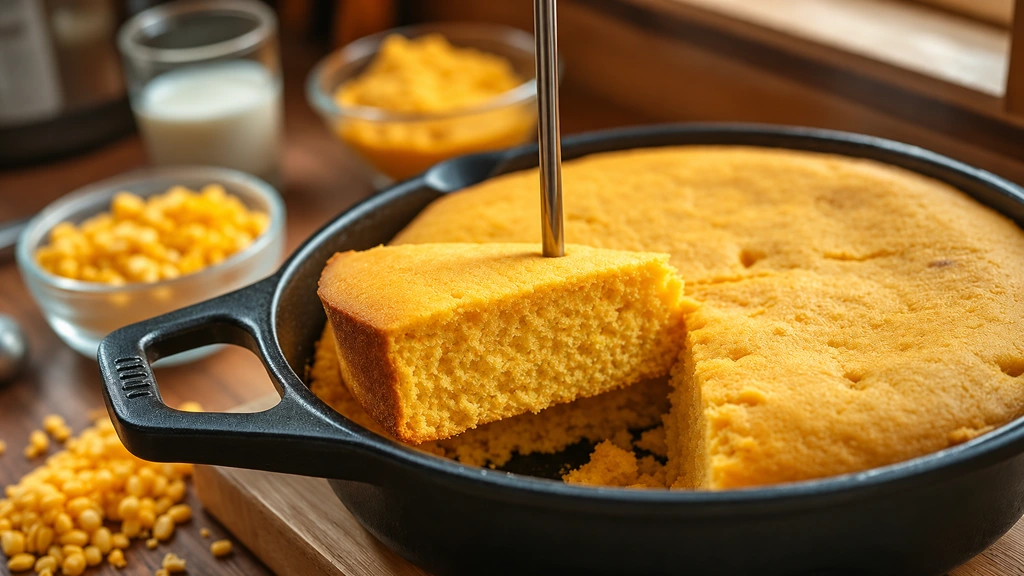
Three things make a difference to the texture: the grind of the cornmeal, the amount of liquid and how you mix the batter. A small change in any of them can affect the finished loaf.
Choosing your cornmeal and flour
Medium-ground cornmeal gives the classic grainy texture. Finely ground cornmeal makes a more even crumb. Plain flour provides structure. For a gluten-free version, use a ready-made gluten-free blend with 1 teaspoon xanthan gum.
Balancing liquid, fat and temperature
Buttermilk, or milk soured with vinegar, adds acidity and keeps the crumb tender. Melted butter gives flavour and helps crisp the crust. Room-temperature eggs blend more readily with the fat. Cold ingredients can affect the texture.
Mix the batter lightly
Mix just until the ingredients come together. A slightly grainy batter gives a light, moist crumb. Overmixing develops the gluten in the flour and can make the cornbread heavy.
- Preheat thoroughly. Set the oven to 200°C and let the cast-iron pan heat up with it. The batter will start to form a crust as soon as it hits the hot pan.
- Check the oven temperature. An oven thermometer lets you check the actual temperature, which can differ from the setting by as much as 20°C.
- Test with a skewer. Insert it into the centre. A few moist crumbs mean the bread is ready. If you see wet batter, give it more time.
- Internal temperature. As a guide to the texture, the centre should reach about 88–93°C (190–200°F).
- Rest before slicing. Give the cornbread 8–10 minutes for the crumb to firm up so it is easier to cut.
Quick baking tips
- Use a cast-iron frying pan for even heat and a golden crust.
- Dust the pan with a little cornmeal to prevent sticking and add texture.
- For a moister crumb, add another 1–2 tablespoons buttermilk. For a crisper top, brush with melted butter as soon as the bread comes out of the oven.
- Keep the oven door closed for the first 12 minutes to give the batter a chance to rise.
Gluten-free, vegan and cheese variations
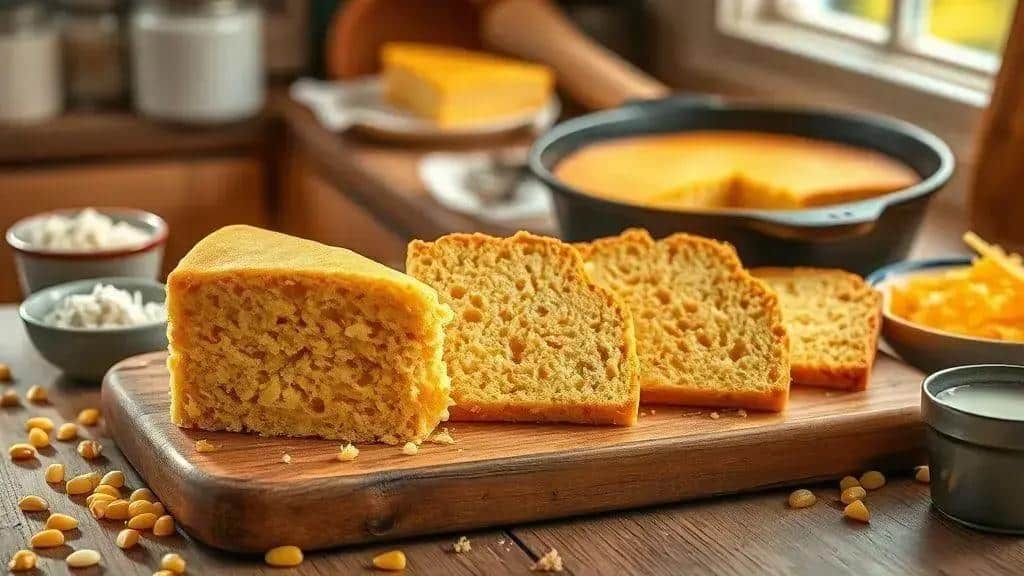
Here are practical ways to vary Midwestern cornbread while keeping its flavour and texture.
How to make it gluten-free
Replace the plain flour with the same quantity of ready-made gluten-free flour blend. Add 1 teaspoon xanthan gum for structure if your blend does not already contain it.
- Replace 1 cup (120 g) plain flour with 1 cup (120 g) gluten-free flour blend and 1 teaspoon xanthan gum.
- Tip: if using a single flour, such as maize or rice flour, increase the xanthan gum to 1¼ teaspoons and rest the batter for 10 minutes before baking.
Vegan substitutes for eggs, milk and butter
Eggs help bind and aerate the batter. Suitable substitutes help keep the crumb light and tender.
- Replace 2 large eggs with 2 flaxseed eggs. Stir 2 tablespoons ground flaxseed into 6 tablespoons water and leave for 5 minutes.
- Replace 1 cup (240 ml) buttermilk with 1 cup soya or oat milk mixed with 1 tablespoon cider vinegar. Leave for 5 minutes.
- Replace ¼ cup melted butter with ¼ cup vegetable oil or melted vegan butter.
- Tip: vegan batter may need 1–2 extra minutes in the oven. Check with a skewer.
Cheese options and quantities
Cheese adds moisture and a savoury flavour. Fold it in at the end to distribute it evenly.
- ½ cup (50 g) grated Cheddar is the classic option. It melts readily and gives a creamy texture.
- Try mozzarella for a stretchy texture or Parmesan for a stronger flavour. For a salty contrast, use ⅓ cup cotija or feta.
- For a vegan option, use ½ cup grated vegan cheese or 3 tablespoons nutritional yeast for a cheesy flavour.
Adjusting the raising agent and liquids
Baking powder helps the bread rise and buttermilk contributes acidity and moisture. When changing the liquid, keep the overall balance of wet and dry ingredients.
- If you replace the buttermilk with unsoured plant milk, add 1 extra teaspoon baking powder.
- For a moister batter, add 1–2 tablespoons buttermilk or plant milk.
Quick checks when trying a variation
- Baking time. Gluten-free or vegan versions may need 2–5 extra minutes. Check with a skewer.
- Texture. Medium-ground cornmeal retains the characteristic grain. For a softer, finer crumb, use finely ground cornmeal.
- Distributing the cheese and sweetcorn. Fold them through gently so they are evenly spread rather than clustered in the centre.
- Cast iron. Use the same pan for a golden crust with gluten-free or vegan batter.
Serving Midwestern cornbread: sides and sauces

Serve Midwestern cornbread with contrasting textures and temperatures. A crisp crust and soft crumb work well with anything from a hot stew to a cool dip.
Starters and sides
- Chilli con carne. A classic pairing. The bread balances the rich, spicy chilli and is ideal for dipping.
- Stewed beans. A home-cooked pot of beans in a rich broth goes well with the tender crumb.
- Creamy soups. A warm slice makes pumpkin soup or chicken soup even more comforting.
- Fresh salad. Leaves, tomatoes and a citrus vinaigrette make a lighter contrast.
- Roast vegetables. Carrots, squash and broccoli add sweetness and texture.
Sauces and toppings
- Flavoured butter. Try herb butter or butter mixed with honey and chilli for a glossy, aromatic topping.
- Honey or maple syrup. A light drizzle gives the traditional sweet and savoury combination.
- Barbecue sauce. Its sweetness and acidity pair well with smoked meats.
- Soured cream or Greek yoghurt. A spoonful adds freshness and mellows stronger flavours.
Drinks to serve alongside
- Lager or pale ale. Either refreshes the palate and complements the golden crust.
- Light white wine. A Sauvignon Blanc or another young wine balances the richness.
- Iced tea or lemonade. Refreshing alcohol-free options, with lemonade adding a citrus note.
How to serve and portion it
- Warm the bread for 3–5 minutes in an oven at 150°C or in a frying pan to crisp the crust again.
- Cut into wedges or cubes for a starter to share.
- As a guide, allow one slice of cornbread with a ladleful of chilli or soup per person.
- Serve on a wooden board with small bowls of butter, honey and barbecue sauce so everyone can choose.
Quick serving tips
- Contrast temperatures. Warm bread works particularly well with cool dips.
- Balance flavours. Offer one sweet and one savoury topping to suit different tastes.
- Reheating. Use the oven or a frying pan to restore the crust. The microwave tends to soften it.
Cornbread and the maize it is made from
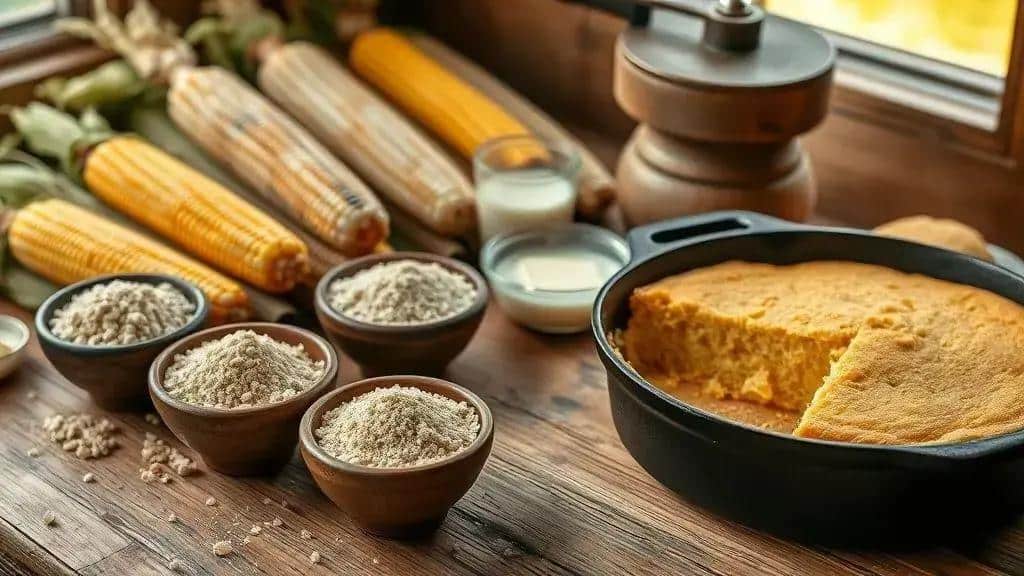
Cornbread has deep roots. Indigenous peoples of the Americas have cultivated maize for thousands of years, and breads made from it spread as a practical way to use the crop.
Origins and development
Modern cornbread draws on Indigenous techniques for drying and grinding maize and on recipes from the colonial period. In the United States it became a staple of the Midwest and the South, with variations reflecting local ingredients.
Types of maize and cornmeal
Maize comes in several colours and textures. In cornbread, the kind of cornmeal you use makes a noticeable difference.
- Yellow maize has a mildly sweet flavour and gives cornbread its familiar texture.
- White maize has a milder flavour and makes a delicate cornbread.
- Blue maize lends colour and a slightly nutty flavour. It is used in some artisan versions.
- Medium-ground cornmeal gives the traditional grainy crumb. Finely ground cornmeal gives a smoother batter.
A brief look at nutrition
Maize provides carbohydrates, fibre, B vitamins and minerals such as magnesium. The energy content of the finished bread depends in part on how much butter and cheese you add.
Cornbread traditions
- In many areas, cornbread is a symbol of hospitality and appears at celebrations and community suppers.
- Families pass recipes down through the generations, with local variations ranging from sweeter loaves to denser or cheese-flecked versions.
- In the Midwest, cornbread often accompanies chilli or stewed beans. Both are classic pairings.
Ingredient tips
The grind of the cornmeal and the freshness of the sweetcorn affect the flavour. Buy good-quality cornmeal and store it in a sealed container. For extra flavour, fold fresh or drained tinned sweetcorn into the batter.
A few facts to remember
- Dried maize can keep for months when stored properly.
- Buttermilk makes cornbread more tender. Use milk mixed with vinegar if necessary.
- A cast-iron pan gives a particularly crisp crust and is traditional in Midwestern recipes.
The finished cornbread
Midwestern cornbread is straightforward to make. Choose your cornmeal, measure the liquids carefully and check the centre as it bakes for a crisp crust and a soft crumb.
Try gluten-free, vegan or cheese variations and adjust the sweetness to suit your taste. Small changes make a difference. A cast-iron pan is a good choice for a crisp crust.
Thank you for following the recipe. Follow us on social media for more practical tips and visit the Mestre das Receitas blog for more ideas for your kitchen.
Frequently asked questions about Midwestern cornbread
Which cornmeal works best for cornbread?
Choose medium-ground cornmeal for the characteristic grainy crumb. Finely ground cornmeal makes a smoother, less grainy batter.
How do I make gluten-free Midwestern cornbread?
Replace the plain flour with 1 cup gluten-free flour blend and add 1 teaspoon xanthan gum, taking account of any gum already in the blend. Rest the batter for 5–10 minutes before baking.
Can I make this recipe vegan?
Yes. Replace the 2 eggs with 2 tablespoons ground flaxseed mixed with 6 tablespoons water and left for 5 minutes. Use plant milk soured with 1 tablespoon vinegar instead of buttermilk, and oil instead of butter. Leave out the dairy cheese and bacon fat.
Why is my cornbread dry and how can I prevent it?
Too much flour or too long in the oven can dry it out. Measure the ingredients carefully, avoid overmixing and check the centre with a skewer. Take it out as soon as the skewer comes out with a few moist crumbs.
How should I store and reheat it?
Keep plain, cooled cornbread in a sealed container for up to 2 days at room temperature or up to 5 days in the fridge. Refrigerate the cheese version. Reheat in the oven or a frying pan to restore the crust. The microwave tends to soften it.