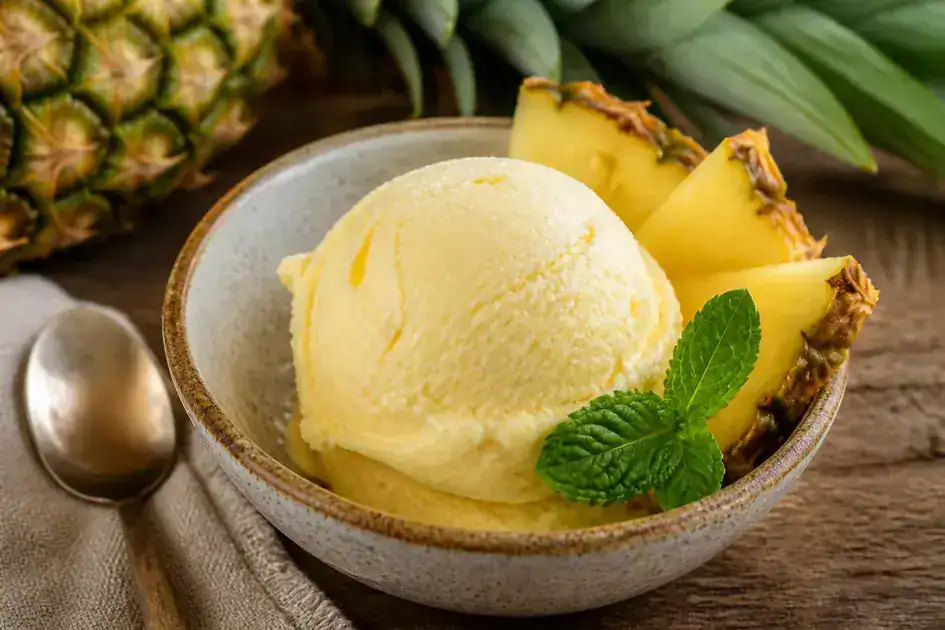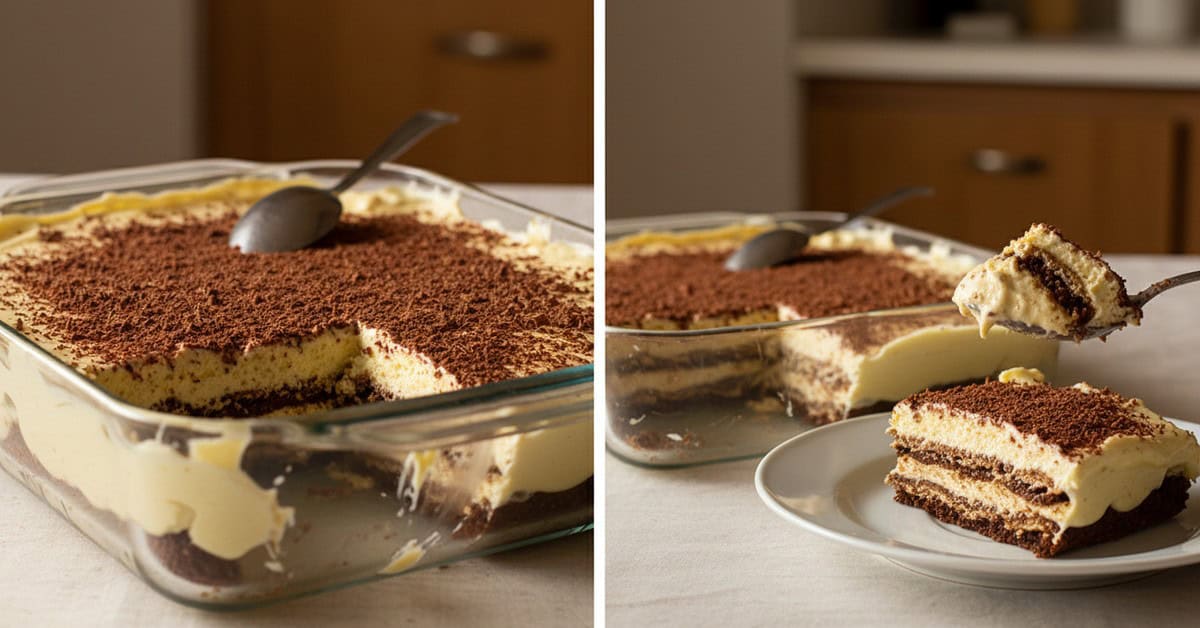

Pineapple pavê is a sweet, refreshing Brazilian dessert made with layers of biscuits dipped in pineapple juice, a creamy condensed milk filling and chunks of fresh pineapple.
Who doesn’t love a dessert that’s both sweet and refreshing? Pineapple pavê with condensed milk is one of those treats that always goes down well. Fancy making this crowd-pleasing classic? Let’s give this simple, delicious recipe a go together!
Ingredients for pineapple pavê
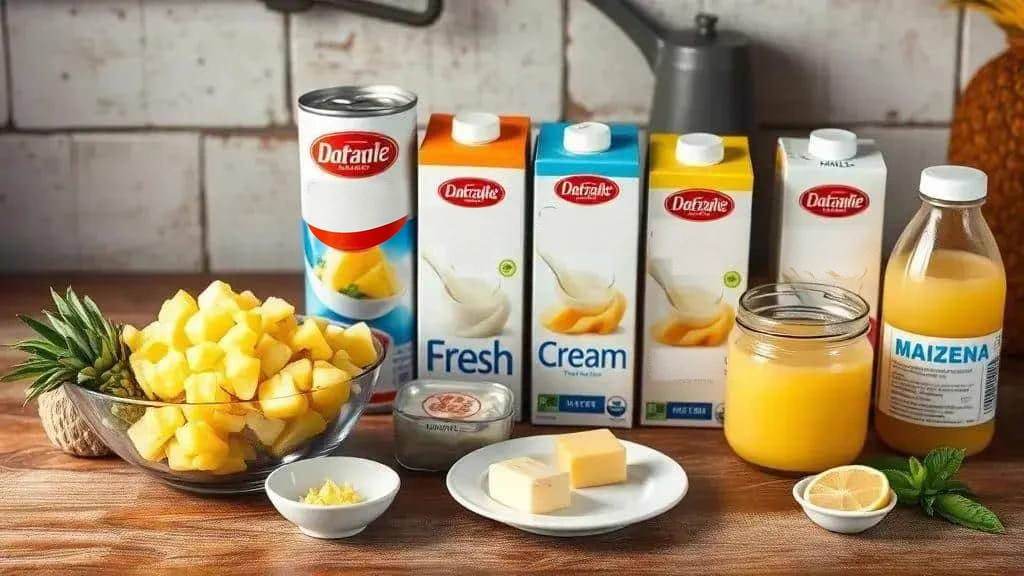
Here’s what you’ll need to make a delicious pineapple pavê.
- 1 medium pineapple, peeled and cut into small cubes, to give the dessert a fresh flavour and juicy texture.
- 2 tins of condensed milk give the dessert its characteristic sweetness and creaminess.
- 2 cartons of cream give the filling a smooth, velvety texture.
- 1 packet of cornflour biscuits (200 g) to layer with the filling and pineapple. The biscuits add a little crunch.
- 1 cup of pineapple juice for dipping the biscuits so they take on the flavour of the fruit.
- 1 tablespoon of butter to enrich the filling.
- Lime zest or mint to garnish (optional), for fragrance and a touch of colour.
How to make pineapple pavê with condensed milk
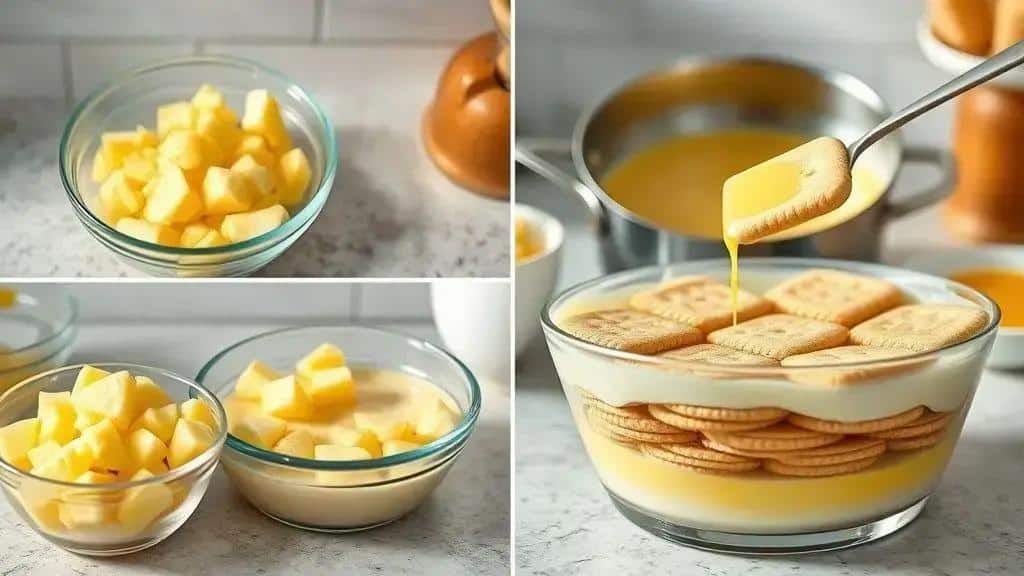
- Prepare the pineapple. Peel it, cut it into small cubes and set them aside for layering.
- Make the filling. Combine the 2 tins of condensed milk, 2 cartons of cream and 1 tablespoon of butter in a saucepan. Cook over a medium heat, stirring constantly, until smooth and slightly thickened. Set aside to cool.
- Dip the biscuits. Pour 1 cup of pineapple juice into a shallow bowl and briefly dip the cornflour biscuits one at a time. Don’t let them soak through or the pavê will be too soft.
- Assemble the pavê. Arrange a layer of dipped biscuits in an ovenproof dish, spread some of the filling over them, then add a layer of pineapple pieces. Repeat until you’ve used all the ingredients, finishing with a layer of filling.
- Garnish and chill. Decorate with lime zest or mint leaves if you like. Cover the dish with cling film and refrigerate for at least 4 hours to give the pavê time to firm up and absorb the flavours.
How to choose a good pineapple
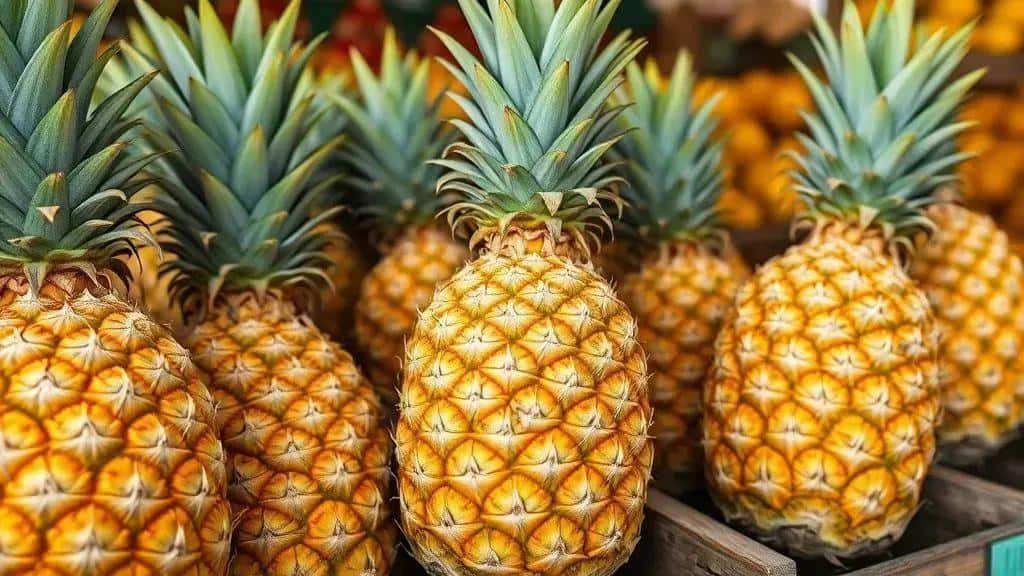
The pineapple you choose makes all the difference to the flavour and texture of your pavê. Here’s what to look for when buying one.
- Check the skin. Look for a pineapple with firm, golden-yellow skin, a sign that it’s ripe. Avoid fruit with dark patches or soft spots, which suggest it’s past its best.
- Smell the base. A pleasant, sweet scent is a sign of sweet, ripe fruit. Avoid pineapples with a sour or overpowering smell.
- Check the leaves. Firm, fresh green leaves are a sign of freshness. Dry or yellowing leaves can mean the fruit is past its best.
- Feel the weight. A pineapple that feels heavy for its size is usually juicier and more flavoursome.
Substitutions and extra tips
If you prefer, you can use pineapple in natural syrup in place of fresh pineapple. Just take care not to add too much sugar to the recipe.
Organic pineapples may have a more intense flavour and are grown with fewer pesticides.
Fresh twists on pineapple pavê

Try one of these variations to give your pineapple pavê a fresh twist.
- Pineapple and coconut pavê. Add grated coconut to the creamy filling or use coconut milk for an extra tropical note.
- Pineapple and white chocolate pavê. Stir melted white chocolate into the condensed milk filling for a creamier texture and a richer, sweeter flavour.
- Pineapple pavê with chocolate biscuits. Swap the cornflour biscuits for chocolate biscuits so their cocoa flavour contrasts with the pineapple.
- Pineapple and mint pavê. Scatter chopped mint leaves between the layers or garnish with fresh mint for its cool, fragrant flavour.
- Pineapple and passion fruit pavê. Combine the pineapple with passion fruit juice or pulp in the filling. Its sharp, citrusy flavour balances the sweetness.
Tips for trying the variations
When trying these variations, adjust the amount of sugar so the dessert doesn’t become too sweet. Use fresh, good-quality ingredients for the best flavour.
Feel free to try your own combinations using your favourite fruits and ingredients!
Facts about pineapple in Brazilian cooking
Pineapple is a popular fruit in Brazilian cooking. Here are a few facts that illustrate its importance in the country’s cuisine.
- Origins. The Brazilian Portuguese word ‘abacaxi’ comes from an Indigenous Brazilian language. The fruit itself is native to South America, particularly the region that now includes Brazil and Paraguay.
- Uses in the kitchen. Pineapple features in juices, desserts, savoury dishes, marinades and even alcoholic drinks such as the pineapple caipirinha.
- Pineapple flesh contains vitamin C and an enzyme called bromelain. In this recipe, the pineapple adds tartness, sweetness and juiciness.
- Production. Brazil is among the world’s largest pineapple producers, with São Paulo, Minas Gerais and Bahia among its notable pineapple-growing states.
Pineapple in Brazilian culture
In several Brazilian cultures, pineapple is a symbol of hospitality and is often used at parties and events to welcome guests.
In traditional dishes across Brazil, pineapple pairs with local ingredients to create distinctive, flavourful regional recipes.
Final thoughts
Pineapple pavê is a refreshing, flavourful dessert that’s easy to make and suits all sorts of occasions. With these tips and variations, you can put your own spin on it to suit everyone’s tastes.
We hope you’ve enjoyed the recipe and feel inspired to make this delicious classic at home. Remember to follow us on social media and keep up with all the latest news on the Mestre das Receitas blog for more delicious recipes!
Thanks for visiting and see you next time!
Frequently asked questions about pineapple pavê
What sort of pineapple works best in pavê?
Choose a ripe pineapple with yellowish skin, a sweet scent and fresh green leaves for the best flavour and juiciness.
Can I use another type of biscuit instead of cornflour biscuits?
Yes, you can use chocolate biscuits or sponge fingers to vary the flavour and texture of the pavê.
How long should I chill the pavê?
Ideally, leave the pavê in the fridge for at least 4 hours so it firms up and the flavours have time to mingle.
Can I make pineapple pavê without condensed milk?
Yes, you can replace the condensed milk with cream sweetened with sugar or another sweetener, though the flavour will be different.
How can I make the pavê creamier?
Adding fresh cream or stirring white chocolate into the filling can make the dessert creamier and give it a richer flavour.