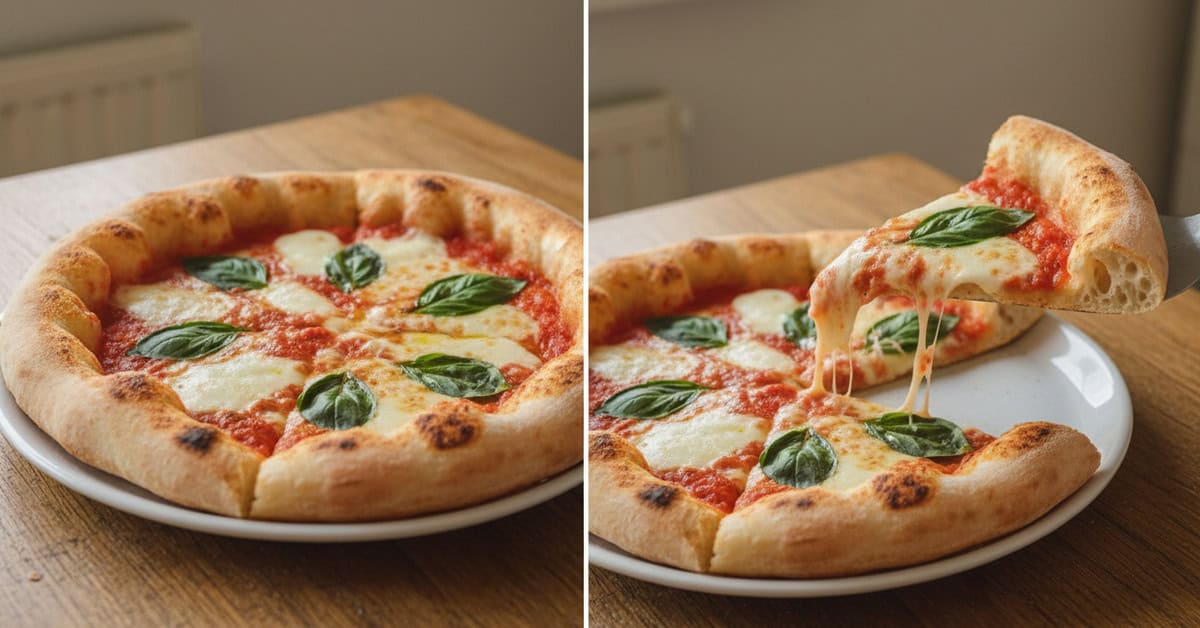

Neapolitan pizza is a delicious speciality from Naples, Italy, with a thin base topped with fresh tomato sauce, buffalo mozzarella and basil. The art of making it is on UNESCO’s list of Intangible Cultural Heritage of Humanity. The pizza owes its character to the simplicity and quality of its ingredients.
Neapolitan pizza is a gem of Italian cooking, known for its authentic flavour and simplicity. Its light, crisp base and fresh toppings let the quality of the ingredients shine through. Read on to discover what goes into a delicious Neapolitan pizza, how to make it properly and a few facts that help explain why it’s so special.
Neapolitan pizza ingredients
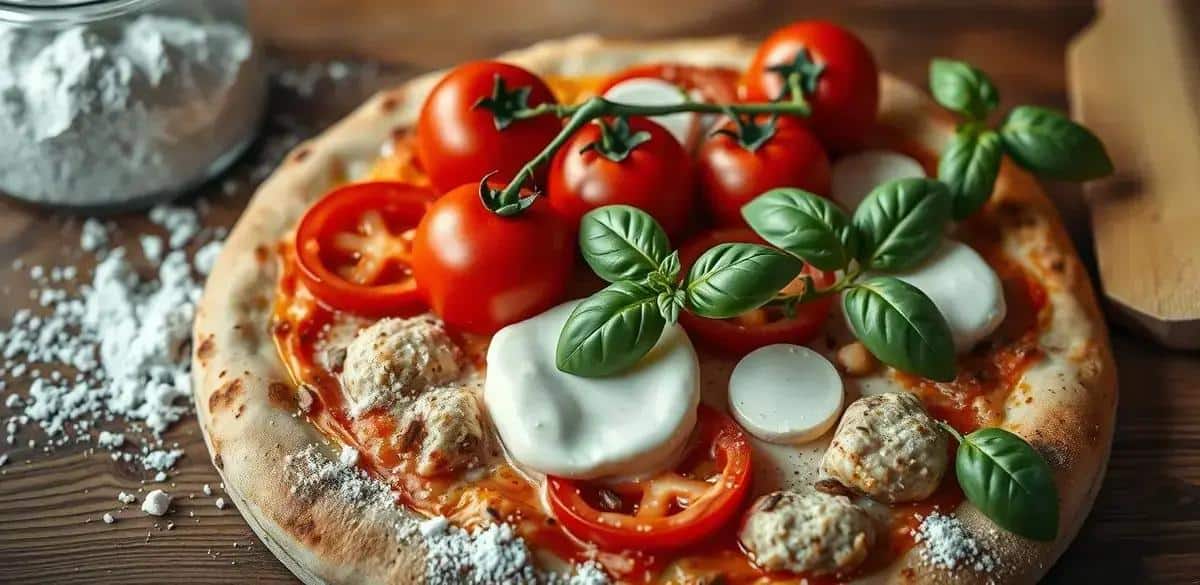
Choosing the right ingredients makes all the difference to a Neapolitan pizza. Here’s what you’ll need.
For the dough
- 500g type 00 wheat flour, finely milled and ideal for pizza
- 325ml lukewarm water
- 10g salt
- 2g dried yeast
- 2 tablespoons olive oil
For the topping
- 400g peeled tomatoes, preferably San Marzano
- 250g buffalo mozzarella, as fresh as possible
- Fresh basil leaves
- A drizzle of extra virgin olive oil
- A few pinches of salt, to taste
These ingredients are the foundation of Neapolitan pizza. Their quality and freshness make all the difference to the finished dish.
How to make authentic Neapolitan pizza

Making Neapolitan pizza takes a little attention to detail. Here’s how to make it step by step.
1. Make the dough
Mix the flour and salt in a large bowl. In a separate bowl, dissolve the yeast in the lukewarm water. Pour the yeast mixture into the flour and mix until a dough forms. Add the olive oil.
2. Knead the dough
Turn the dough out onto a clean, floured surface. Knead for about 10 minutes until smooth and elastic. Shape into a ball and place in a lightly oiled bowl. Cover with a cloth and leave to rest for 1 hour.
3. Make the tomato sauce
While the dough rests, make the sauce. Crush the peeled tomatoes with your hands until smooth. Season with salt to taste and, if you like, add a drizzle of olive oil for extra flavour.
4. Shape and top the pizza
Once the dough has rested, preheat the oven to 250°C. Divide the dough into individual portions. On a floured surface, stretch each portion into a round. Spread the tomato sauce over each base, add the buffalo mozzarella and finish with the basil leaves.
5. Bake the pizza
Place the pizza on a preheated pizza stone or a baking tray. Bake for 8 to 10 minutes or until the rim is golden and crisp.
6. Finish and serve
Take the pizza out of the oven and drizzle with extra virgin olive oil. Leave to cool for a few minutes before slicing and serving.
Facts about Neapolitan pizza

Neapolitan pizza is much more than a delicious meal. Here are a few things you might not know about it.
1. Its origins in Naples
Neapolitan pizza has its roots in the Italian city of Naples, where it originated in the late XVIII century. What began as a local tradition has spread around the world.
2. Rules on ingredients
For a pizza to qualify as Neapolitan, the recipe must follow specific rules governing the ingredients and how it is made. These standards safeguard its quality and authenticity.
3. Named after its home city
Neapolitan pizza takes its name from Naples, where it was first made. It is a symbol of both Neapolitan and Italian culture.
4. The Margherita
One of the best-known varieties of Neapolitan pizza is the Margherita, created in 1889 in honour of Queen Margherita of Italy. Red tomatoes, white mozzarella and green basil echo the colours of the Italian flag.
5. The traditional baking method
Neapolitan pizza is traditionally baked in a clay oven at over 400°C, giving it a light crust with a slight char.
6. Cultural significance
In 2017, UNESCO recognised the art of making Neapolitan pizza as part of the Intangible Cultural Heritage of Humanity, highlighting the importance of this culinary tradition.
7. Worldwide popularity
Today, Neapolitan pizza is famous the world over. The versions served in different parts of the world vary, but all retain the pizza’s Italian character.
Tips for perfect pizza dough
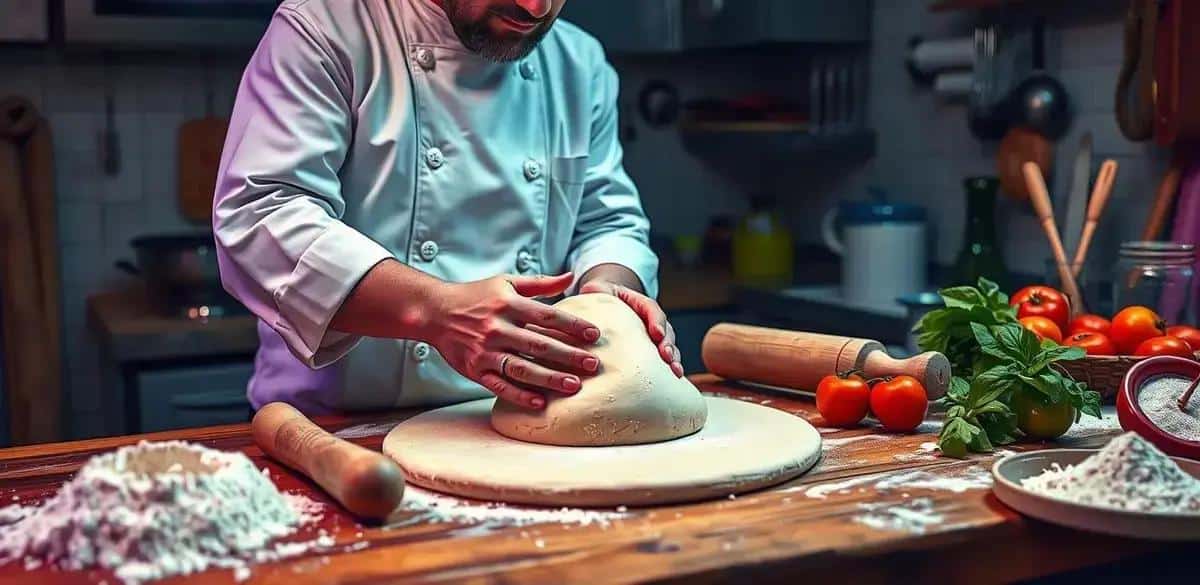
For a Neapolitan pizza base with just the right texture, keep these tips in mind.
1. Choose good-quality flour
Choose type 00 wheat flour. It’s finely milled and well suited to pizza dough, giving it better elasticity and texture.
2. Knead thoroughly
Kneading is essential. Knead the dough for at least 10 minutes until smooth and elastic. This helps develop the gluten.
3. Give the dough time to rest
Cover the dough with a cloth and leave it in a warm place for at least 1 hour. This allows the gluten to relax and makes the dough easier to handle.
4. Check the water temperature
Use lukewarm water to dissolve the yeast. The ideal temperature is between 30°C and 40°C to activate the yeast and help the dough rise well.
5. Go easy on the olive oil
Olive oil works well in pizza dough, but use it sparingly. One or two tablespoons are enough to improve the texture without making the dough greasy.
6. Check whether the dough is ready to shape
Press a small piece of dough and see if it springs back quickly. If it does, it’s ready to shape.
7. Shape the base and leave a thicker rim
Gently stretch the dough, taking care to keep the edges from getting too thin. A slightly thicker rim gives you a light, airy crust.
Pizza toppings to try

Toppings give a pizza its flavour and personality. Here are a few combinations to try.
1. Classic Margherita
Tomato sauce, buffalo mozzarella and fresh basil leaves are a classic combination. Finish with a pinch of salt and a drizzle of extra virgin olive oil.
2. Pepperoni
If you like a little heat, try slices of crisp pepperoni. Their spicy flavour goes beautifully with the creamy mozzarella.
3. Vegetarian
Try mushrooms, peppers, onions, olives and artichokes on a vegetarian pizza. Together they give the topping plenty of colour and a variety of flavours.
4. Four cheese
For a rich topping, combine cheeses such as mozzarella, Gorgonzola, Parmesan and ricotta. It’s perfect for cheese lovers.
5. Seafood
Try topping your pizza with squid, prawns and mussels. Pairing the seafood with a little olive oil and garlic gives the pizza a distinctive, refined flavour.
6. Portuguese-style
Ham, eggs and Portuguese chouriço sausage make a crowd-pleasing combination. It’s a popular choice in many pizzerias.
7. Sweet
Sweet toppings such as Nutella and strawberries or banana and cinnamon turn a pizza into a delicious dessert. It’s a different way to round off a meal.
How Neapolitan pizza has shaped cooking

Neapolitan pizza has had a major influence on cooking around the world, shaping local food traditions as well as international cuisine. Here are some of the ways it has made its mark.
1. From Naples to the world
Neapolitan pizza began in Naples and won people over around the world. This simple dish has become the starting point for countless variations across different cultures.
2. A greater appreciation of fresh ingredients
Neapolitan pizza shows the value of using fresh, good-quality ingredients. Chefs around the world have embraced this approach to bring out the flavours in their own dishes.
3. The rise of new food movements
The success of Neapolitan pizza has inspired food movements such as artisan pizza, with its emphasis on making pizza by hand using traditional methods. This has encouraged a renewed appreciation for food made by hand and with care.
4. Pizza’s place in fine dining
Neapolitan pizza’s reputation now extends well beyond fast food. Many acclaimed restaurants feature it on their menus as a speciality worthy of an elegant dinner.
5. Cultural exchange
Neapolitan pizza brings Italian traditions into contact with cooking practices around the world. This exchange has enriched food culture in many countries.
6. Tastings and pizza-making classes
Preparing and serving Neapolitan pizza has become an experience in its own right, with pizzerias hosting tastings and teaching pizza-making classes.
7. Inspiration for new recipes
The simple, authentic flavours of Neapolitan pizza have inspired chefs to create new recipes and flavour combinations, widening the choice of toppings and bases.
The history of Neapolitan pizza and its name
The history of Neapolitan pizza goes back to the XVIII century, when people began making this simple dish on the streets of Naples, Italy. In its early days it was popular with workers and was made with basic ingredients available to people on low incomes.
1. The roots of pizza
Early references to pizza appear in old texts from Naples, where people topped flatbreads with ingredients such as tomatoes and cheese. Eating flatbread this way soon became popular with locals.
2. The name ‘pizza’
The word ‘pizza’ comes from the Latin ‘pinsa’, meaning ‘flattened’. The term evolved over time and became established in Naples as the name for this type of topped flatbread.
3. Pizza Margherita
In 1889, pizza maker Raffaele Esposito created the Margherita in honour of Queen Margherita of Italy. He chose ingredients to match the colours of the Italian flag, using red tomatoes, white mozzarella and green basil.
4. International recognition
Over time, Neapolitan pizza became popular beyond Italy, particularly in the United States. Different cultures adapted the traditional style and often reinterpreted it, while retaining its emphasis on fresh, artisan ingredients.
5. Cultural heritage
In 2017, UNESCO recognised the art of making Neapolitan pizza as part of the Intangible Cultural Heritage of Humanity. The recognition highlights the cultural and historical importance of a dish that symbolises Italian cooking.
Thanks for joining us!
We hope you’ve enjoyed learning all about Neapolitan pizza and feel ready to make it at home. Exploring food is a lovely way to celebrate other cultures and traditions, and pizza is a perfect example!
If you’ve enjoyed this recipe and would like more, follow us on social media! Keep up with the latest news and cooking tips from our Mestre das Receitas food blog. Join our community and explore a world of flavour!
Thank you for visiting. We hope to see you again soon!
Frequently asked questions about Neapolitan pizza
Where did Neapolitan pizza originate?
Neapolitan pizza originated in Naples, Italy, in the XVIII century as a popular meal for workers.
What are the traditional ingredients in Neapolitan pizza?
The traditional ingredients include type 00 wheat flour, water, salt, yeast, tomato sauce, buffalo mozzarella, fresh basil and olive oil.
How is Neapolitan pizza baked?
Neapolitan pizza is usually baked in a wood-fired oven at a very high temperature, above 400°C, giving it a light crust with a slight char.
What makes Neapolitan pizza distinctive?
Neapolitan pizza owes its character to fresh, high-quality ingredients and the traditional way it is made by hand.
How does Neapolitan pizza differ from other styles?
Neapolitan pizza usually has a thinner base, a light crust and simple toppings. Other styles may have thicker edges and a wider range of toppings.
What is a Margherita pizza?
The Margherita is a well-known variety of Neapolitan pizza with tomato sauce, mozzarella, basil and a touch of olive oil. Its colours represent the Italian flag.