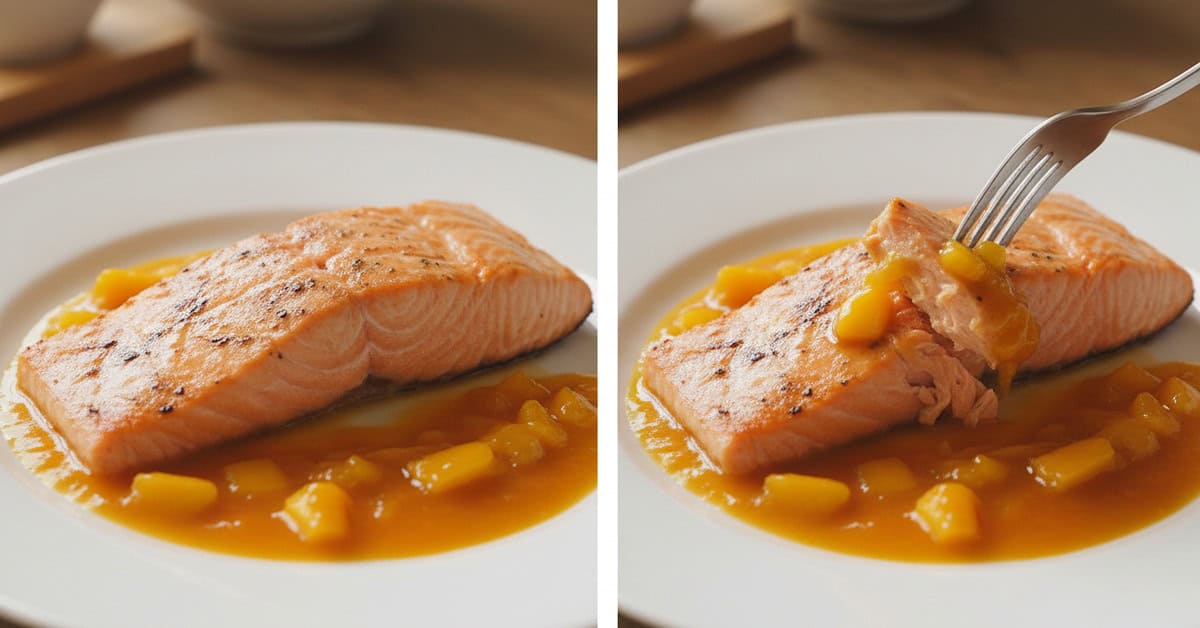

Juicy grilled salmon and fresh, zesty mango salsa make a quick dish with a balance of flavours and textures. Rich in omega-3, it’s easy to vary and goes well with jasmine rice, quinoa or grilled vegetables.
Juicy grilled salmon with a vibrant mango salsa is a dinner you can always count on. Want to learn a few chef’s techniques for a quick dish that will impress everyone at the table? I’ll show you how to make it step by step.
Ingredients for grilled salmon with mango salsa
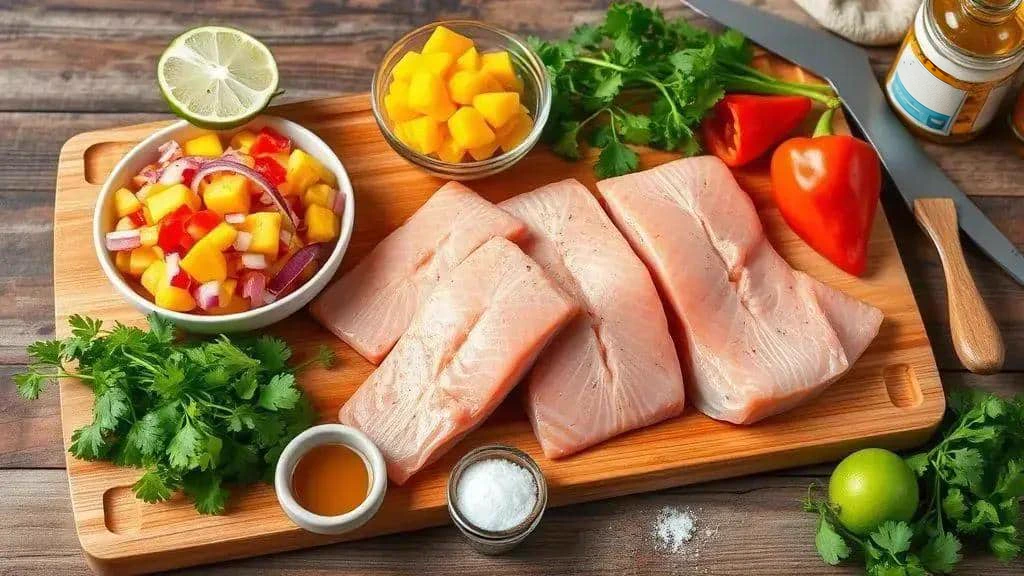
To make grilled salmon with mango salsa for 4, you’ll need the following ingredients.
- 4 salmon fillets (170–200 g each), skin on or off, for grilling. Choose firm, brightly coloured fillets.
- 1 tablespoon olive oil for brushing the fillets. Avocado oil also works.
- Coarse salt and ground black pepper, to taste, for seasoning the salmon before grilling.
- 2 ripe mangoes, peeled and diced (about 2 cups). You can also use pineapple or firm peaches.
- 1/2 red onion, finely chopped. For a milder flavour, use white onion or pickled red onion.
- 1 red pepper, deseeded and diced. Start with half in the salsa and set the rest aside to add to taste. You can also use a yellow or orange pepper.
- 1 small jalapeño, deseeded and chopped (optional), for a little heat. You can also use a Brazilian dedo-de-moça chilli.
- Juice of 2 lemons or limes. Always use freshly squeezed juice to give the salsa a bright, sharp flavour.
- 1/4 cup fresh coriander, chopped. Use parsley for a milder flavour.
- 1 tablespoon honey or agave syrup (optional), to balance the acidity and bring out the sweetness of the mango.
- Salt and pepper to taste.
- Lemon slices, to garnish and serve.
- Salad leaves or jasmine rice, to serve. Choose lettuce, rocket or cooked white rice.
Portions and substitutions
These quantities serve 4. Scale them up or down to suit the number of people at the table. For a vegetarian or vegan version, replace the salmon with grilled firm tofu or a smoked plant-based fish alternative. If the mango isn’t very sweet, add 1 tablespoon of honey or agave syrup to the salsa.
How to make grilled salmon with mango salsa step by step
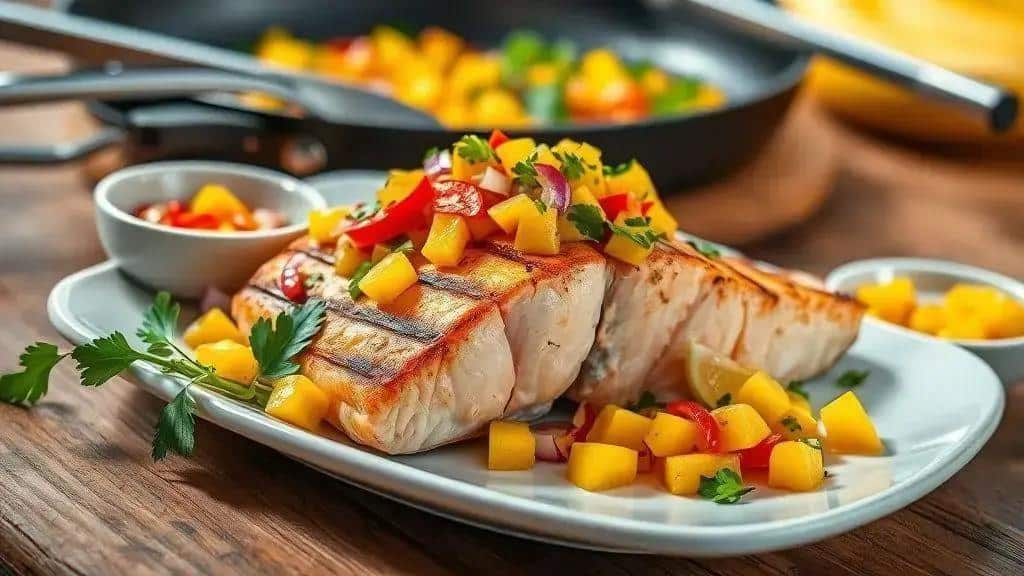
- Get the ingredients ready. Take the salmon out of the fridge 15 minutes before cooking and pat it dry with kitchen paper. Season with coarse salt and freshly ground black pepper, then brush lightly with olive or avocado oil to prevent sticking.
- To make the mango salsa, combine the diced mango, 1/2 a red onion (finely chopped), 1/2 a red pepper (diced), 1 deseeded and chopped jalapeño (optional), the juice of 2 lemons, 1/4 cup of chopped coriander, 1 tablespoon of honey or agave syrup and a pinch of salt in a bowl. Taste and adjust the lemon juice and salt, then add more of the reserved red pepper if you like. Chill for 10–15 minutes.
- Preheat the barbecue to medium-high or heat a cast-iron frying pan over a medium heat (about 200–230°C). Lightly oil the grate or brush the pan with oil.
- Grill the salmon skin-side down. Place the fillets skin-side down on the barbecue or in the frying pan and press gently for 10 seconds so the skin makes even contact with the cooking surface. Cook undisturbed for 4–6 minutes, depending on thickness (fillets 2–3 cm thick take longer).
- Once the underside is golden, turn the fillets once with a fish slice and cook for another 2–4 minutes, depending on their thickness. Before taking them off the heat, check with a thermometer that the centre of the thickest part has reached 63°C.
- For an oven finish, sear the fillets in a frying pan for 2 minutes on each side. Finish in an oven preheated to 200°C for about 4–6 minutes, or under the grill, until the centre reaches 63°C.
- Take the fillets off the heat and leave them to rest for 3–5 minutes before serving so the juices redistribute and the salmon stays succulent.
- Place each fillet skin-side down on a plate, or remove the skin first if you prefer. Spoon 2–3 spoonfuls of mango salsa over the centre of each fillet or serve it alongside. Finish with lemon slices and coriander leaves for colour.
- Serve with jasmine rice, a green salad or quinoa. For a main course, allow 1 fillet (170–200 g) per person.
- Mango salsa keeps in the fridge for up to 48 hours. Avoid freezing it. Grilled salmon keeps its texture well for 1–2 days in the fridge. Reheat in a low oven to keep it moist.
Quick tips
- Check the thickness of the fillets. Thicker pieces need longer, so use a thermometer to check when they’re ready.
- If you don’t have a barbecue, a cast-iron frying pan works well. Leaving the skin on helps protect the fish from direct heat.
- For a milder flavour, swap the jalapeño for a dedo-de-moça chilli. Use agave syrup in place of honey for a vegan salsa.
Grilling techniques and tips for perfectly cooked salmon
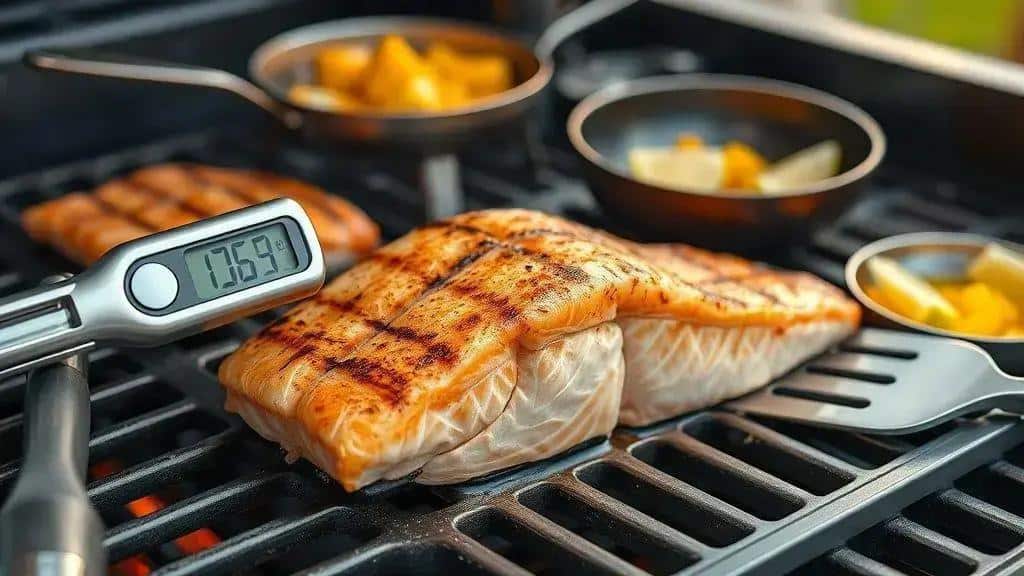
When grilling salmon, the heat, the timing and the way you handle the fish all make a difference.
- Preheat the barbecue or frying pan for 8–10 minutes until it reaches 200–230°C so the fish sears quickly.
- Leave the skin on to protect the fillet from direct heat and make it easier to turn in one piece.
- Lightly brush the salmon and barbecue grate with olive oil to prevent sticking. Oils with a high smoke point, such as avocado or rapeseed oil, are preferable.
- Let a crust form, then turn the fillet just once. Turning it repeatedly can break it up and dry it out.
- Sauces containing honey or sugar burn quickly, so brush on any glaze during the last 1–2 minutes.
Equipment and temperatures
A charcoal barbecue, gas barbecue or cast-iron frying pan will all work well if you control the temperature. Sear the salmon over a medium-high heat (200–230°C). If finishing it in the oven, preheat to 200°C.
- A charcoal barbecue gives the fish a smoky aroma that suits West Coast recipes.
- A gas barbecue lets you adjust the heat quickly.
- A cast-iron frying pan is ideal for searing the fish and finishing it in the oven.
Cooking times and how to tell when the salmon is ready
For fillets 2–3 cm thick, grill skin-side down for about 4–6 minutes, then turn and cook for another 2–4 minutes. Adjust the cooking time to suit the thickness of the fillets. Take the salmon off the heat when the centre reaches 63°C and leave it to rest for 3–5 minutes.
- Thin fillet (≤2 cm): 3–4 minutes on each side.
- Medium fillet (2–3 cm): 4–6 minutes on the skin side and 2–4 minutes on the other side.
- Thick fillet (≥3 cm): sear, then finish in the oven for 4–6 minutes at 200°C.
How to check the salmon is cooked
Insert a thermometer into the centre of the thickest part of the fillet, keeping the tip clear of the grate. Check that it reads 63°C.
Turning and finishing the salmon
- Use a wide fish slice to support the whole fillet as you turn it so it stays in one piece.
- Let the salmon rest before serving so the juices can redistribute. Don’t slice it straight away.
- Spoon the cold mango salsa over the hot salmon just before serving for a contrast in texture and temperature.
Common mistakes
- Grilling over too high a heat and burning the outside before the centre is cooked.
- Turning the fish repeatedly and drying it out.
- Adding butter or honey too early and letting it burn.
Variations on grilled salmon with mango salsa (marinades and side dishes)
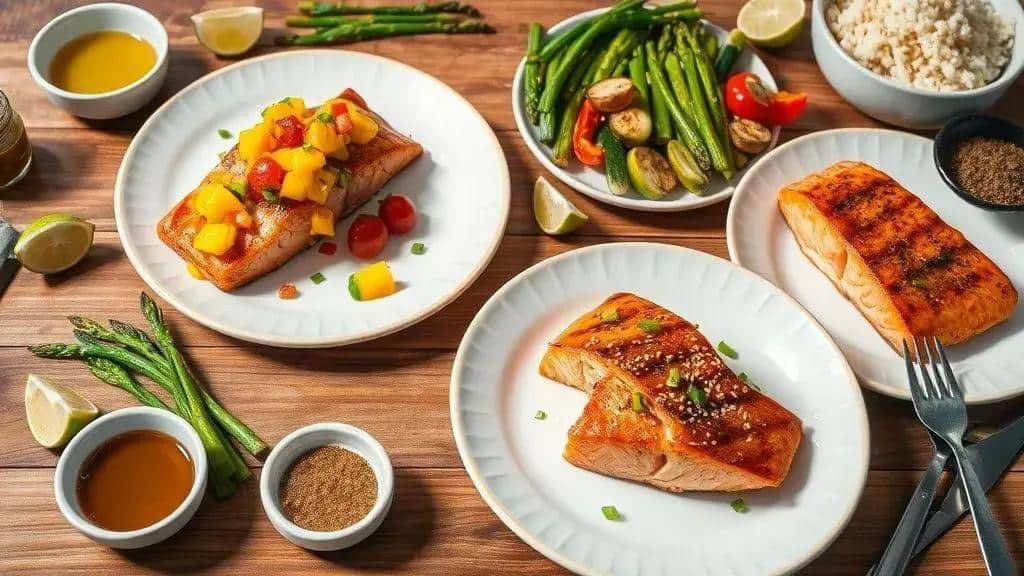
Classic marinades
- Citrus marinade
- Juice of 1 lemon
- 2 tablespoons olive oil
- 1 garlic clove, finely chopped
- 1 teaspoon grated lemon zest
- Salt and pepper to taste
Marinate for 15–30 minutes to bring out the fresh citrus flavour without letting the lemon juice ‘cook’ the fish.
- Quick teriyaki marinade
- 3 tablespoons soy sauce
- 1 tablespoon honey
- 1 tablespoon sesame oil
- 1 teaspoon grated ginger
Marinate for 20 minutes. Brush with some reserved marinade during the last few minutes of grilling for a glossy finish.
- Miso and lemon marinade
- 1 tablespoon white miso paste
- 1 tablespoon honey or agave syrup
- 2 tablespoons lemon juice
- 1 tablespoon water, to thin
Spread over the salmon and leave for 10–15 minutes for a savoury umami flavour without too much salt.
Dry rubs and seasonings
- Herb rub: mix 1 teaspoon paprika, 1/2 teaspoon ground cumin, 1 teaspoon salt and some pepper. Rub over the salmon before grilling.
- Sweet citrus rub: mix brown sugar with orange zest and coarse salt. Apply during the last 1–2 minutes for a caramelised crust.
Side dishes to serve with salmon
- Jasmine rice or quinoa is light and soaks up the juices from the fish.
- A green salad with lemon vinaigrette adds freshness and a little sharpness.
- Serve grilled vegetables such as asparagus, courgettes and peppers alongside the salmon for a mix of textures.
- Sweet potato mash makes a sweeter side that goes well with the mango salsa.
Regional variations
- For a Californian West Coast version, serve grilled salmon with a hint of smoke and a mango and avocado salsa.
- For an Asian-inspired version, glaze the salmon with teriyaki and finish with toasted sesame seeds and chopped spring onions.
- For a Mediterranean twist, marinate the salmon in lemon juice, olive oil and fines herbes, then serve with couscous and roasted tomatoes.
Options and substitutions
- If you have no jalapeño, use black pepper or a dedo-de-moça chilli for less heat.
- For a fish-free version, press firm tofu, leave it in one of the marinades above, then grill it.
- For a gluten-free version, use gluten-free tamari in place of soy sauce in the teriyaki marinade.
Quick tips for adapting the recipe
- Adjust the honey or agave syrup and lemon juice to balance sweetness and acidity so the salsa complements the salmon without overpowering it.
- Finish with toasted almonds or cashews for a little crunch.
- Follow the same grilling temperatures and timings. Changing the seasonings makes little difference to the cooking time.
Serving suggestions, drinks and side dishes
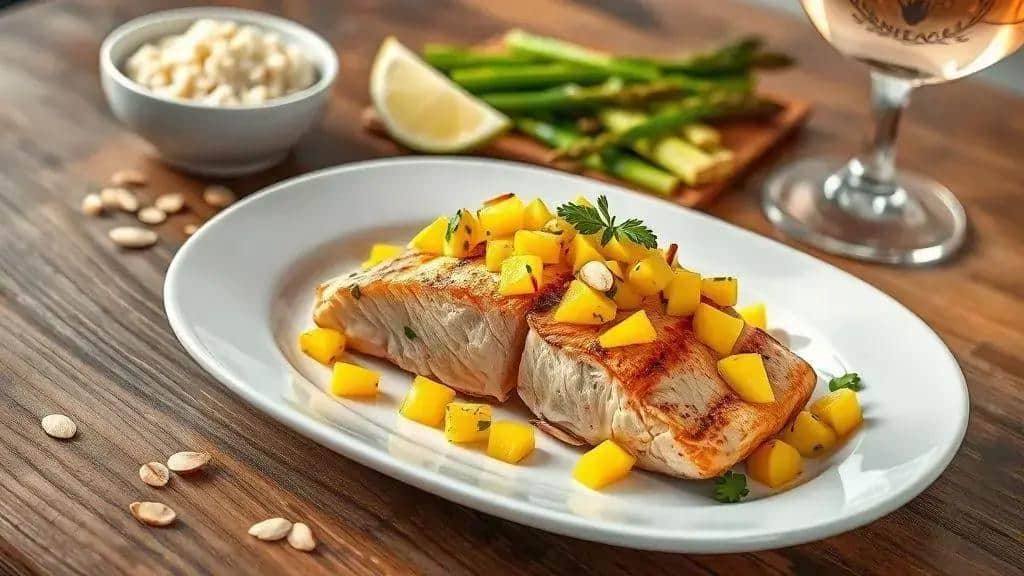
Serve grilled salmon and mango salsa with something crisp, something fresh and a little acidity to balance the sweetness of the mango.
Side dishes that work well
- Light, fragrant jasmine or basmati rice soaks up the juices from the fish without overpowering the salsa.
- Dress quinoa with lemon juice and olive oil for a nutritious, fluffy side dish.
- Grilled vegetables such as asparagus, courgettes and peppers complement the salmon and add a hint of smoke.
- For a crisp green salad, dress rocket and mixed leaves with citrus vinaigrette to cut through the richness of the fish.
- Sweet potato mash has a gentle sweetness that works well with the mango.
- Scatter toasted almonds or chopped cashews over the dish for crunch.
Drinks pairings
- Try a Sauvignon Blanc or Verdejo. The crisp acidity of these white wines brings out the flavour of the mango salsa.
- Dry rosé suits outdoor meals and complements the fruity flavours.
- Light beers such as a pilsner or pale lager refresh the palate between bites.
- For a citrus cocktail, try a margarita or a gin and tonic with a squeeze of lime to complement the tropical flavours.
- For a light, refreshing alcohol-free drink, try iced hibiscus tea with lemon or sparkling water with lemon slices.
Plating and presentation
- Serve the salmon hot with the cold salsa spooned over the top for a contrast in temperature.
- For a main course, allow 170–200 g of salmon fillet per person.
- Finish with a few drops of extra virgin olive oil, some lemon zest and fresh coriander for colour and aroma.
- Use a pale plate to show off the colours and a wide fish slice to serve the fillet in one piece.
Quick serving ideas for different occasions
- For a casual dinner, serve with jasmine rice, a simple salad and a cold beer.
- For a summer meal or celebration, try quinoa salad, grilled vegetables and well-chilled rosé.
- For a light lunch, serve a smaller fillet with mixed leaves and iced tea with lemon.
Salmon and mango facts and nutritional benefits
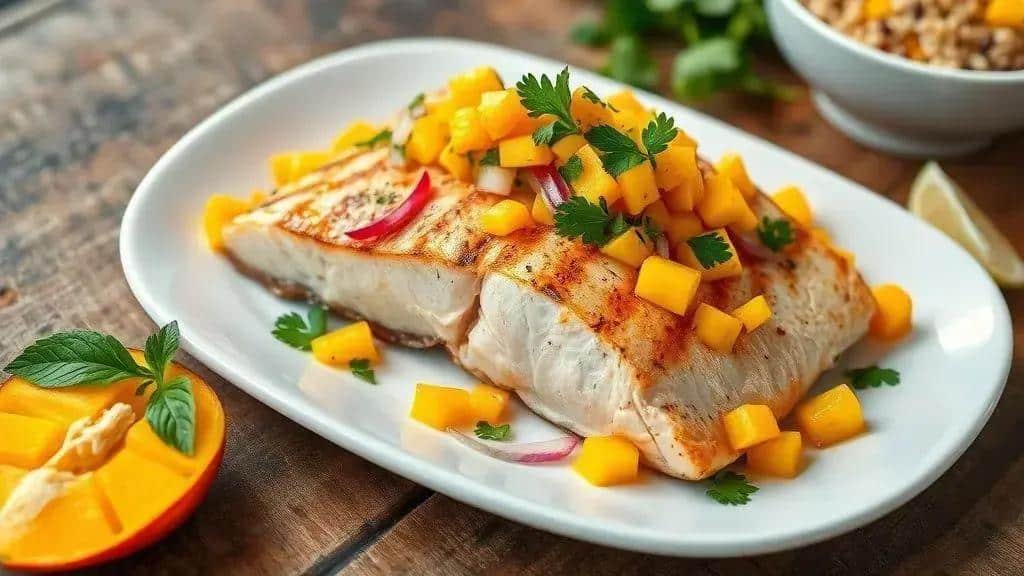
Salmon and mango make a tasty, nutritious pairing. Salmon provides healthy fats and protein, while mango adds vitamins and natural sweetness.
Nutrients in salmon
- Omega-3s: the fat in salmon contains the omega-3 fatty acids EPA and DHA.
- Protein: salmon is the main source of protein in this dish.
- Salmon provides vitamin D, selenium and B vitamins.
- Commonly eaten salmon species are low in mercury. For food safety, check where the fillets come from when buying your fish.
Facts about salmon
- Many salmon species hatch in fresh water, migrate to the sea and return to fresh water to spawn.
- Wild and farmed salmon can differ in flavour, texture and nutritional content. Look for sustainable seafood certification.
- In West Coast cooking, grilling the fish with a little smoke brings out its natural flavour.
Nutrients in mango
- Mango adds vitamin C to the fruit salsa.
- Carotenoids: mango flesh also contains beta-carotene, a precursor to vitamin A.
- Fibre and digestive enzymes aid digestion, and the fibre helps you feel full.
- Mango is low in fat and adds sweetness without making the dish heavy.
Facts about mangoes
- Mangoes originated in South Asia and are now grown in tropical regions around the world.
- A ripe mango gives slightly when pressed gently and has a sweet aroma. Its colour depends on the variety.
- If mangoes are unavailable, use firm pineapple or ripe peaches.
Why salmon and mango work well together
- Flavour balance – the mango’s sweetness and acidity complement the richness of the salmon.
- Contrasting textures – the crisp mango salsa sets off the juicy salmon in every mouthful.
- What to drink – the tropical flavours go well with citrusy white wines or light rosés. A refreshing drink brings out the flavours of the dish.
- Food safety and storage – keep the mango salsa in the fridge for up to 48 hours and eat the cooked salmon within 2 days. Avoid freezing the prepared salsa.
Conclusion
Grilled salmon with mango salsa is easy to prepare, nutritious and full of flavour. You can adapt it to suit your taste. With the right techniques and timing, you’ll get a juicy salmon fillet and a fresh, well-balanced salsa.
Try the variations and serve with rice, quinoa or grilled vegetables for a range of meals you can put together in a few steps. Adjust the seasoning and cooking time to suit the thickness of the fillets.
Thank you for joining us! Follow us on social media for more simple, inspiring recipes and visit the Mestre das Receitas blog for news and tips.
Frequently asked questions about grilled salmon with mango salsa
How long does a salmon fillet usually take to grill?
For fillets 2–3 cm thick, grill skin-side down for about 4–6 minutes, then turn and cook for another 2–4 minutes. Before taking the fish off the heat, check with a thermometer that the centre of the thickest part has reached 63°C.
Can I make the mango salsa ahead of time?
Yes. Make the salsa up to 48 hours ahead and keep it in a sealed container in the fridge. Avoid freezing it so it keeps its texture.
What can I use if I don’t have mango?
Dice firm pineapple or a ripe peach to keep the salsa sweet and tangy. Adjust the honey or lemon juice as needed.
How should I store leftover grilled salmon?
Put the salmon in a sealed container and refrigerate within 2 hours of cooking. Keep for 1–2 days. Reheat in a low oven (150–160°C) to keep it moist.
Which side dishes go best with this recipe?
Try jasmine rice, quinoa, grilled vegetables or a green salad with a hint of citrus. Toasted almonds add crunch.
Do I need jalapeño in the salsa? What can I use for less heat?
The jalapeño is optional. For less heat, use a deseeded dedo-de-moça chilli or just black pepper for a milder flavour.