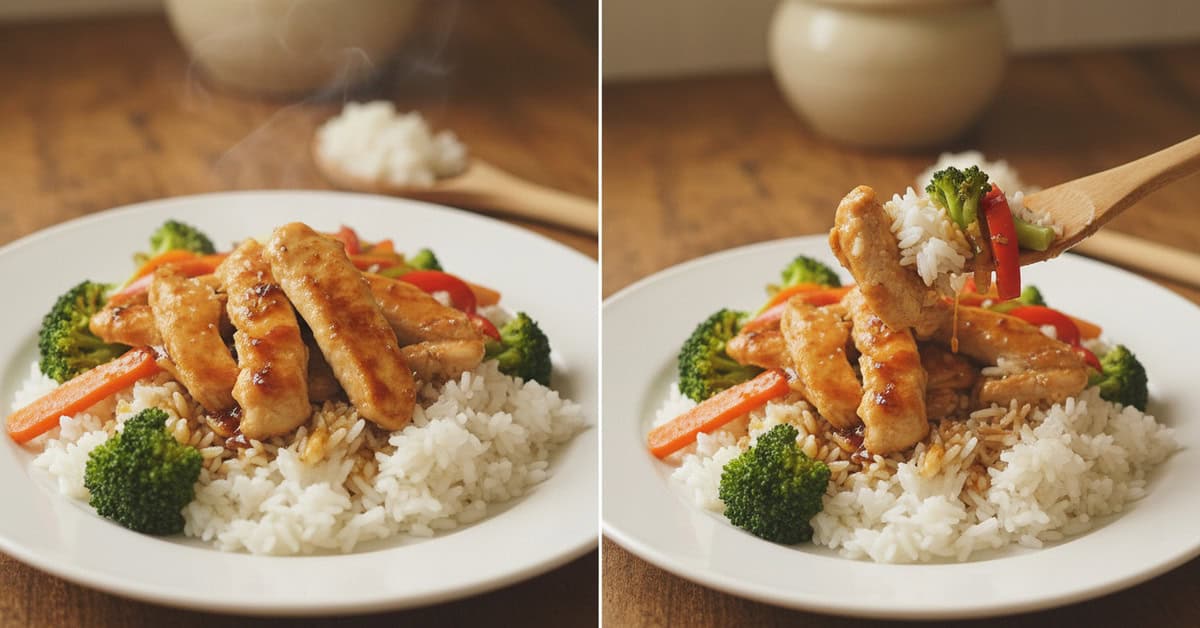

A teriyaki chicken bowl brings together rice, chicken caramelised in teriyaki sauce and crisp vegetables. Marinate chicken breast or thigh in soy sauce, mirin and brown sugar, then cook until caramelised. Serve the chicken over Japanese rice with broccoli, carrot and edamame. Finish with a scattering of sesame seeds and spring onions for a fragrant garnish.
Caramelised chicken, fluffy rice and crisp vegetables make this teriyaki chicken bowl an easy dish that looks impressive. Want to know which tricks and variations really work in the kitchen? I’ll talk you through each step.
Ingredients for a teriyaki chicken bowl
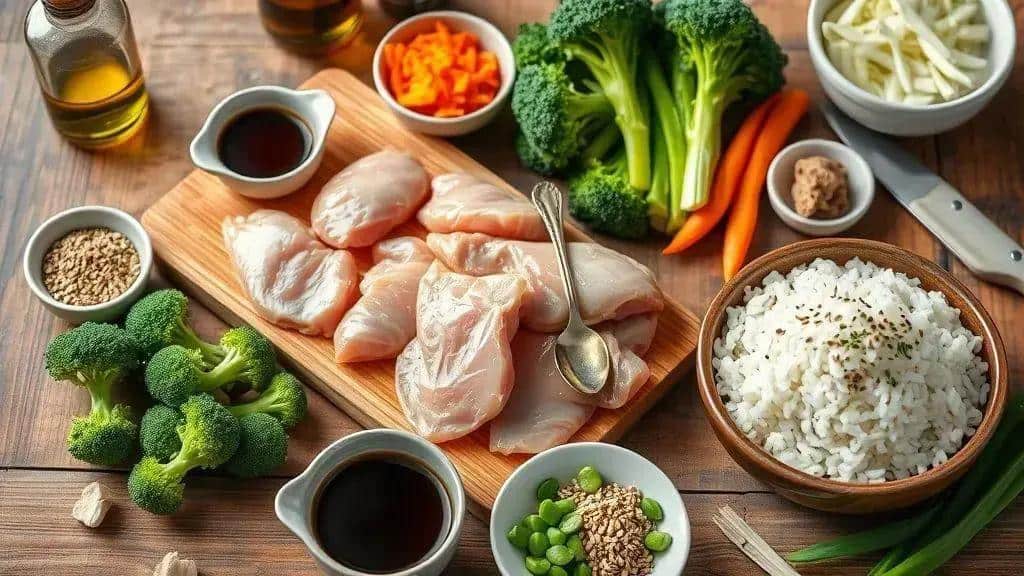
To make the teriyaki chicken bowl, you’ll need the following ingredients.
- 500 g boneless, skinless chicken thighs, cut into strips, or the same weight of diced chicken breast.
- 2 cups of cooked white rice. Japanese rice or another short-grain variety gives the best texture. For a lighter bowl, use brown rice or cauliflower rice instead.
- 1 cup broccoli, cut into florets and lightly steamed. Cauliflower or pak choi also works well.
- 1 medium carrot, cut into thin rounds or strips. You can use red pepper or courgette instead.
- 1/2 cup cooked, shelled edamame. Peas or green beans also work well.
- Use 3 tablespoons of soy sauce for the sauce and a further 2 tablespoons for the marinade. Choose reduced-salt soy sauce if you prefer.
- Use 2 tablespoons of mirin for the sauce, or replace them with 1 tablespoon of rice vinegar and 1 tablespoon of sugar. You’ll need a further 1 tablespoon of mirin for the marinade.
- Use 2 tablespoons of brown sugar for the sauce and a further 1 tablespoon for the marinade. Honey or maple syrup also works.
- 1 tablespoon of sesame oil, to finish the dish and give it a nutty aroma. Alternatively, use vegetable oil and toasted sesame seeds.
- 1 tablespoon of freshly grated ginger, to give the sauce a fresh, gingery bite. You can use 1/2 teaspoon of ground ginger instead.
- 2 garlic cloves, finely chopped, are a key part of the seasoning. You can use 1/2 teaspoon of garlic powder instead.
- 1 tablespoon of cornflour mixed with 2 tablespoons of water, to thicken the sauce. Tapioca flour is an alternative.
- Toasted sesame seeds, to sprinkle over the finished bowls.
- 2 spring onions, thinly sliced, to garnish.
- Vegetable oil for cooking, and salt and pepper to taste.
Substitutions and practical tips
- For a gluten-free bowl, replace the soy sauce with gluten-free tamari or gluten-free soy sauce.
- Adjust the sugar or honey to taste. Start with less and add more at the end if needed.
- For a fuller flavour, marinate the chicken in the teriyaki sauce for 15–30 minutes if you have time.
- Steam the vegetables briefly so they keep their crunch and bright colour.
- These quantities make about 2 to 3 full servings.
With these ingredients and a few simple swaps, you can make a flavourful teriyaki chicken bowl with what you have at home.
How to make a teriyaki chicken bowl step by step
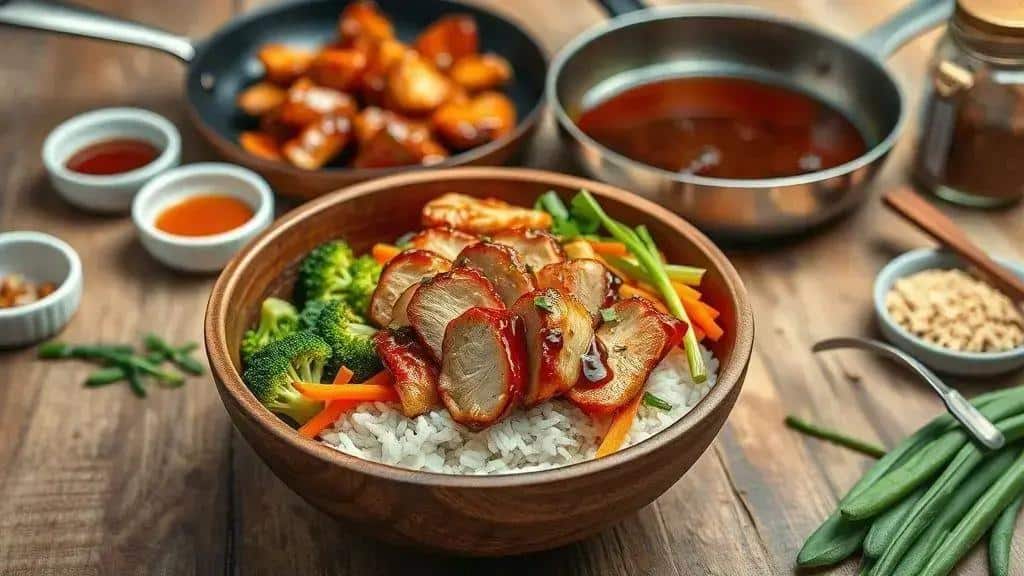
- Set aside 2 cups of cooked rice for the bowls. If you’re cooking a full pan, rinse 2 cups of uncooked rice, add 2.5 cups of water and bring to the boil. Turn down the heat and cook for 12–15 minutes, until the rice has absorbed the water. Leave to stand with the lid on for 10 minutes, then measure out the cooked rice you need.
- To marinate the chicken, mix 2 tablespoons of soy sauce, 1 tablespoon of mirin, 1 tablespoon of brown sugar, 1 teaspoon of grated ginger and 1 finely chopped garlic clove in a bowl. Add 500 g of chicken strips, toss to coat and marinate in the fridge for 15–30 minutes.
- Make the teriyaki sauce separately in a clean saucepan. Mix 3 tablespoons of soy sauce, 2 tablespoons of mirin, 2 tablespoons of brown sugar and 2 tablespoons of water. Heat until the sugar dissolves. Add 1 tablespoon of cornflour mixed with 2 tablespoons of water and stir until the sauce thickens. Finally, stir in the ginger and garlic you set aside when making the marinade.
- Heat 1 tablespoon of vegetable oil over a medium-high heat. Drain the chicken and discard the marinade that was in contact with the raw meat. Brown the strips for 3–4 minutes on each side. Turn down the heat, add the teriyaki sauce from the separate pan and stir for 1–2 minutes to caramelise. Before serving, use a food thermometer to check that the centre of the thickest strip has reached 74 °C. Cook for longer if needed.
- Steam the broccoli for 2–3 minutes so it retains some crunch. Cook the carrots in boiling water for 2 minutes, or sauté them in a frying pan with a little oil for 3–4 minutes. Heat the edamame according to the instructions on the packet.
- Divide the rice between 2–3 bowls. Top with the teriyaki chicken and arrange the broccoli, carrots and edamame around it. Drizzle with a little sesame oil, then add a little more sauce if you like.
- Scatter the toasted sesame seeds and sliced spring onions over the top. Serve straight away while the chicken is still glossy and the vegetables are crisp.
Practical tips for beginners
- If the sauce is too thin, stir in a little more cornflour mixed with water, adding it gradually until the sauce reaches the consistency you like.
- Use a food thermometer to check that the thickest part of the chicken has reached 74 °C.
- For easy swaps, use chicken breast in place of thighs, rice vinegar and a pinch of sugar in place of mirin, and frozen peas in place of edamame.
- Marinating for 15–30 minutes is enough to flavour the chicken. If you use a lot of soy sauce, leaving the chicken in the marinade for longer can make it too salty.
- Rinse Japanese rice thoroughly before cooking, then leave it to stand afterwards so the grains soften and cling together.
Variations and substitutions
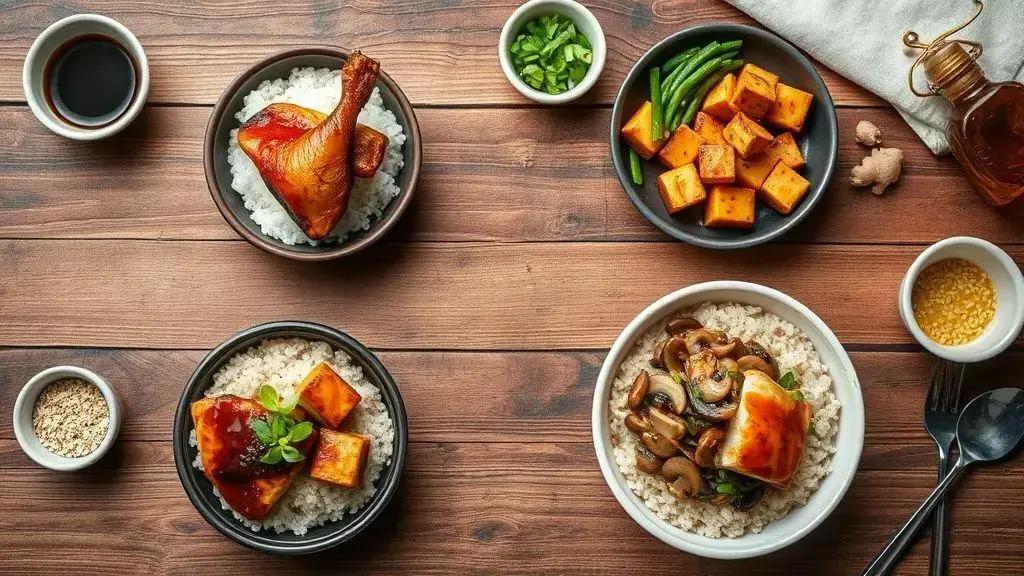
Here are a few ways to adapt your teriyaki chicken bowl and keep it full of flavour.
Alternative proteins
- For a leaner bowl, dice 500 g of chicken breast and cook it in the same way as the thighs.
- For a vegan alternative, press 400 g of firm tofu, cut it into cubes and grill. For more flavour, marinate the cubes for 30 minutes before grilling.
- Use 400 g of salmon, either as fillets or cut into cubes. Bake or grill the fish and brush it with teriyaki sauce towards the end of cooking.
- Cut 500 g of pork shoulder or loin into thin strips and sauté briefly to caramelise them.
Grains and bases
- Use 2 cups of cooked Japanese white rice for the traditional sticky texture.
- For a more nutritious option, use 2 cups of cooked brown rice. Allow extra cooking time.
- Use 2 cups of cooked quinoa for a light texture and a high-protein base.
- For a low-carb bowl, sauté 2 cups of cauliflower rice for 2–3 minutes to cook off excess moisture.
Vegetables and textures
- Steam the broccoli for 2–3 minutes so it keeps its crunch.
- Cut the carrot into ribbons or rounds and sauté for 3–4 minutes.
- Use 1/2 cup of cooked edamame, or substitute peas or green beans.
- Sautéed shiitake or button mushrooms add umami.
Sauce and seasonings
- For a traditional teriyaki sauce, use 3 tablespoons of soy sauce, 2 tablespoons of mirin and 2 tablespoons of brown sugar. Use less sugar if you prefer a less sweet sauce.
- For a gluten-free version, replace the soy sauce with an equal quantity of gluten-free tamari.
- For a vegan version, use maple syrup or brown sugar in place of honey and choose a vegan mirin.
- For a spicier bowl, add 1 teaspoon of chilli or a drizzle of chilli oil.
More variations and cooking tips
- For a quick bowl, use ready-cooked chicken or grilled tofu and stir-fry a mix of frozen vegetables.
- For children, use less salt and sugar and cook the vegetables until softer.
- The basic recipe serves 2–3. Double the ingredients to serve 4–6 people.
- Freeze the cooked chicken in its sauce, keeping it separate from the rice. Defrost in the fridge and reheat until it reaches 74 °C.
- Chicken needs only 15–30 minutes in the marinade. Give tofu 30–60 minutes to absorb more flavour.
Use these variations to get the texture you like, make the most of seasonal produce or cater for dietary requirements while keeping the character of the dish.
Chef’s tips for getting the texture and aroma just right
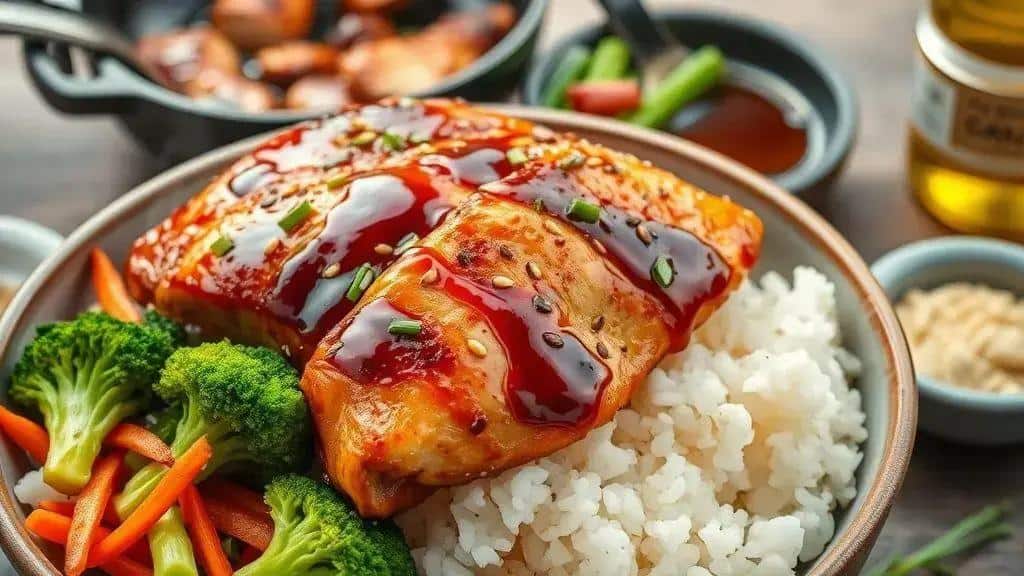
- Always heat the frying pan thoroughly before adding the chicken. The high heat helps the strips caramelise quickly and develop a firm crust.
- Leave some space in the pan so the chicken can form a golden crust. Cook it in small batches if necessary.
- Pat the chicken dry with kitchen paper before cooking to help it brown well and give the sauce a glossier finish.
- Marinate for 15–30 minutes to flavour the chicken without making it too salty. Use less soy sauce if you plan to marinate it for longer.
- Let the cooked chicken rest for 3–5 minutes before slicing so the juices can redistribute.
A step-by-step guide to a good sear and a glossy glaze
- Preheat the frying pan over a high heat for 2 minutes until very hot.
- Drain the chicken strips and lightly pat them dry before searing. To brush the chicken with marinade, use only marinade you set aside before it came into contact with the raw chicken.
- To sear the chicken, place the strips in the pan with a little space between them. Leave undisturbed for 3–4 minutes until golden.
- Turn the strips over, reduce the heat to medium and cook for a further 2–3 minutes. Continue cooking if needed until the centre reaches 74 °C.
- Warm the teriyaki sauce in a separate pan, then add it to the chicken and stir for 1–2 minutes to caramelise.
- For extra gloss, stir in a teaspoon of cornflour mixed with water if needed. Add it sparingly so the sauce doesn’t become stodgy.
- Turn off the heat and add a drizzle of sesame oil for its nutty aroma. Scatter over the sesame seeds and spring onions before serving.
Tips for aroma and contrast
- Grate the fresh ginger and garlic just before you need them and add them to the sauce at the end for a fresh flavour without bitterness.
- Toast the sesame seeds in a dry frying pan for 1 minute to bring out their nutty aroma before scattering them over the bowls.
- Briefly char the sliced spring onions in a hot frying pan for a hint of smokiness.
- Adjust the brown sugar or honey a little at a time to balance the sweetness and saltiness. A touch of citrus, such as lime or yuzu, lifts the aroma.
- Blanch the vegetables, then plunge them into iced water to preserve their colour and crunch. The crisp vegetables contrast with the caramelised chicken.
Always taste the sauce before finishing the dish. Adjust the acidity and salt for a glossy, aromatic and well-balanced result.
About teriyaki sauce and its ingredients

Sweetness, salt and umami give teriyaki sauce its distinctive gloss and flavour, bringing out the best in meat and vegetables.
Origins and evolution
Teriyaki began in Japan as a technique for grilling food and brushing it with a sauce made from soy sauce and sugar. Over time, cooks have adapted it to different cuisines and ingredients, with variations that include mirin, sake or rice vinegar.
Main ingredients and substitutions
- Soy sauce (3 tablespoons) gives the sauce its salty base. Use gluten-free tamari for a gluten-free version.
- Mirin or sake (2 tablespoons) adds sweetness and shine. You can use 1 tablespoon of rice vinegar and 1 tablespoon of sugar instead.
- Brown sugar or honey (1–2 tablespoons) caramelises as the sauce cooks. Honey adds a floral note, while brown sugar gives a deeper flavour.
- Cornflour (1 tablespoon mixed with water) thickens the sauce and gives it a glossy finish. Tapioca flour also works.
- Add ginger and garlic to taste. Both are particularly aromatic when fresh, and fresh ginger adds a bright, peppery note.
Teriyaki cooking notes
- Reducing the sauce concentrates the umami from the soy sauce, giving a deeper savoury flavour without the need for much salt.
- As the chicken browns on the grill, the Maillard reaction gives it a toasted aroma and the sugar in the sauce helps form a caramelised crust.
- Brush on the sauce in the final minutes of cooking to keep the sugar from burning and preserve the glossy finish.
- A little cornflour thickens the sauce and gives it the sheen of a glaze.
- Western versions often use honey or maple syrup and less mirin, depending on what’s available.
Storage, nutrition and yield
- Store the prepared sauce in a sealed container in the fridge for up to 5–7 days, or freeze it in portions for up to 3 months.
- Teriyaki sauces contain sugar. To cut the calories, use less sugar or a liquid sweetener and keep an eye on how much sauce you add to each bowl.
- For a lower-salt version, choose reduced-salt soy sauce or dilute the soy sauce with water, then adjust the sweetness to taste.
- The basic recipe makes about 150–200 ml of sauce, enough for 4 bowls.
Always taste the sauce and adjust the sweetness and acidity before finishing the dish for a balanced flavour, a fragrant aroma and a glossy finish.
Conclusion
This teriyaki chicken bowl shows how much flavour and texture a simple dish can offer. Tender rice, caramelised chicken and crisp vegetables make a balanced, easy-to-prepare meal for everyday cooking.
Try the suggested variations and adjustments to see what suits your routine and your taste. Small details in how you cook the ingredients and prepare the sauce give the finished bowl its gloss, aroma and appetising appearance.
Thanks for reading! Follow us on social media for more easy recipes and cooking tips, and visit Mestre das Receitas blog to keep up with the latest news and share your own versions.
Teriyaki chicken bowl FAQs
How long does it take to make a teriyaki chicken bowl?
Allow about 30 to 40 minutes from start to finish, with 15 minutes to marinate the chicken and 15–20 minutes to cook the rice, chicken and vegetables.
How should I store leftovers, and how long will they keep?
Store the chicken and sauce in a sealed container in the fridge for up to 3 days. Cool the rice quickly, ideally within 1 hour, and store it separately in the fridge for up to 24 hours. Reheat each portion only once, in a frying pan or in the microwave, until it reaches 74 °C at the centre.
Can I make a gluten-free or vegan version?
Yes. For a gluten-free bowl, use gluten-free tamari in place of soy sauce. For a vegan bowl, use firm tofu in place of chicken and maple syrup in place of honey.
How do I give teriyaki sauce a glossy finish and the right consistency?
Reduce the sauce over a low heat, then gradually stir in cornflour mixed with water until it thickens. Finish with a drizzle of sesame oil for shine and aroma.
Which vegetables work best, and how do I keep them crisp?
Broccoli, carrots, edamame and mushrooms all work well. Blanch the vegetables briefly, then plunge them into iced water to preserve their colour and crunch.
Can I prepare parts of the recipe in advance to save time?
Yes. Cook the rice and chop the vegetables the day before. You can marinate the chicken in the fridge for up to 24 hours. Store everything separately. When you’re ready to serve, cook the chicken and vegetables, reheat the rice and assemble the bowls.