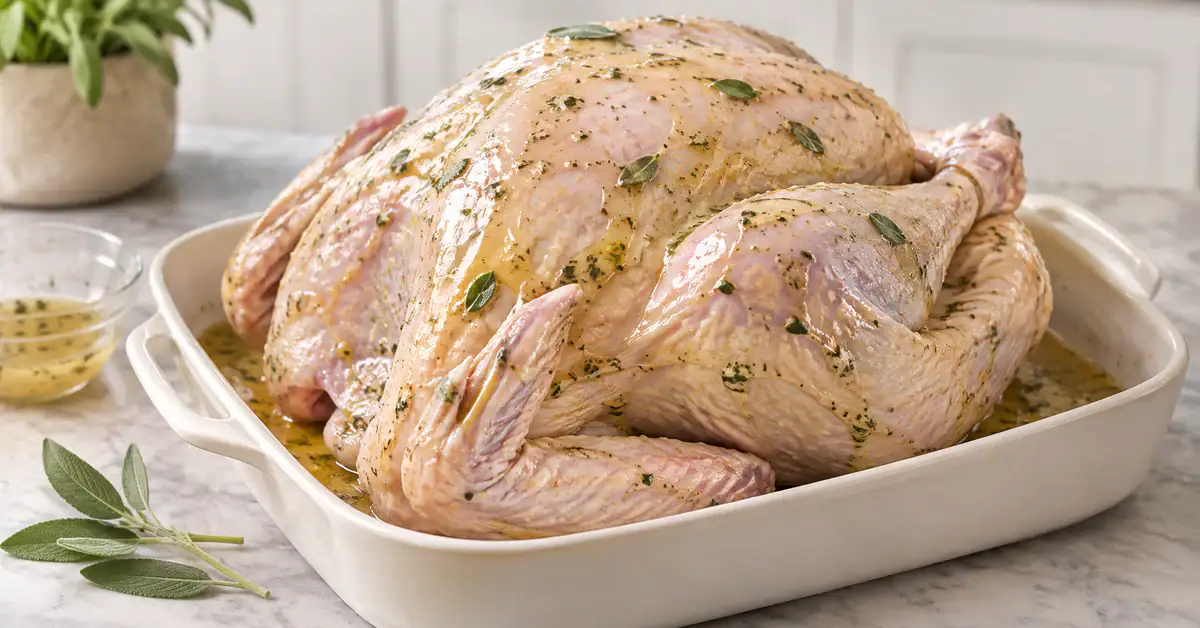

This white wine and sage marinade combines garlic, olive oil and seasonings to coat a turkey weighing about 4 kg. Spread some of the mixture under the skin as well, then refrigerate the bird for about 8–12 hours.
White wine and sage give turkey a fragrant coating. How you distribute the marinade matters, so take the time to reach the meat evenly. The steps below show how to mix and spread the marinade before continuing with your chosen turkey recipe.
Ingredients for white wine and sage marinade
These quantities season one whole turkey weighing about 4 kg.
- 180 ml dry white wine
- 60 ml olive oil
- 8 fresh sage leaves
- 3 medium garlic cloves, peeled
- 2 level teaspoons salt
- ½ teaspoon ground black pepper
How to make the marinade
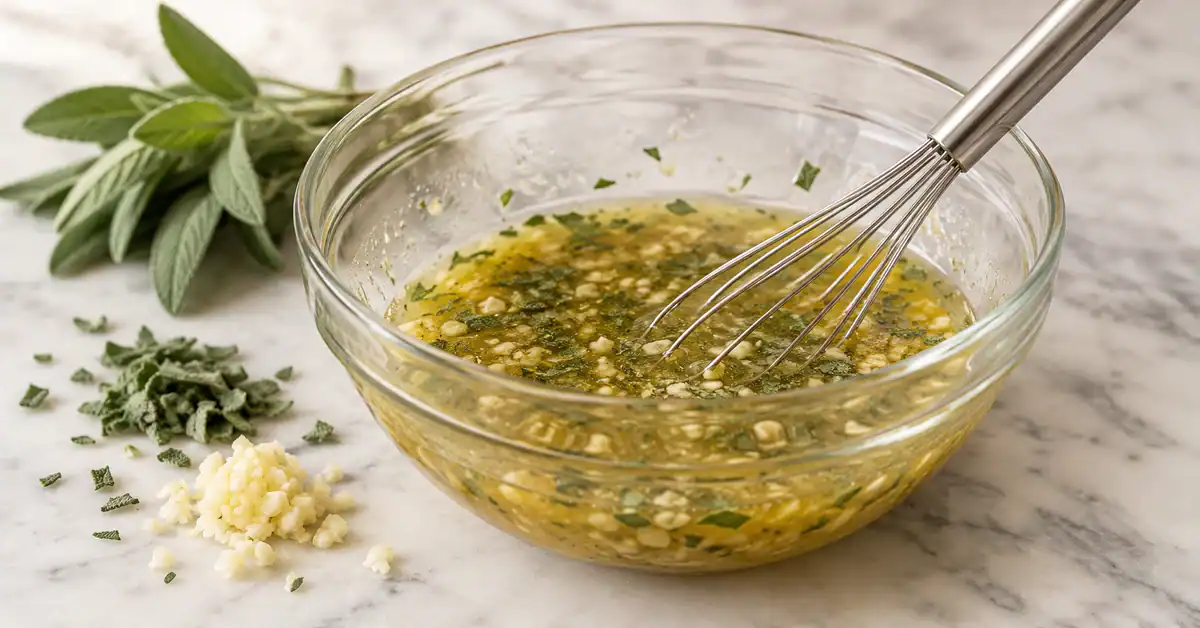
The order for combining the ingredients
- Finely chop the 8 fresh sage leaves and 3 peeled garlic cloves. Small pieces distribute the seasoning more evenly through the mixture.
- Whisk the 180 ml dry white wine with the 2 level teaspoons of salt and ½ teaspoon ground black pepper in a bowl until the salt is dispersed.
- Gradually pour in the 60 ml olive oil while whisking. Add the chopped sage and garlic and mix. The wine and oil may separate after a few minutes. This is normal, so stir again before using.
Preparing the turkey and applying the marinade
- Use a fully thawed turkey of about 4 kg. Remove anything inside the cavity, including any bag of giblets. Pat the surface dry with kitchen paper. Do not rinse the bird, as splashes can spread contamination around the sink and work surfaces.
- Stir the marinade again, as the wine and olive oil may have separated. Use a spoon to redistribute the garlic and sage before applying.
- With clean hands, carefully loosen the skin over the breast without tearing it and spread some marinade directly on the meat. If you can reach the thighs under the skin, apply a little there too.
- Spread the marinade over the rest of the turkey, including the sides and thighs, and rub a little inside the cavity. Use your hands or a spoon to distribute the garlic and sage so they do not collect in one spot.
- Set the turkey in a deep roasting tin or container big enough to hold it and catch the liquid. Wash your hands and utensils that touched the raw bird, then refrigerate throughout the marinating time.
Where to apply the seasoning
Coat the surface, the flesh beneath the skin and the inside of the cavity. This seasons different parts of the bird, although the flavour acts mainly where the marinade touches the meat and will not reach the centre of every piece.
How long to marinate the turkey
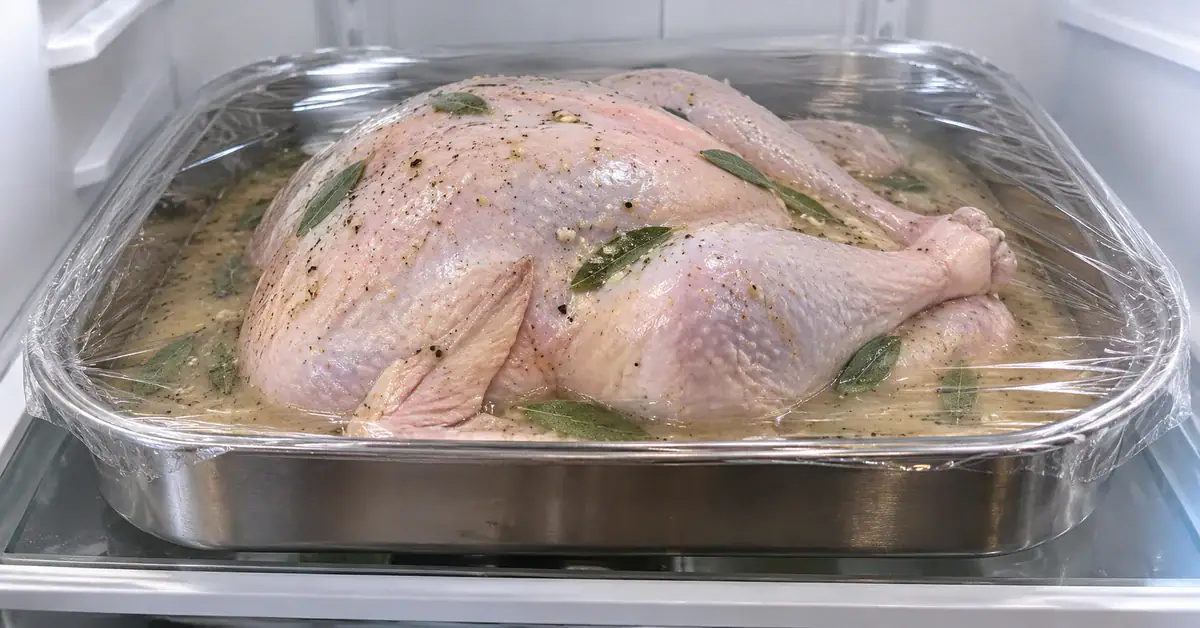
For a whole turkey of about 4 kg, allow around 8–12 hours. This is an approximate range. A few hours gives the seasoning time to coat the surface, but the marinade does not reach the centre of all the meat.
Keeping the turkey refrigerated
Keep the turkey covered in the deep roasting tin or container in the fridge throughout. Do not marinate it on the worktop. If practical, turn it once halfway through, taking care not to spill any liquid. Otherwise, leave it in place and distribute the marinade well at the start.
Adjusting the flavour
The main recipe uses 180 ml dry white wine and 8 fresh sage leaves. To change the flavour, make one substitution at a time so you can judge the effect of each ingredient.
Choosing a white wine
Choose a mild, dry white wine so it does not sweeten the marinade or overpower the sage and garlic. Avoid dessert wines or heavily oaked wines, which may dominate the flavour. An expensive bottle is unnecessary.
Fresh or dried sage
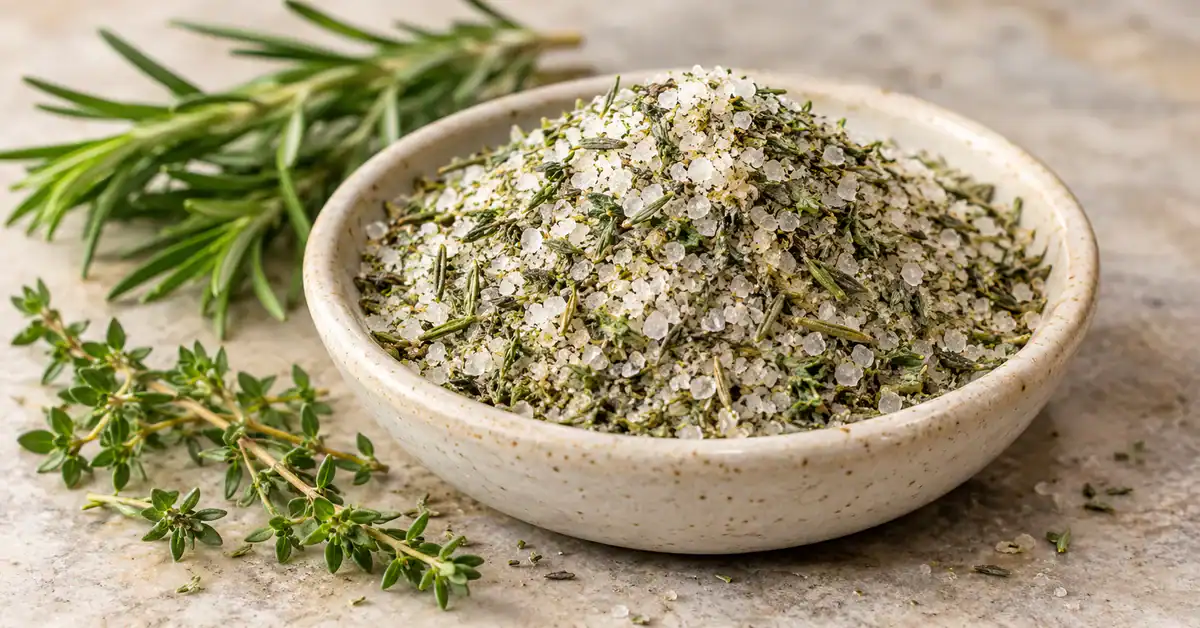
Fresh sage, finely chopped as above, gives a delicate herbal flavour. If unavailable, use about 1 teaspoon dried sage instead of the 8 leaves. Dried sage is generally more concentrated and leaves little flecks in the mixture. Use one form only to keep the aroma in balance.
Using the marinade when preparing the turkey
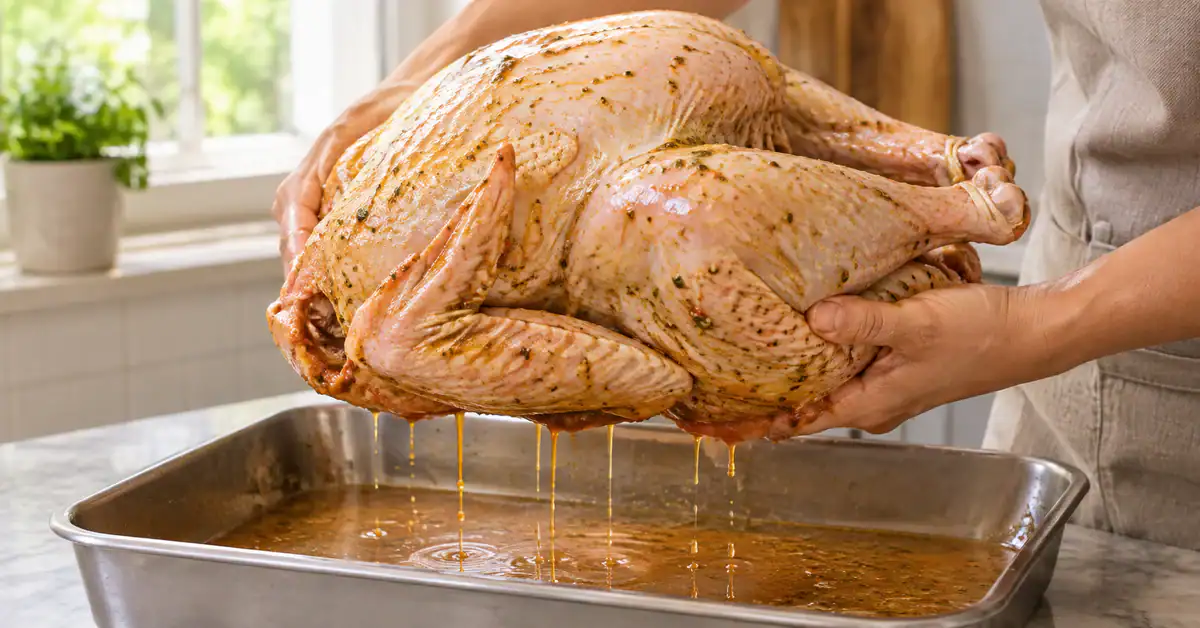
After marinating, lift the turkey from the container and let excess liquid drain off. Do not rinse the bird, as the splashes can contaminate the sink and surrounding surfaces. The marinade on the outside and under the skin has seasoned the meat. Continue with your chosen roast turkey recipe.
Handling marinade that has touched raw poultry
Discard the liquid remaining in the container. Do not use it directly for basting or as a sauce. If you wish to reuse it, bring it to a vigorous rolling boil in a saucepan before using a clean utensil to serve or baste. Wash your hands and any utensils that touched raw poultry or used marinade.
What to expect from the marinated meat
After about 8–12 hours in the fridge, the marinade will have coated the surface of the turkey and the areas reached beneath the skin. The flavours of white wine, garlic and sage will be strongest there and less intense in the centre of thicker pieces.
Seasoning at the surface and in the centre
The marinade does not penetrate every part of the meat evenly. The inside can taste milder than the surface even when the mixture was carefully distributed. This is an expected result.
Follow your turkey recipe for roasting. Marinating cannot replace proper cooking or guarantee juicy meat. Discard any liquid that touched the raw turkey or bring it to a vigorous rolling boil before reusing it.
After marinating
Lift out the turkey and let excess marinade drain off. Discard the liquid that touched the raw bird or boil it vigorously before reuse. Without rinsing the turkey, continue with the instructions in your chosen roasting recipe.
Practical questions about the marinade
Do I need to turn the turkey while it marinates?
It is optional. If practical, turn the bird once halfway through. Otherwise, leave it in place with a good coating of marinade and keep it refrigerated.
What if the wine and oil separate?
Stir again before applying. Separation after a few minutes is normal, and stirring redistributes the garlic and sage too.
Can I use dried sage instead of fresh?
Yes. Use about 1 teaspoon dried sage instead of the 8 fresh leaves. Avoid using both together, as the flavour can become too strong.
Can I start marinating while the turkey is still frozen?
No. Use a fully thawed turkey. Remove anything from the cavity and pat the surface dry with kitchen paper before applying the marinade.
Can I use the leftover liquid as a sauce?
Never use liquid that touched raw poultry directly. Discard it or bring it to a vigorous rolling boil in a saucepan before reusing it with a clean utensil.