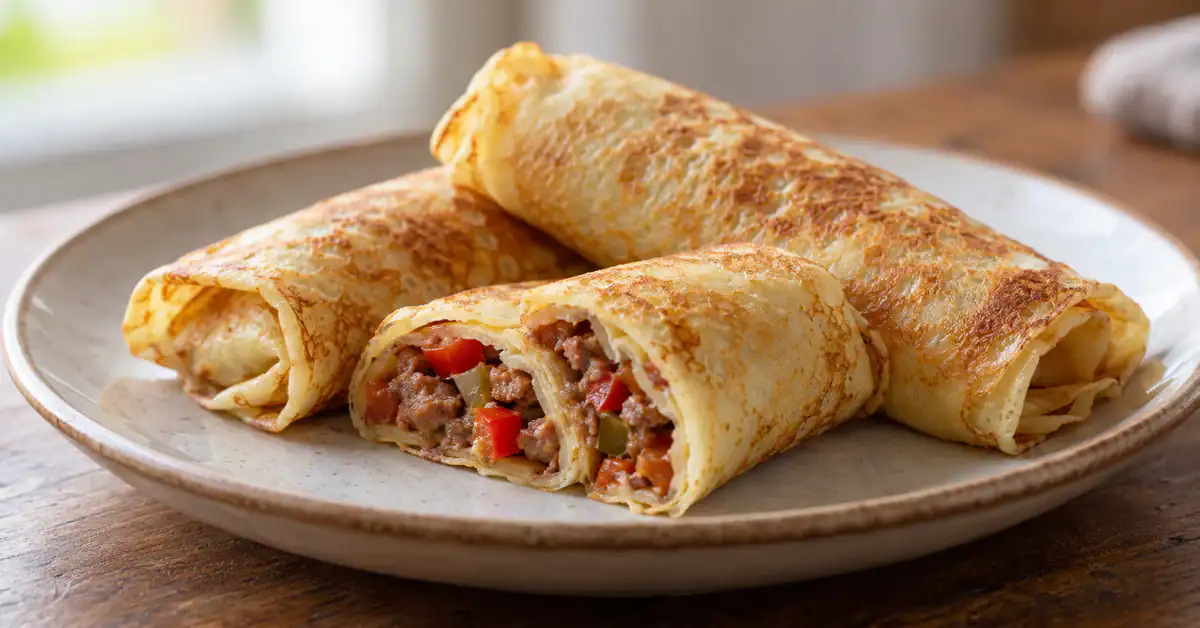

These thin frying-pan pancakes are filled with browned fresh sausage, onion, garlic and peppers. Learn how thin the batter should be, when to turn the pancakes and how to roll them without tearing.
Soft pancakes and sautéed peppers give this sausage filling a contrast of textures. The steps take you from mixing the batter to filling each pancake, with cues for each stage if you are new to cooking.
Ingredients for the batter and filling
Makes about 8 to 10 pancakes, depending on their size and thickness.
For the batter
- 2 eggs
- 480 ml milk (2 cups of 240 ml each)
- 180 g plain flour
- 1 tablespoon of vegetable oil
- 1/2 teaspoon salt
- 1 tablespoon vegetable oil for greasing the frying pan, used a little at a time
For the sausage and pepper filling
- 300 g fresh sausage, skins removed
- 1 medium pepper, deseeded and finely diced
- 1 small onion, chopped
- 2 garlic cloves, chopped
- Black pepper to taste (optional)
Prepare the batter
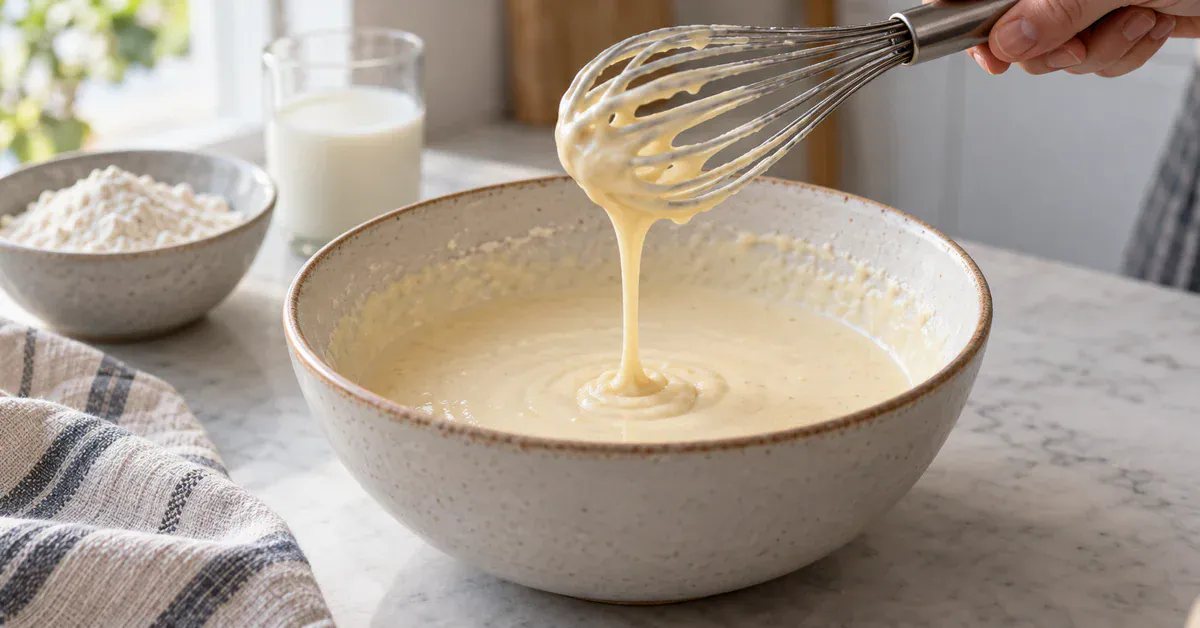
Set out the ingredients and make a smooth, pourable batter. If you don’t have a blender, use a bowl and a whisk to work out any lumps of flour.
- Beat the base: place the eggs, milk, one tablespoon of oil, and salt in the blender. Blend for a few seconds, just until combined.
- Add the flour: gradually add the plain flour and mix until the batter is even, with no dry spots or lumps. If using a bowl, add the flour in stages while stirring with a whisk.
- The batter should run off the whisk in a steady stream and be thinner than cake batter. Rest it for about 10 minutes before cooking the pancakes to give the flour time to absorb the liquid.
Cook the sausage and pepper filling
While the batter rests, prepare the filling in a large frying pan. Fresh sausage usually releases fat during cooking, so no oil is needed.
- Heat the pan over a medium heat. Add the skinned sausage, breaking it into small pieces with a wooden spoon or spatula. Cook for about 8 to 10 minutes, stirring occasionally, until browned and cooked through with no raw or pink patches. If using a food thermometer, the centre should reach 71 °C.
- Soften the onion and garlic. Add the chopped onion to the frying pan and stir for 2 to 3 minutes, until it starts to soften. Add the garlic and cook for about 30 seconds, stirring so it does not burn.
- Add the bell pepper: mix the cubes and cook for 4 to 5 minutes, stirring a few times until they are tender but still hold their shape. If desired, season with black pepper.
- Take the pan off the heat and set the filling aside while you cook the pancakes. Spoon off any excess fat, leaving a little so the filling stays moist.
Cook the pancakes
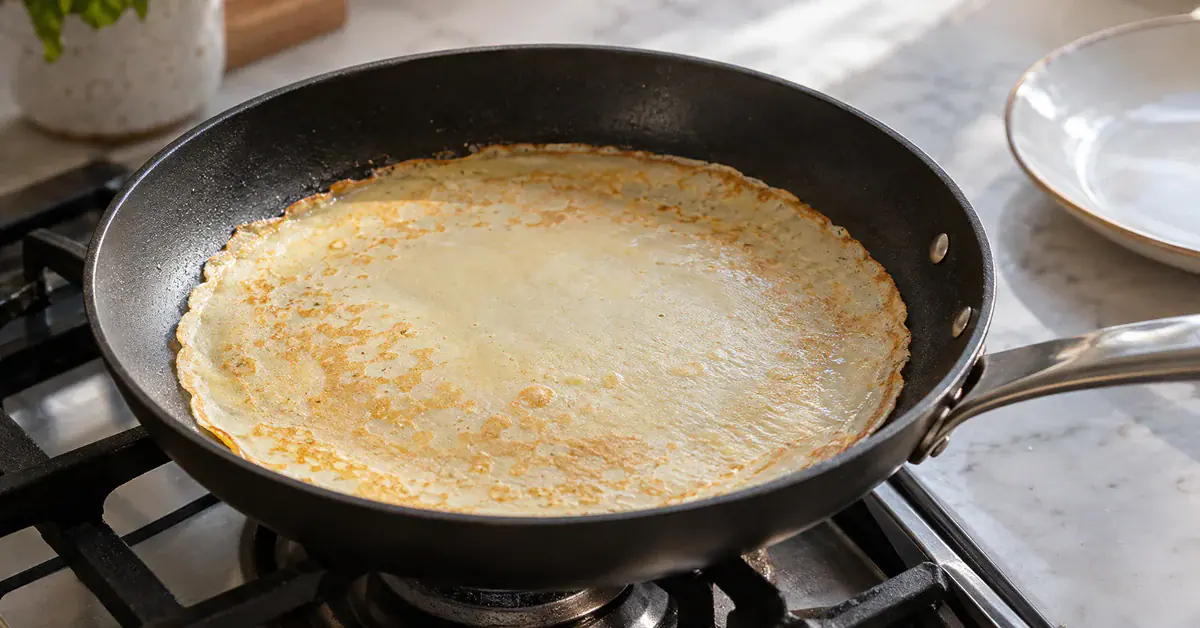
Once the filling is ready and the batter has rested, set a non-stick frying pan, preferably about 20 cm across, over a medium heat. Have a clean plate ready for the cooked pancakes.
- Heat and grease the frying pan: spread a little of the reserved oil to coat the surface, using a pastry brush or kitchen paper. The frying pan should be slightly shiny, without oil puddles.
- Stir the batter gently and pour a little into the centre of the pan. Swirl the pan to coat the base thinly. Too much batter makes a thick pancake that takes longer to cook.
- Cook over a medium heat for about 1 to 2 minutes on the first side. Turn when the surface loses its shine, the edges begin to lift and the underside is lightly golden.
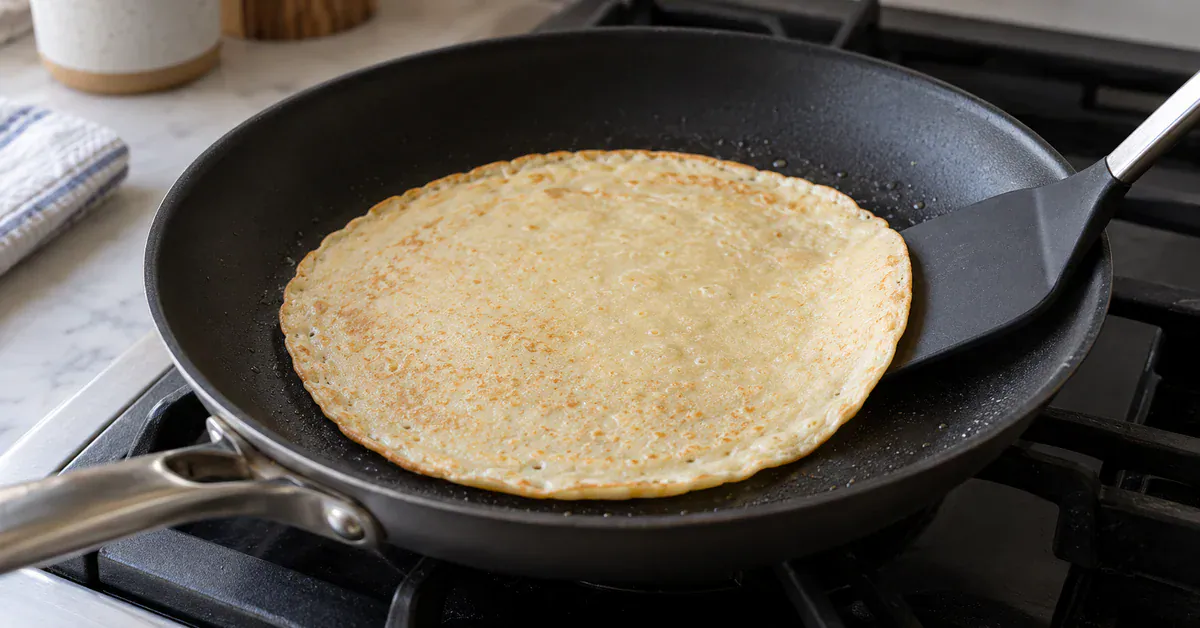
- Loosen the pancake with a spatula and turn carefully. Cook the other side for about 30 seconds until set, then transfer to the plate.
- Repeat with the remaining batter, adding a little oil when the pan feels dry. Stack the cooked pancakes on the plate, ready to fill.
Fill and roll the pancakes
Fill the pancakes while the sausage mixture is still warm. Divide it evenly among them. Too much filling in one pancake makes it difficult to close and may tear it.
- Arrange a strip of filling across the lower third of each pancake. If fat has pooled in the pan, spoon out mostly sausage and peppers, leaving enough moisture to keep the filling from drying out.
- Fold the sides over the ends of the filling and roll upwards from the bottom without squeezing too tightly. Place each pancake seam-side down on the plate or serving dish.
- Repeat with the rest, stacking them loosely so they don’t come open. If one tears, place it underneath with the opening facing the dish.
Getting the texture right
If the rested batter looks uneven, give it a gentle stir before cooking the next pancake. The flour can settle at the bottom. Whisk out any remaining lumps.
If the discs get thick: place a smaller portion of batter in the frying pan and immediately tilt it in circular motions to cover the bottom. A thin layer cooks evenly and is easier to roll up.
If a pancake tears when you turn it, wait until the surface loses its shine and the edges start to lift before using the spatula. If the underside browns while the centre still looks wet, lower the heat a little. Turning too soon or using too much heat makes the pancakes hard to handle.
Serving and storing the pancakes
Savoury pancakes can be served immediately after filling, with the sautéed mixture still warm. Arrange them on a tray with the seam facing down; this helps keep them sealed when serving.
Let leftovers cool a little, then refrigerate them in a covered container. Avoid packing them tightly so they keep their shape. Reheat in a covered frying pan over a low heat or in the microwave until hot all the way through.
To serve
Serve the pancakes warm and seam-side down. Refrigerate leftovers and reheat until the filling is hot throughout.
Questions about making the pancakes
Can you make the batter without a blender?
Yes. Mix the eggs, milk, oil, and salt in a bowl and gradually add the flour, stirring with a wire whisk. Continue until the batter is smooth and lump-free.
How can I prevent the disc from tearing when flipping?
Wait until the surface loses its shine and the edges begin to lift before using the spatula. If the bottom browns too quickly while the centre is still moist, reduce the heat slightly.
What should I do if the sausage releases too much fat?
Spoon off excess fat, leaving a little so the filling stays moist. When filling the pancakes, scoop up mostly sausage and pepper if fat has pooled in the pan.
How do I reheat the leftover pancakes?
Reheat in a covered frying pan over a low heat or in the microwave until the filling is hot all the way through.