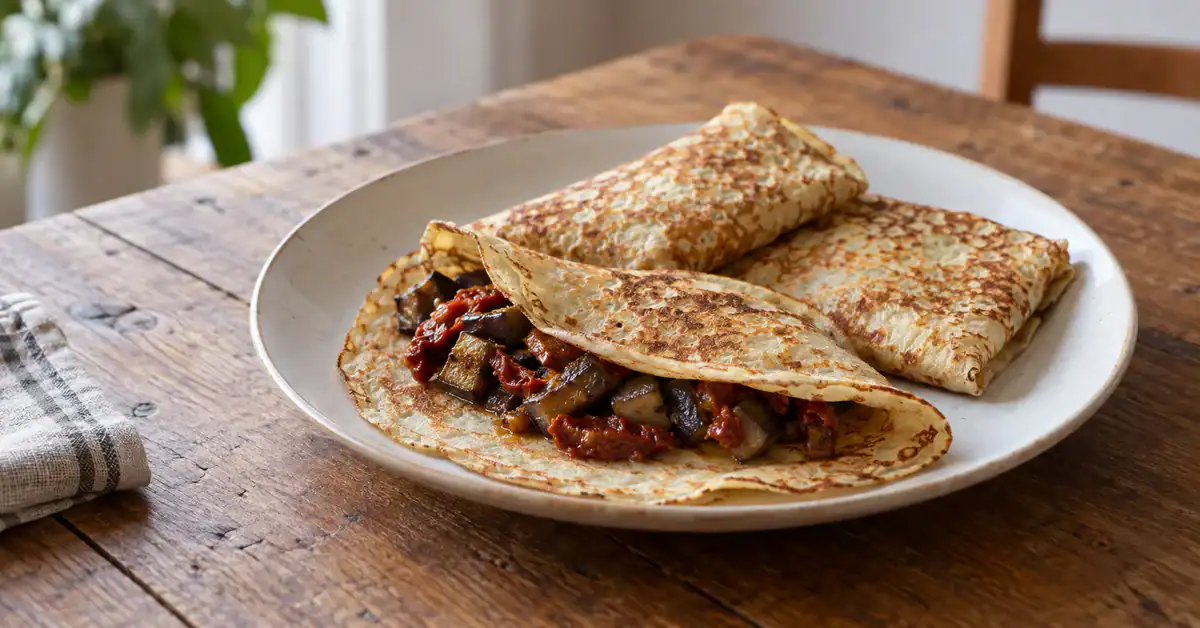

The eggplant pancake with dry tomato features a filling of tender eggplant, sautéed with onion and finished with dry tomato, wrapped in a thin dough prepared in the frying pan. The recipe yields about 8 pancakes, for approximately 4 servings, and includes guidance on how to check for doneness before flipping.
The eggplant pancake with dry tomato combines the soft dough of the pancake with a flavorful filling. The preparation requires attention to the doneness of the eggplant and the heat level, but each step is simple to follow: you will prepare the ingredients, assemble the portions, and monitor when the pancake is ready to flip.
Ingredients for the dough and filling
The quantities below yield about 8 pancakes, enough for about 4 servings. To measure the flour, use a cup with 240 ml capacity and level the surface without compacting.
Batter
- 1 cup (about 120 g) plain flour
- 240 ml milk
- 1 egg
- 1 tablespoon oil
- 1/2 teaspoon salt
- 1 teaspoon oil for greasing the pan
Filling
- 1 medium eggplant, weighing about 300 g
- 100 g dry tomatoes in preserve, drained
- 1 small onion
- 1 tablespoon olive oil
- 1/4 teaspoon salt
- Black pepper to taste
Prepare the eggplant and dry tomato
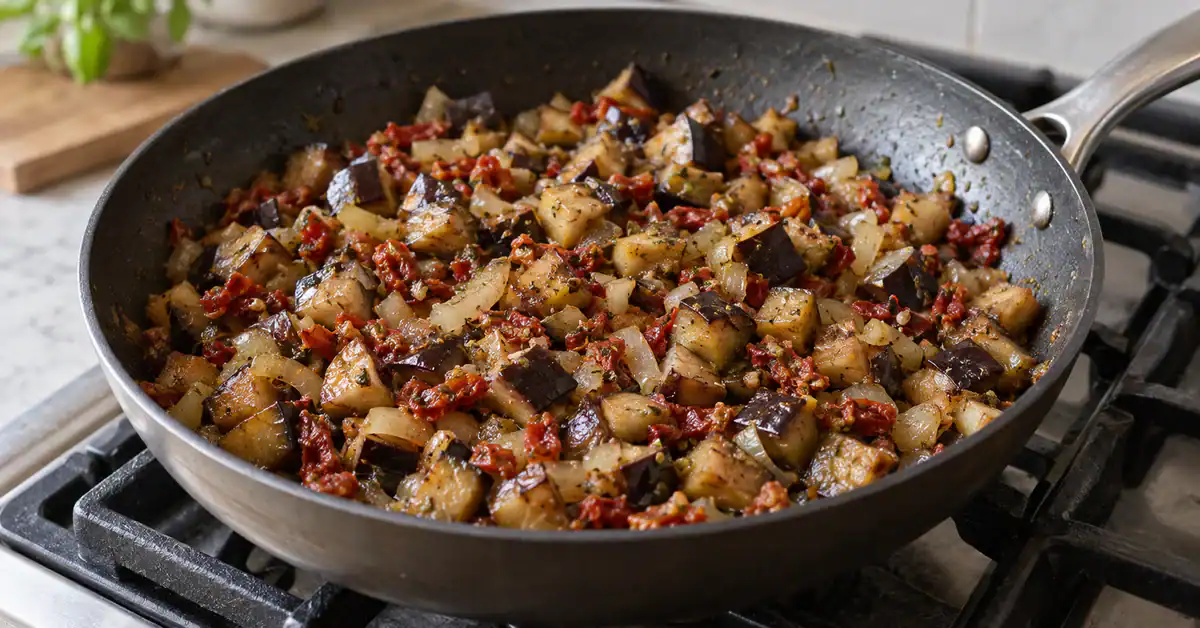
- Prepare the ingredients: wash and dry the eggplant, cut it into cubes of about 1 cm, and chop the onion. Drain the dry tomatoes and cut them into small pieces.
- Sauté the onion: heat the olive oil in a large frying pan over medium heat. Add the onion and cook for about 2 minutes, until it begins to soften and become translucent.
- Cook the eggplant: add the cubes, salt, and pepper. Mix, cover the frying pan and cook for about 8 to 10 minutes, stirring occasionally; the eggplant should be soft when pressed with the spatula, without breaking.
- Add the dry tomatoes: add the pieces and mix for another 1 to 2 minutes, just to warm them up and distribute the flavor. Transfer the filling to a plate and reserve while preparing the dough.
Make the savoury pancake dough
With the reserved filling, prepare the dough in a medium bowl. Mixing the ingredients gradually helps prevent the plain flour from forming lumps.
- Add the liquid ingredients: beat the egg with a wire beater or fork. Add the milk, oil, and salt and mix until it is uniform.
- Incorporate the flour: add the plain flour gradually, stirring continuously. Stop when the dough is smooth, without dry flour or large lumps, and has a fluid consistency enough to drain from the beater.
- Reserve the dough: leave it in the bowl while organizing the frying pan and filling for the next step. If you notice any small lumps, stir a little more before you start preparing the pancakes.
Fill and cook the savoury pancakes
- Warm up and grease the frying pan: use a non-stick frying pan on medium heat and spread part of the tablespoon of oil reserved for greasing, with a brush or paper towel. The surface should only be slightly glossy, without oil puddles.
- Prepare the first savoury pancake: pour a portion of dough to the center of the frying pan and immediately flip it to cover the bottom with a thin layer. Cook for about 1 minute, until the surface loses the shine of raw dough and the edges begin to lift.
- Turn and finish cooking: release the dough with a spatula and carefully flip the pancake. Let the other side cook for about 20 to 30 seconds, until firm, and transfer to a plate. Repeat with the remaining dough, lightly greasing the pan as needed; stack the finished pancakes.
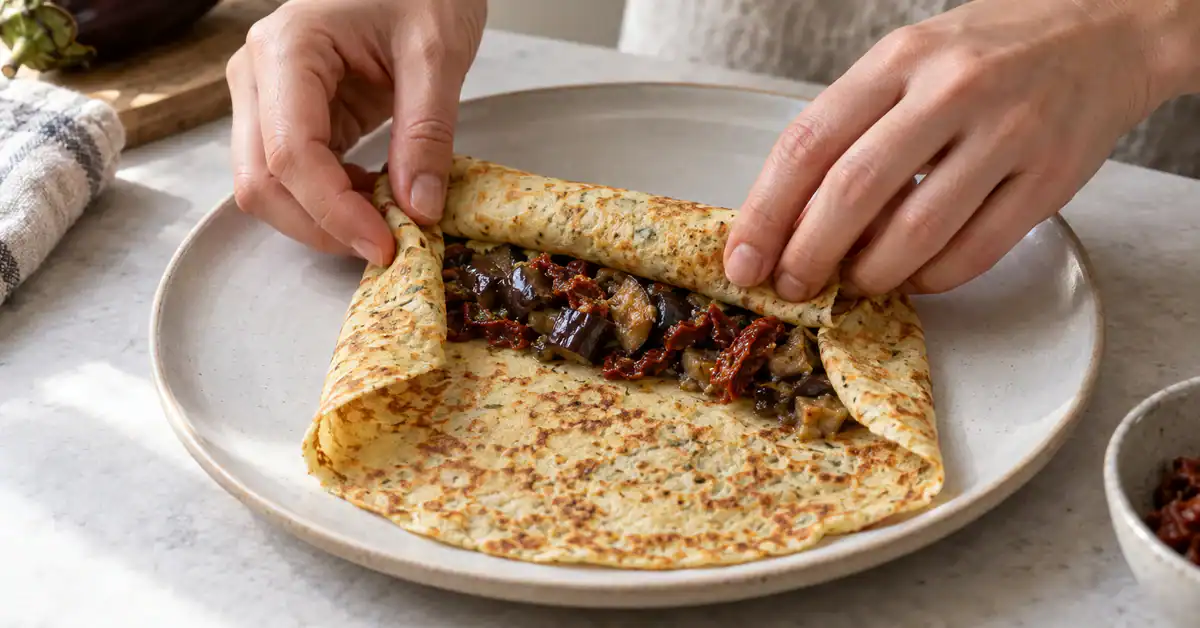
- Fill and roll: distribute the reserved filling between the pancakes, using approximately 2 tablespoons in each. Spread in a strip in the center, fold the sides over the filling, and roll gently without over-tightening, so the dough does not tear. Serve immediately.
Monitor the doneness and avoid common mistakes
Observe the surface and edges more than the clock: the first must lose the brightness of raw dough, and the edges need to loosen before flipping. If it’s still shiny or clinging to the frying pan, wait a few seconds longer; trying to flip too early can tear the pancake.
If the dough browns too quickly or turns dark before setting, reduce the heat and wait for the frying pan to stabilize before adding the next portion. A pancake that takes a long time to cook and becomes pale may indicate the frying pan wasn’t properly heated; keep the medium heat and wait for the surface to begin setting.
When rolling, excess filling or filling concentrated at a single point can cause the dough to open. Distribute it in a central strip and fold without pressing; if the pancake is cold and less pliable, warm it briefly in the frying pan before filling.
Serving and storage
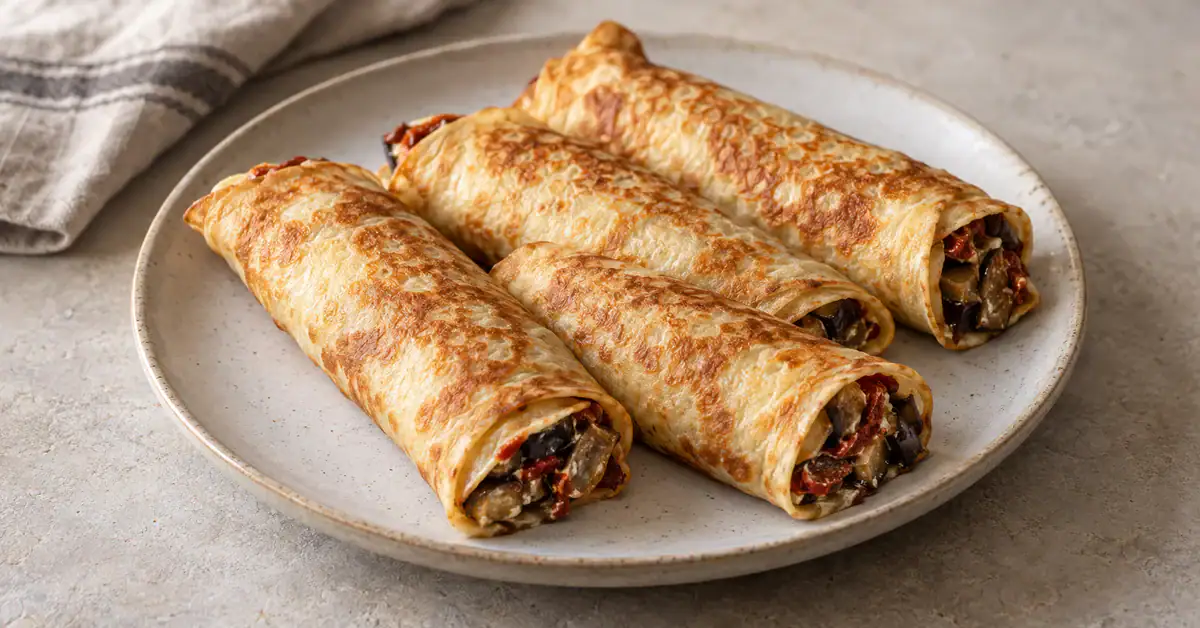
Serve the pancakes immediately after filling, with the fold turned downward to help keep them sealed. To divide into portions, place the whole rolls on the plate; cutting in half also makes serving easier, although the filling may escape from the ends.
If there are leftovers, wait for them to cool and store them in a sealed container in the refrigerator. To reheat, warm them in a lidded frying pan over low heat, turning carefully; remove when they are warm inside, without leaving too much time for the dough to dry out.
Ready to serve
Arrange the rolls with the fold turned down and serve immediately. If you prefer, cut them in half to make serving easier.
Questions about the recipe
Can you mix the dough without a whisk?
Yes, use a fork to beat the egg and mix the liquids. Add the flour gradually, stirring until the dough is smooth and free of large lumps.
How do I keep the aubergine from falling apart in the filling?
Cut it into 1 cm cubes and cook until it is soft when pressed with a spatula, but still retains its shape. Stir occasionally and check the doneness during 8 to 10 minutes of cooking.
Why do pancakes crack when I try to flip them?
Wait until the surface loses the shine of raw dough and the edges begin to loosen. If it’s still sticking to the pan, wait a few more seconds before lifting with a spatula.
How do I keep the rolls from opening up?
Distribute about 2 tablespoons of filling in a strip in the center and avoid pressing when rolling. When serving, keep the fold downward to help keep each roll closed.