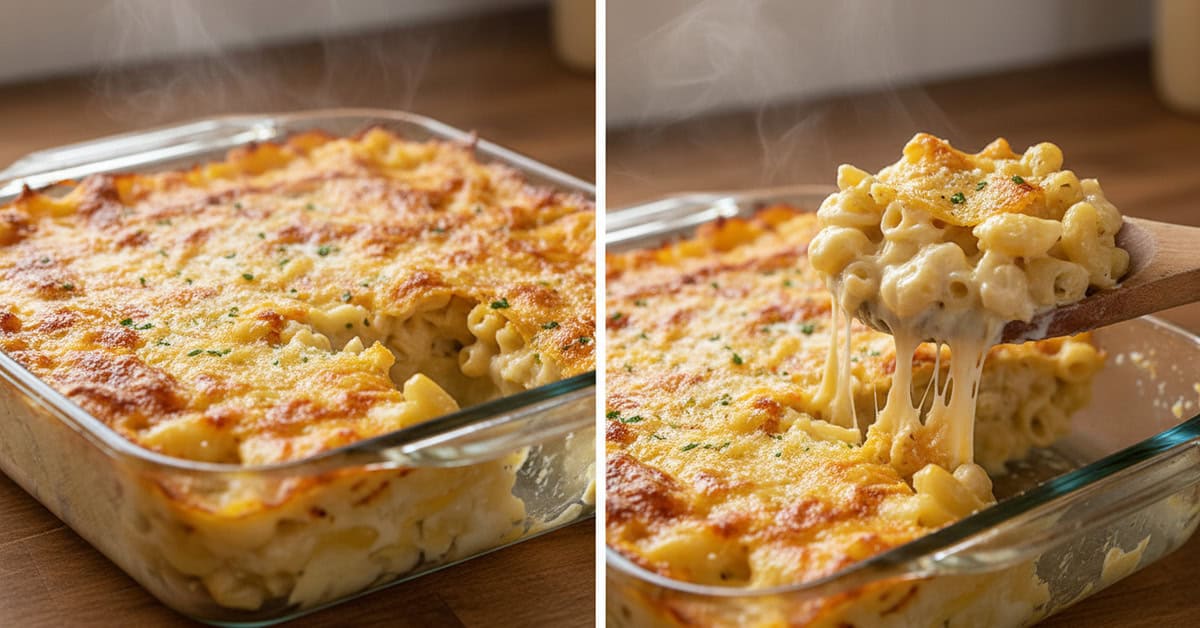

This New England-style baked macaroni and cheese has a creamy cheddar and Gruyère sauce thickened with a roux and a crisp panko topping. Learn how to keep the sauce smooth, add lobster or bacon, or adapt the recipe for a lactose-free or vegan meal.
Creamy under a golden crust, baked macaroni and cheese is a classic dish for sharing. Looking for a few chef’s tricks and easy variations to make it your own?
Ingredients for baked macaroni and cheese
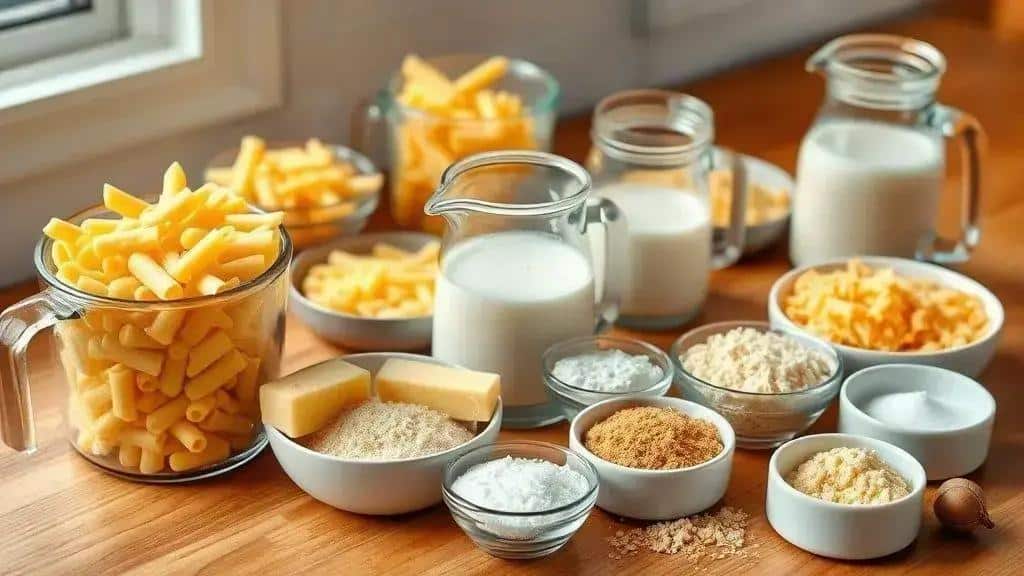
Gather the following ingredients for the macaroni and cheese:
- 400 g elbow macaroni, cooked al dente. Use gluten-free pasta if needed.
- 60 g (4 tablespoons) butter for the roux, plus a little for greasing the dish. For a vegan option, use coconut oil or vegan margarine.
- 45 g all-purpose flour (about 3 generous tablespoons) to thicken the sauce. Gluten-free flour or cornstarch can be used instead.
- 720 ml (3 cups) whole milk for a creamy sauce. Substitute unsweetened, unflavored plant-based milk for a lactose-free or vegan version.
- 240 ml (1 cup) cream, optional, for a silkier sauce. Omit for a lower-fat version.
- 300 g (about 3 cups) shredded cheddar, the main cheese for flavor and color. Use meltable vegan shreds if needed.
- 100 g (1 cup) grated Gruyère or Parmesan for flavor and texture. Pecorino or another firm cheese can stand in.
- 1 large egg (optional) for a firmer set. Omit for a creamier filling.
- 1 teaspoon mustard powder or 1 teaspoon Worcestershire sauce to bring out the cheese flavor, optional.
- ¼ teaspoon grated nutmeg (optional) for a little depth in the white sauce.
- Salt and freshly ground black pepper to taste, taking the saltiness of the cheeses into account.
- 100 g (1 cup) breadcrumbs or panko for a crisp topping. Choose gluten-free crumbs if needed, or use herbs and Parmesan to lower the carbohydrate content of the topping.
- 2 tablespoons melted butter to brown the breadcrumbs. Olive oil works for a lactose-free topping.
Quick substitutions and tips
Gluten-free: use certified gluten-free pasta, flour blend and crumbs. Vegan: use full-bodied plant-based milk for the milk and cream, vegan margarine and meltable dairy-free cheese. Skip the egg and use mustard or vegan Worcestershire. For less fat, replace part of the milk with chicken or vegetable stock and omit the cream. For more flavor, add a pinch of smoked paprika or ½ teaspoon Dijon mustard.
How to make baked macaroni and cheese
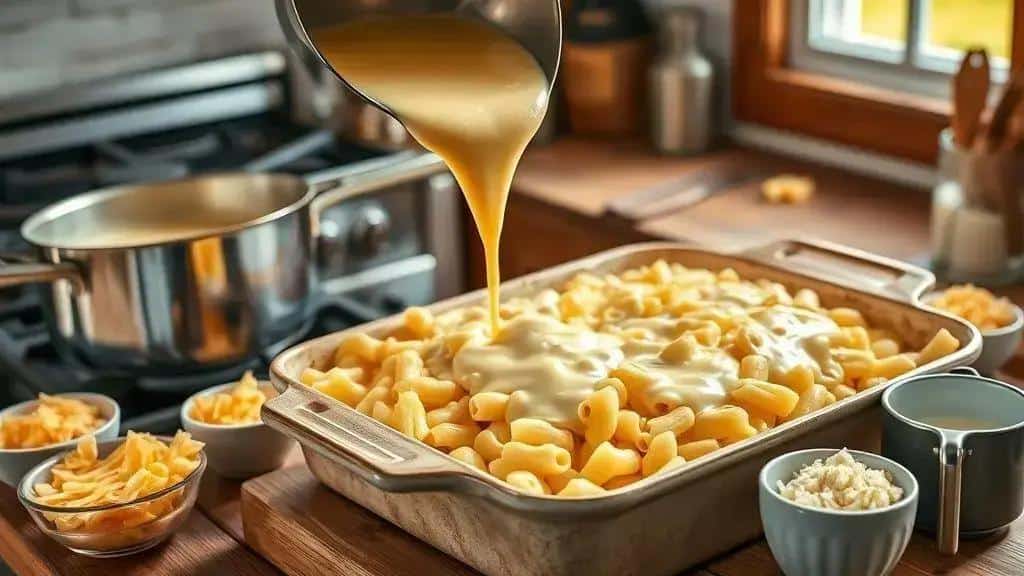
Follow these steps to make the pasta, sauce and crisp topping:
- Preheat the oven to 350°F (180°C) and lightly butter a medium baking dish.
- Boil salted water and cook 400 g elbow macaroni for 1–2 minutes less than the package directs, until barely al dente. Drain and set aside.
- Melt 60 g butter in a medium saucepan over medium heat. Add 45 g flour and stir constantly for 1 minute, until the roux forms a lightly golden paste.
- Gradually whisk in 720 ml milk to avoid lumps. Simmer gently until the sauce thickens enough to coat the back of a spoon. Stir in the optional cream for a richer sauce.
- Add 1 teaspoon mustard powder, ¼ teaspoon nutmeg, and salt and pepper to taste. Cook for another minute to blend the flavors.
- Off the heat, stir in 300 g shredded cheddar and 100 g Gruyère or Parmesan until melted. If using the egg, beat it, whisk in a little hot sauce to temper it and gradually stir it back into the pan.
- Combine the cheese sauce with the drained macaroni in a large bowl, coating the pasta evenly.
- Transfer to the prepared baking dish and smooth the top. Scatter with extra grated cheese if you like a crispier top.
- Mix 100 g breadcrumbs or panko with 2 tablespoons melted butter and ¼ cup grated Parmesan. Sprinkle evenly over the macaroni.
- Bake for 20–25 minutes, until bubbling and golden. For more color, broil for 1–3 minutes, keeping a close eye on the top.
- Rest for 5–10 minutes before serving so the sauce sets slightly and the portions hold together.
Quick tips
Undercook the pasta slightly because it will continue cooking in the oven. For extra creaminess, add 60–120 ml cream. To go egg-free, leave out the egg and add a little more soft cheese. For less lactose, use plant-based milk and a meltable vegan cheese.
New England macaroni and cheese variations and add-ins

A few simple changes can give the same baked macaroni and cheese a different flavor or texture.
Classic and regional variations
- Lobster mac and cheese: fold 200–300 g cooked, chopped lobster meat into the sauce for a rich New England variation.
- Three-cheese version: combine 200 g sharp cheddar, 100 g Gruyère and 50 g Parmesan for a balance of flavor and texture.
- Smoked cheddar: replace part of the regular cheddar with 150 g smoked cheddar for a deeper, slightly sweet flavor.
Meat and vegetable additions
- For a crisp contrast, add 100–150 g cooked, chopped bacon.
- For a heartier, smoky dish, add 200 g seasoned pulled pork.
- Roast broccoli, cauliflower or squash and add 150–200 g for color and extra vegetables.
- Thinly slice a jalapeño or a fragrant Brazilian pimenta-de-cheiro pepper for a little heat, adjusting to your taste.
Toppings and textures
- For a light golden crust, mix 100 g panko with 2 tablespoons melted butter.
- Breadcrumbs and Parmesan make a classic, richly flavored crust.
- Crush buttery crackers or corn crackers over the top for a different crunch.
Options for special diets
- Gluten-free: use 400 g gluten-free pasta and a gluten-free flour blend in the roux. If using cornstarch, use the recipe’s 1:1 measure as a guide, mix it with cold liquid and add gradually until thickened. Choose gluten-free crumbs.
- Vegan and lactose-free: make a sauce with 240–360 ml full-bodied plant-based milk, 200 g cashew cream and 120 g vegan shredded cheese. Add nutritional yeast to taste.
- Lower fat: replace half the whole milk with vegetable stock and use 150–200 g lower-fat cheese.
Portions and practical options
- For individual servings, bake the mixture in ramekins for about 18–20 minutes.
- To make ahead, assemble, cover and refrigerate for up to 24 hours. Bake from chilled in a suitable oven-safe dish, allowing about 5–10 extra minutes, until hot all the way through.
- Freeze individual portions without the crumb topping for up to 3 months. Thaw in the refrigerator, add the topping and bake.
Sides and drinks
- A fresh green salad with citrus vinaigrette balances the creamy pasta.
- Grilled asparagus or snow peas add a welcome contrast in texture.
- Try an unoaked Chardonnay or another moderately acidic white wine, or a light beer, to balance the richness.
How to make a creamy, lump-free cheese sauce

Temperature, steady whisking and gentle cooking make the difference between a smooth cheese sauce and a lumpy one.
Step-by-step technique
- Melt 60 g butter over medium heat. Stir in 45 g flour and cook for 1 minute to form a lightly golden roux.
- Warm 720 ml milk or bring it to room temperature so it blends into the roux more easily.
- Pour in the milk gradually, in a thin stream over two or three additions, whisking well after each addition until smooth.
- Lower the heat and stir for about 3–5 minutes, until the sauce thickens and coats the back of a spoon.
- Season with salt, pepper and ¼ teaspoon nutmeg before adding the cheese so the seasoning disperses evenly.
- Take the pan off the heat and wait 1 minute. Add 300 g shredded cheese a little at a time, stirring until melted.
- If using an egg, beat it separately, whisk in a little hot sauce and slowly stir it back into the pan off the heat to keep it from scrambling.
Preventing and fixing lumps
- A wire whisk helps blend the milk into the roux and break up small lumps.
- If lumps remain, pass the sauce through a fine sieve or blend with an immersion blender for 10–20 seconds.
- If the sauce is thin, simmer gently a little longer or add 1 teaspoon cornstarch mixed with cold water and stir until thickened.
- If the sauce separates, whisk vigorously with a splash of warm milk or stir in 1 teaspoon cold butter to help it come back together.
- Grate cold cheese just before using and choose good melters, such as sharp cheddar or Gruyère. Use very hard, aged cheeses sparingly rather than relying on them for the whole sauce.
- Keep the heat low. Boiling a cheese sauce can separate the fat and leave the texture grainy.
Finishing tips
For immediate baking, you can warm a heatproof metal baking dish before filling it, then assemble and bake right away. Add a pinch of mustard powder or 1 teaspoon Worcestershire to the sauce before the cheese for extra flavor.
Cheese substitutions and dietary options
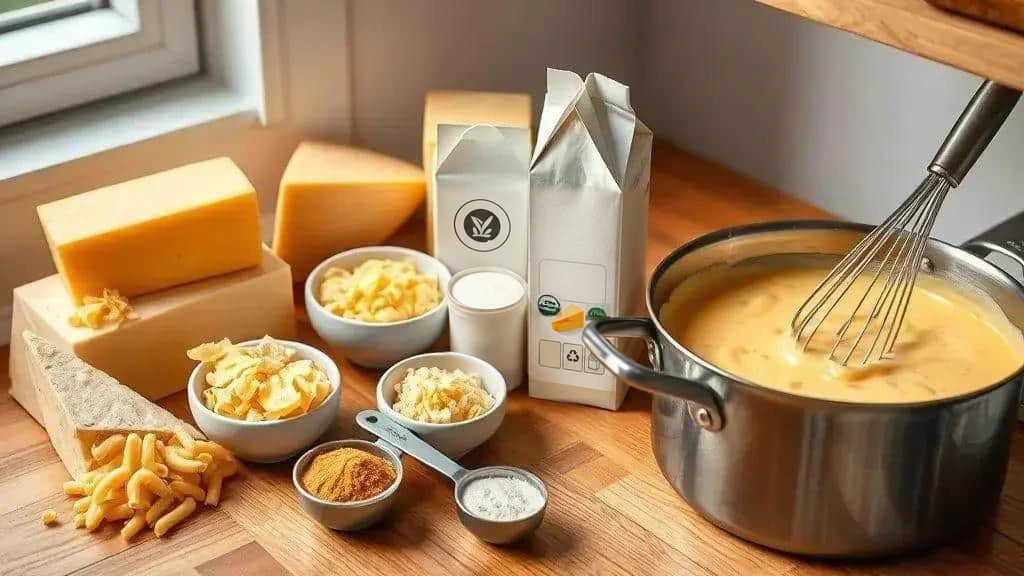
Choosing your cheeses by how they melt and taste makes it easier to adapt the recipe without losing its character.
Substitutes for common cheeses
- Replace 300 g cheddar with 300 g Colby, Red Leicester or Monterey Jack for a mild change in flavor and a good melt.
- In place of 100 g Gruyère, use 100 g Emmental, Fontina or Jarlsberg for creaminess and a slightly sweet note.
- Replace 50 g Parmesan with 50 g Pecorino Romano or Grana Padano for a salty, slightly granular finish.
- If using a very aged cheese, reduce the amount and blend it with a creamier cheese to avoid a grainy texture.
Alternatives for specific diets
- Lactose-free: use 720 ml lactose-free milk and cheeses labeled lactose-free in the same amounts, such as 300 g lactose-free cheddar. Omit regular cream or choose lactose-free cream.
- Vegan and dairy-free: replace 300 g cheese with 200–300 g meltable vegan shreds and 2 tablespoons nutritional yeast for a savory, cheesy flavor. Add 120–180 ml cashew cream for body.
- Lower fat: combine 200 g lower-fat cheese with 100 g strongly flavored cheese, such as Parmesan, and replace part of the whole milk with vegetable stock.
- Gluten-free: replace the flour with a gluten-free flour blend or use the recipe’s 1:1 cornstarch measure, adding it gradually as a slurry. Choose gluten-free panko.
- Nut allergy: avoid cashew and other nut creams. Consider oat or soy milk and vegan cheese made with vegetable oil, checking the labels for your specific allergens.
Practical amounts and equivalents
- Replace cheeses by weight as a starting point: 300 g cheddar for 300 g of the alternative. Adjust the salt at the end.
- For 6–8 servings, use roughly 300 g of the main cheese and 100 g of a complementary cheese.
- For example, a vegan sauce can use 250 g vegan shreds, 150 ml cashew cream and 2 tablespoons nutritional yeast for flavor and body.
Preparing and melting the cheese
- Grate cheese while cold so the shreds melt more evenly.
- Remove the sauce from the heat before adding cheese. A lower temperature helps keep the cheese from turning rubbery or separating.
- Cheddar, Gruyère, Fontina and Monterey Jack melt well. Blend very dry cheeses with a creamier variety.
- If the sauce separates, whisk vigorously with 1 tablespoon warm milk or use an immersion blender for a few seconds.
- When using milder, less salty cheeses, add 1 teaspoon mustard powder or ½ teaspoon Worcestershire sauce to boost the flavor.
Adapting the recipe
Taste the sauce before adding any raw egg, or taste the finished dish. Salt and acidity vary among cheeses and vegan alternatives. Make small adjustments to preserve the balance and texture.
Mac and cheese history and trivia
The history of pasta, the way cheese melts and the many regional variations all help explain this dish’s place among classic comfort foods.
Historical origins
- Medieval English texts from the 14th century describe a pasta and cheese dish called “makerouns.”
- The word “macaroni” comes from the Italian maccheroni, a name associated with short tubular pasta.
- American recipes appear in early 19th-century records. Thomas Jefferson’s household helped popularize pasta after his exposure to European cooking.
Food and culture
- Mac and cheese is a familiar dish at family dinners, holiday meals and shared gatherings in both the United States and the United Kingdom.
- Regional variations range from creamy New England-style versions to lobster, bacon and pulled pork additions.
- Fans and restaurants celebrate National Macaroni and Cheese Day.
Ready-made mac and cheese
- Boxed mixes emerged in the 20th century and helped make the dish inexpensive and widely available.
- Packaged macaroni and cheese helped families keep it on the menu during difficult economic times.
The science of cheese and texture
- Combining cheeses with different fat and moisture levels changes how smoothly the sauce melts and how it tastes.
- A cooked roux, warm milk and steady whisking help prevent lumps. Stirring in the cheese off the heat prevents a rubbery sauce.
- Baking creates a browned crust and firmer set, while stovetop mac and cheese is generally looser and creamier.
Nutrition and adaptations
- Macaroni and cheese is energy-dense and also provides protein and calcium. Portion size and ingredients affect its nutritional profile.
- Lighter cheeses or suitable plant-based milks can lower the calorie content, while whole-grain pasta and roasted vegetables can add fiber.
A few fun facts
- Although closely associated with the United States, versions appear in several other Western cuisines.
- Old cookbooks and letters document how simple pasta and cheese recipes developed into many modern variations.
Conclusion
New England-style baked macaroni and cheese is a versatile, flavorful dish that adapts well to different tastes and dietary needs.
Try the variations and sauce techniques for a creamy, lump-free result. Changing a cheese or topping can give the same recipe a new flavor.
Thanks for reading! Follow us on social media for practical recipes and tips, and visit the Mestre das Receitas blog for new ideas, variations and easy kitchen tricks.
Frequently asked questions about New England baked macaroni and cheese
How should I store and reheat baked macaroni and cheese?
Refrigerate in a covered container for up to 3 days. Reheat, covered, in a 350°F (180°C) oven for about 15–20 minutes, or microwave with a little milk for creaminess. Check for 165°F (74°C) in the center and finish in the oven if you want the crust to brown.
Can I assemble the macaroni and cheese ahead of time?
Yes. Assemble before baking, cover and refrigerate for up to 24 hours. Allow about 5–10 extra minutes when baking from cold, checking that the center is thoroughly heated.
How can I keep lumps out of the sauce?
Use warm or room-temperature milk and gradually whisk it into the roux. If lumps form, strain through a fine sieve or use an immersion blender.
Which cheeses work best, and what can I substitute?
Cheddar and Gruyère melt well, while Parmesan adds flavor. Replace cheddar with Colby or Monterey Jack, or Gruyère with Emmental or Fontina. For a vegan version, use meltable vegan shreds and nutritional yeast.
How can I make it lactose-free or vegan?
For lactose-free mac and cheese, choose lactose-free milk, cream and cheese, or plant-based alternatives. For vegan mac and cheese, use plant-based milk, vegan margarine and vegan cheese, omit the egg and use mustard or vegan Worcestershire. Cashew cream adds body.
How do I get a golden, crunchy topping?
Mix panko or breadcrumbs with melted butter and a little Parmesan. Sprinkle over the pasta and bake until golden. For more color, broil for 1–3 minutes, watching closely so the top does not burn.