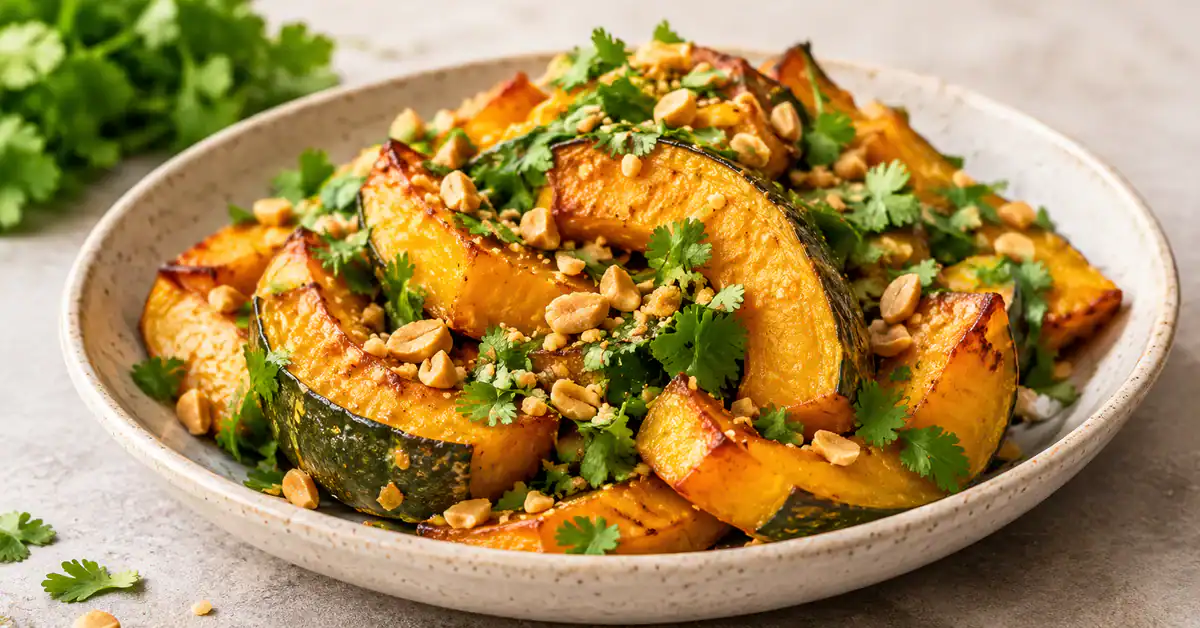

Roasted kabocha squash meets fresh coriander, lemon and toasted peanuts. Roast until tender and golden at the edges. Prepare the topping separately and add it when the squash is warm to keep the herbs fresh and the peanuts crunchy.
Naturally sweet roast squash goes well with fragrant coriander and crunchy peanuts. The topping adds contrast while letting the flavour of the squash come through.
Learn how to prepare the topping and when to add it so the peanuts keep their crunch and the flavours remain balanced.
Ingredients for the topping and squash
These quantities make about 4 portions. Unsalted roasted peanuts add crunch, while fresh coriander and lemon give fragrance and a little acidity.
For the coriander and peanut topping
- 70 g unsalted roasted peanuts
- 15 g fresh coriander leaves and tender stalks
- 1 tablespoon olive oil
- 1 tablespoon lemon juice
For roasting the squash
- 800 g kabocha squash, deseeded, skin on
- 1 tablespoon olive oil
- 1/2 teaspoon salt
- 1/4 teaspoon ground black pepper
Prepare the coriander and peanut topping
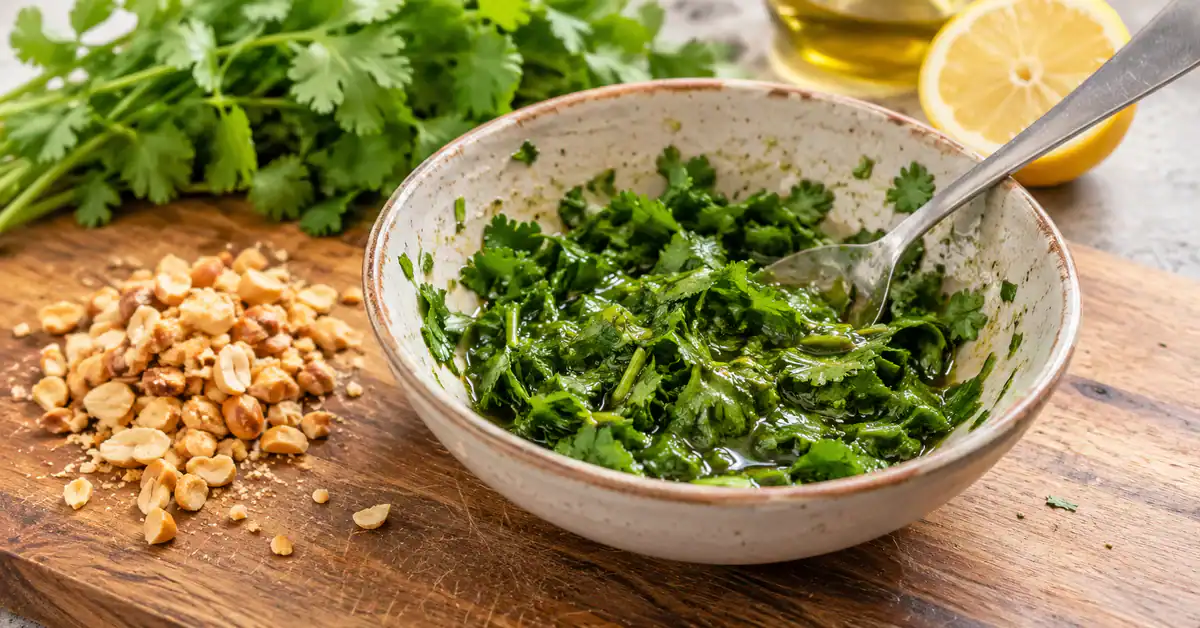
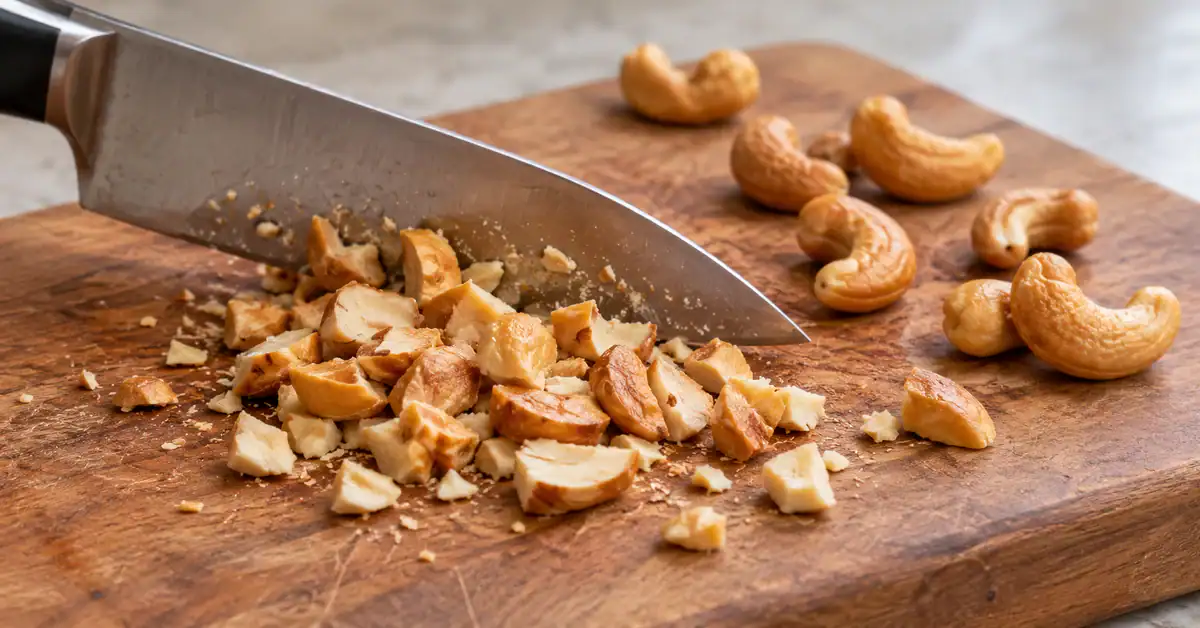
- Put the 70 g unsalted roasted peanuts on a board and chop into small, uneven pieces. Avoid grinding them to a powder, as the larger pieces help keep the topping crunchy.
- Wash and thoroughly dry the 15 g coriander leaves and tender stalks. Chop finely. Blot away any remaining moisture with a clean tea towel or kitchen paper so the mixture does not turn watery.
- In a small bowl, mix the coriander with 1 tablespoon olive oil and 1 tablespoon lemon juice. Stir just enough to coat the leaves without crushing them.
- Keep the chopped peanuts separate while the squash roasts. Stir them into the coriander shortly before serving so they stay crunchy.
Cut and roast the squash
- Preheat the oven to 220 °C and line a large baking tray with baking parchment if you like. Leave space between the pieces in a single layer so they roast without steaming.
- Wash and dry the kabocha. Set it on a stable board and use a sturdy knife to cut slices, then chunks of about 3 cm. Leave the skin on. It is edible after roasting.
- Toss the squash on the tray with 1 tablespoon olive oil, ½ teaspoon salt and ¼ teaspoon black pepper. Arrange without overlapping.
- Roast for about 30–40 minutes, turning halfway through. The squash is ready when a fork slides easily into the flesh and the edges are beginning to brown. Timing depends on the oven and the size of the chunks.
- Take out the tray when the squash is tender but still holds its shape. Let it cool until warm before adding the coriander and peanuts to preserve their freshness and crunch.
Add the topping at the right time
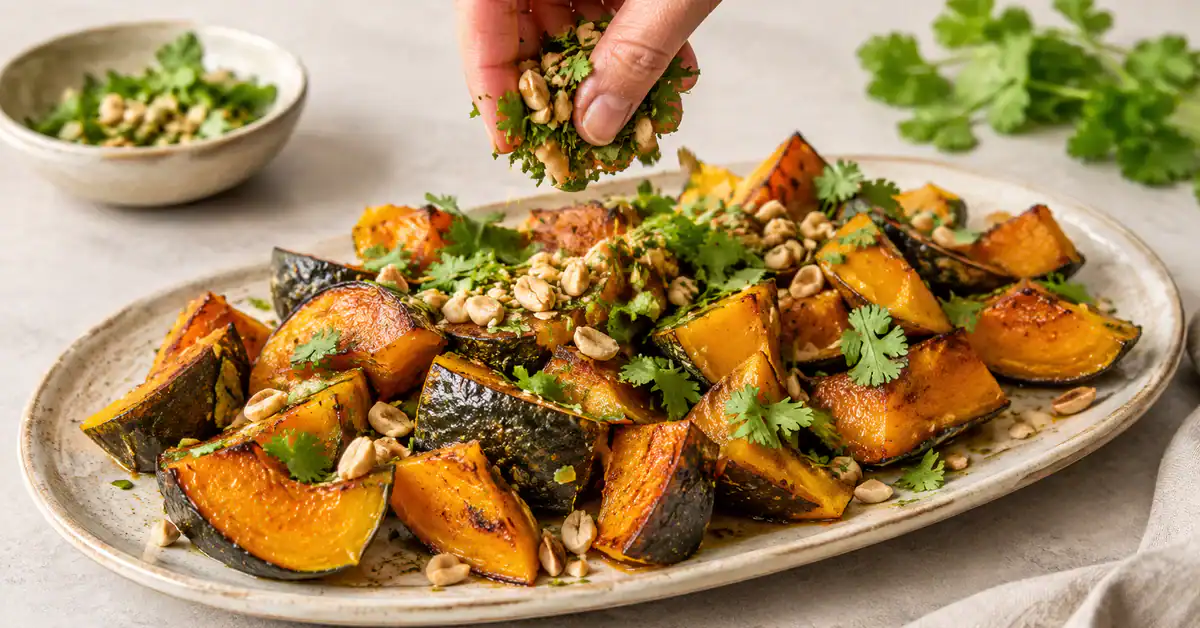
Timing matters. Very hot squash can dull the fresh coriander, while prolonged contact with the moist mixture softens the peanuts.
- After roasting, wait until the squash is warm and no longer giving off much steam.
- Just before serving, stir the chopped peanuts into the coriander with olive oil and lemon. Scatter over the squash or fold through gently without breaking the chunks. Serve immediately while the peanuts still have crunch.
Balancing the flavours
Taste some squash with the topping. The coriander should taste fresh, the lemon lightly tangy and the peanuts crunchy, with the sweetness of the kabocha still clear.
If the topping tastes too strong, serve a little more squash with each bite and spread the topping evenly. For more crunch or peanut flavour, add a few chopped peanuts to each portion. Avoid adding lemon straight away, as the acidity can dominate.
Possible substitutions and variations
To adapt the topping, change one ingredient at a time to see how it affects the dish. The basic combination is fresh coriander and unsalted roasted peanuts.
Replace the peanuts
Use 70 g unsalted roasted cashews or unsalted toasted sunflower seeds instead of peanuts. Chop unevenly as before. Cashews are softer and buttery, while the seeds give a finer, more delicate crunch.
Replace the coriander
Use 15 g fresh parsley in place of the 15 g coriander, keeping the olive oil and lemon juice. Parsley has a milder flavour but still provides a fresh contrast to the roast squash.
Serving and storing
Serve the squash warm, scattering the coriander and peanut mixture over it just before it goes to the table. Spread evenly to flavour each portion without hiding the sweetness of the squash.
Refrigerate leftover squash and topping separately in tightly closed containers. Reheat only the squash and add the topping afterwards. Peanuts lose their crunch over time in damp coriander.
At serving time
Let the squash cool until warm before adding the topping to keep the coriander fresh and the peanuts crunchy. Scatter over just before serving. For a milder aroma, choose the parsley variation.
Questions about the squash and topping
How can I tell the squash is cooked but still holds its shape?
Take it out when a fork slides easily into the flesh and the edges begin to brown while the chunks still hold their shape. If they fall apart when turned, they are past the ideal stage for serving whole.
Can I make the topping while the squash roasts?
Yes. Mix the coriander with 1 tablespoon olive oil and 1 tablespoon lemon juice in advance. Keep the chopped peanuts separate and add just before serving to retain their crunch.
What if the coriander or lemon tastes too strong?
Spread the topping over more squash rather than piling it onto a few pieces. Avoid adding more lemon if the flavour is already strong, as the acidity will stand out even more.
Can I use something else instead of peanuts?
Yes. Use 70 g unsalted roasted cashews or unsalted toasted sunflower seeds, chopped unevenly. Cashews are softer and buttery, while sunflower seeds have a more delicate crunch.
How do I replace coriander for a milder flavour?
Swap the 15 g fresh coriander for 15 g fresh parsley, keeping the oil and lemon juice. The topping loses coriander’s distinctive aroma but still adds freshness to the squash.