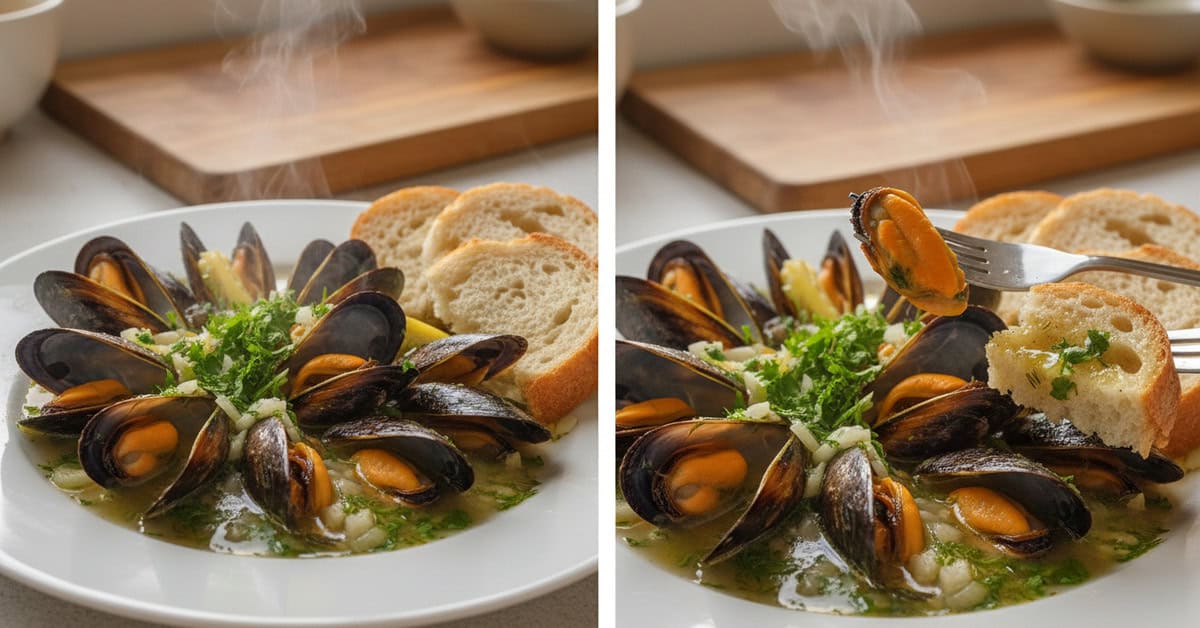

New England steamed mussels are served with a fragrant broth of white wine, butter and herbs. Cook them in an already steaming basket for 4–9 minutes and discard any that stay closed. They provide protein and omega-3 fats. Serve with crusty bread for the broth.
Steamed mussels make a light meal with plenty of flavor. Want to make the New England version? Here’s how to keep the mussels juicy and build an aromatic broth.
Ingredients for New England steamed mussels
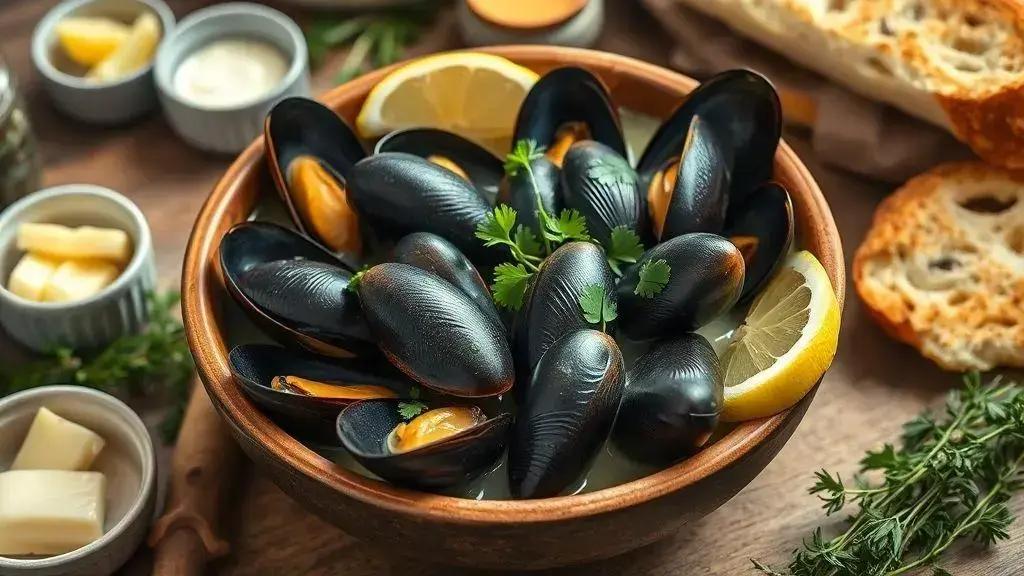
For 4 servings of New England steamed mussels, gather the following ingredients.
- 1.5 kg fresh mussels, cleaned and debearded. Discard any open shells that do not close when tapped.
- 3 tablespoons unsalted butter for a rich, silky broth, or 3 tablespoons olive oil or ghee
- 2 tablespoons olive oil for sautéing the onion and garlic
- 1 medium onion, chopped, or 3 chopped shallots for a milder flavor
- 4 garlic cloves, minced, or to taste
- 250 ml dry white wine for acidity and aroma, or light beer or 250 ml fish stock
- 250 ml heavy cream for the creamy New England version, or half-and-half or whole milk with 1 tablespoon melted butter
- 200 ml fish or shellfish stock for a deeper seafood flavor, or vegetable stock
- 1 bay leaf for a subtle aroma
- 2 sprigs fresh thyme or 1 teaspoon dried thyme
- 3 tablespoons chopped fresh parsley to finish
- Zest and juice of 1 lemon to balance the cream and brighten the broth
- Salt and freshly ground black pepper, added sparingly at the end
- Rustic bread, baguette or sourdough for dipping in the broth
Substitutions and cooking notes
Use fresh ingredients and season gently so the mussels come through. For a lighter broth, halve the cream and make up the difference with stock. For an alcohol-free version, use fish or vegetable stock instead of wine. Regular light beer makes a different version that contains alcohol.
Handling live mussels
Choose live mussels that are closed or close when tapped. Rinse under cold running water, scrub, remove the beards and discard broken or foul-smelling shells. Cook for 4–9 minutes in an already steaming basket and discard any that remain closed.
How to steam mussels step by step
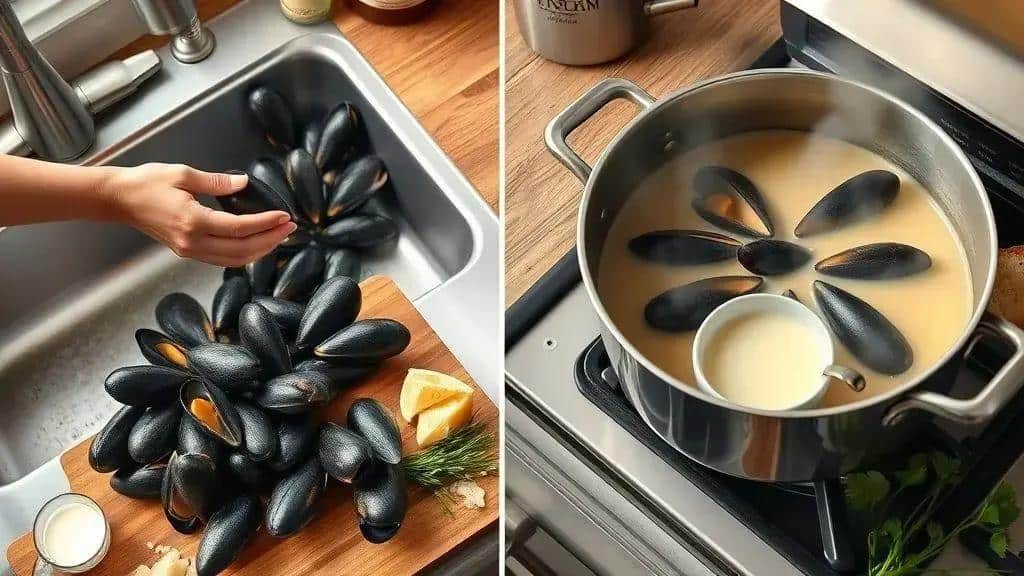
- Sort through the 1.5 kg mussels and discard cracked shells or open ones that do not close when tapped.
- Scrub the shells under cold running water, pull out the beards and rinse away any grit.
- Dice 1 medium onion and mince 4 garlic cloves. Set aside the parsley and lemon zest.
- Measure 250 ml white wine and 200 ml fish stock, or use 450 ml stock for the alcohol-free version.
- Melt 3 tablespoons butter with 2 tablespoons olive oil in a large pot over medium heat.
- Add the onion and sauté for 3 minutes until translucent. Add the garlic and cook for 30 seconds without letting it burn.
- Pour in the wine, scrape up the browned bits and reduce for 1–2 minutes to concentrate the flavor. If avoiding alcohol, start with stock instead.
- Add 250 ml cream, 200 ml stock, 1 bay leaf and 2 sprigs thyme. Fit a steamer basket above the liquid and bring it to a steady steam. Work in batches to suit the pot.
- Spread the mussels in a shallow layer in the already steaming basket. Cover and steam steadily for 4–9 minutes. Use several batches if the pot is small.
- At the end of steaming, lift the lid away from your face and discard any mussels that stay closed. Shells opening early do not establish that cooking is complete.
- Lower the heat, remove the bay leaf and adjust the salt and pepper. Stir in 3 tablespoons chopped parsley and the lemon zest.
- Transfer to a deep bowl, spoon the creamy broth over the mussels and serve immediately with lemon wedges and rustic bread.
Once the steaming time is complete, serve promptly so the mussels stay tender. For a glossy sauce, stir in 1 tablespoon cold butter at the end.
Choosing and cleaning fresh mussels
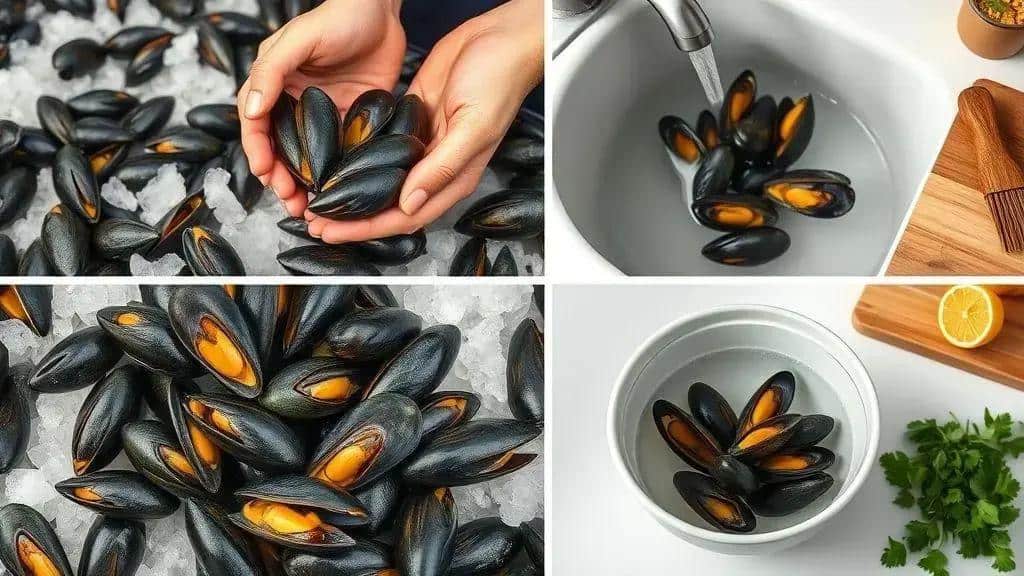
- Look for clean, naturally glossy shells without cracks.
- The shells should be tightly closed or close when tapped. Discard open mussels that do not respond.
- They should smell mildly of the sea. Discard any that smell rotten or of ammonia.
- Buy from a reputable, traceable source and choose a similar size for even cooking.
- Keep refrigerated and use within 24–48 hours of purchase.
Cleaning mussels step by step
- First remove any cracked shells or open ones that do not close when tapped.
- Put the mussels in a colander and rinse briefly under cold running water to remove loose dirt.
- Hold the shell in one hand and grip the beard with the other. Pull firmly toward the hinge. Use a small knife to grip the fibers if needed.
- Use a stiff brush or clean sponge under running water to remove slime and encrusted debris.
- Mussels from an approved supplier need rinsing and scrubbing under cold running water before cooking. Do not soak live mussels in fresh water or use cornmeal to clean them.
- Rinse once more under cold running water and let drain.
- Tap any partly open shells. Keep those that close and discard those that stay open.
Care and storage
- Keep live mussels in an open container covered with a damp towel on a low shelf in the refrigerator. Do not submerge in water.
- Use within 24–48 hours for the best flavor and freshness.
- For this recipe, freeze the mussels after cooking. Do not freeze live mussels in a container of water.
- Discard mussels with an offensive smell, broken shells or a slimy texture.
Steam for 4–9 minutes in an already steaming basket and discard mussels that remain closed after cooking.
Sauces and side dishes for steamed mussels

- Classic white wine and garlic broth is light and aromatic, bringing out the mussels’ natural flavor.
- 250 ml dry white wine
- 3 tablespoons butter
- 1 small onion, chopped
- 3 garlic cloves, minced
- 1 bay leaf
- 2 thyme sprigs
- Salt and pepper to taste
- Melt the butter and sauté the onion for 3 minutes, until translucent.
- Add the garlic and cook for 30 seconds without browning.
- Deglaze with the wine, add the bay leaf and reduce for 1–2 minutes.
- Season with salt and pepper. Cook the mussels in a basket over the already steaming broth for 4–9 minutes. Discard closed mussels before adding the rest to the sauce.
- Creamy New England-style sauce is silky and rich while letting the briny flavor come through.
- 200 ml heavy cream
- 100 ml fish stock
- 2 tablespoons butter
- 1 tablespoon flour, optional, for thickening
- Zest of 1 lemon
- Prepare the white wine broth as described above.
- Lower the heat and stir in the cream and fish stock.
- For a thicker sauce, knead the flour with the butter and whisk it in a little at a time. Cook gently until thickened.
- Heat gently without boiling, adjust the seasoning and add the cooked mussels.
- Spicy tomato and herb sauce adds color and a bright contrast to the dish.
- 400 g peeled tomatoes
- ½ teaspoon crushed red pepper flakes
- 1 garlic clove
- 2 tablespoons olive oil
- Basil or parsley to taste
- Heat the olive oil and briefly sauté the garlic until lightly golden.
- Add the peeled tomatoes and crush them with a spoon.
- Add the chile flakes, simmer for 5–7 minutes and finish with the herbs.
- Gently toss the cooked mussels in the sauce and serve.
Suggested side dishes
- Rustic bread or baguette is ideal for soaking up every drop of broth.
- For classic moules-frites, serve crisp French fries alongside.
- A green salad with a light vinaigrette and lemon balances the rich sauce.
- Boiled corn or buttered peas add sweetness to the briny flavors.
- Fluffy white rice turns the dish into a more substantial meal.
Pairings and serving tips
Choose a light, citrusy white such as Sauvignon Blanc or Pinot Grigio. With a creamy sauce, try a lightly oaked or unoaked Chardonnay. Avoid heavily tannic wines.
Add fresh parsley, thyme or basil at the end to preserve their aroma. Lemon zest gives a bright finish without overpowering the mussels.
Serve the mussels in a deep bowl with plenty of broth showing. Add sliced bread and small bowls of sauces or herb butter so everyone can share.
White wine, beer and cream variations
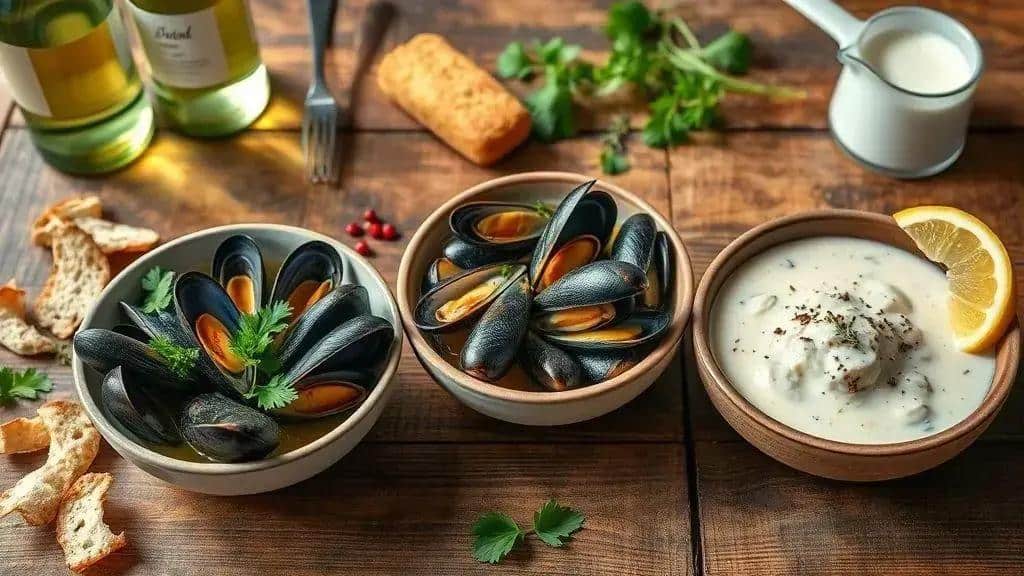
These three versions let you adapt the dish to your ingredients and your taste.
White wine version
- 250 ml dry white wine, such as Sauvignon Blanc or Pinot Grigio
- 3 tablespoons butter or 3 tablespoons olive oil
- 1 small onion, chopped
- 3 garlic cloves, minced
- 1 bay leaf
- 2 thyme sprigs
- Melt the butter, sauté the onion for 3 minutes and add the garlic for 30 seconds.
- Deglaze with the wine and reduce for 1–2 minutes to concentrate its flavor.
- Add the mussels to an already steaming basket, cover and cook for 4–9 minutes. Discard any that remain closed.
- Remove from the heat and add chopped parsley and lemon juice to taste.
Beer version
- 330 ml light-colored beer, such as a mild lager or pilsner
- 2 tablespoons butter to soften the acidity
- 1 medium onion, chopped
- 2 garlic cloves, minced
- Crushed red pepper flakes to taste, optional
- Heat the butter and sauté the onion until translucent.
- Pour in the beer and boil for 1–2 minutes to reduce it slightly. The sauce will still contain alcohol.
- Set the mussels in a basket above the already steaming beer. Cover and cook for 4–9 minutes. Discard any that stay closed.
- Sprinkle with chile flakes for heat and finish with fresh herbs.
Creamy New England version
- 200–250 ml heavy cream for a velvety sauce
- 150 ml fish stock or vegetable stock
- 2 tablespoons butter
- 1 tablespoon flour, optional, for a little extra body
- Zest and juice of 1 lemon
- Sauté the onion and garlic in butter until softened.
- Add the stock and simmer for 1 minute, then lower the heat.
- Stir in the cream and warm gently without boiling to keep it smooth.
- To thicken, work the flour into a little butter and whisk it into the sauce. Cook gently until smooth and thickened.
- Cook the mussels in an already steaming basket for 4–9 minutes, discard any that stay closed and fold the rest into the sauce. Finish with lemon zest and parsley.
Practical notes
- Time 4–9 minutes from the moment the mussels enter strong steam. Opening alone is not a reliable end point. Discard any shells that stay closed.
- Use stock instead of wine for an alcohol-free version. For a lactose-free version use plant-based cream and olive oil instead of dairy butter.
- Wine gives acidity, beer adds a slight bitterness and body, and cream mellows the briny flavor with a silky texture.
Mussel facts and nutritional value

Mussels are bivalve mollusks with a long culinary history. They are nutritious, versatile and at home in many traditional dishes.
A few facts
- Mussels feed by filtering the water around them and play a role in coastal ecosystems.
- Mussel farms use little added feed, which helps keep the environmental footprint relatively low.
- French moules marinières and New England steamed mussels are two well-known preparations.
- They cook quickly: give them 4–9 minutes in an already steaming basket and discard any that stay closed.
Approximate nutrition per 100 g cooked mussel meat
- Energy: about 170 kcal
- Protein: about 24 g, contributing to fullness and normal muscle maintenance.
- Fat: about 4 g, including omega-3 fatty acids.
- Carbohydrates: about 7 g
- Iron: about 6 mg. Iron supports normal red blood cell formation.
- Zinc supports normal immune function.
- Vitamin B12 is abundant and contributes to normal nervous system function.
Mussels as part of a balanced diet
- Lean protein makes them a filling choice and helps support muscle maintenance.
- They provide omega-3 fats and are low in saturated fat, making them a useful part of a heart-healthy eating pattern.
- Iron and zinc contribute to normal energy metabolism and immune function.
Allergies and food safety
- Anyone allergic to mussels should avoid them even when fully cooked. If you have another seafood allergy, check with your allergist about your individual risk.
- Buy mussels from an approved, traceable source. Marine toxins can occur even in clear water, and cooking does not destroy all of them.
- Refrigerate live mussels in an open container covered with a damp cloth and use within 24–48 hours.
- Steam for 4–9 minutes in an already steaming basket and discard any shells that stay closed.
- People who are pregnant or have weakened immune systems should avoid raw or undercooked mussels.
Pair mussels with vitamin C sources such as lemon or parsley to help the body absorb iron from the meal.
To finish
Steamed mussels are quick to cook and easy to vary. A few simple steps keep the meat juicy while making sure it cooks through.
Try the wine, beer and cream versions and give the same care to selecting and cleaning the mussels for each one.
Thanks for reading! Follow us on social media for more easy recipes and cooking tips. Visit the Mestre das Receitas food blog to see what’s new.
Share your photos and tell us how your mussels turned out. We love seeing what you make.
Frequently asked questions about steamed mussels
How can I tell if mussels are fresh?
Look for shiny shells that are closed or close when tapped and have a mild sea smell. Choose similar sizes for even cooking. Reject cracked shells or any with an unpleasant odor.
How long should mussels steam?
Add to a basket already filled with steady steam. Cover and cook for 4–9 minutes. Discard any that stay closed, and do not end cooking just because the first few shells have opened.
How do I clean mussels?
Rinse under cold running water, scrub the shells and pull off the beards. Rinse again and drain. Do not soak live mussels in fresh water.
Can I substitute the white wine?
Yes. Use the same amount of fish or vegetable stock for an alcohol-free dish. Light beer is another option for a different flavor.
How do I store mussels before cooking?
Keep them refrigerated in an open container covered with a damp cloth and use within 24–48 hours. Do not keep them submerged in fresh water.
Who should avoid mussels?
People allergic to mussels should avoid them even when cooked. Those who are pregnant or immunocompromised should avoid raw or undercooked mussels and discuss any concerns with a health professional.