

New England lobster bisque is a velvety soup made with concentrated lobster shell stock, pieces of lobster meat and cream. Blending and fine straining give it its silky texture. You can also make it lactose-free or use other seafood.
Lobster bisque is a comforting New England classic. Want to make it at home? I’ll show you how to turn lobster shells and meat into a silky soup, with practical substitutions along the way.
Ingredients for New England lobster bisque

For 4 servings of New England lobster bisque, gather the following ingredients.
- 2 whole lobsters, about 1–1.2 kg in total. Cook them, remove and reserve the meat, and keep the shells for stock.
- 400 g lobster meat, cut into large pieces to finish the soup. Crab or shrimp can stand in.
- 4 tablespoons (60 g) unsalted butter for sautéing, or olive oil for a lactose-free version
- 1 medium onion, chopped, for the aromatic base
- 1 medium carrot, chopped, for sweetness and color
- 2 celery stalks, chopped, to balance the flavors
- 2 garlic cloves, minced, or to taste
- 2 tablespoons tomato paste, optional, for depth and color
- 60 ml brandy or white wine for deglazing, or extra stock to avoid alcohol
- 1.2 liters fish or seafood stock for the shell broth. Strong vegetable stock makes a different base, though the finished soup still contains lobster.
- 250 ml heavy cream, or plant-based cream or coconut milk for a lactose-free alternative
- 100 ml whole milk to adjust the consistency. Omit it for a richer, cream-only bisque.
- 2 tablespoons all-purpose flour to thicken lightly, or 1½ tablespoons cornstarch for a gluten-free version
- 1 bay leaf for the stock
- 1 teaspoon fresh thyme or ½ teaspoon dried
- 1–1½ teaspoons salt and black pepper to taste, adjusted after reducing the broth
- 1 pinch cayenne or smoked paprika, optional, to bring out the flavor
- Juice of ½ lemon for a little acidity at the end
- 1–2 tablespoons chopped chives or parsley to finish
- Rustic bread or toast to serve
Substitutions and quick tips
Keep the shells for the stock. For a quick version, start with 1 liter prepared fish stock and add 2 tablespoons tomato paste and lightly roasted shells.
For lactose-free bisque, use olive oil instead of butter, plant-based cream or coconut milk instead of cream, and unsweetened almond milk or extra stock instead of whole milk. The flavor will change slightly.
If using cornstarch, mix it with a little cold water first to prevent lumps. Adjust the salt after reducing the soup.
How to make lobster bisque step by step

Prepare the lobsters and stock
- Use 2 fresh lobsters weighing about 1–1.2 kg in total. Cook in boiling water and start checking after 8–10 minutes. The thickest part of the tail should reach 145°F (63°C). Lift out, cool briefly until you can handle them and carefully remove the meat.
- Cut the meat into large pieces and refrigerate in a covered bowl. Keep the shells and tips for stock.
- Roast the shells on a baking sheet at 390°F (200°C) for 10–12 minutes to deepen the flavor. Watch that they do not burn.
- Melt 2 tablespoons butter in a large pot. Sauté 1 chopped onion, 1 chopped carrot and 2 chopped celery stalks for 4–5 minutes, until softened.
- Stir in the roasted shells and 2 tablespoons tomato paste and cook for 2 minutes.
- Off the heat, add 60 ml brandy or white wine. Return to the heat and reduce briefly for flavor. For an alcohol-free version use stock instead. Add 1.2 liters water or fish stock, the bay leaf and thyme, bring to a boil and simmer for 45–60 minutes.
- Strain the stock carefully and discard the solids. For a stronger flavor reduce the liquid over medium heat.
Thicken and finish the bisque
- In another large pot, melt the remaining 2 tablespoons butter and sauté 1 small chopped onion and 1 garlic clove until softened and the onion is translucent.
- Add 2 tablespoons flour and stir for 1–2 minutes to cook out its raw flavor.
- Gradually whisk in 500–700 ml lobster stock to avoid lumps. Simmer for 8–10 minutes until lightly thickened.
- Blend with an immersion blender or in small batches in a blender suitable for hot liquids. Pass through a fine-mesh strainer or chinois for a silky finish.
- Return to low heat and stir in 250 ml heavy cream and 100 ml milk without boiling. For a lighter version, use less cream or choose plant-based cream.
- Add the cooked lobster pieces. Freshly cooked, still-warm meat may need only 1–2 minutes. If using refrigerated leftovers, heat them to 165°F (74°C) throughout.
- Taste and adjust the salt (1–1½ teaspoons), black pepper and a pinch of cayenne or smoked paprika. Finish with the juice of ½ lemon.
- Serve hot in bowls with a swirl of cream, chopped chives or parsley, and rustic bread on the side.
Mix 1½ tablespoons cornstarch with cold water before adding it, if using. For a lactose-free version use olive oil and plant-based cream or coconut milk, and replace the milk with unsweetened almond milk or more stock.
Making stock and drawing out flavor from the shells

Use these steps to get a clear, aromatic stock with plenty of flavor from the shells.
- Rinse the shells from both cooked lobsters and break them into pieces to expose more of the interior.
- Spread on a baking sheet and roast at 390°F (200°C) for 10–12 minutes, until lightly browned and aromatic.
- In a large pot melt 2 tablespoons butter or heat olive oil. Soften 1 chopped onion, 1 chopped carrot and 2 chopped celery stalks for 4–5 minutes.
- Stir in the roasted shells and 2 tablespoons tomato paste and cook for 1–2 minutes until the paste darkens slightly.
- Off the heat, pour in 60 ml brandy or white wine. Return the pot to the heat and loosen any browned bits from the bottom.
- Add 1.2 liters water or fish stock, 1 bay leaf and the thyme. Bring to a gentle simmer and cook on low for 45–60 minutes without a hard boil.
- Skim away foam and fat that collect around the edges as the stock simmers.
- Strain into a clean pot through a fine sieve or chinois, pressing the shells lightly to collect the flavorful liquid.
- If you want a stronger stock, reduce the strained liquid over medium heat to taste.
- Chill the stock until the fat sets, then lift it off with a spoon. Adjust salt and acidity with lemon juice at the end.
Essential tips
- Avoid a rolling boil, which can make the stock cloudy and bitter.
- For a silky result, strain twice, first through a coarse sieve and then through a chinois or fine cloth.
- Brandy heightens the aroma. For an alcohol-free version, use extra stock and 1 teaspoon white wine vinegar.
- For a shortcut, start with 1 liter prepared fish stock and enrich it with lightly roasted shells, if available, and 1 tablespoon tomato paste.
- Freeze the stock in portions for soups and risotto for up to 3 months.
Texture and finishing touches for a velvety bisque

A silky bisque depends on emulsifying, straining and controlling the heat. Small adjustments make a marked difference.
Techniques for a silky texture
- For 1.2 liters of stock, reduce the volume by 15–25% to intensify flavor without making it too heavy.
- Make a light roux with 2 tablespoons butter and 2 tablespoons flour. Alternatively, mix 1 egg yolk with 30–50 ml cream, temper with a little hot stock and stir into the bisque. Heat while stirring until it reaches 160°F (71°C) throughout.
- Stir in 200–250 ml heavy cream over low heat. Keep it below a hard boil to prevent it from splitting.
- Use an immersion blender or a blender on low speed to emulsify the soup, then pass it through a fine sieve to remove fibers and small fragments.
- For an optional beurre monté finish, whisk in 30–50 g cold butter off the heat until the soup is glossy.
Finishing and balancing the cream
- Serve hot but below boiling. At 158–167°F (70–75°C) the bisque stays creamy without separating.
- Finish with the juice of ½ lemon or 1 teaspoon white wine vinegar to balance the richness.
- Add cooked lobster at the end to keep the pieces juicy. Still-warm meat may need only 1–2 minutes. Reheat refrigerated leftovers to 165°F (74°C) throughout.
- If too thick, stir in hot stock a little at a time. If too thin, reduce further or add 1 tablespoon cornstarch mixed with cold water.
- Top with a swirl of cream, chopped chives or a pinch of smoked paprika, and serve with rustic bread.
Strain twice and taste at the end. A good bisque glides off a spoon, leaving a silky coating.
Lactose-free and alternative seafood versions

You can adapt lobster bisque for a lactose-free meal or vary the seafood. Here are some measured substitutions.
Lactose-free option
- Replace 4 tablespoons (60 g) butter with 4 tablespoons (60 ml) olive oil or lactose-free margarine.
- Replace 250 ml heavy cream with 250 ml plant-based cream or light coconut milk for a milder flavor.
- Replace the 100 ml whole milk with the same amount of unsweetened almond milk or extra stock.
- For a gluten-free thickener, use 1½ tablespoons cornstarch mixed with 2 tablespoons cold water instead of 2 tablespoons flour.
- The texture may differ slightly. Adjust the salt and finish with the juice of ½ lemon.
With other seafood
- Use 300–400 g cooked crabmeat for sweet flavor and a texture close to lobster.
- Use 250–300 g medium cleaned shrimp. Cook until firm, pearly and opaque, then add in the final 1–2 minutes.
- Sear 200–250 g scallops just until the flesh is firm and opaque.
- For mixed seafood, combine 150 g shrimp, 150 g scallops and 100 g crabmeat. Stagger the additions according to cooking time.
- Add delicate seafood toward the end so it does not dry out.
Adjusting richness and flavor
- For a lighter soup, use 150 ml cream and add an extra 100–200 ml fish stock.
- For more intensity, reduce the stock by 15–30% before adding cream.
- For a smoky note, add ¼ teaspoon smoked paprika.
- For a more aromatic version, add 1 extra teaspoon fresh thyme and a little lemon zest.
Thickener substitutions and allergy considerations
- Instead of 2 tablespoons flour, use 1½ tablespoons cornstarch mixed with cold water or 1 tablespoon potato starch.
- For a shellfish-free soup, use concentrated chicken stock and cooked chicken pieces for a creamy chicken version.
- For a plant-based bisque, replace the shells and seafood with roasted mushrooms and bell pepper. Use 1.2 liters concentrated vegetable stock, 250 ml plant-based cream and plant-based options for the other dairy.
Practical tips and final seasoning
- Taste after adding the cream and only then adjust salt, pepper and acidity with the juice of ½ lemon.
- Add cayenne a pinch at a time for a subtle lift.
- Freeze the concentrated stock without cream for up to 3 months. Add the cream as you thaw and reheat.
- When using plant-based ingredients, blend and strain for the same velvety finish.
Lobster facts and key ingredient tips
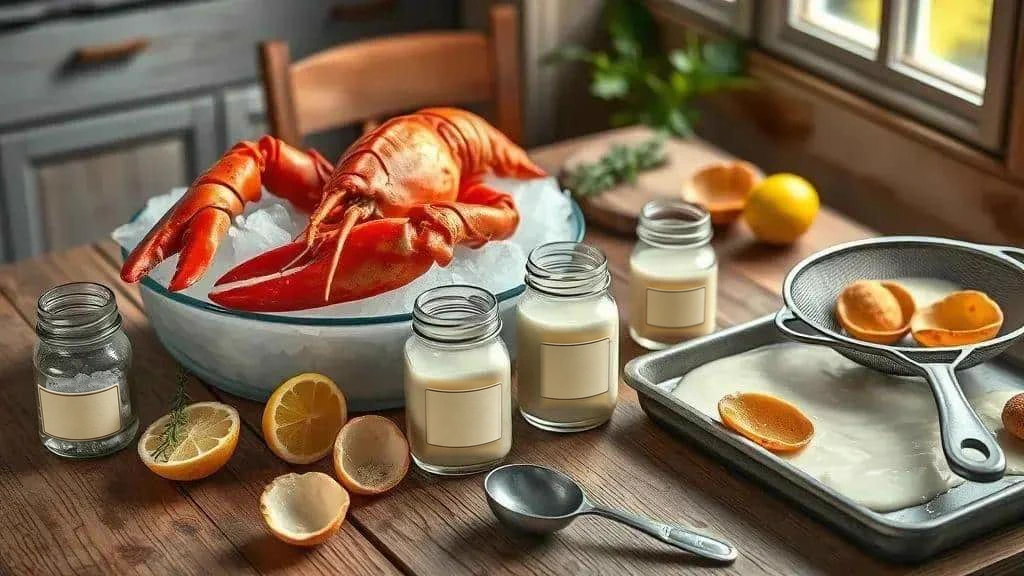
A few facts about lobster and the other ingredients help explain their roles in a good bisque.
Quick lobster facts
- The shells and the tissues clinging to them give the stock body and savory flavor. That is why they form the base of a bisque.
- Season and price vary by region. Outside the main season, cost and quality may fluctuate.
- The American lobster (Homarus americanus) is common in New England. Crab and shrimp can be more affordable substitutes.
- Shellfish are common allergens. Tell guests what the bisque contains.
Buying and choosing lobster
- A live lobster should have moving antennae and a mild, clean smell.
- Precooked lobster saves time but can yield a less flavorful stock. Roasting the shells helps bring out the flavor.
- Ask your fishmonger to save the shells. They make a particularly aromatic stock.
Storage and shelf life
- Refrigerate cooked lobster meat in a covered container for up to 48 hours.
- Freeze the meat in airtight packaging for up to 3 months. Add a little lemon juice if desired.
- Freeze stock in portions for up to 3 months. Add cream only during reheating.
Kitchen techniques and tips
- Cook lobster to 145°F (63°C) at the thickest part of the tail. The meat should be opaque and firm. Remove it promptly once it reaches this point so it stays tender.
- Roast the shells in the oven to brown them lightly and deepen their flavor before making the stock.
- Brandy or white wine loosens the flavorful browned bits. Use sparingly so it does not overpower the lobster.
- For a silky bisque, strain first through a coarse sieve and again through a chinois or fine cloth.
Key ingredients and final adjustments
- Use heavy cream for the classic texture, or choose plant-based cream for a lactose-free alternative.
- A squeeze of lemon at the end brightens the flavor and balances the rich cream.
- Adjust salt and pepper after reducing the stock and adding the cream.
- A little fresh thyme or lemon zest gives the finished dish a lift.
Practical ways to reduce waste
- Use shells and suitable leftovers for stocks and sauces to reduce waste and add flavor.
- Look for responsibly sourced or certified seafood and avoid threatened species.
- For an economical shortcut, combine a good prepared stock with roasted shells.
To finish
New England lobster bisque combines simple ingredients with careful technique. A flavorful stock and a gentle finish turn them into a refined, velvety soup that you can make at home.
Try the lactose-free and seafood variations, and adjust the seasonings to taste. Take your time and taste at the end to balance salt and acidity.
Thanks for reading! Follow us on social media for more recipes, quick tips and news. Visit the Mestre das Receitas food blog and share your version. We love seeing what you make.
Frequently asked questions about New England lobster bisque
How do I choose a fresh lobster for this recipe?
Choose a live lobster or one that has just been cooked. Look for a mild smell and, in a live lobster, moving antennae. If using precooked lobster, roast the shells for a more flavorful stock.
Can I make lactose-free bisque?
Yes. Replace butter with olive oil, 250 ml heavy cream with plant-based cream or light coconut milk, and the 100 ml milk with unsweetened almond milk or stock. Adjust salt and acidity to taste.
What is the best way to store the stock and bisque?
Freeze the strained stock without cream in portions for up to 3 months. Add the cream only when reheating. Refrigerate cooked lobster meat for up to 48 hours.
How do I get the characteristic velvety texture?
Reduce some of the stock, thicken with a light roux or an egg yolk and cream liaison, blend and strain through a chinois. Add cream gently. If using egg yolk, stir over the heat until the bisque reaches 160°F (71°C) throughout, without hard boiling.
What can I use instead of lobster?
Use crab, shrimp or scallops in the suggested amounts, such as 300–400 g crab or 250–300 g shrimp. For a vegan version use roasted mushrooms and concentrated vegetable stock in place of shellfish and choose the plant-based alternatives to dairy.