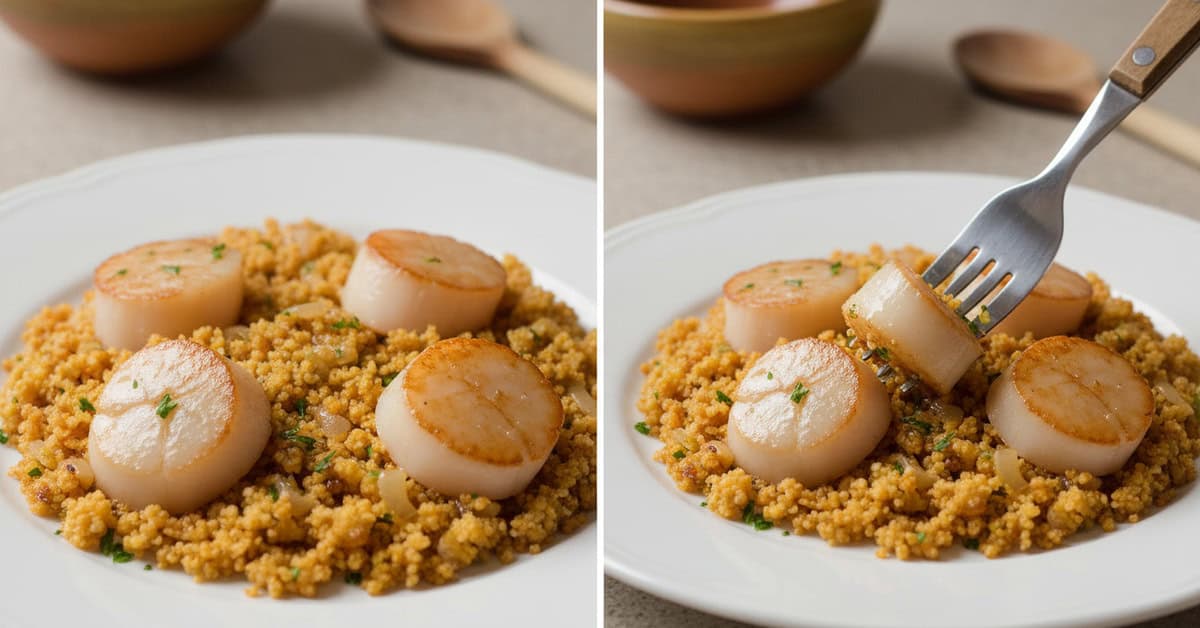

A New England scallop bake pairs seared scallops with white wine, butter and a crisp golden topping. Here toasted cassava crumbs add crunch. Try panko, nuts or citrus zest for a change.
These New England-style baked scallops with crisp farofa make an elegant, easy dinner. I’ll show you how to choose the ingredients, sear the scallops and adapt the topping to your taste.
Ingredients for New England baked scallops with farofa
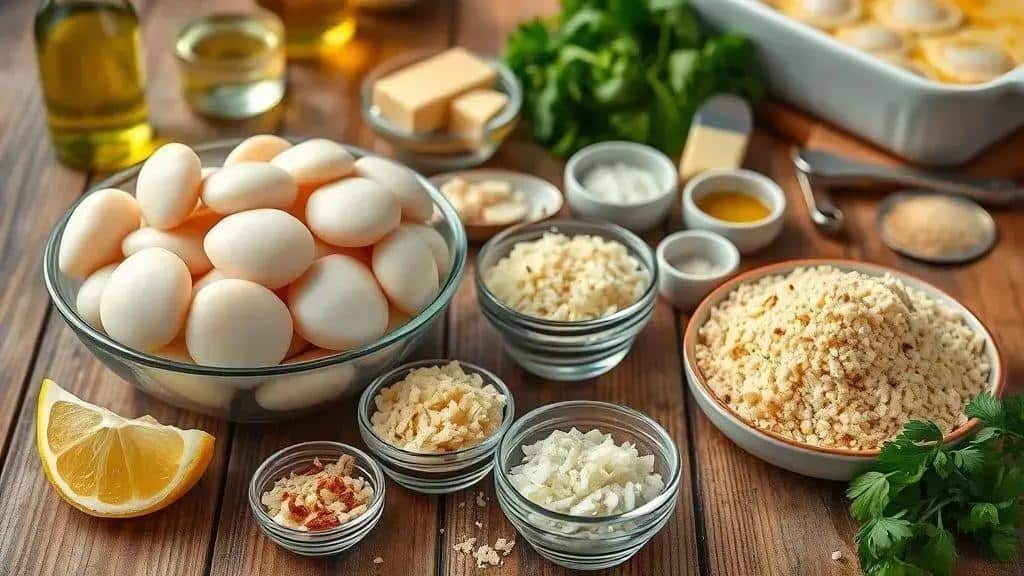
- 800 g cleaned scallops (about 12–16). Choose fresh scallops or thaw frozen ones in the refrigerator and pat dry. Substitute shelled medium shrimp if desired.
- 100 g unsalted butter for searing and flavor, or use 80 ml olive oil or clarified butter.
- 1 cup (120 g) prepared crisp cassava farofa for the topping. Panko or breadcrumbs also work.
- ½ cup (50 g) grated Parmesan for a savory crust, or use pecorino or aged Minas cheese.
- 3 garlic cloves, minced, or 1 teaspoon garlic paste.
- 1 small onion, chopped, to sauté for the farofa if desired.
- 100 g diced bacon (optional) for a crisp, savory topping. Substitute pancetta or chopped dry-cured ham.
- 1 lemon, zest and juice. Its acidity balances the butter. Alternatively, use 2 tablespoons white wine vinegar.
- 60 ml dry white wine for deglazing, or 60 ml fish stock or water with a dash of vinegar.
- 60 ml cream (optional) for a creamy sauce between the scallops. Plant-based cream or thick plain yogurt also works.
- 2 tablespoons fresh parsley, chopped, to finish.
- 2 tablespoons olive oil for drizzling and browning.
- Salt and black pepper to taste. Season sparingly because the Parmesan and bacon are salty.
Notes and substitutions
Homemade farofa: toast 1 cup cassava flour in 2 tablespoons butter with chopped onion and bacon until crisp. For a meatless topping leave out the bacon and add chopped walnuts or other nuts.
Choosing scallops: look for firm flesh and a mild scent. Large fresh scallops are easy to handle. Frozen scallops work well if thawed slowly in the refrigerator.
For a creamier bake, mix cream, white wine and a little butter and pour over the scallops before adding the crumbs. For a lighter version use just olive oil and lemon zest.
How to bake scallops with farofa
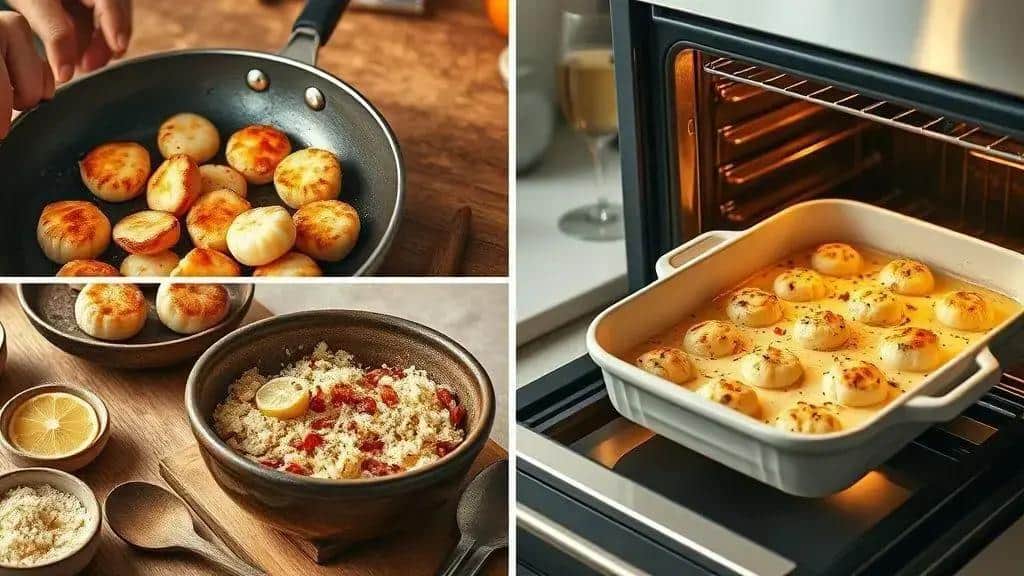
- Preheat the oven to 200°C and grease a shallow baking dish with butter or olive oil.
- Pat the 800 g of cleaned scallops dry with paper towels. Remove any side muscles. Season lightly with salt, pepper and lemon zest.
- Heat a large skillet over high heat with 1 tablespoon each of butter and olive oil until very hot.
- Arrange the scallops without touching. Sear for 1–1½ minutes per side until golden, then set aside. Work in two batches if necessary to keep the skillet hot.
- Reduce the heat to medium. Add 60 ml white wine and scrape up the browned bits. Add 1 of the 3 garlic cloves and a quarter of the small onion, both chopped. Cook 1 minute, then turn off the heat. If using the 60 ml cream, warm until blended.
- In another pan, brown the optional 100 g diced bacon. Add 2 tablespoons butter, the remaining garlic and onion, and 1 cup (120 g) farofa or panko. Stir until golden. Finish with ½ cup (50 g) grated Parmesan, lemon zest and 2 tablespoons chopped parsley.
- Spread a thin layer of sauce over the base of the baking dish. Arrange the seared scallops on top in a single layer with space between them.
- Cover evenly with crisp farofa and drizzle with 1–2 tablespoons melted butter or olive oil to help the top brown.
- Bake at 200°C for about 6–8 minutes, until the topping is golden. Check the center of the thickest scallop. The flesh should be firm, pearly and opaque, at about 63°C.
- Squeeze the juice of half a lemon over the scallops, scatter with fresh parsley and serve right away. Pair with white rice or green salad and sliced bread for the sauce.
How to keep scallops juicy
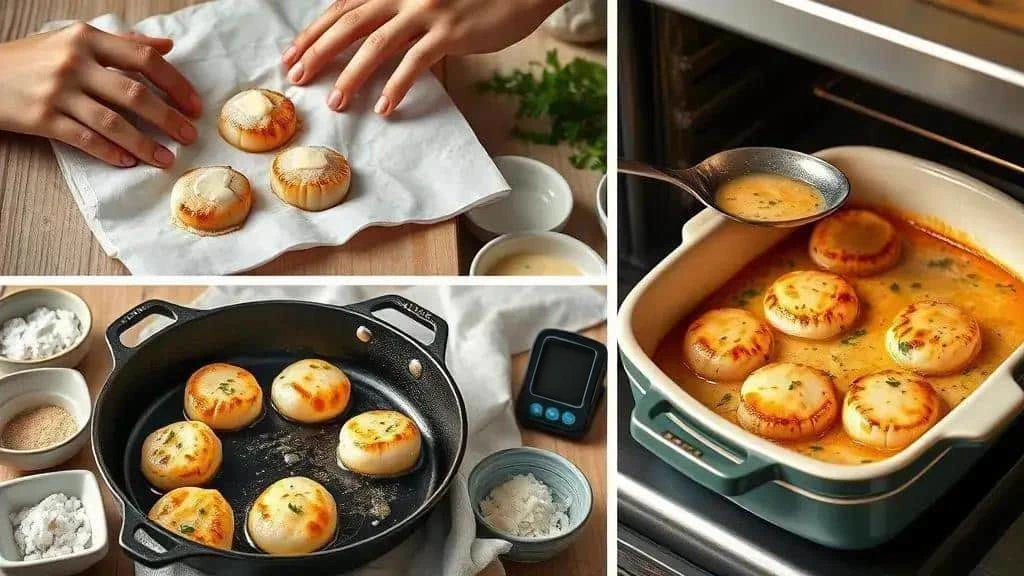
High heat for searing, a short cooking time and a dry surface help keep scallops tender. Small adjustments keep the flesh from turning rubbery.
Getting a golden sear
- Pat the scallops between sheets of paper towel until no surface moisture remains.
- Season just before searing. Salt and pepper at the last minute so the salt does not draw out moisture.
- Heat the skillet over high heat with oil and a little butter for flavor. The scallops should sizzle on contact.
- Sear for 1–1½ minutes per side. Leave each scallop undisturbed while its golden crust forms.
- Avoid crowding. Cook in batches to keep the skillet hot and the sear even.
Finishing in the oven and checking doneness
- Sear before baking so the scallops spend only a short time in the oven as the topping browns and the flesh finishes cooking.
- For seared scallops, allow about 6–8 minutes at 200°C to brown the topping, checking the center before serving.
- Larger scallops may need longer in the oven. Check the center of the thickest one before serving.
- Insert a thermometer into the center of the thickest scallop. At about 63°C the flesh should be firm, pearly and opaque.
Preserving moisture and flavor
- Optional quick brine: dissolve 1 tablespoon salt in 1 liter water and soak the scallops for 10 minutes to season and firm the flesh. Rinse and pat dry before cooking.
- Baste the scallops with melted butter as they sear to add flavor and keep the surface moist.
- A little cream, white wine or reduced stock beneath the scallops keeps them moist as the topping browns.
- Let the scallops rest for 1–2 minutes before serving so their juices settle.
Frozen scallops and trimming
- Thaw in the refrigerator for 12–24 hours. Avoid thawing at room temperature.
- Remove the small side muscle if present. It is firmer than the rest and may cook unevenly.
- Go easy on salt if using Parmesan or bacon, both of which are salty.
Quick tips for consistent results
- A heavy cast-iron or stainless-steel skillet holds heat well.
- In a large skillet, sear 6–8 scallops per batch to prevent the temperature from dropping.
- Cooked scallops have opaque flesh that feels firm with slight spring. A completely rigid texture suggests overcooking.
Variations on crumbs, herbs and crunch
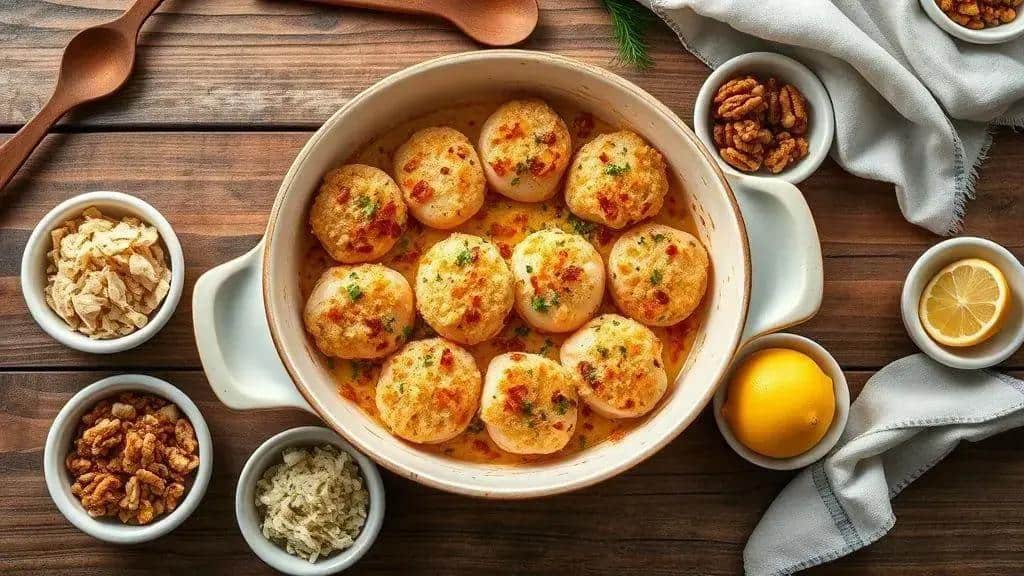
Change the crumbs, herbs or crunchy extras to give the scallop bake a different flavor without changing the technique.
Types of crumb topping
- 1 cup toasted cassava farofa gives a slightly earthy flavor. Use panko for a lighter crust.
- 1 cup panko makes an airy, crisp crust. Toasted cornmeal is a gluten-free alternative.
- 1 cup seasoned breadcrumbs browns well and binds the cheese. Substitute almond flour for a richer flavor.
- ½ cup chopped toasted walnuts or other nuts adds crunch and richness. Sunflower seeds also work.
Herbs and aromatics
- 2 tablespoons chopped parsley add a classic fresh finish.
- 1 tablespoon chives or shallot for a delicate onion flavor that suits scallops.
- 1 teaspoon tarragon or dill complements seafood. Use half as much for a subtler flavor.
- The grated zest of 1 lemon brightens the dish. Orange zest adds a sweeter note.
Crunchy additions and quantities
- Crisp bacon: fry 100 g diced bacon and stir into the farofa. For a meatless topping use crisp mushrooms or smoked tofu.
- Toasted panko: brown ½ cup panko with 1 tablespoon butter before using.
- Crisp onions: add ½ cup ready-made fried onions for instant crunch.
- Farofa with nuts: ¼ cup sliced almonds or chopped walnuts adds a rich crunch.
Dietary and flavor variations
- Gluten-free: replace the panko with an equal volume of cornmeal or cassava farofa.
- Lactose-free: use olive oil instead of butter, omit the Parmesan and leave out the cream or use plant-based cream. Nutritional yeast adds a savory note.
- Bacon-free: add extra nuts or sautéed mushrooms to the topping. The dish still contains scallops.
- For more heat, add ½ teaspoon chili flakes or ¼ teaspoon cayenne pepper to the farofa.
Ways to combine the variations
- New England-inspired: cassava farofa, crisp bacon and lemon zest.
- Light and crisp: toasted panko, parsley and chives.
- Rich and rustic: breadcrumbs, nuts and grated Parmesan.
- Fresh and herbal: plain farofa, dill or tarragon, and citrus zest.
Drinks and side dishes for scallop bake
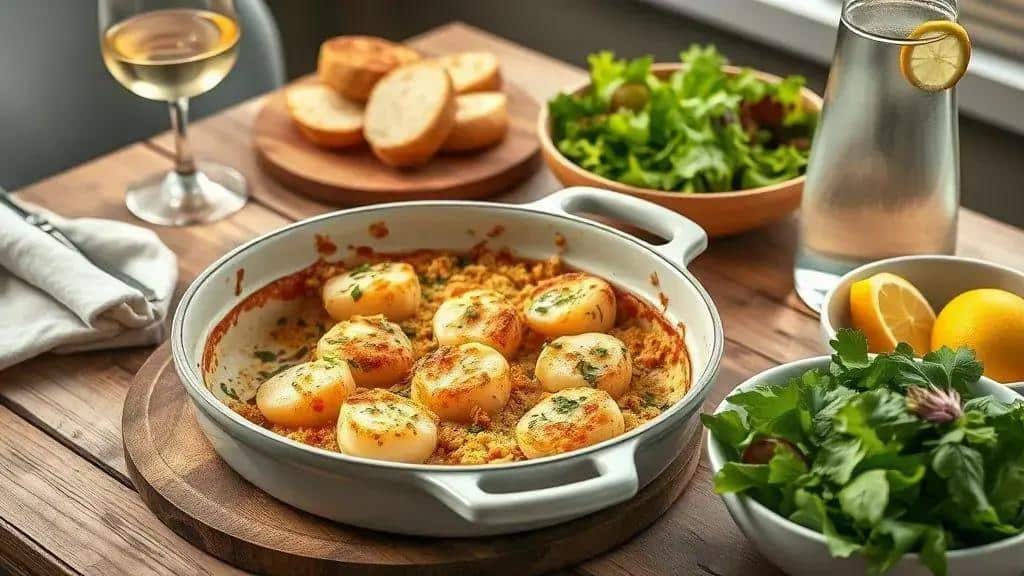
Fresh, tangy sides and contrasting textures balance the richness of the scallops and crisp farofa.
Wine pairings
- Sauvignon Blanc has bright acidity and citrus notes to balance the butter. Serve at 8–10°C.
- Unoaked Chardonnay is fruity and medium-bodied and complements the creamy sauce. Serve at 10–12°C.
- Light, gently spritzy Vinho Verde suits seafood and informal meals. Serve at 7–9°C.
- Brut sparkling wine refreshes the palate between bites and suits a special dinner.
Beer and cocktails
- Pilsner or pale lager offers light body and gentle bitterness to balance the butter.
- Witbier has citrus and spice notes that work well with herbs and lemon.
- A light gin and tonic with lemon zest refreshes without overpowering the scallops.
Classic side dishes
- Fluffy white rice has a mild flavor and soaks up the sauce.
- A crisp green salad of mixed leaves, cucumber and citrus vinaigrette adds a fresh contrast.
- Roasted baby potatoes with butter and herbs have a soft center to contrast with the crunchy farofa.
- Sliced crusty bread is ideal for mopping up the sauce.
Sides for different occasions
- For a formal dinner, serve small portions of lemon risotto or light cauliflower purée.
- For a relaxed lunch, try a barley or quinoa salad with herbs and cherry tomatoes.
- When friends come over, offer mild cheeses and lightly pickled vegetables before the main course.
Plating and serving tips
- Allow 3–4 medium scallops per person for an appetizer or 6–8 for a main course.
- Add a squeeze of lemon and fresh parsley just before serving to brighten the flavor.
- Serve hot from the oven for juicy flesh and a crisp topping.
- If the farofa is especially salty from bacon or Parmesan, choose a tangy or mild side.
Nonalcoholic options
- Sparkling water with a lemon slice refreshes the palate.
- Iced citrus herbal tea is light, fragrant and goes well with the herbs in the dish.
Scallops and the New England scallop bake
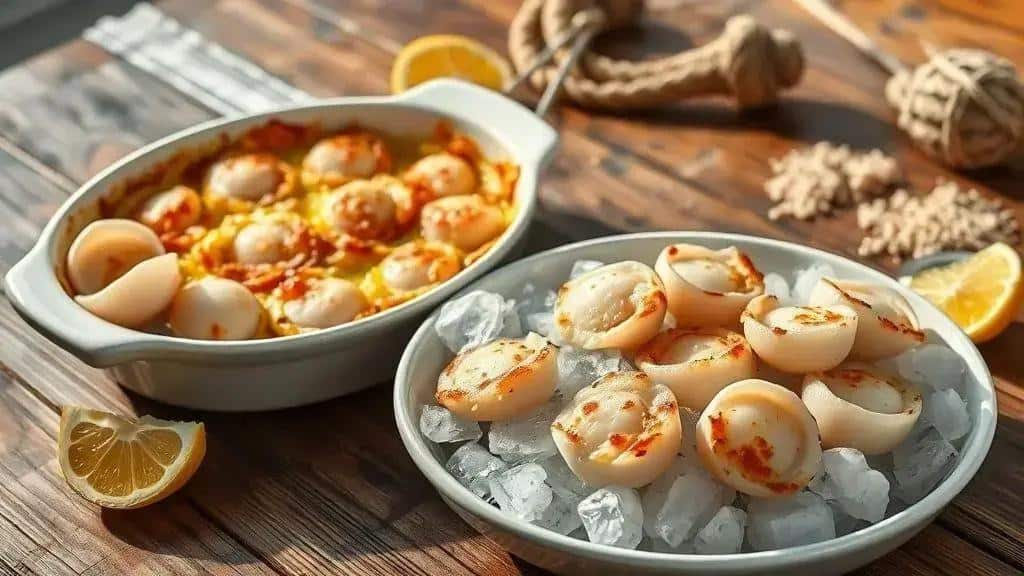
This dish combines coastal traditions and practical cooking techniques. Here are a few facts about scallops and the New England scallop bake.
Origins and tradition
- The name “scallop bake” reflects New England’s coastal tradition of baking seafood with crisp toppings to share at gatherings.
- Fishing families and chefs have their own versions, all built on simple preparation and local ingredients.
Scallop biology
- Scallops are bivalve mollusks. Their large, juicy adductor muscle is the part most commonly eaten.
- Larger scallops tend to have firmer flesh and a fuller flavor. Very small ones cook quickly.
Useful cooking facts
- If present, pull off the small side muscle. It is firmer and can feel chewy next to the tender scallop.
- Scallops cook quickly. Sear for 1–1½ minutes per side and bake for about 6–8 minutes, checking for firm, pearly, opaque flesh to avoid overcooking.
- Frozen scallops work well if thawed slowly in the refrigerator and dried before cooking.
Sustainability and fishing
- Look for scallops from certified sources or trusted fishmongers who can tell you where they came from.
- Some fisheries use catch quotas and minimum sizes. Ask about the origin when buying.
Buying and storing scallops
- Choose firm scallops with a faint scent of the sea. A strong odor suggests loss of freshness.
- Refrigerate on ice in a covered container and use within 1–2 days. Keep the scallops out of fresh water and melted ice.
Notes on flavor
- Inspired by New England seafood bakes, this version uses farofa or panko to add a crisp crust.
- Citrus zest or fresh herbs added at the end change the flavor with little extra effort.
For elegant New England-style scallops, start with a good sear, finish gently and balance the farofa with herbs and lemon.
Try panko, nuts or different herbs to find your preferred texture and flavor. These simple swaps need no change in technique.
Thanks for reading! Follow us on social media for practical recipes, kitchen tips and quick inspiration. Visit and follow the Mestre das Receitas to keep up with all our latest recipes.
Frequently asked questions about baked scallops
How do I keep scallops from turning rubbery?
Pat dry, sear in a very hot skillet for 1–1½ minutes per side and avoid overcooking in the oven. Let rest 1–2 minutes before serving.
Can I use frozen scallops?
Yes. Thaw in the refrigerator for 12–24 hours, then drain and pat dry. Avoid thawing at room temperature.
What can I use instead of cassava farofa?
Use panko for a similar crunch, ordinary breadcrumbs for browning or toasted cornmeal for a gluten-free version.
How do I make this lactose-free?
Replace butter with olive oil, leave out the Parmesan and omit the cream or choose plant-based cream. Nutritional yeast and toasted nuts add flavor and texture.
What sides and drinks pair well?
Serve with citrus-dressed green salad, white rice or baby potatoes. Try chilled Sauvignon Blanc, Vinho Verde or brut sparkling wine.
How do I store leftover scallop bake?
Refrigerate in a covered container for up to 24 hours. Reheat in a 150–160°C oven until the center reaches 74°C.