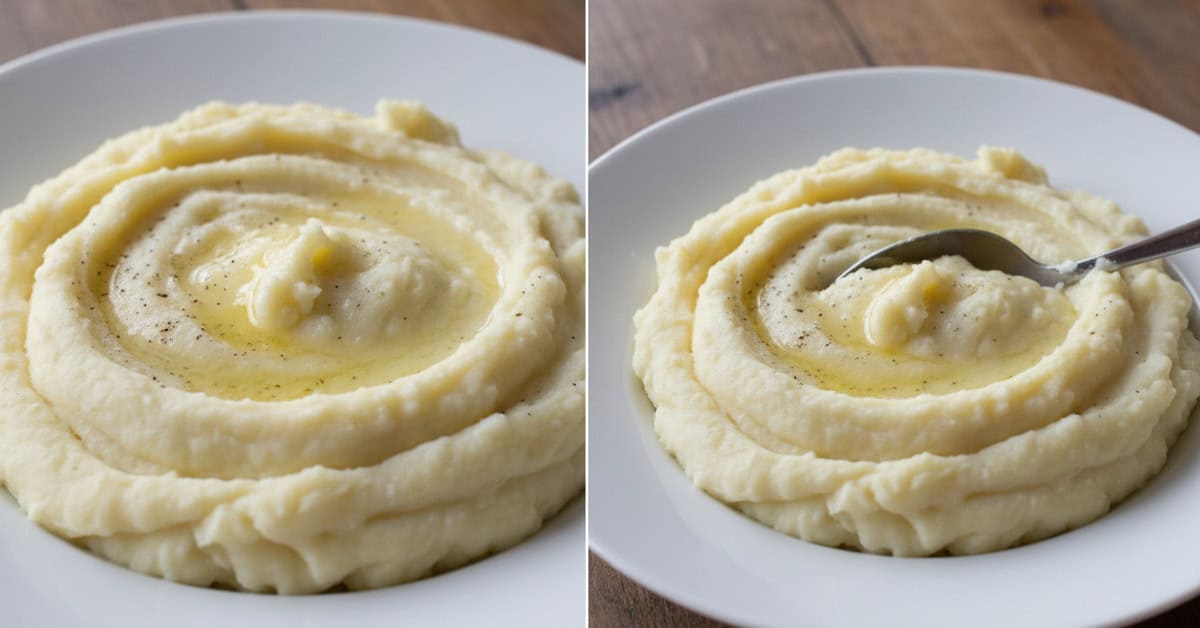

For these homemade Midwestern mashed potatoes, mash the cooked potatoes with warm butter and milk until creamy. Russet or Yukon Gold potatoes, a potato ricer and hot liquids give the mash a light texture and a balanced flavour. The recipe is easy to adapt for a vegan version.
Fancy making creamy homemade mashed potatoes the way they do in the American Midwest? I’ll show you how, with straightforward steps, tips for getting the texture right and tasty variations you can try straight away.
Ingredients for homemade mashed potatoes
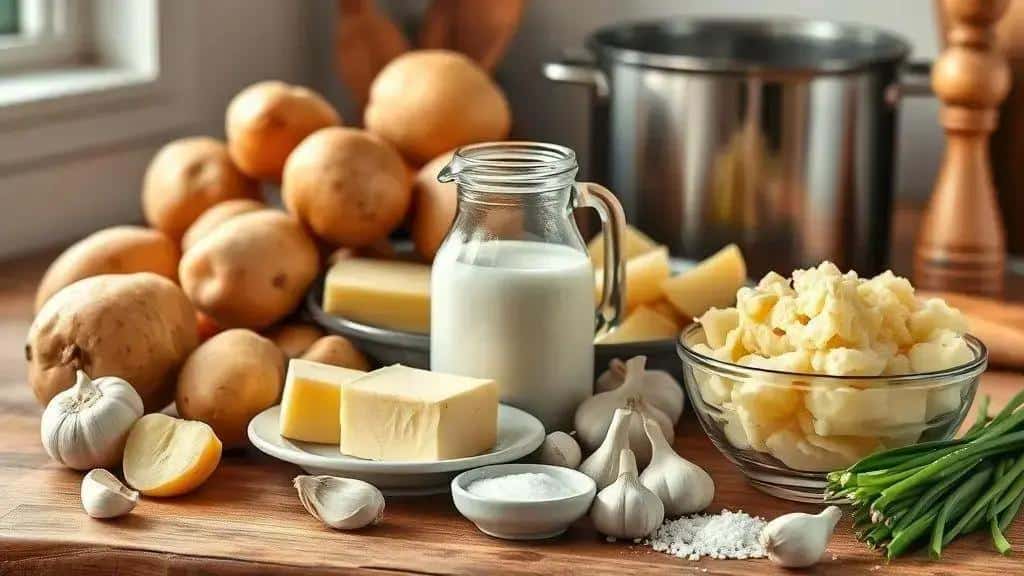
- 1 kg russet or Yukon Gold potatoes, peeled and cut into even pieces. Yukon Gold makes a softer, creamier mash.
- 120–180 ml warm milk. Whole milk gives the best texture. For a lactose-free version, use unsweetened almond or oat milk.
- 60–100 g unsalted butter, at room temperature so it mixes in easily. For a vegan option, use 50–70 ml olive oil.
- 1 teaspoon coarse salt. Adjust to taste and to suit the variety of potato.
- 1/2 teaspoon freshly ground black pepper for a fresh, peppery note that balances the richness.
- 2–3 garlic cloves (optional), finely chopped or roasted for a milder flavour. Alternatively, use 1/2 teaspoon garlic powder.
- 2 tablespoons soured cream or cream cheese (optional) for a creamier mash with a slight tang. Plain Greek yoghurt also works.
- 2 tablespoons chopped chives to finish. You can also garnish with parsley or chopped spring onion.
Notes and substitutions
Russets make light, fluffy mash, while Yukon Gold potatoes give it a richer, more buttery texture.
For the consistency you like, add the warm milk a little at a time. For a lighter mash, use vegetable or chicken stock.
For lactose-free mash, replace the butter with olive oil and the milk with unsweetened plant milk. Taste and adjust the salt.
For a comforting aroma, try adding a little grated nutmeg or a spoonful of butter to each portion as you serve.
How to make homemade Midwestern mashed potatoes
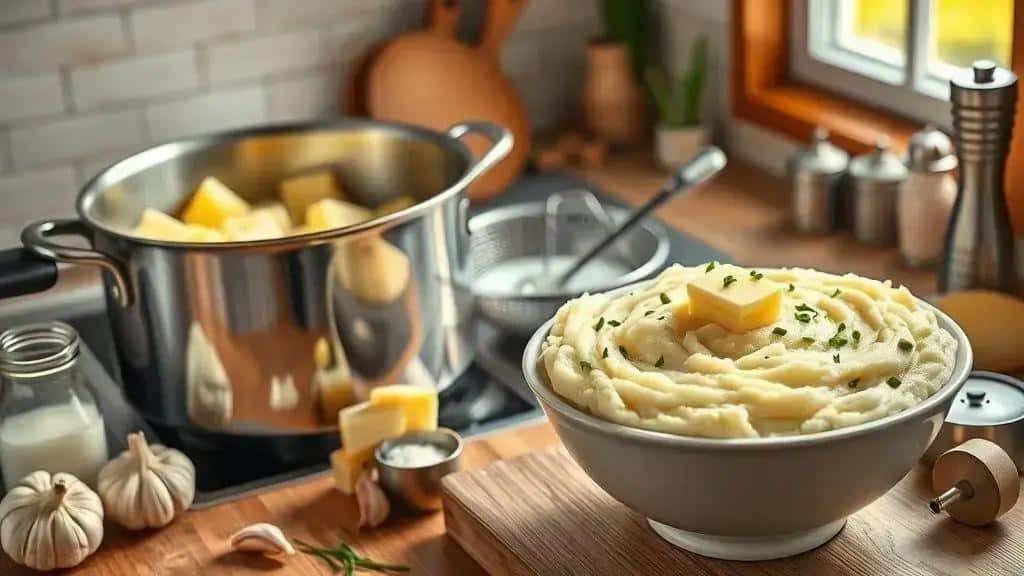
- Peel 1 kg of russet or Yukon Gold potatoes and cut them into even 3–4 cm pieces so they cook at the same rate.
- Rinse the pieces in cold water to remove excess starch. Put them in a large saucepan and add enough cold water to cover them by 2 cm.
- Add 1 teaspoon of coarse salt to the water and bring to the boil over a high heat. Reduce the heat to medium and cook for 15–20 minutes, until the potatoes are tender when pierced with a fork.
- Drain well in a colander, then return the potatoes to the hot pan for 1–2 minutes, shaking it gently. This lets excess water evaporate and keeps the mash from turning watery.
- While the potatoes are still hot, pass them through a potato ricer or mash them by hand with a potato masher. Avoid using a food processor, which makes the mash stretchy.
- In a small saucepan, gently warm 120–180 ml of whole milk and melt 60–100 g of unsalted butter. Using hot liquids helps keep the mash creamy.
- Gradually stir the melted butter and warm milk into the potatoes with a wooden spoon or spatula until the mash reaches the consistency you like. For a richer mash, add 2 tablespoons of soured cream or cream cheese.
- Season with 1/2 teaspoon of ground black pepper and a little more salt if needed. Always taste after adding the liquids, as you may need less salt once the butter is mixed in.
- For extra flavour, add 2–3 roasted garlic cloves, chopped chives or a pinch of grated nutmeg, if you like.
- Spoon the mash into a warmed serving bowl and top with a knob of butter to keep it moist. Serve immediately.
Quick tips
- Overmixing makes mash sticky. Stir just enough to incorporate the liquids.
- Use a potato ricer for a lighter mash or a hand masher for a more rustic texture.
- For a lactose-free version, use almond or oat milk and olive oil in place of the milk and butter.
- 1 kg of potatoes makes about 4 medium to large portions.
Tips for getting the texture just right
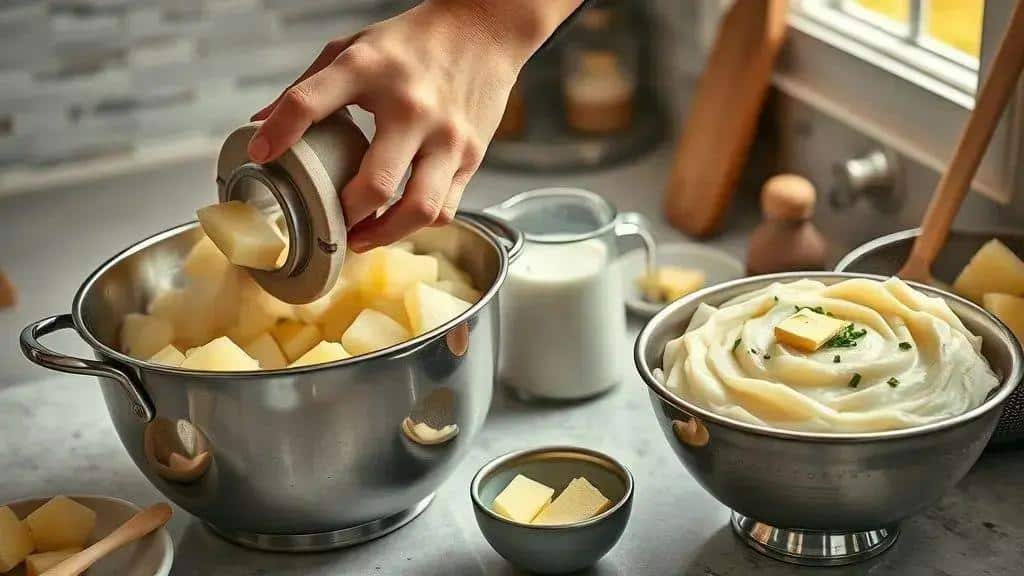
Choose russets for light, fluffy mash or Yukon Gold potatoes for a creamier, more buttery texture.
Cut the potatoes into even pieces and start them in cold, salted water. This helps them cook evenly so there are no hard pieces in the mash.
Drain well, then return the hot potatoes to the pan for 1–2 minutes to let excess water evaporate. Skipping this step often leads to watery mash.
Use a potato ricer or hand masher. Avoid food processors and blenders, which make mash stretchy and sticky.
How to get the texture right
- Cook the potatoes until very tender. They should break apart easily when pierced with a fork.
- Drain the potatoes and heat them briefly in the pan to let any remaining water evaporate.
- While the potatoes are still hot, pass them through a ricer or mash by hand using steady, moderate pressure to avoid lumps.
- Use 120–180 ml of warm milk and 60–100 g of melted butter. Hot liquids mix in more easily and help the mash keep its texture.
- Work the liquids in a little at a time until the mash is as creamy as you like.
- Stop stirring as soon as everything is combined to avoid releasing too much starch.
- For extra-creamy mash, stir in 2 tablespoons of soured cream or cream cheese at the end.
Quick fixes
- Sticky mash has probably been overworked. Try gently folding in a little cold butter cut into pieces.
- If the mash is watery, stir it over a low heat to let the excess water evaporate. To thicken it, add a little more butter or sprinkle in instant mashed potato a little at a time.
- If the mash is lumpy, cook the potatoes until softer or pass them through the ricer again while still hot.
- If the mash tastes bland, adjust the salt at the end and add ground pepper. A drizzle of olive oil or a spoonful of butter on each portion brings out the flavour.
Mashed potato variations and creative serving ideas
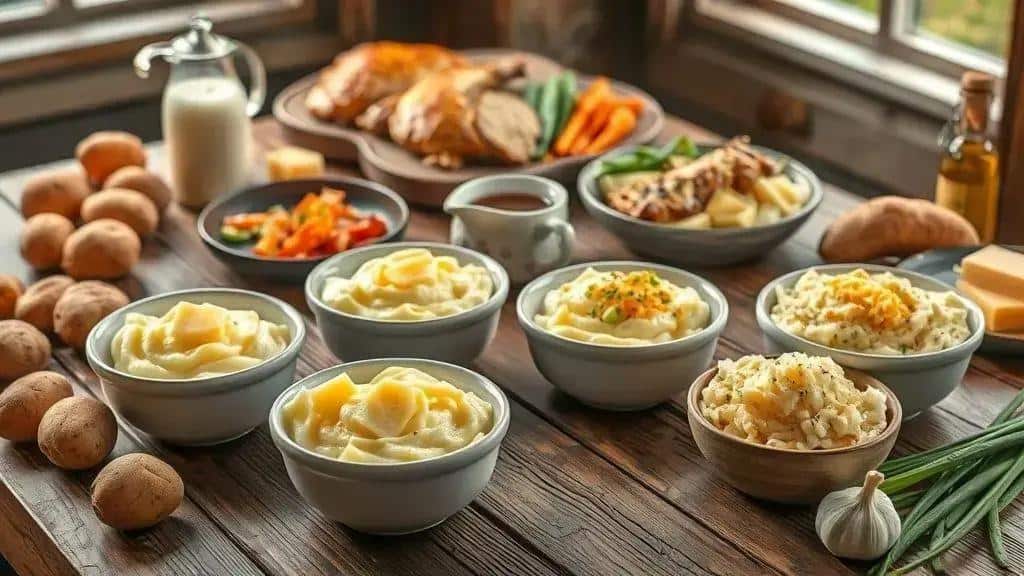
With a few simple changes, you can adapt mash to suit everyday meals or special occasions. It’s easy to try different textures and flavours.
Tasty variations
- Classic mash with butter and milk – ingredients:
- 1 kg cooked potatoes
- 120–180 ml warm milk
- 60–100 g unsalted butter
- 1 teaspoon salt
- 1/2 teaspoon black pepper
- Roasted garlic mash – ingredients:
- 1 kg cooked potatoes
- 2–3 roasted garlic cloves, mashed
- 120 ml warm milk
- 50 g butter
- Salt and pepper to taste
- Creamy Cheddar mash – ingredients:
- 1 kg cooked potatoes
- 100 g grated Cheddar
- 120 ml milk or cream
- 60 g butter
- Salt and pepper to taste
- Rustic olive oil and herb mash – ingredients:
- 1 kg cooked potatoes
- 3 tablespoons extra virgin olive oil
- 2 tablespoons chopped fresh herbs (parsley and thyme)
- Salt and pepper to taste
- Lactose-free vegan mash – ingredients:
- 1 kg cooked potatoes
- 120–180 ml unsweetened oat or almond milk
- 50–70 ml olive oil
- Salt and pepper to taste
How to adapt each variation
- For a lighter mash, add the hot liquids a little at a time. For a thicker mash, use less milk.
- Use cream cheese or Greek yoghurt in place of soured cream. For the vegan version, swap the butter for olive oil.
- For a deeper flavour, stir in a little Dijon mustard or grated Parmesan at the end.
Creative accompaniments
- A classic gravy or a rich sauce made by reducing beef stock adds warmth and brings the dish together.
- Creamy mash goes well with roast chicken, chops or brisket.
- Glazed carrots, sautéed spring greens or buttered peas add colour and texture.
- Crisp cubes of bacon, crispy onions or seasoned croutons add crunch to the smooth mash.
- For a rustic Midwestern meal, serve the mash with beans and sautéed vegetables.
Presentation tips
- Serve the mash hot in a warmed bowl and finish with melted butter.
- Scatter fresh herbs or grated cheese over the mash just before serving for extra aroma and colour.
- Allow about 250 g of mash per person when serving it as the main side dish.
Potato and mash facts
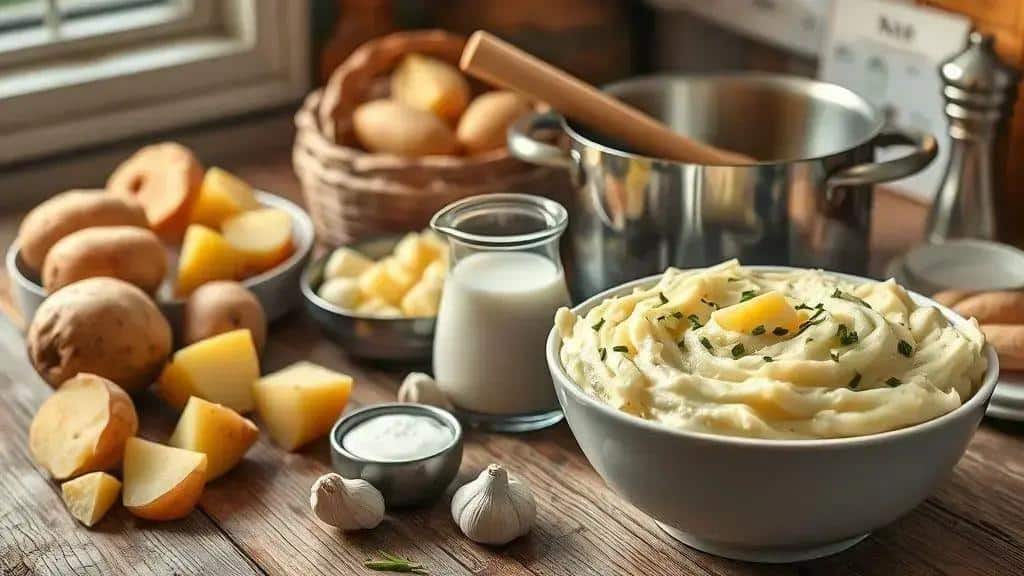
The story behind potatoes and mash helps explain why this side dish is a staple of home cooking in so many cultures.
Origins and history
- Potatoes come from the Andes in Peru and Bolivia, where they have been grown for thousands of years.
- Potatoes reached Europe in the 16th century and spread as an affordable, nutritious food.
- Immigration and large-scale farming helped make potatoes a staple on tables across the American Midwest.
Nutrition and benefits
- A medium potato is a good source of potassium and vitamin C.
- The calorie content of mash depends largely on what you add, such as butter, cream or cheese.
- The skin contains fibre and many vitamins, so peeling it all off removes some of these nutrients.
The science of mashed potatoes
- Floury russets make light mash, while Yukon Gold potatoes give it a creamier, more buttery texture.
- Overbeating releases starch, making the mash stretchy and sticky.
- Warming the milk or butter before adding it keeps the mash creamy and prevents a sudden drop in temperature that can make it stiff.
Practical tips
- For lump-free mash, pass the potatoes through a ricer while they are still hot. Avoid using a food processor.
- To prevent watery mash, drain the potatoes, then return them to the hot pan for 1–2 minutes to let the water evaporate.
- Mix leftover mash with flour and egg to make potato cakes or croquettes, then fry or bake them.
Mashed potatoes in Midwestern cooking
- Mashed potatoes are a fixture at Thanksgiving dinners and family lunches in the Midwest.
- Regional versions of mash often include soured cream, Cheddar or roasted garlic.
Thanks for reading! We hope these tips help you make creamy, delicious mash.
Follow us on social media for more easy recipes and kitchen tips. And do visit the Mestre das Receitas blog for more inspiration.
Come back soon and share your own versions of the mash. We’d love to see what you make.
Frequently asked questions about homemade mashed potatoes
Which potatoes are best for mash?
Russets make light, fluffy mash, while Yukon Gold potatoes give it a creamier, more buttery texture. Choose whichever gives you the texture you prefer.
How long do the potatoes take to cook?
Once the water comes to the boil, cook the potatoes for 15–20 minutes, until they break apart when pierced with a fork.
How do I make lactose-free or vegan mash?
Use warm oat or almond milk in place of dairy milk and replace the butter with olive oil or vegan margarine. Adjust the salt to taste.
What can I do if my mash is watery or sticky?
If the mash is watery, warm it over a low heat to let the excess water evaporate, or add a little more butter. If it’s sticky, avoid using a food processor and keep stirring to a minimum as you gently fold in pieces of cold butter to improve the texture.
How should I store and reheat leftover mash?
Store in a sealed container in the fridge for up to 3 days. Reheat over a low heat with a little warm milk or butter, stirring until smooth.