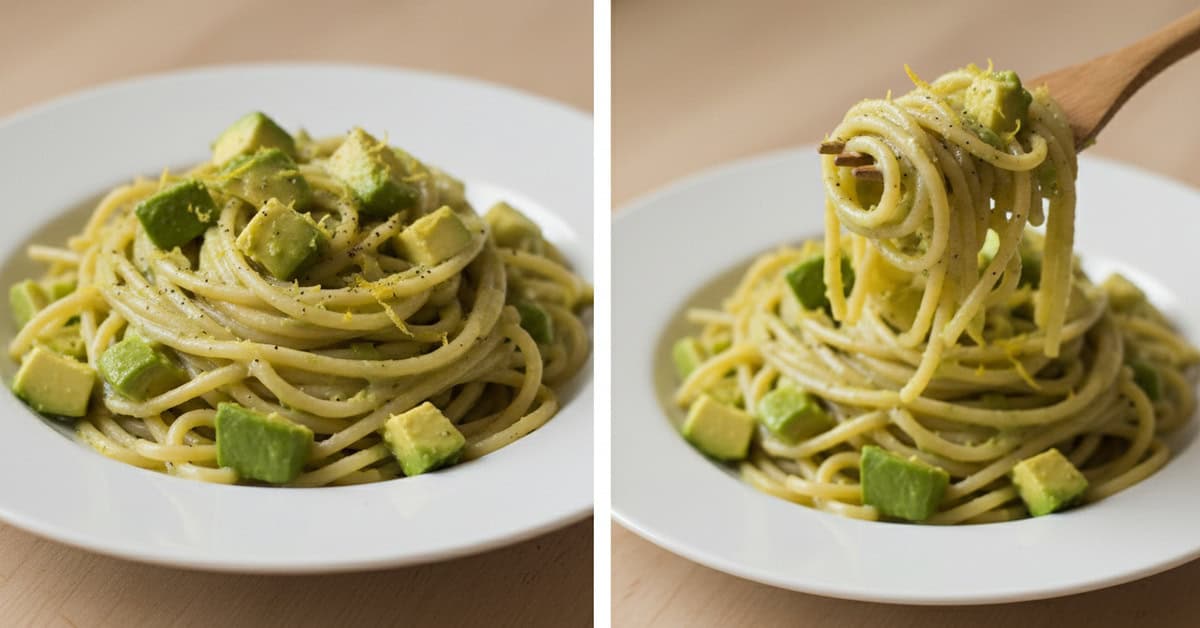

This creamy avocado and lemon pasta has a velvety sauce that comes together in minutes. Blend ripe avocados in a powerful food processor and use the pasta water to emulsify the sauce. Serve warm with basil and Parmesan (or nutritional yeast). There are also vegan, spicy and seafood variations.
Fancy avocado pasta with a fresh, creamy lemon and avocado sauce that’s ready in 15 minutes? Discover easy techniques, tips for getting the sauce velvety smooth and a few delicious variations.
Ingredients for creamy avocado and lemon pasta
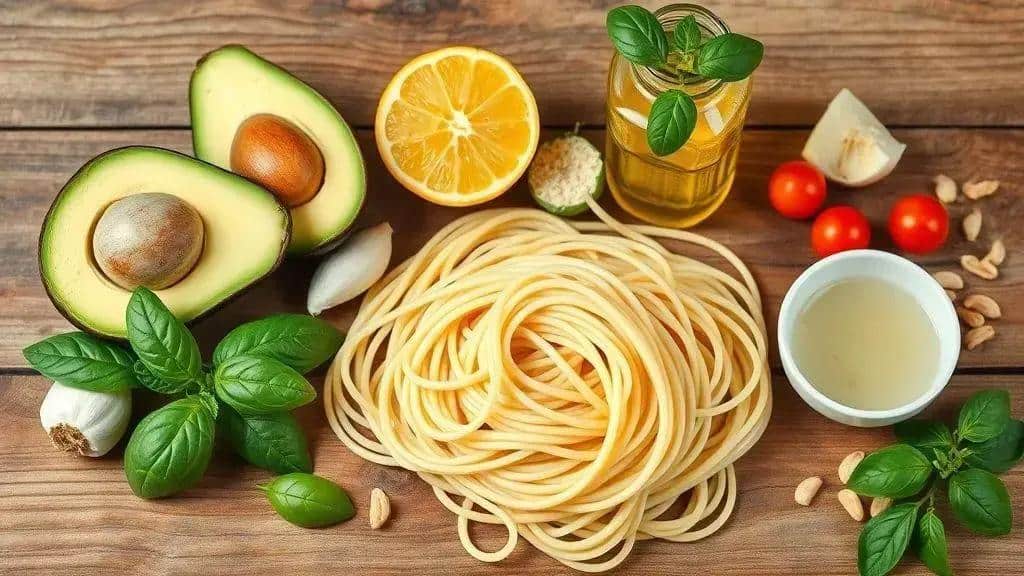
To make creamy avocado and lemon pasta, you’ll need the following ingredients.
- 400 g dried pasta (linguine or spaghetti) – choose whichever you prefer, or try penne for a different texture.
- 2 medium ripe avocados (about 300–350 g) – they should give under gentle pressure. For convenience, use 1 cup of avocado purée instead.
- Zest and juice of 1 lemon (about 2 tablespoons of juice) – for acidity and freshness. You can use a Persian lime or 1 tablespoon of white wine vinegar instead.
- 1 small garlic clove, crushed – use less or leave it out for a milder flavour.
- 3 tablespoons of extra virgin olive oil – for greasing and a glossy finish. Use sunflower oil for a more neutral flavour.
- 1/3 cup (30 g) of grated Parmesan – adds creaminess and savoury depth. For a vegan version, use 3 tablespoons of nutritional yeast.
- 1/4 to 1/2 cup of pasta cooking water – to adjust the consistency of the sauce. Plain hot water will also work, but don’t add extra salt to it.
- Kosher salt and freshly ground black pepper to taste – use sea salt if you prefer.
- A handful of fresh basil leaves – for fragrance and colour. Parsley is an alternative.
- Chilli flakes (optional) – for the spicy version. Extra black pepper also works.
- Cherry tomatoes (optional, 100 g), halved – for a fresh garnish. Diced regular tomatoes also work.
- Pine nuts or toasted walnuts (optional, 2 tablespoons) – for crunch. Cashews or almonds also work.
Substitutions and quick tips
Use fully ripe avocados for a naturally creamy sauce. If they’re firm, soften them in the oven at 90°C for 10 minutes. For a vegan version, swap the Parmesan for nutritional yeast and use a good-quality olive oil. Add the lemon juice a little at a time when mixing just before serving. It balances the richness of the avocado and helps prevent browning.
Season gradually and taste as you go. Start with a little salt and pepper and adjust at the end. Refrigerate any leftover sauce for no more than 24 hours.
How to make creamy avocado and lemon pasta step by step

For the best flavour and texture, follow each step carefully when making this creamy avocado and lemon pasta.
- Fill a large saucepan with water and add 1 tablespoon of salt. Bring to a rolling boil over a high heat.
- Add 400 g of pasta (linguine or spaghetti) and cook for 1 minute less than the time on the packet for an al dente texture. Stir occasionally to stop it sticking.
- Before draining the pasta, ladle out 1/2 to 1 cup of the starchy cooking water. Use it to adjust the consistency of the sauce.
- Drain the pasta quickly in a colander so it stays hot, then return it to the pan off the heat.
- To make the sauce, blend 2 ripe avocados (about 300–350 g), the zest and juice of 1 lemon, 1 small garlic clove, 3 tablespoons of olive oil and 1/3 cup of grated Parmesan in a food processor or blender until smooth and velvety.
- If the sauce is too thick, add 2–4 tablespoons of the reserved pasta water until it’s creamy enough to coat the pasta without becoming watery.
- Season with salt and black pepper to taste. Taste and adjust the lemon or salt as needed. The lemon balances the richness of the avocado.
- While the pan is still hot, pour the sauce over the pasta and toss vigorously for 30–60 seconds. The residual heat and pasta water help the sauce turn silky and cling to the pasta.
- For freshness and crunch, add a handful of torn basil leaves, halved cherry tomatoes and 2 tablespoons of pine nuts or toasted walnuts. Toss briefly to distribute them evenly.
- Serve straight away on warmed plates with more grated Parmesan, ground pepper and a drizzle of olive oil. The sauce has the best colour and texture if served within 15 minutes of making it.
Practical tips for preparing and storing the sauce
To prevent browning, add the lemon juice to the avocado just as you make the sauce and serve straight away. If you need to store it, press cling film directly onto the surface and refrigerate for no more than 24 hours.
For a vegan version, replace the Parmesan with 3 tablespoons of nutritional yeast. Taste and add a little more salt and lemon juice as needed.
Add the pasta water a little at a time. Avocados vary in fat content, so keep adding water until the sauce is as creamy as you like.
How to make the sauce creamy and keep the avocado from browning
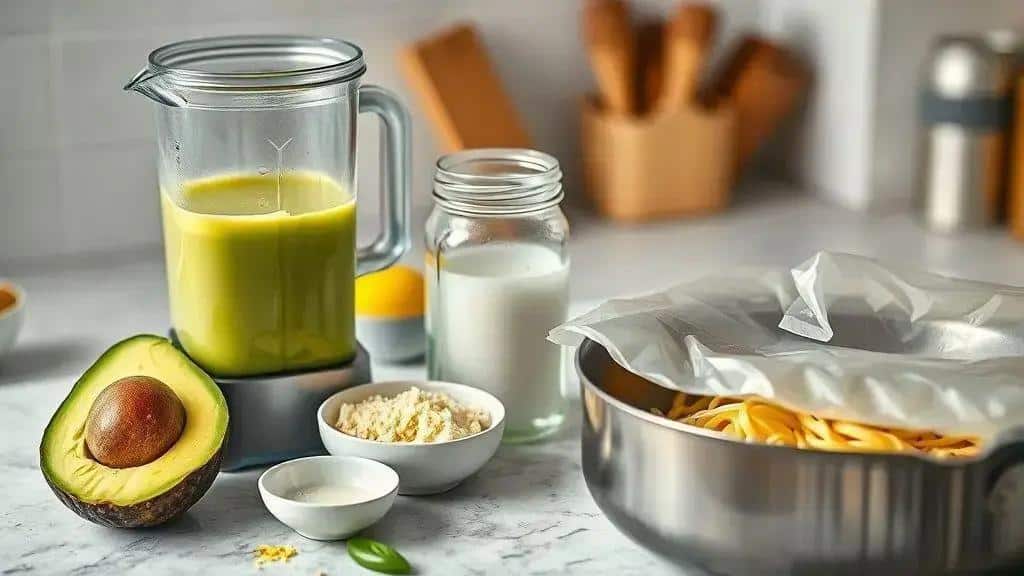
- Choose ripe avocados that give slightly when gently pressed. If they’re firm, leave them to ripen at room temperature for 1–3 days.
- A powerful food processor or blender gives a smoother sauce. Pulse the mixture and scrape down the sides.
- For a velvety texture, balance the fat and liquid by adding 2–3 tablespoons of olive oil and 2–4 tablespoons of pasta water for every 2 avocados.
- Use 1 tablespoon of lemon juice for every 2 avocados to help prevent browning and bring out the flavour.
- For a creamier sauce with more body and savoury depth, use 1/3 cup of grated Parmesan or, for a vegan version, 2–3 tablespoons of nutritional yeast.
- Toss the hot pasta with the sauce for 30–60 seconds to give the sauce a silky finish without overcooking it.
- To store the sauce, press cling film directly onto the surface and refrigerate. Eat within 24 hours.
- For a vegan sauce, use more pasta water and olive oil, replace the Parmesan with nutritional yeast and adjust the salt and lemon to taste.
- Add pine nuts or toasted walnuts just before serving for a crunchy contrast to the creamy sauce.
How to adjust the consistency in a few steps
- If the sauce is too thick, add pasta water 1 tablespoon at a time until it’s as creamy as you like.
- If the sauce is too thin, add 1/4 of an avocado or 1 tablespoon of grated cheese and blend briefly.
- For a silky texture, toss the sauce vigorously with the hot pasta for 30–60 seconds, adding 1–2 tablespoons of pasta water to emulsify it.
To prevent browning, add the lemon juice as you blend the avocado and serve straight away. When storing the sauce, limit its exposure to air and always refrigerate it rather than leaving it at room temperature.
Taste as you go and adjust the salt, acidity and pepper a little at a time. Even small changes make a noticeable difference to the flavour.
Vegan, spicy and seafood avocado pasta variations
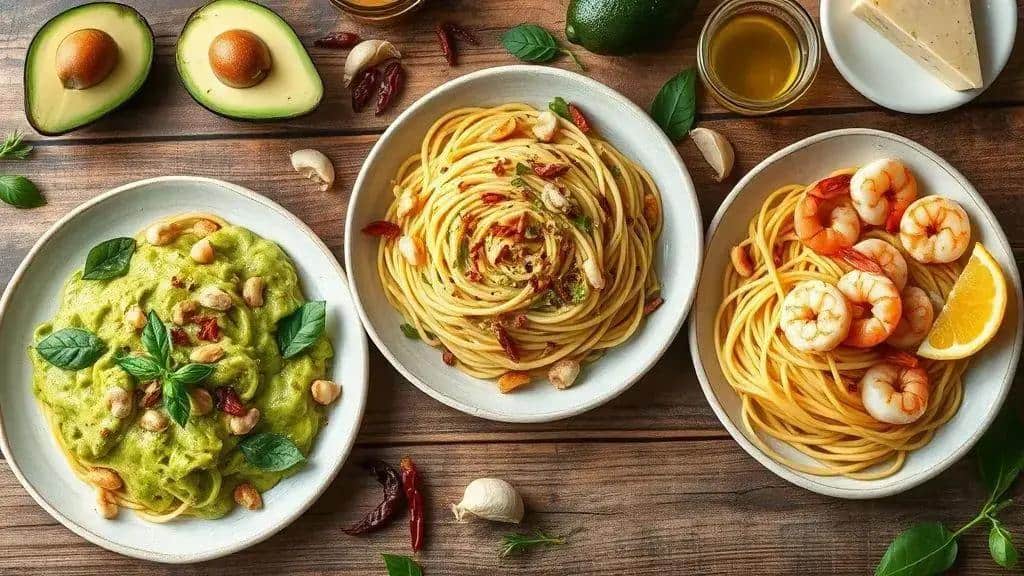
Try these three simple variations on avocado pasta to suit your taste, diet or occasion.
Vegan
A dairy-free version that keeps the sauce creamy and full of savoury flavour.
- 400 g dried pasta – linguine or spaghetti.
- 2 ripe avocados (300–350 g) – the creamy base of the sauce.
- Zest and juice of 1 lemon – to help prevent browning and balance the richness of the avocado.
- 3 tablespoons of extra virgin olive oil – to bring the sauce together and give it a glossy finish.
- 3 tablespoons of nutritional yeast – to replace the Parmesan and add savoury depth.
- 2–4 tablespoons of pasta water – to adjust the consistency.
- Basil leaves and black pepper – to finish.
- Cook the pasta until al dente and reserve 1/2 cup of the cooking water.
- Blend the avocado, lemon juice, olive oil and nutritional yeast in a food processor until smooth.
- Add the pasta water a little at a time until the sauce is creamy.
- Toss the sauce with the hot pasta for 30–60 seconds to emulsify it, then serve with basil.
For a richer sauce, try tahini (1 spoonful), or use soaked cashews (1/4 cup) for extra body.
Spicy
Chilli flakes add heat and smoked paprika lends a smoky aroma, while the avocado keeps the sauce creamy.
- 400 g pasta
- 2 ripe avocados
- Juice of 1 lemon
- 1–2 teaspoons of chilli flakes – adjust to taste.
- 1 teaspoon of smoked paprika – for a smoky aroma.
- 3 tablespoons of olive oil
- 1/4 cup of grated Parmesan (optional)
- Cook the pasta and reserve some of the cooking water.
- Blend the avocado, lemon juice and olive oil, then add the chilli flakes and paprika.
- Taste and increase the heat gradually so the avocado flavour still comes through.
- Toss the hot pasta with the sauce and finish with Parmesan and extra chilli flakes if you like.
For a different kind of heat, replace the chilli flakes with chopped fresh chilli or, for a more complex flavour, a spoonful of harissa paste.
Seafood
Prawns or scallops complement the fresh avocado with a delicate taste of the sea and provide a light source of protein.
- 400 g pasta
- 200–300 g of prepared prawns or small scallops.
- 2 avocados
- Juice and zest of 1 lemon
- 2 tablespoons of olive oil
- 1 small garlic clove – sauté with the seafood in the olive oil.
- Salt and pepper to taste.
- Cook the pasta until al dente and reserve some of the cooking water.
- Sauté the seafood in the olive oil with the garlic for 2–3 minutes until opaque, then season lightly.
- Blend the avocado with the lemon juice and olive oil, adding pasta water as needed to adjust the consistency.
- Combine the pasta, sauce and seafood in the hot pan. Toss for 30 seconds and serve immediately.
Cook the seafood briefly to keep it juicy, then finish with lemon zest for a fresh citrus note. For an alternative to prawns, use pieces of grilled salmon.
Pairing and serving suggestions for avocado pasta

Serve the avocado pasta in a way that shows off its freshness and creamy texture. Choose accompaniments that bring out the avocado’s flavour without overpowering it.
Suggested drink pairings
- Light white wines such as Sauvignon Blanc or Pinot Grigio pair well with the acidity of the lemon and the herbal notes of the basil.
- Light, fruity dry rosés work well with the spicy or seafood versions.
- A crisp, pale beer such as a lager or witbier refreshes the palate between mouthfuls and keeps the meal light.
- For a citrus drink, try tonic water with lemon or a light spritz to complement the freshness of the pasta.
- For a light alcohol-free option, try sparkling water with lemon slices or iced herbal tea.
Serving and presentation ideas
- Serve as soon as you’ve tossed the hot pasta with the sauce. The creamy texture is at its best when the dish is warm to hot.
- Allow 100–125 g of dried pasta per person for a starter or 150–180 g for a main course.
- Use a flat white plate to show off the green sauce. Twirl the pasta strands into a nest and finish with lemon zest and basil leaves.
- Finish with Parmesan shavings (or nutritional yeast), ground pepper and a drizzle of extra virgin olive oil. Add toasted pine nuts for crunch.
- Lightly toasted rustic bread, a simple green salad or roasted tomatoes balance the richness of the dish.
- For a party, serve the pasta on a warmed platter with a bowl of extra sauce alongside for anyone who’d like a creamier helping.
- For extra protein, offer grilled prawns, flakes of roast salmon or cubes of grilled tofu on the side.
Quick serving tips
- Avoid preparing the dish too far ahead, as the sauce darkens and loses its creamy texture. Toss it with the pasta just before serving.
- Serve on warmed plates to keep the sauce silky for longer.
- Set out small bowls of extra pepper, grated cheese and lemon zest so guests can season their pasta to taste.
Avocado facts and nutritional benefits
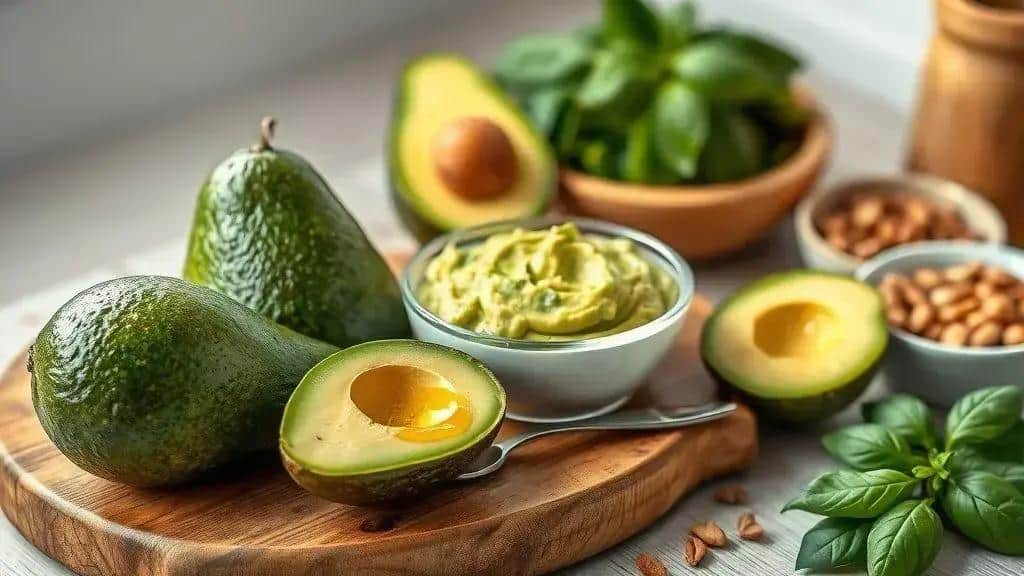
The avocado is a versatile, nutritious fruit prized for its creamy texture and mild flavour. Originally from Mesoamerica, it comes in varieties including Hass, the most widely available in shops, and Fuerte, which has smoother flesh.
Nutritional benefits
- Half an avocado (about 100 g) provides around 160 kcal, making it a nutritious source of energy.
- Most of the fat in avocado flesh is monounsaturated. Oleic acid is one example.
- Avocados provide around 6–7 g of fibre per 100 g, helping you feel full and supporting regular bowel movements.
- Avocados contain amounts of potassium comparable to those in bananas. Potassium helps maintain electrolyte balance.
- Avocados are a good source of essential vitamins, including vitamin K, which plays a role in blood clotting, and folate and other B vitamins, which support metabolism.
- Pigments: avocado flesh contains two carotenoids, lutein and zeaxanthin.
Good to know about avocados
- Avocados ripen after picking, not on the tree. Leave them at room temperature to soften.
- A ripe avocado gives slightly under gentle pressure. Skin colour depends on the variety, so dark skin alone is an unreliable guide to quality.
- Lemon juice helps slow the oxidation that causes avocado flesh to turn brown when exposed to air.
- Beyond the kitchen, avocado oil and flesh are used in cosmetics for their moisturising properties.
- Hass avocados have rough skin that darkens as the fruit ripens. Hass is the world’s most widely exported avocado variety.
Quick tips
- To speed up ripening, put the avocado in a paper bag with an apple for 1–2 days.
- To store an unused half, leave the stone in, press cling film against the flesh and refrigerate for up to 24 hours.
- Half an avocado with a meal is a filling portion that provides nutrients without adding too many calories.
Conclusion
Creamy avocado and lemon pasta is quick, fresh and full of flavour. It works just as well for an everyday meal as for a special occasion. In a few simple steps, you’ll have a velvety sauce the whole family can enjoy.
Try the recipe and adjust the seasoning to your taste. Share your version on social media – we love seeing your photos and hearing what you think.
Thanks for reading! Follow us on social media and visit the Mestre das Receitas blog for more recipes, practical tips and cooking inspiration.
Frequently asked questions about creamy avocado and lemon pasta
How long can I keep leftover pasta or sauce?
Refrigerate the sauce and pasta separately for up to 24 hours. Press cling film directly onto the surface of the sauce to prevent oxidation. Freezing isn’t recommended, as it changes the texture.
How do I stop the avocado sauce from turning brown?
Add lemon juice when making the sauce and limit its contact with air by pressing cling film directly onto the surface. Toss the sauce with the pasta just before serving.
Can I make a vegan version?
Yes. Replace the Parmesan with 2–3 tablespoons of nutritional yeast. Keep the olive oil for flavour and to help the sauce go further. Taste and adjust the salt and lemon juice.
Which pasta shape works best with avocado sauce?
The creamy sauce coats long strands such as linguine or spaghetti beautifully. Penne or fusilli also work well for a more rustic dish, so choose whichever you prefer.
Can I make the sauce in advance for an event?
You can make the sauce up to 24 hours ahead and refrigerate it, tightly covered. Wait until you’re ready to serve before mixing it with the pasta. When reheating, loosen it with a little pasta water and check the seasoning.