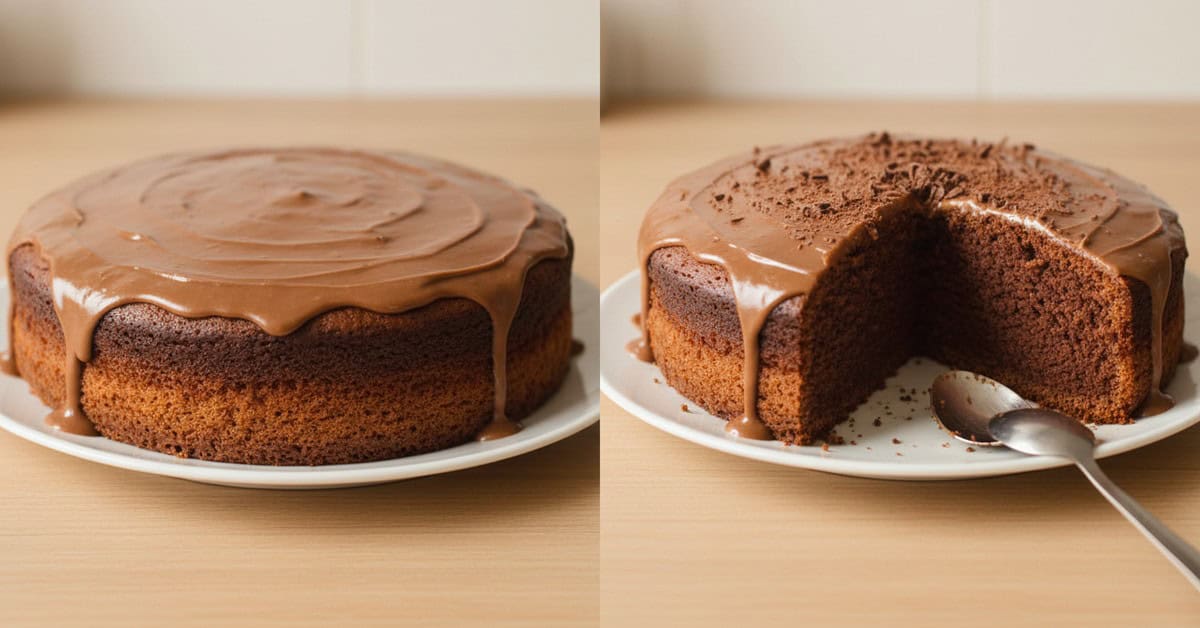

Chocolate sheet cake is a moist, economical traybake that’s ideal for parties. The batter comes together quickly, and you can finish the cake with glossy ganache-style icing or buttercream. The recipe includes gluten-free options and baking tips for a soft cake that serves a crowd.
Chocolate sheet cake is an easy, generously sized chocolate cake that’s become a party favourite in the Midwest. Want to make a moist cake with glossy icing in next to no time? I’ll share my tried-and-tested method and a few chef’s tips to help you get it right.
Ingredients for Midwest chocolate cake
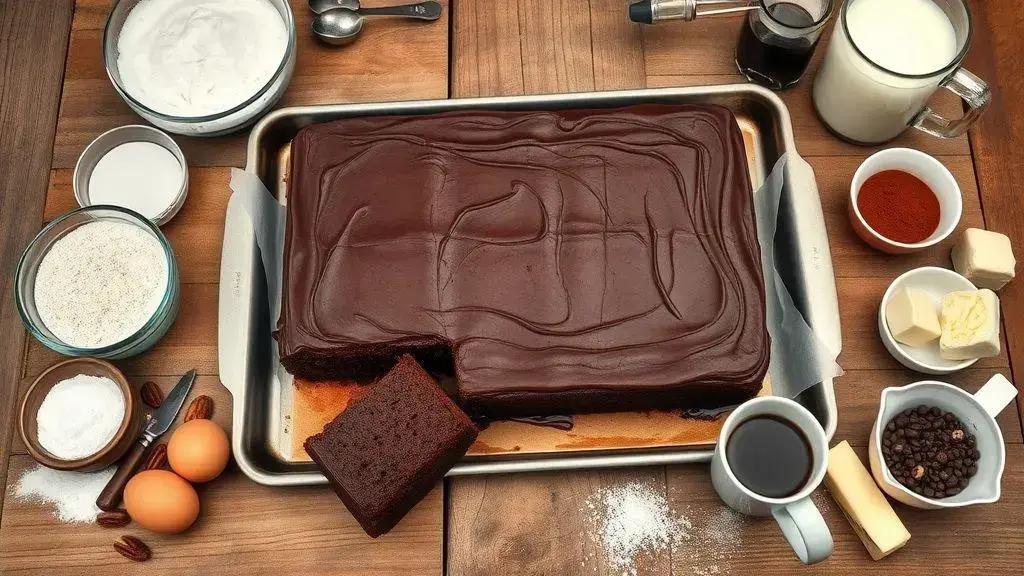
Before you start making Midwest chocolate cake, lay out the ingredients for the batter and the icing. Here’s how much you’ll need and what you can use instead.
Cake batter
- 2 cups (240 g) plain flour – you can use a 1:1 gluten-free flour blend instead.
- 2 cups (400 g) granulated sugar – for a deeper flavour, use 1 1/2 cups coconut sugar instead.
- 3/4 cup (75 g) unsweetened cocoa powder – use Dutch-process cocoa if you prefer a less acidic flavour.
- 1 teaspoon bicarbonate of soda – essential for a light sponge.
- 1/2 teaspoon baking powder – helps give the cake structure.
- 1/2 teaspoon salt – brings out the chocolate flavour.
- 2 large eggs – for a vegan alternative, use 2 tablespoons of apple purée per egg. This can change the texture.
- 1 cup (240 ml) buttermilk – you can use 1 cup of milk mixed with 1 tablespoon of white vinegar or lemon juice instead.
- 1/2 cup (120 ml) vegetable oil – for a richer flavour, use the same amount of melted butter.
- 1 teaspoon vanilla extract
- 1 cup (240 ml) hot water or hot coffee – coffee brings out the chocolate flavour. Water works just as well.
Icing
- 1/2 cup (115 g) unsalted butter – if you use salted butter, reduce the salt in the batter.
- 1/2 cup (45 g) unsweetened cocoa powder
- 1/4 cup (60 ml) milk – use plant milk as a lactose-free alternative.
- 3 to 3 1/2 cups (360–420 g) icing sugar – adjust to taste.
- 1 teaspoon vanilla extract
- A pinch of salt – brings out the flavour of the icing.
- Optional sprinkles or chopped walnuts to decorate the finished cake.
Quick tips
Bring the ingredients to room temperature so they blend more easily. Measure the flour without packing it into the cup. If you’re using coffee, choose ordinary filter coffee that isn’t too strong.
How to make Midwest chocolate cake step by step
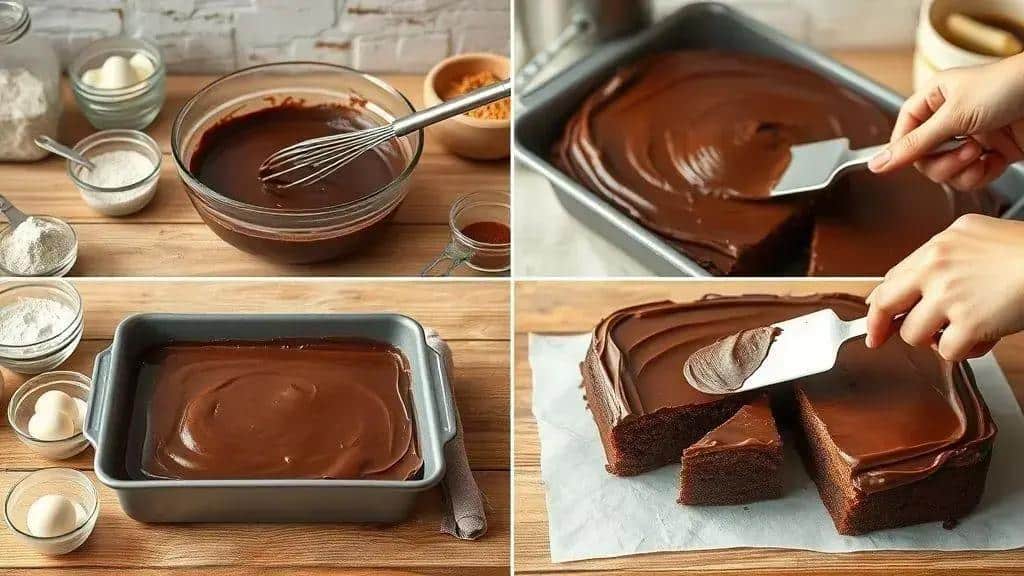
Follow these steps to make Midwest chocolate cake.
- Preheat the oven to 180°C. Grease a rectangular baking tin measuring about 23 × 33 cm (9 × 13 in) with butter and line it with baking parchment.
- Sift 2 cups (240 g) plain flour, 2 cups (400 g) sugar, 3/4 cup (75 g) cocoa powder, 1 teaspoon bicarbonate of soda, 1/2 teaspoon baking powder and 1/2 teaspoon salt into a large bowl. Whisk until evenly combined.
- In a separate bowl, whisk 2 large eggs with 1 cup (240 ml) buttermilk (or milk mixed with 1 tablespoon of vinegar), 1/2 cup (120 ml) vegetable oil and 1 teaspoon vanilla extract until combined.
- Pour the wet ingredients into the dry ingredients and stir gently with a spatula just until the batter is smooth and free of lumps. Take care not to overmix.
- Gradually stir in 1 cup (240 ml) hot water or hot filter coffee until the batter is smooth and pourable. Coffee brings out the chocolate flavour without giving the cake a strong coffee taste.
- Pour the batter into the prepared tin, level it with a spatula and tap the tin gently on the worktop to release any air bubbles. Bake at 180°C for about 20–25 minutes. Insert a skewer into the cake. It should come out with moist crumbs clinging to it and no wet batter.
- Take the cake out of the oven and leave it to cool in the tin for 10–15 minutes. Turn it out onto a wire rack and leave it to cool completely so the icing won’t melt too much when you spread it.
Midwest-style ganache icing
- Melt 1/2 cup (115 g) butter in a small saucepan over a low heat. Stir in 1/2 cup (45 g) cocoa powder until smooth.
- Gradually stir in 1/4 cup (60 ml) milk until the mixture is smooth and glossy. Do not let it boil.
- Take the pan off the heat. Stir in 3 to 3 1/2 cups (360–420 g) sifted icing sugar a little at a time until the icing is glossy and spreadable.
- Add 1 teaspoon vanilla extract and a pinch of salt. Taste and add a little more sugar if needed.
- If you’d like some of the icing to soak into the cake, spread it over the hot cake while the icing is still warm. For a firmer layer, wait until the cake has cooled completely before icing it.
- Decorate with sprinkles, chopped walnuts or chocolate shavings. Leave the icing to set for about 30 minutes before cutting the cake into pieces.
Practical tips
Use eggs and butter at room temperature so they blend more easily. Level off the flour when measuring and sift the cocoa to avoid lumps. For a gluten-free cake, use a 1:1 gluten-free flour blend. For a lactose-free alternative to milk, use plant milk.
Chocolate sheet cake variations – simple, fudgy and gluten-free
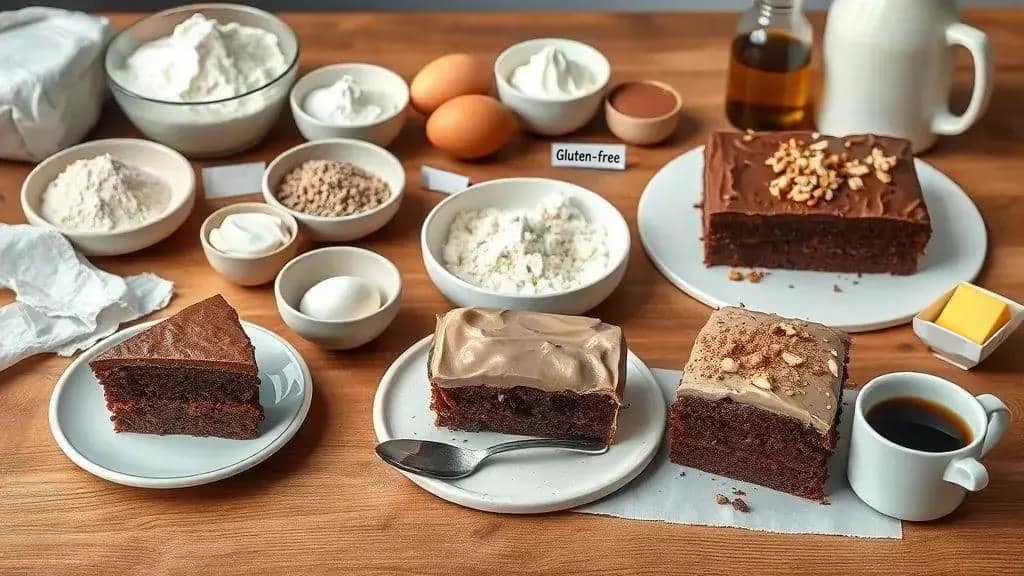
These three chocolate sheet cake variations make it easy to adjust the flavour and texture or cater for different dietary needs.
Simple version
Light, moist and easy to make with everyday ingredients, this version is ideal for parties or a quick snack.
- 2 cups (240 g) plain flour
- 2 cups (400 g) sugar
- 3/4 cup (75 g) cocoa powder
- 1 teaspoon bicarbonate of soda
- 2 large eggs
- 1 cup (240 ml) milk (or buttermilk)
- 1/2 cup (120 ml) vegetable oil
- 1 cup (240 ml) hot water or coffee
For a shortcut, use hot coffee in place of the water. It brings out the chocolate flavour without overpowering it.
Dense, fudgy version
If you prefer a richer cake with a moist crumb, increase the fat and reduce the liquid.
- 1 3/4 cups (210 g) plain flour
- 1 1/2 cups (300 g) sugar
- 1 cup (100 g) cocoa powder
- 1 teaspoon bicarbonate of soda
- 3 large eggs
- 3/4 cup (180 ml) vegetable oil (or 1/2 cup oil plus 1/4 cup melted butter)
- 1/2 cup (120 ml) soured cream
- 1/2 cup (120 ml) hot water
- Use half the water in the original recipe for a thicker batter.
- For a fudgy texture, add extra fat in the form of melted butter or soured cream.
- Bake at 175°C for 22–28 minutes, checking carefully towards the end. A skewer should come out with moist crumbs clinging to it.
Gluten-free version
Use a gluten-free flour blend in place of the plain flour and adjust the binder as needed to keep the cake from crumbling.
- 2 cups (240 g) 1:1 gluten-free flour blend containing xanthan gum
- 2 cups (400 g) sugar
- 3/4 cup (75 g) cocoa powder
- 1 teaspoon bicarbonate of soda
- 2 large eggs
- 1 cup (240 ml) milk or plant milk
- 1/2 cup (120 ml) vegetable oil
- 1 teaspoon xanthan gum (optional, if your flour blend doesn’t already contain it)
Keep mixing to a minimum and leave the batter to rest for 10 minutes before baking. This gives any flakes in the flour blend time to absorb the liquid and helps prevent a gritty texture.
Ganache made with cream or butter works well with all three versions. For a lactose-free topping, use plant-based cream and vegan butter.
Baking tips, texture and ingredient substitutions
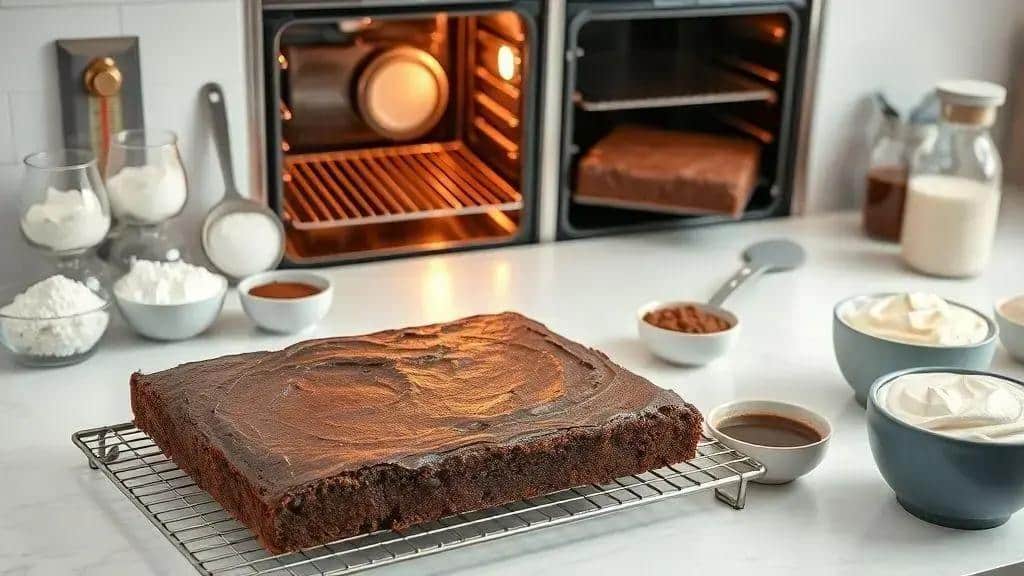
Keep your oven properly calibrated, as even small temperature differences can affect the texture of the cake. Use an oven thermometer to check the temperature and bake sheet cakes at 175–180°C.
How to adjust the bake
- If the oven is too hot, the crust forms quickly while the centre stays raw. Lower the temperature by 5–10°C and check the cake before the minimum baking time is up.
- If the oven is too cool, the cake may sink. Preheat it thoroughly and let the temperature settle before baking.
- Insert a skewer into the centre. It should come out with moist crumbs clinging to it and no runny batter.
- Use a 23 × 33 cm baking tin. Cakes bake more quickly in dark tins, so lower the oven temperature by 5–10°C if you’re using one.
Getting the texture right
A good chocolate sheet cake is moist and holds together when sliced. Here’s how to achieve that texture.
- Once you’ve added the dry ingredients, take care not to overmix. This keeps too much gluten from developing and helps prevent a dry cake.
- Ingredients at room temperature blend more easily and give the cake a more even crumb.
- Hot coffee brings out the chocolate flavour without changing the cake’s moisture level. Choose weak filter coffee and avoid concentrated brews.
Useful substitutions
- For a 1:1 swap, replace the flour (240 g) with a 1:1 gluten-free flour blend if needed. If the blend doesn’t contain xanthan gum, add 1 teaspoon of xanthan gum.
- If you like the flavour of coconut sugar, use 300–350 g in place of the 400 g of granulated sugar and adjust the sweetness to your taste.
- For the 120 ml of fat, vegetable oil gives a moister cake. The same amount of butter gives a richer flavour.
- To make a substitute for 240 ml of buttermilk, combine 1 tablespoon of vinegar or lemon juice with milk. This provides the acidity needed to react with the bicarbonate of soda.
- For a vegan alternative to eggs, replace 1 egg with 2 tablespoons of apple purée and adjust the baking time.
- Unsweetened plant milk is a lactose-free alternative to milk and has little effect on the texture.
Common problems and quick fixes
- A dry cake usually means there was too much flour or the cake baked for too long. Measure the flour carefully and shorten the baking time.
- Adding the hot water all at once can weaken the cake’s structure and leave it with a heavy crumb. Pour it in a little at a time, stirring gently.
- If the icing is too runny, stir in more sifted icing sugar a little at a time until it thickens.
Keep the plain cake, without a perishable frosting, tightly covered at room temperature for up to 3 days. If you use the milk frosting in this recipe, a cream ganache, or another perishable topping, refrigerate the cake within 2 hours, or within 1 hour if the room is warmer than 32°C (90°F). Keep it covered at 4°C (40°F) or colder and eat within 3–4 days.
Assembling and decorating Midwest chocolate cake with ganache, buttercream and simple finishing touches
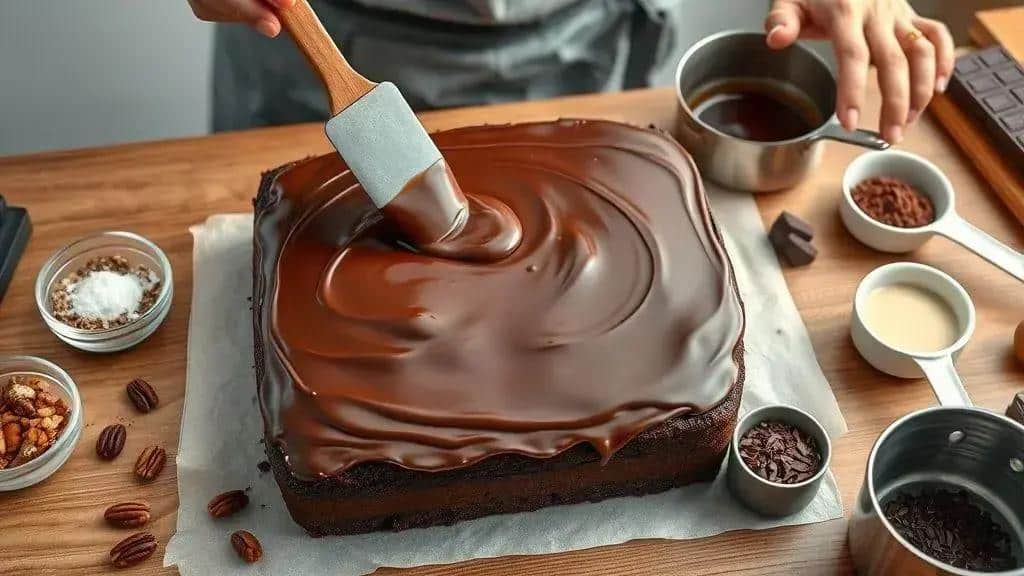
Ganache, buttercream and a few simple decorations turn Midwest chocolate cake into an eye-catching, delicious dessert. The easy recipes and step-by-step instructions below show you how to apply each topping and assemble the cake for a professional finish.
Simple ganache for a glossy finish
- 200 g dark chocolate, chopped – use milk chocolate for a sweeter ganache.
- 200 ml fresh cream – use plant-based cream for a lactose-free alternative.
- 1 tablespoon unsalted butter (optional) for extra shine.
- Chop the chocolate and put it in a heatproof bowl.
- Heat the cream until it is just about to boil, then take it off the heat.
- Pour the hot cream over the chocolate to cover it and leave for 1 minute to let the chocolate melt.
- Stir gently with a spatula, using circular movements, until smooth and glossy.
- Add the butter and stir until smooth. If you want some of the ganache to soak into the cake, use it while it’s still warm.
Quick, creamy chocolate buttercream
- 115 g unsalted butter at room temperature
- 240–300 g sifted icing sugar, to taste.
- 45 g unsweetened cocoa powder
- 2–3 tablespoons milk – use plant milk as a lactose-free alternative.
- 1 teaspoon vanilla extract
- Beat the butter with an electric mixer or a whisk until pale and creamy.
- Add the cocoa and icing sugar a little at a time, beating on a low speed.
- Gradually add the milk until the buttercream is spreadable, then beat until light.
- Taste and adjust, adding more icing sugar for a firmer buttercream or a little more milk to soften it.
Assembling and icing the cake
- Let the cake cool completely before spreading it with buttercream. If you’re using ganache and want it to soak in, apply it while the ganache is warm.
- If necessary, level the top with a knife or palette knife so the icing goes on evenly.
- For an optional crumb coat, spread a thin layer of buttercream over the cake and chill for 15 minutes to hold the crumbs in place.
- Pour the warm ganache onto the centre of the cake and spread it with a palette knife. Let it trickle over the edges for a rustic finish.
- Spread the buttercream with a large palette knife or use a piping bag for the details. Use a light touch to avoid lifting the layer underneath.
- Finish with chopped walnuts, chocolate shavings, sprinkles, a dusting of sifted cocoa or fresh fruit. For extra shine, drizzle with honey or chocolate sauce.
- Chill the cake for 20–30 minutes to set the icing before slicing.
Quick tips
- If the ganache is too hot, it can soften the surface of the cake too much. If it’s too cold, it sets and becomes difficult to spread.
- A little butter or glucose syrup gives the ganache extra shine.
- For a lactose-free or vegan version, use plant-based alternatives to cream and butter, and choose vegan chocolate.
- For neat slices, dip the knife in hot water and dry it before each cut.
Keep the cake covered in the refrigerator for 3–4 days if it has milk frosting, cream ganache, or another perishable topping. Take out just the portion you plan to serve about 30 minutes beforehand so it can soften.
Facts about chocolate sheet cake and its influence in the Midwest
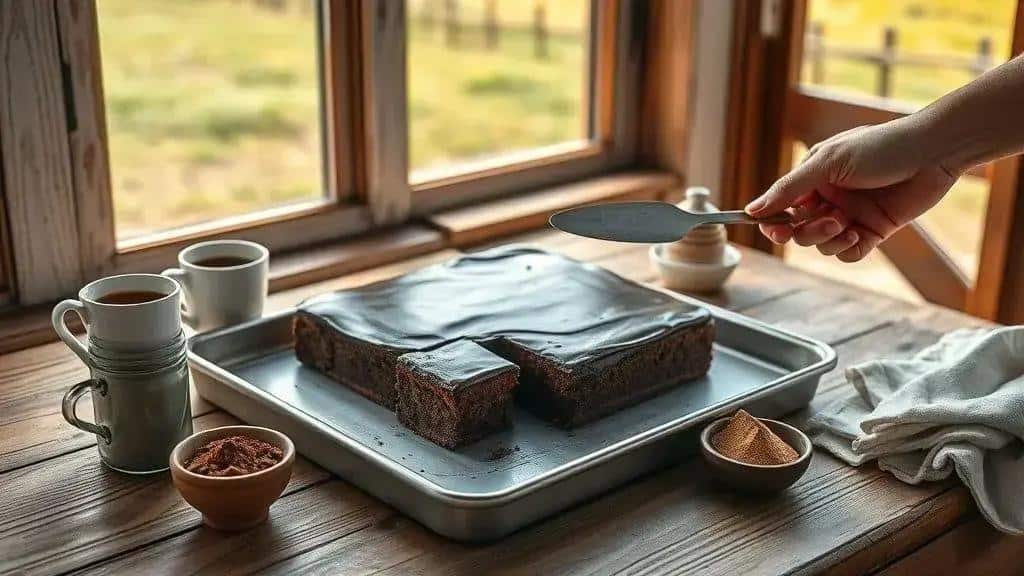
Chocolate sheet cake became popular in the Midwest because it bakes in a single tin, serves a crowd and has a flavour that appeals to all sorts of tastes.
Origins and how the recipe was adapted
Versions of this cake come from the United States, where it is baked in a shallow tin. In the Midwest, home bakers adapted the recipe using local ingredients and familiar baking techniques to keep costs down and make it easier to bake in large batches.
Parties and other occasions
- At family gatherings, it’s a favourite for birthdays and Sunday lunches because one cake serves so many people.
- At rural events and rodeos, it feeds a crowd at little cost.
- Local bakeries can easily cut a sheet cake into portions and sell it by the slice.
A few facts about the ingredients
- Coffee in the batter brings out the chocolate flavour without making the cake taste of coffee. It’s a familiar trick among the region’s bakers.
- In rural areas, bakers sometimes use plant milk or homemade cultured milk when shop-bought ingredients are hard to come by.
- Although ‘sheet cake’ is an English term, in the Midwest the cake is known simply as a traybake or Midwest chocolate cake.
Social and economic impact
This simple recipe suits families and small businesses. The cake costs little to make, cuts easily into even portions and is popular with customers, making it a good choice for selling at parties and in local shops.
A few more facts
- A glossy ganache is a popular way to give a homemade cake a professional finish.
- Regional recipes often use extra fat to keep the cake moist in dry climates.
- It goes beautifully with freshly brewed filter coffee, a traditional pairing.
Final thoughts
Midwest chocolate cake is easy to make, inexpensive and just right for a party or a special treat. A few simple swaps and a careful eye on the oven will give you a moist, flavourful cake.
Try the variations, choose the icing you like best and feel free to adjust the quantities to suit your oven and your taste.
Thanks for baking along! Follow us on social media for more quick tips, recipe variations and baking tricks. Visit Mestre das Receitas blog and keep up with our latest news.
Frequently asked questions about Midwest chocolate cake
What’s the best baking time and temperature for chocolate sheet cake?
Preheat the oven to 175–180°C. For a 23 × 33 cm tin, bake for about 20–25 minutes. A skewer inserted into the cake should come out with moist crumbs clinging to it. Adjust the time if you’re using a dark tin or a fan oven.
How do I keep the cake really moist?
Use vegetable oil, take care not to overmix the batter, add the hot water or coffee gradually and avoid overbaking. Buttermilk or yoghurt also helps keep the cake moist.
Can I make this cake gluten-free? What do I need to change?
Replace the plain flour with a 1:1 gluten-free flour blend containing xanthan gum. If the blend doesn’t contain xanthan gum, add 1 teaspoon. Keep mixing to a minimum and let the batter rest for 10 minutes before baking so the flour can absorb the liquid.
Which icings work best, and when should I apply them?
Ganache, made from cream and chocolate, gives a glossy finish and can be spread on while warm so that some of it soaks into the cake. Buttercream holds its shape better for decorating. Choose warm ganache for a rustic finish, or apply buttercream over a crumb coat, depending on the texture you like.
How should I store the cake, and how long does it keep?
Store the plain cake without a perishable frosting tightly covered at room temperature for up to 3 days. With milk frosting or cream ganache, refrigerate it within 2 hours, or within 1 hour above 32°C (90°F), and eat within 3–4 days. Take out the portion you plan to serve about 30 minutes beforehand and keep the rest covered in the refrigerator.
Can I scale up the recipe for a large party?
Yes. Increase all the quantities in proportion and use larger tins or several separate tins. Adjust the baking time and check with a skewer. For larger batches, keep an eye on the oven temperature and bake in stages if needed.