
Mango and coconut chia pudding is made with coconut milk and mango purée. The chia seeds form a gel that gives the pudding its creamy texture. It provides fibre and healthy fats, takes minutes to prepare and makes a nutritious breakfast or a light dessert. You can make a vegan version, add extra protein or leave out the added sugar.
Mango and coconut chia pudding is a taste of the tropics in a glass. It’s creamy, quick and easy to prepare. Fancy turning mango and coconut into a light breakfast? I’ll show you how to get the texture just right, with a few variations you might not expect.
Ingredients for mango and coconut chia pudding
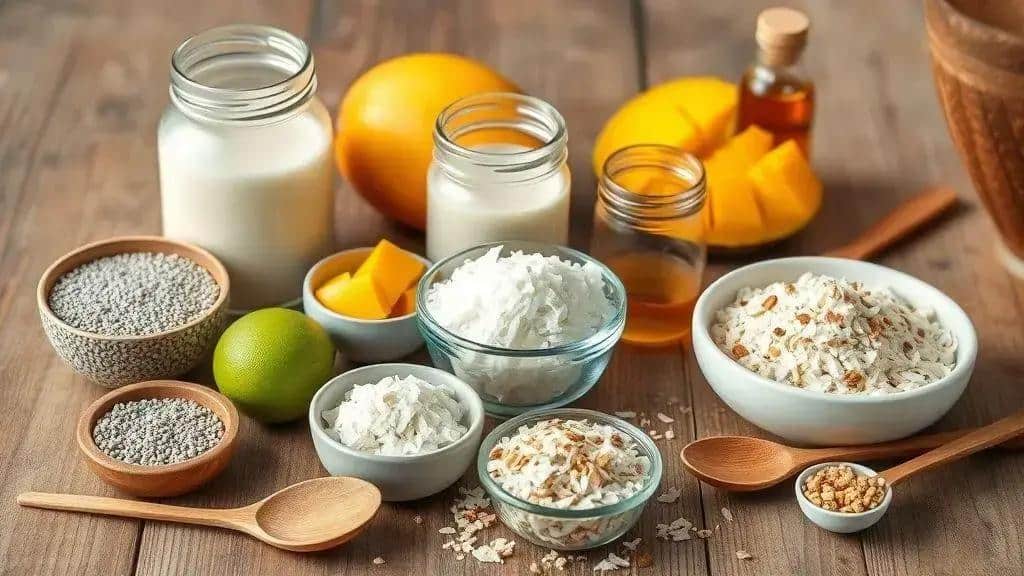
To make mango and coconut chia pudding, you’ll need the following ingredients.
- 1/2 cup (90 g) chia seeds – these help the pudding set. Use 1/2 cup of ground linseed instead if you prefer.
- 2 cups (480 ml) coconut milk – choose light coconut milk for less fat, or almond milk for a milder flavour.
- 1 cup (240 g) ripe mango flesh (about 1 medium mango) – choose a sweet, fragrant mango. You can also use 1 cup of peach purée.
- 2 to 3 tablespoons of honey or maple syrup – adjust to taste. For a vegan version, choose maple or agave syrup.
- 1 teaspoon of vanilla extract – this brings out the flavour, but you can leave it out.
- 2 tablespoons of unsweetened desiccated coconut – this adds texture. For a thicker pudding, use 1 tablespoon of coconut flour instead.
- 1 pinch of salt – this brings out the flavours.
- Finely grated zest of 1/2 a lemon or lime – optional, for a fresh citrus tang. You can use 1 teaspoon of lemon juice instead.
- To serve, top with fresh mango slices, toasted coconut and granola. Other options include chopped walnuts, pumpkin seeds or a drizzle of Greek yoghurt.
Substitutions and quick tips
For a higher-protein version, mix 1 tablespoon of protein powder into the milk before adding the seeds. For a firmer texture, increase the chia seeds to 3/4 cup. If the coconut milk is very thick, thin it with water or plant-based milk until it reaches the consistency you like. Leave the seeds to soak for at least 2 hours, preferably overnight.
How to make mango and coconut chia pudding step by step
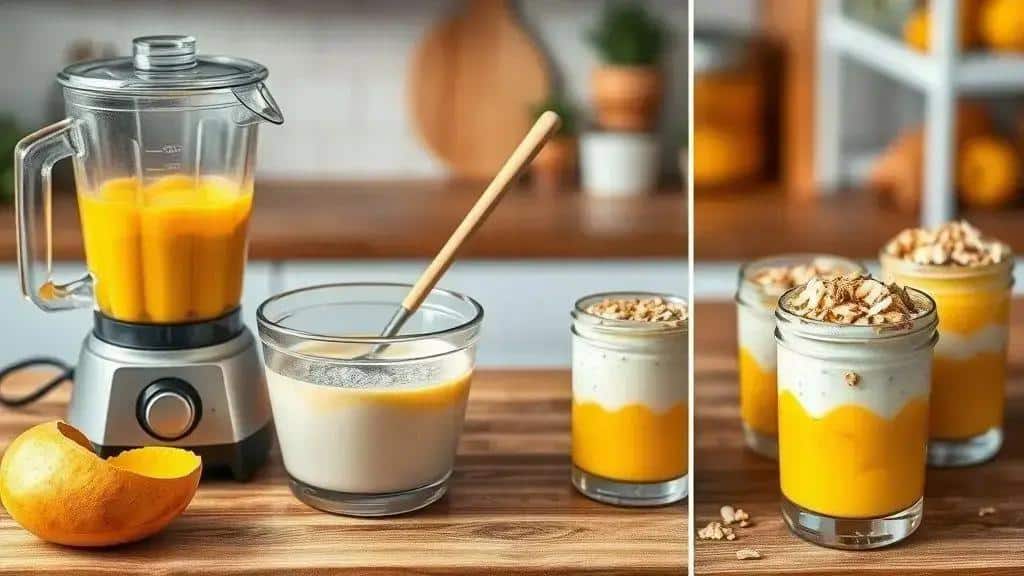
- Peel 1 medium mango, cut the flesh into chunks and blend until smooth (about 30 seconds).
- In a bowl, stir together 2 cups (480 ml) of coconut milk, 2 to 3 tablespoons of honey or maple syrup and 1 teaspoon of vanilla extract until well combined.
- Add 1/2 cup (90 g) of chia seeds to the liquid and stir vigorously for 20 to 30 seconds to prevent lumps.
- Leave the mixture to stand for 5 minutes, then stir again to distribute the seeds evenly.
- Check the consistency after 10 to 15 minutes. The mixture should have started to thicken. If it’s still too runny, add another 1 to 2 tablespoons of chia seeds.
- Cover the bowl or transfer the mixture to jars and refrigerate for at least 2 hours, ideally overnight, for a creamy texture.
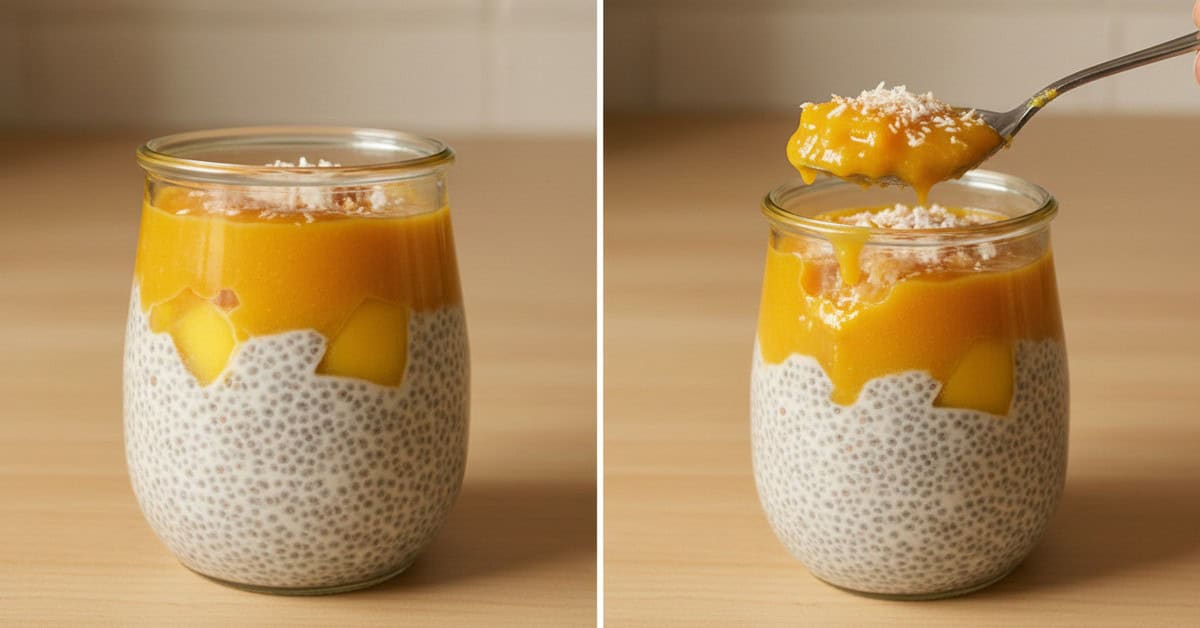
- Spoon a layer of chia pudding into each glass or jar, followed by a layer of mango purée. Repeat until full.
- For a crunchy finish, sprinkle over 2 tablespoons of desiccated coconut and, if you like, 2 tablespoons of granola or chopped walnuts.
- Taste before serving. Add a drizzle of honey for sweetness or a few drops of lemon juice to brighten the flavour.
- Keep the pudding in sealed jars in the fridge for up to 3 days. If the liquid separates, stir before eating.
Quick tips
For a vegan pudding, use maple or agave syrup in place of honey. For a firmer texture, increase the chia seeds to 3/4 cup. For a lighter pudding, thin the coconut milk with water or plant-based milk.
Tips for the perfect texture and easy ingredient swaps
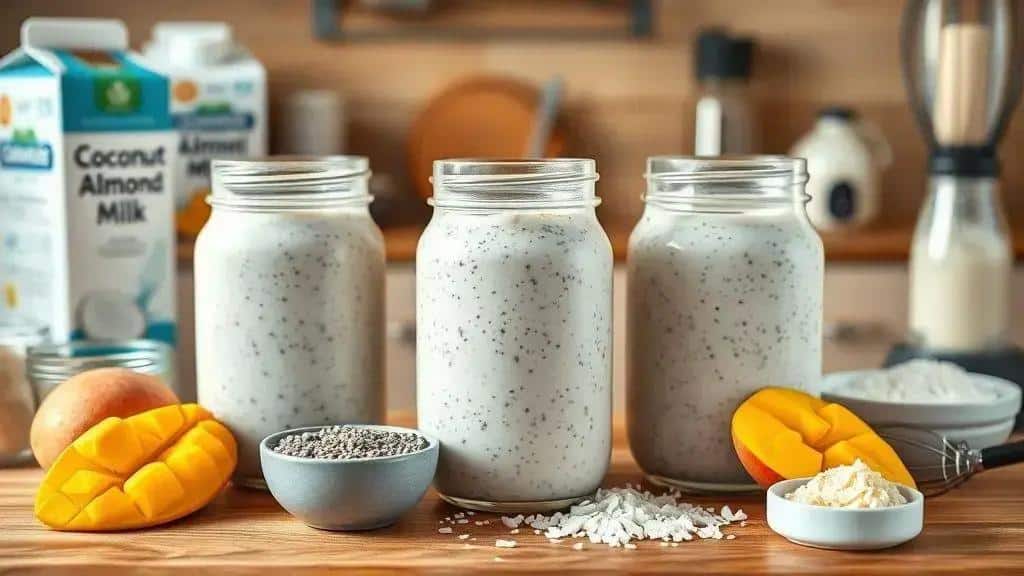
Stir the seeds in thoroughly to prevent lumps, give them enough time to soak and chill the pudding until set.
Proportions and soaking time
For a creamy, spoonable pudding, the usual ratio is about 1/2 cup (90 g) of chia seeds to 2 cups (480 ml) of liquid. Adjust the amount of chia depending on how thick you like your pudding.
- For a firmer pudding, increase the chia seeds to 3/4 cup.
- For a looser pudding, reduce the chia seeds to 1/3 cup.
- Allow at least 2 hours for soaking. Ideally, leave the pudding overnight for 6 to 8 hours.
Ways to improve the texture
- Stir twice, first when you add the seeds and again after 5 minutes to stop them settling at the bottom.
- Use a small whisk. It’s better than a spoon at preventing lumps from forming.
- For a velvety texture, blend for 10–20 seconds once the seeds have soaked. This gives the pudding an even consistency without changing the flavour.
- Gently warm the liquid to help honey or protein powder dissolve, then let it cool before adding the chia seeds.
- Add fruit pieces, granola or toasted coconut only when assembling the pudding so you can enjoy the contrast in textures.
Useful ingredient swaps
- For less fat, replace the coconut milk with the same amount (480 ml) of almond or oat milk.
- If mango is unavailable, use the same amount (1 cup) of peach purée or ripe avocado.
- For a vegan version, replace the honey with 2–3 tablespoons of maple or agave syrup.
- Replace the desiccated coconut with half as much coconut flour, or use chopped walnuts for crunch.
- For a higher-protein pudding, add 1 tablespoon of protein powder to the liquid and mix well before adding the seeds.
Tips for storing and assembling the pudding
- Store in covered jars in the fridge for up to 3 days.
- If the pudding is too firm, give it a stir and add 1–2 tablespoons of milk to loosen it.
- To serve, layer the pudding with mango purée and finish with toasted coconut and granola for crunch.
Vegan, higher-protein and no-added-sugar variations
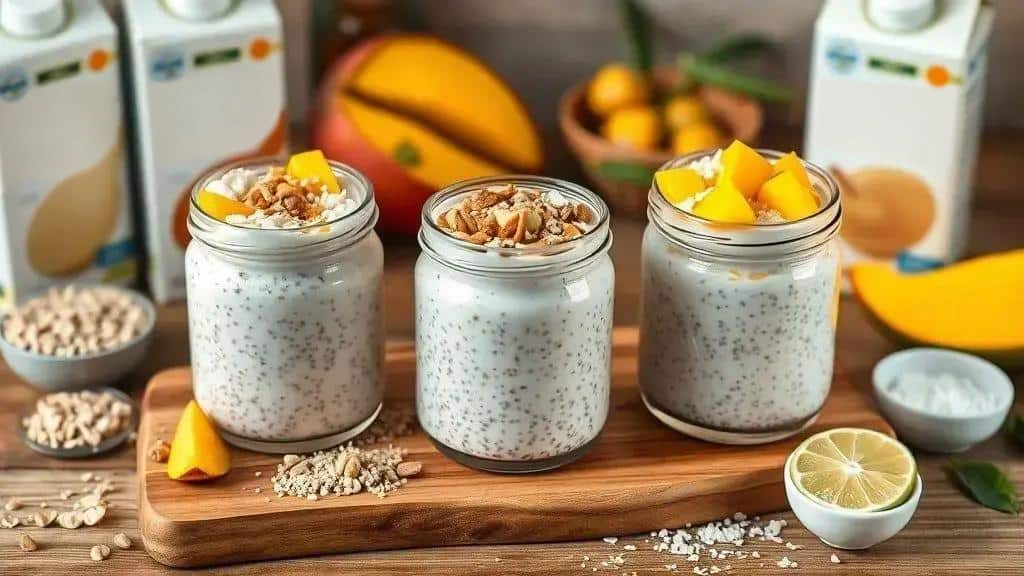
You can adapt mango and coconut chia pudding to suit different needs. Here are the ingredients and quantities for a vegan pudding, one with more protein or one with no added sugar.
Vegan version
Use plant-based alternatives to animal products to keep the pudding naturally creamy.
- Keep the 2 cups (480 ml) of coconut milk, or use 2 cups of almond milk for a lighter flavour.
- To sweeten, use 2–3 tablespoons of maple or agave syrup in place of honey.
- If the recipe calls for yoghurt, use 1/2 cup of coconut yoghurt or another plant-based yoghurt.
- Finish with desiccated coconut and mango slices. For crunch, add 2 tablespoons of vegan granola.
Higher-protein version
You can add protein with little change to the texture. Mixing the ingredients thoroughly in the right order helps prevent lumps.
- Mix 1 scoop (20–30 g) of whey or plant-based protein powder into the liquid before stirring in the chia seeds.
- For a creamier pudding with extra protein, combine 2 cups (480 ml) of almond or coconut milk with 1/4 cup (60 g) of Greek yoghurt.
- If the mixture gets too thick, add an extra 1–2 tablespoons of liquid.
- For extra protein and crunch, sprinkle over 1 tablespoon of hemp seeds or chopped walnuts.
No-added-sugar version
Choose an alternative to sugar that preserves the flavour and makes little difference to the texture.
- To sweeten, use the equivalent of 2 tablespoons of erythritol or 6–8 drops of stevia extract, adjusting to taste.
- Choose a slightly tart mango, or stir a little lemon juice into the mango purée to bring out its natural sweetness without adding sugar.
- Calorie-free sweeteners can give the pudding a drier texture. If needed, add 1 extra tablespoon of milk to loosen it.
- Top with fresh fruit and unsweetened toasted coconut.
Practical tips for all variations
- Always dissolve the protein powder or sweetener in the liquid before adding the chia seeds to prevent lumps.
- Taste the base before adding the chia seeds. It’s easier to adjust the sweetness and acidity at this stage.
- As a guide, use 1/2 cup (90 g) of chia seeds to 2 cups (480 ml) of liquid. Adjust the ratio to get the texture you prefer.
- Refrigerate for at least 2 hours. For the best consistency, make the pudding the night before.
Facts about chia pudding and mango
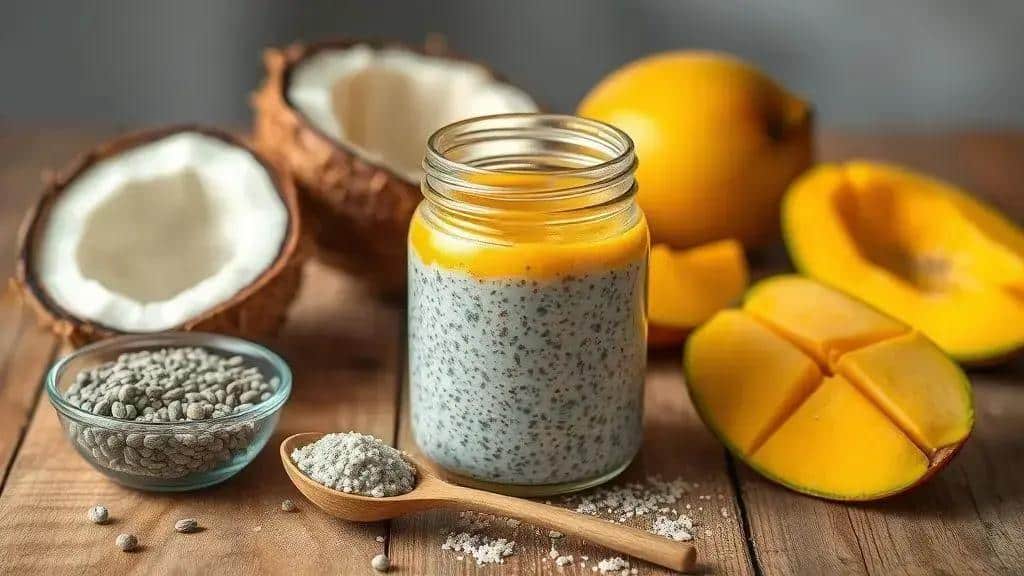
Chia seeds can absorb up to 10–12 times their volume in liquid, forming a gel that gives the pudding its texture without cooking. All this simple physical process takes is liquid and time.
Origins and history
Chia seeds come from the Americas and were an important food for pre-Columbian civilisations. Mangoes are native to southern Asia and are now grown in tropical regions around the world.
A few quick facts
- Warriors used chia seeds as a source of energy because they release energy gradually.
- A medium mango contains vitamins C and A, along with antioxidants that enhance the flavour of the pudding.
- The gel that forms around chia seeds helps you feel full for longer.
- Coconut acts as an emulsifier, and the fat in coconut milk gives the pudding its creaminess and brings out its aromas.
Why mango, coconut and chia work well together
The flavours and textures complement each other. Chia gives the pudding body, mango adds sweetness and a natural tang, and the fat in the coconut milk brings everything together for a velvety texture.
Tips for choosing and storing ingredients
- Choose a firm mango that smells fragrant at the stalk. Sweeter varieties work especially well when you’re using very little sweetener.
- Full-fat coconut milk makes a creamier pudding. Choose light coconut milk for a lighter version.
- Store chia seeds in a dry, dark place to preserve their omega-3 fats and keep them from turning rancid.
Nutrition at a glance
Together, these ingredients provide fibre, healthy fats and vitamins. For more protein, add yoghurt or dissolve protein powder in the liquid before adding the chia seeds.
Storage, portion sizes and creative ways to serve
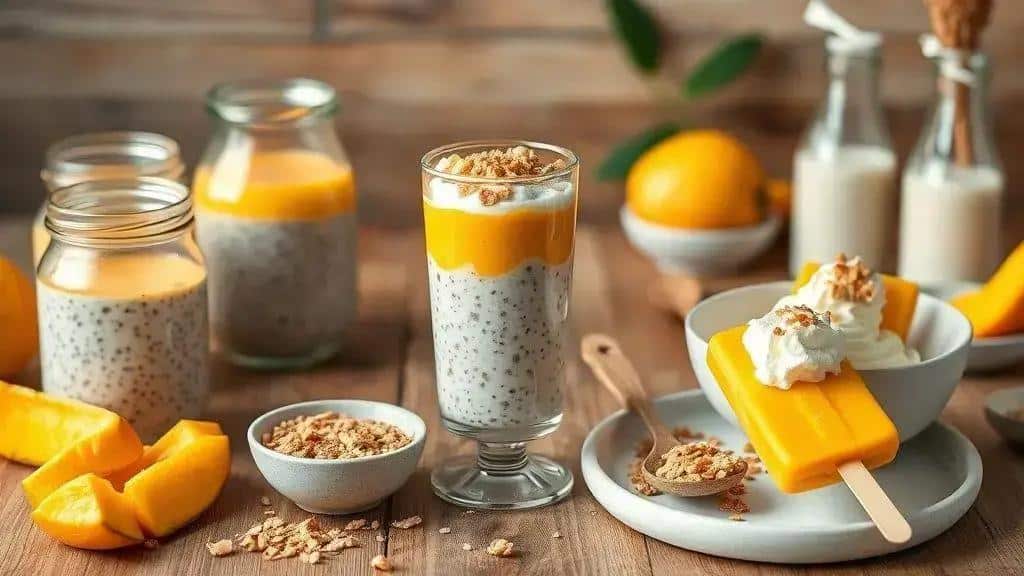
Store the mango and coconut chia pudding in lidded glass jars or airtight containers in the fridge. It stays fresh for up to 3 days. Avoid freezing the finished pudding, as the texture of the gel can change when it thaws.
Storage tips
- Keep the pudding in small jars in the fridge at 2 to 4 °C so it’s easy to serve individual portions.
- When transporting the pudding, use tightly sealed jars and a cool bag with enough ice to keep it at 4 °C or below. A 6-hour journey is suitable only if the pudding stays at that temperature throughout. Without effective refrigeration, discard it after 2 hours, or after 1 hour if the surrounding temperature rises above 32 °C.
- If the pudding is too firm, stir in 1–2 tablespoons of plant-based milk before serving.
Portion sizes and yield
This recipe makes about 4 portions of 150–180 g each (roughly 1 small 200 ml jar per portion). For larger dessert portions, allow around 200–250 g per person.
- Use 150–200 ml jars for individual snacks or ready-to-eat breakfasts.
- For an event, double the recipe to make 8 regular portions. For mini desserts, divide the pudding between 100–120 ml jars. The number of jars you’ll need depends on how much you put in each one.
Creative ways to serve
- For a layered parfait, alternate layers of pudding and mango purée in clear glasses, then finish with granola and toasted coconut.
- For a nutritious breakfast bowl, top the pudding with mango slices, a spoonful of Greek yoghurt and extra seeds.
- For an elegant dessert, serve in wine or martini glasses and finish with whipped coconut cream and lemon zest.
- For creamy ice lollies, pour the mixture into lolly moulds with pieces of mango once the chia seeds have soaked. Freeze for 6–8 hours for a frozen snack.
- For a breakfast or snack to take with you, make the pudding ahead in individual jars. Pack the granola separately so it stays crunchy until you’re ready to eat.
- For children, cut fruit into stars or hearts and decorate the pudding with the shapes and a drizzle of honey.
Topping combinations
- For crunch, try granola, chopped walnuts or flaked almonds.
- For freshness, add mint leaves or finely grated lemon or lime zest.
- For extra creaminess, add a spoonful of Greek yoghurt or whipped coconut cream.
- For a touch of sweetness, drizzle with honey, maple syrup or a light passion fruit sauce.
Assemble the layers shortly before serving to keep the granola crunchy. If you’re making the pudding ahead, keep the granola separate and add it just before eating.
Ready to give it a try?
Mango and coconut chia pudding is simple, nutritious and versatile, making it ideal for breakfast or as a light dessert. Try the variations and adjust them to your taste.
Share your photos on social media and let us know how your pudding turned out. We love seeing what you’ve made and swapping tips.
Thanks for reading! Follow our pages for more easy recipes and visit the Mestre das Receitas blog for more inspiration.
Mango and coconut chia pudding FAQs
How should I store chia pudding and how long does it keep?
Keep it in lidded jars in the fridge for up to 3 days. Store the granola separately so it stays crunchy, and give the jar a shake before serving if the liquid has separated.
How do I get the texture just right and avoid lumps?
Stir the seeds thoroughly into the liquid for 20–30 seconds, stir again after 5 minutes and refrigerate for at least 2 hours, preferably overnight.
What alternatives can I use for the coconut milk and the sweetener?
Use almond or oat milk in place of coconut milk. Maple or agave syrup can replace the honey. For a version with no added sugar, use unsweetened plant milk and sweeten with erythritol or stevia. Mango contains naturally occurring sugars.
How do I make a vegan or higher-protein version?
For a vegan pudding, replace the honey with maple or agave syrup and use plant-based yoghurt if needed. For extra protein, dissolve 1 scoop (20–30 g) of protein powder in the liquid before adding the chia seeds.
Can I freeze the pudding or turn it into something else?
Avoid freezing the finished pudding, as freezing changes its texture. The mixture does work well for ice lollies. Once the seeds have soaked, pour the mixture into lolly moulds and freeze for 6–8 hours for a frozen snack.
How many portions does the recipe make, and how should I portion it out for an event?
The recipe makes about 4 portions of 150–180 g. Double the ingredients for 8 portions of that size. For smaller servings at an event, use 100–120 ml jars.