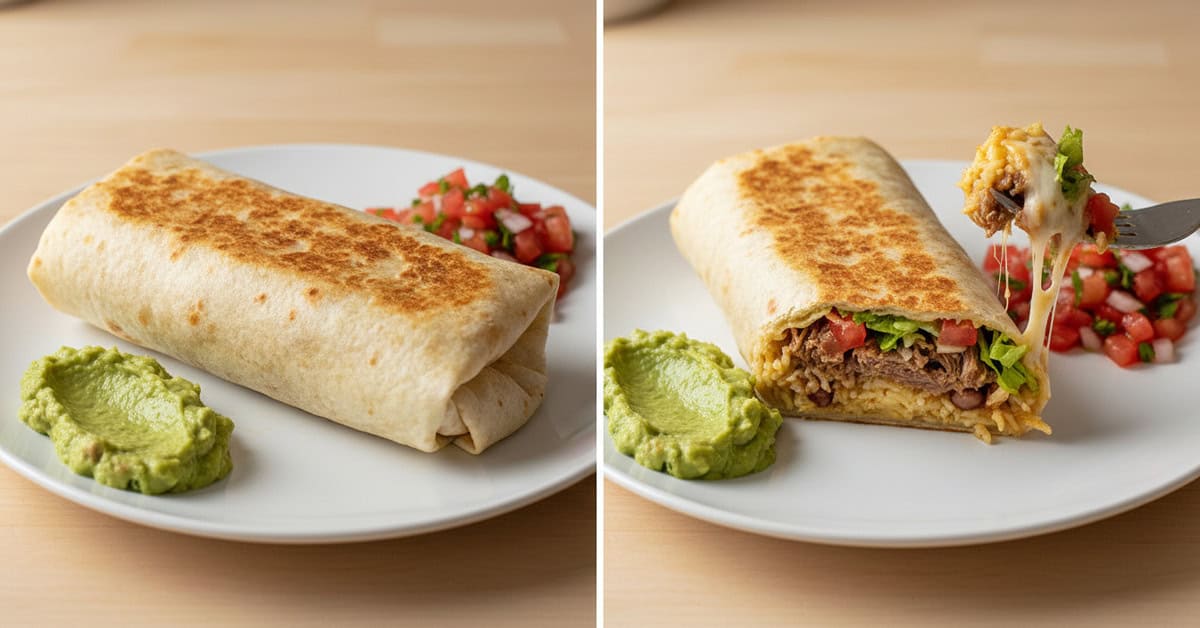

The California burrito is a speciality of the US West Coast, filled with crispy potatoes, juicy grilled steak, melted cheese, pico de gallo and guacamole. Its balance of flavours and textures makes it ideal for a quick meal, and it’s easy to make vegetarian or gluten-free.
A California burrito wraps crispy potatoes and grilled steak in a soft tortilla. Sounds irresistible, doesn’t it? I’ll share a few chef’s tips, simple options and variations so you can make it just the way you like it.
Ingredients for the grilled steak and potato burrito
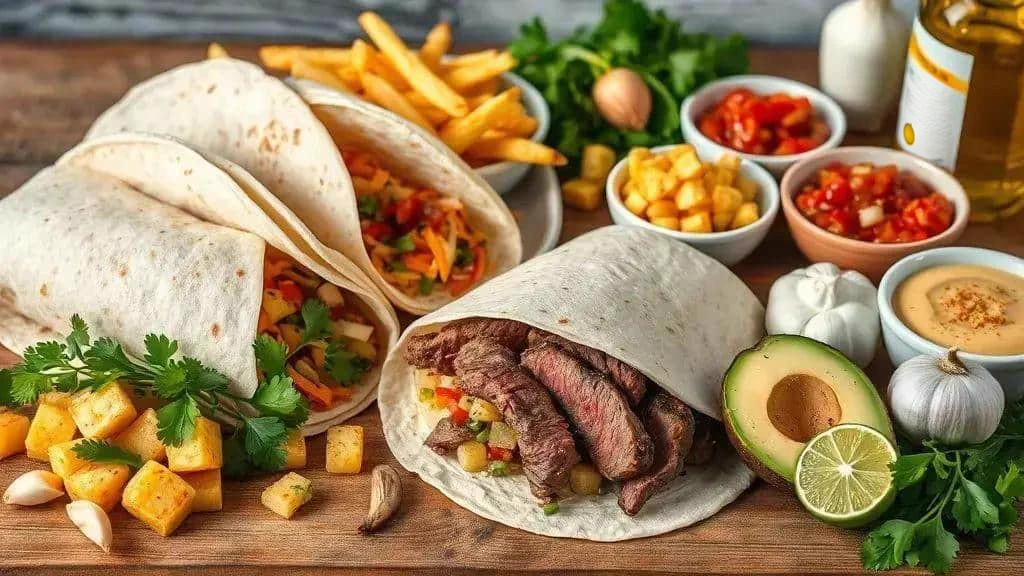
- 4 large flour tortillas (25–30 cm). Choose soft ones that roll up easily. You can also use large wholemeal or corn tortillas.
- 500 g of beef for grilling (flap steak, skirt steak or sirloin), cut into thin strips so it stays juicy. You can also use grilled chicken breast or a marinated plant-based meat alternative.
- 400 g of potatoes (Russet or Yukon), cut into chips for frying or cubes for roasting. For a sweeter, more nutritious variation, use sweet potatoes.
- 2 tablespoons of vegetable oil for frying or searing the beef. Olive oil or avocado oil also works.
- 1 cup of grated cheese (Cheddar and Monterey Jack). Mix the two so they melt together. You can also use mozzarella or grated vegan cheese.
- 1 cup of pico de gallo, made with finely chopped tomato, onion and coriander dressed with lime juice. A good shop-bought salsa also works.
- 1/2 cup of soured cream or Mexican crema for a creamy filling. Thick plain yoghurt also works.
- 1 medium avocado, mashed or sliced, or 1 cup of guacamole for creaminess. Other options include thin avocado slices or seasoned mayonnaise.
- 1/4 cup of chopped fresh coriander for freshness. Use parsley for a milder flavour.
- Juice of 1 lime to season the pico de gallo and guacamole.
- 1 teaspoon of salt, or to taste.
- 1/2 teaspoon of ground black pepper
- 1 teaspoon of garlic powder to season the beef. You can also use 2 chopped garlic cloves.
- 1 teaspoon of ground cumin and 1 teaspoon of paprika to bring out the flavour of the beef. A taco seasoning blend also works.
- 1 medium onion, thinly sliced. You can grill it alongside the beef.
Substitutions and practical tips
For a traditional California burrito, thin, fast-food-style fries work well. Roasted potatoes make a lighter filling.
For more flavour, marinate the beef for at least 30 minutes with lime juice, garlic, cumin and olive oil. For a vegetarian version, use marinated firm tofu or grilled mushrooms.
Choose cheeses that melt easily. If you avoid dairy, use plant-based cheese and thick coconut yoghurt.
Have all the ingredients hot and ready before assembling the burrito. This keeps the tortilla soft and makes it easier to roll.
How to make a grilled steak and potato burrito, step by step
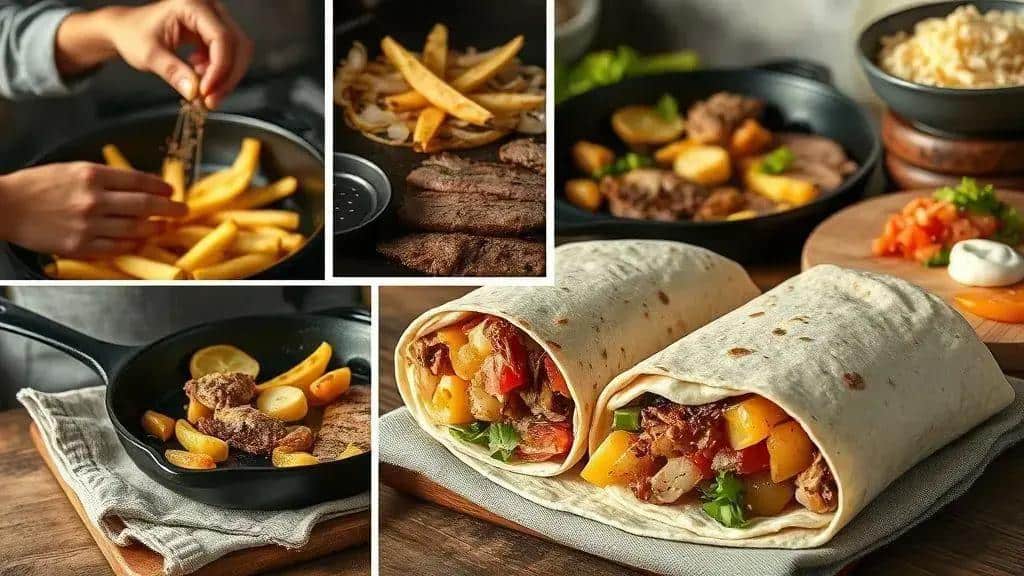
- Wash and drain the potatoes, then cut them into chips or 1–2 cm cubes. If you can, soak them in cold water for 15 minutes and dry them thoroughly for a crispier finish.
- Toss the potatoes with 1–2 tablespoons of oil, 1 teaspoon of salt, 1/2 teaspoon of paprika and pepper to taste.
- To deep-fry the potatoes, heat the oil to 180°C and fry in batches for 6–8 minutes until golden. To roast them, spread them on a baking tray and roast at 220°C for 25–30 minutes, turning halfway through. To air-fry, cook at 200°C for 15–20 minutes, shaking once.
Quick tips for the steak
- Cut 500 g of beef into thin strips. Mix 2 tablespoons of oil with the juice of 1/2 a lime, 1 teaspoon of garlic powder, 1 teaspoon of ground cumin, 1 teaspoon of paprika and 1 teaspoon of salt. Marinate the beef in the mixture for 20–30 minutes.
- Get a grill or cast-iron frying pan very hot. Sear the strips for 1.5–3 minutes on each side until golden sear marks appear. Cook in small batches so the strips sear without releasing too much liquid. Thin strips take very little time to reach medium.
- Sauté 1 sliced onion in 1 tablespoon of oil over a medium heat for 5–8 minutes until soft and lightly golden. You can also grill it alongside the steak.
- When the thickest part of the steak reaches at least 63°C, take it off the grill. Rest for 3–5 minutes, then slice against the grain.
- Warm each tortilla in a hot, dry frying pan for 20–30 seconds, or wrap the tortillas in foil and warm them in the oven for 5 minutes. Keep them covered so they stay pliable.
- Scatter a layer of grated cheese over the warm tortilla. Top with the hot potatoes, steak strips, grilled onion, 2 tablespoons of pico de gallo, 2 tablespoons of guacamole and 1 tablespoon of soured cream. Finish with chopped coriander and lime juice to taste.
- Fold in the sides and roll the tortilla up tightly from the edge nearest you, keeping the filling tucked in. If you like, brown the burrito in a frying pan for 1–2 minutes on each side to seal it and melt the cheese.
- Wrap in foil and refrigerate for up to 48 hours. Reheat in the oven at 180°C for 10–12 minutes or in a frying pan for 3–4 minutes on each side, until piping hot throughout.
How to season and grill the perfect steak
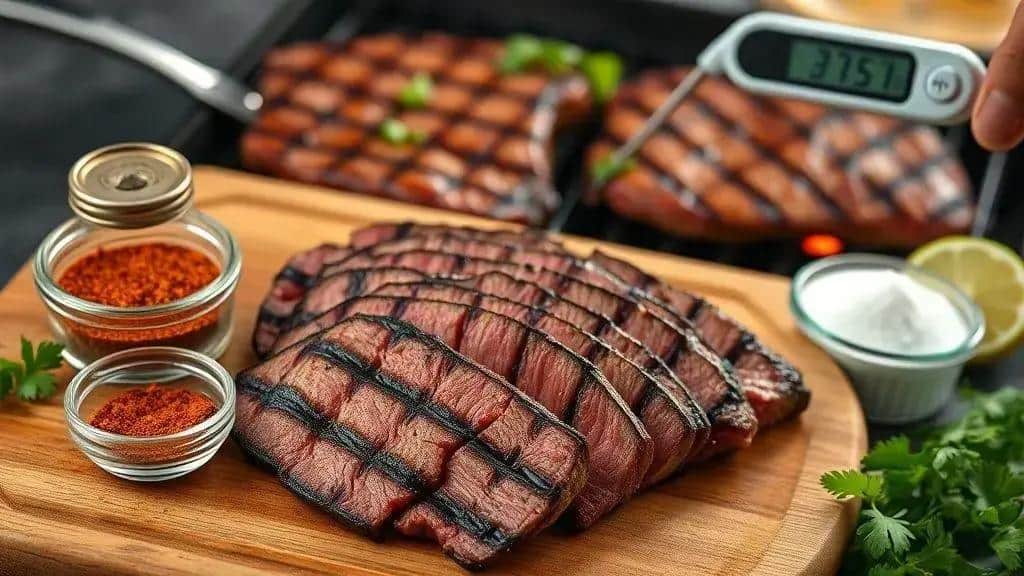
A good grilled steak starts with the cut and how you slice it. Choose flap steak, skirt steak or sirloin and slice thinly against the grain for tender strips. If you can, leave the beef at room temperature for 20 minutes before grilling.
Marinade and spice mix
- 2 tablespoons of vegetable oil to help the seasoning stick. Olive oil also works.
- 1 teaspoon of ground cumin for an earthy flavour.
- 1 teaspoon of smoked paprika for colour and a hint of smokiness.
- 1 teaspoon of garlic powder for a fuller flavour.
- 1 teaspoon of kosher salt, or to taste. You can also use fine table salt.
- 1/2 teaspoon of ground black pepper for a little heat.
- Juice of 1/2 a lime to help tenderise the beef. Cider vinegar also works.
Mix the seasonings, rub them into the beef and leave it to marinate for at least 20–30 minutes. For a fuller flavour, marinate the beef in the fridge for up to 2 hours.
How to grill the steak, step by step
- Preheat the grill or frying pan over a high heat until very hot. The beef should sizzle as soon as it touches the grill.
- Pat the surface of the beef dry with kitchen paper so it sears well and forms a crust.
- Sear the beef over a high heat for 1.5–3 minutes on each side until it has distinct sear marks. Avoid moving it around too much.
- After searing, move the beef to an area of indirect heat or turn the heat down. Grill for a further 2–5 minutes, depending on the thickness of the steak and how you like it cooked.
- Insert a meat thermometer into the thickest part of the steak. When it reads at least 63°C, take the steak off the heat and let it rest for at least 3 minutes before slicing.
- Rest the beef for 3–5 minutes, loosely covered with foil, to let the juices redistribute.
- Slice thinly against the grain so the strips are tender and easy to chew.
Tips for grilling and pan-searing
A grill gives the beef a smoky flavour, while a cast-iron frying pan produces an even crust. Use an oil with a high smoke point for either method.
Avoid crowding the grill. Cooking in small batches keeps the heat high so the beef sears without steaming in its own juices.
As soon as the beef comes off the heat, add a spoonful of butter or a squeeze of lime juice to bring out its flavour before assembling the burrito.
How to make chips, roast potatoes or potato wedges

- Wash 400 g of potatoes (Russet or Yukon). Cut them into chips 1–1.5 cm thick for frying, 2 cm cubes for roasting or medium wedges. For extra crunch, soak in cold water for 15 minutes and dry thoroughly.
- Before cooking, toss the potatoes with 1–2 tablespoons of oil, 1 teaspoon of salt and 1/2 teaspoon of pepper. For extra flavour, add 1 teaspoon of smoked paprika or 1/2 teaspoon of garlic powder.
- For extra crunch, you can parboil the potato cubes or chips for 3–4 minutes, then drain them well. This shortens the frying or roasting time and helps the potatoes cook through to a tender centre.
Deep-fried or air-fried chips
- For deep-frying, heat the oil to 175–180°C. Fry the potatoes in batches for 3–5 minutes until golden. Drain on kitchen paper and sprinkle with salt straight away so it sticks.
- Preheat the air fryer to 200°C. Arrange the potatoes in a single layer and cook for 12–18 minutes until crisp, shaking halfway through.
- For pan-frying, heat 2 tablespoons of oil over a medium-high heat. Fry the potatoes in batches for 8–12 minutes until golden, turning occasionally.
Roast potatoes
- Preheat the oven to 220°C. Line a baking tray with baking parchment and spread the potato cubes out in a single layer. Roast for 25–30 minutes, turning once, until golden and tender in the centre.
- Before roasting, drizzle the potatoes with 1–2 tablespoons of oil and sprinkle with salt, pepper and dried herbs. Rosemary or thyme works well.
- For a crispier finish, turn the oven up to 230°C for the last 5 minutes or put the potatoes under the grill briefly, watching closely so they don’t burn.
Potato wedges
- Cut the potatoes into wedges and toss with 2 tablespoons of olive oil, 1 teaspoon of coarse salt, 1/2 teaspoon of pepper, 1 teaspoon of garlic powder and 1 teaspoon of paprika.
- Spread the wedges on a baking tray and roast at 200–220°C for 30–35 minutes, turning halfway through. They should be golden with crisp edges and soft centres.
- To cook the wedges in a frying pan, sear them in a large pan with 1 tablespoon of oil over a medium-high heat for 10–12 minutes. Cover for the last few minutes to cook them through.
Practical tips
- Choose Russet potatoes for extra-crispy chips or Yukon potatoes for roasting if you like a creamy centre.
- Always sprinkle the potatoes with salt as soon as they come out of the oil or oven so it sticks.
- For a different flavour, try sweet potatoes. Adjust the cooking time as they cook more quickly.
- For burritos, aim for potatoes that are lightly crisp on the outside and soft in the middle so the tortilla doesn’t turn soggy.
- Keep the potatoes in a sealed container in the fridge for up to 48 hours. Reheat in the oven at 200°C for 8–10 minutes to crisp them up again.
California burrito variations and substitutions
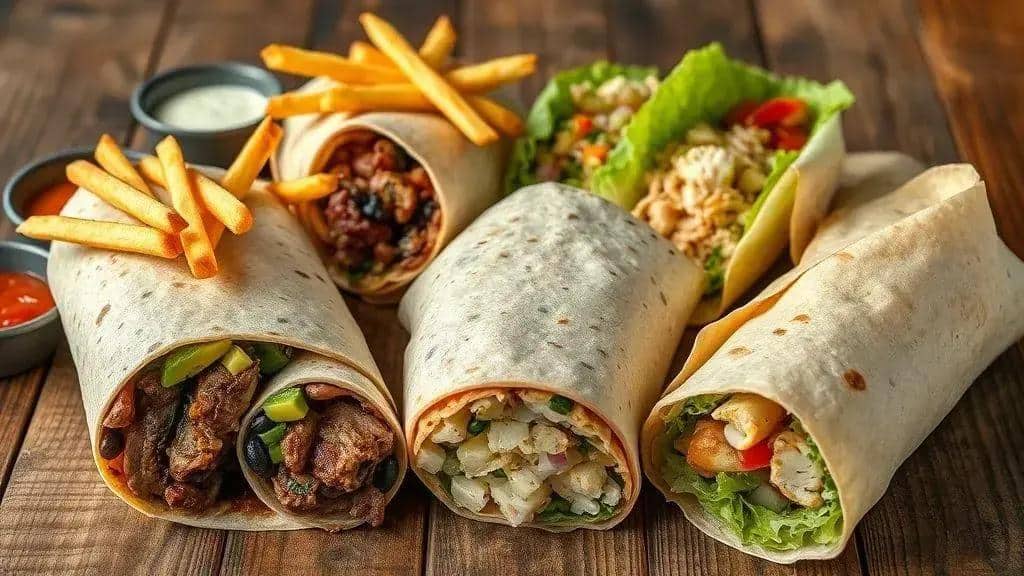
Try these practical, creative ways to adapt your California burrito to different diets, food intolerances and personal tastes while keeping it full of flavour.
Alternative proteins
- Grilled chicken – marinate 500 g of chicken strips in lime juice, garlic and cumin for 30 minutes. It’s an easy swap if you prefer white meat.
- Smoked cold meats – use 400–500 g, thinly sliced, for a quick filling. Warm the slices briefly before assembling the burrito.
- Plant-based meat – season 400 g of a soya- or pea-based meat alternative as you would the beef, then grill until browned.
Vegetarian and vegan versions
- Firm tofu – press 400 g of tofu, cut it into strips and marinate in soy sauce, lime juice and cumin. Grill until golden.
- Portobello mushrooms – slice 3 large mushrooms and grill with olive oil and paprika for a meaty flavour.
- Black beans – season 1 cup of cooked black beans with cumin and lime juice. They go well with potatoes and guacamole.
- Jackfruit – sauté 300–400 g of shredded jackfruit with barbecue-style seasonings for a texture similar to pulled meat.
Low-carb and keto versions
- Lettuce or collard green wraps – choose large, sturdy leaves to wrap around the filling without the carbohydrates from a tortilla.
- Low-carb tortillas – choose almond flour or coconut flour tortillas and use 1 per serving.
- In place of potatoes, use grated cauliflower browned in butter to give the filling texture while keeping the carbohydrates low.
Gluten-free options
- Large corn tortillas made with masa harina – overlap two if you need a sturdier wrap.
- Gluten-free wraps – choose rice or cassava wraps and use 1 per serving.
Alternative sauces and toppings
- Chipotle mayo – mix 1/2 cup of mayonnaise with 1–2 tablespoons of chipotle in adobo for a creamy sauce with a little heat.
- Salsa verde – use 1 cup of salsa made with tomatillos, onion, coriander and lime for a fresh, tangy finish.
- Coriander and lime crema – mix 1/2 cup of soured cream with the juice of 1 lime and chopped coriander. For a lighter version, use Greek yoghurt in place of the soured cream.
- Quick-pickled onion – slice 1 medium onion and leave it in 1/2 cup of vinegar with 1 teaspoon of salt for 20 minutes.
- Queso fresco or vegan cheese – finish with 1/2 cup of crumbled cheese.
Regional twists and other variations
- For a Korean-inspired burrito, use bulgogi or season the beef with gochujang. Add kimchi to the filling for a tangy, spicy contrast.
- For a Mediterranean version, swap the guacamole for tzatziki and add sliced cucumber and feta.
- For a taste of Brazil, add a fresh chopped vegetable salsa dressed with vinegar, along with some pickled biquinho chillies.
- For a breakfast burrito, add scrambled eggs (2 eggs per burrito), potatoes, cheese and a mild chilli sauce.
Practical tips for adapting recipes
- For a balanced filling, aim for 40% protein, 30% potatoes or vegetables, 20% creamy toppings and 10% crunchy toppings such as fried onions or crisps.
- Pair a creamy filling such as guacamole or soured cream with something crunchy, such as fries or crispy onions, for a good mix of textures in each bite.
- Taste the filling before assembling and adjust the salt and acidity so the burrito is well seasoned.
- Adjust the amount of filling to suit the size of the tortilla. Use 1 large tortilla per burrito. For a medium portion with 150–200 g of filling in total, use less meat and potato and include the cheese and sauces in the total weight. The larger quantities in the step-by-step instructions make a more generously filled burrito.
Tips for assembling, storing and finishing your burritos before serving
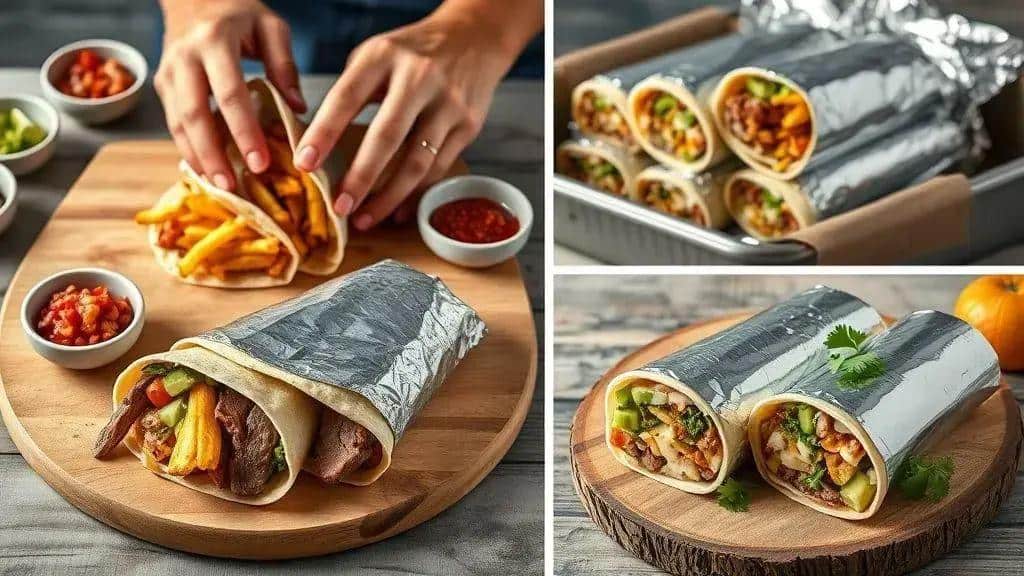
A well-rolled burrito holds together and is easier to eat. Have everything within reach and work on a clean surface.
How to assemble the burrito, step by step
- Warm each tortilla in a dry frying pan for 20–30 seconds so it bends easily.
- Scatter a thin layer of grated cheese over the centre of the tortilla to help hold the other ingredients together.
- Place a portion of hot potatoes (about 90–120 g) in the centre, leaving space around the edges.
- Spread 100–150 g of sliced grilled steak evenly over the potatoes.
- For the cold toppings, add 2 tablespoons of pico de gallo, 1–2 tablespoons of guacamole and 1 tablespoon of soured cream. Keep excess liquid out so the tortilla doesn’t turn soggy.
- If you like, add crispy fried onions or a few crumbled crisps for extra crunch.
- Fold the sides in and roll up tightly from the edge nearest you until the filling is enclosed. Hold the burrito firmly and press it together gently so it keeps its shape.
Wrapping and serving
If serving straight away, let the burrito rest for 1–2 minutes so the tortilla can absorb a little moisture. Cut it in half diagonally with a sharp knife for a neat finish. If you’d like a toasted burrito, brown it in a frying pan for 1–2 minutes on each side until the cheese melts.
Storage and reheating
- For short-term storage (up to 48 hours), wrap each burrito in foil and keep it in the fridge to help it hold its shape and retain moisture.
- To freeze for up to 1 month, wrap each burrito in cling film and then in foil. Press out as much air as possible to prevent freezer burn.
- To reheat a chilled burrito, wrap it in foil and heat it in the oven at 180 °C. Start checking after 10–12 minutes. If using a frying pan, start with 3–4 minutes on each side. Whichever method you use, check with a food thermometer that the centre of the filling has reached 74 °C before serving.
- If you defrost a frozen burrito in the fridge, follow the instructions for reheating a chilled burrito. To reheat it straight from the freezer, heat it in the oven at 180 °C and start checking after 20–25 minutes. Continue heating until the centre of the filling reaches 74 °C.
- To keep the tortilla from going soggy, heat the potatoes and steak separately and assemble just before serving whenever possible.
Finishing touches and presentation
To finish, squeeze a little lime juice over the filling and scatter chopped fresh coriander on top. Offer the sauces on the side so everyone can choose how much heat they like. Serve on baking parchment or a wooden board for an inviting, rustic presentation.
For a casual meal, cut each burrito in half and stack the halves. If serving burritos as a menu item, leave them whole and serve with a side of crisps, a simple salad or a ramekin of sauce.
Conclusion
The California burrito shows how simple ingredients can come together to make a memorable dish full of flavour.
Try the variations, adjust the seasoning to your taste and don’t be afraid to try something new in the kitchen.
Thanks for reading! Follow us on social media for more easy recipes, quick tips and kitchen tricks.
Visit and follow the Mestre das Receitas Food Blog for updates and detailed step-by-step guides.
If you enjoyed the recipe, share your version and leave a comment. We love seeing what you make. Enjoy!
California burrito FAQs
How do I get the potatoes really crispy for my burrito?
Soak the potatoes in cold water for 15 minutes, dry them thoroughly and pre-cook them for 3–4 minutes. Then roast them at 220°C or fry them in hot oil without crowding the pan. Turn them just once, halfway through cooking, to keep them crisp.
Which cut of beef works best, and what can I use instead?
Flap steak, skirt steak and sirloin all work well because they’re tender and have some fat. For a different filling, try grilled chicken breast, a marinated plant-based meat alternative or portobello mushrooms.
How do I assemble the burrito without the tortilla going soggy?
Warm the tortilla and add the grated cheese first to create a barrier. Drain any excess liquid from the pico de gallo and add the sauces in small amounts. Assemble just before serving.
What’s the best way to reheat a burrito?
If the burrito is chilled or has already defrosted in the fridge, wrap it in foil and heat it in the oven at 180 °C. Start checking after 10–12 minutes. If using a frying pan, start with 3–4 minutes on each side. If the burrito goes into the oven still frozen, start checking after 20–25 minutes at 180 °C. In all cases, the centre of the filling must reach 74 °C. Reheating in the oven helps the tortilla stay firm.
How do I make a vegan California burrito?
Use marinated firm tofu, grilled mushrooms or black beans for the protein. Swap the soured cream for plant-based yoghurt and use vegan cheese. Keep the potatoes and pico de gallo for texture and freshness.
How can I make my burrito less spicy?
Serve hot sauces on the side, deseed the chillies and choose milder options such as biquinho chillies or deseeded jalapeños. Add more guacamole or soured cream to balance the heat and acidity.