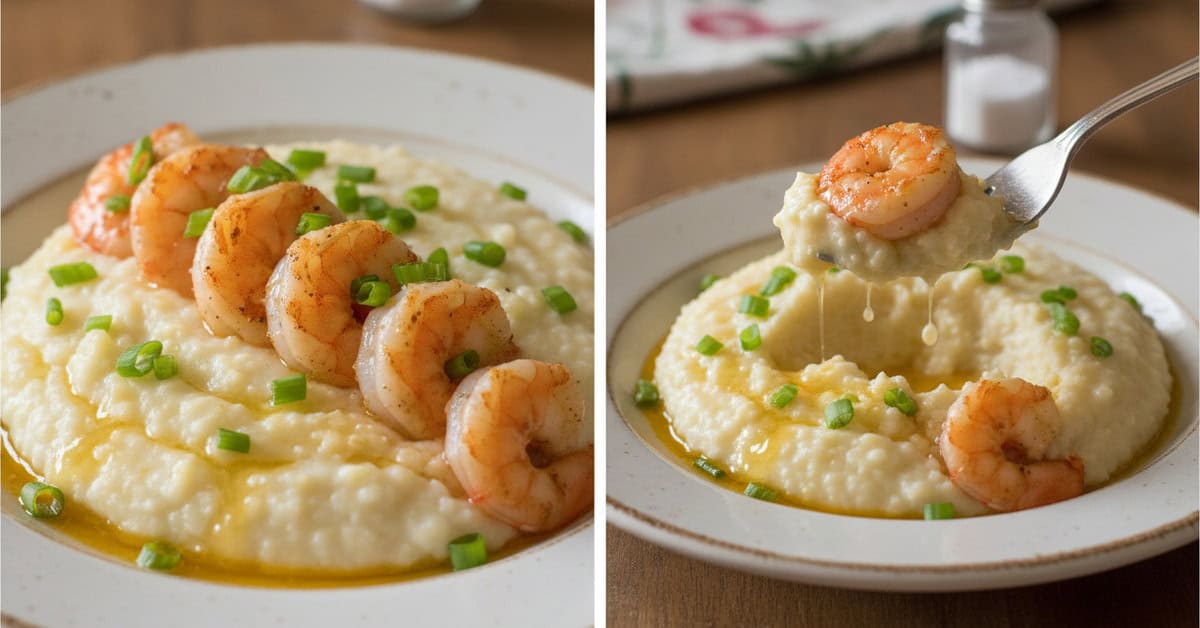

Shrimp and grits is a traditional dish from the American South. Seasoned, grilled prawns are served on a bed of creamy grits enriched with butter and cheese, giving the dish a contrast in textures. There are several regional variations, and a few simple techniques will give you silky grits and juicy prawns at home.
Juicy prawns nestled in creamy grits make shrimp and grits the kind of dish you fall for at the first forkful. Want an easy, authentic recipe with a few chef’s tips to get the texture and seasoning right? I’ll walk you through each step.
Ingredients for shrimp and creamy grits

To make 4 portions of shrimp and creamy grits, gather your fresh ingredients and measure them carefully. The list includes the essentials and some substitutions.
Main ingredients
- 200 g coarse-ground maize (grits) – use instant grits for a quicker dish and adjust the liquid to get the consistency you like.
- 800 ml chicken stock – use vegetable stock for vegetarian grits.
- 200 ml whole milk – or use plant milk to reduce the lactose content.
- 50 g butter for the grits. In addition, set aside 1 tablespoon of butter or olive oil for sautéing and 1 tablespoon of butter to finish the sauce.
- 100 g grated Cheddar – try queijo prato, a mild Brazilian cheese, or Parmesan for a different flavour.
- 400 g medium prawns, peeled and deveined – use fresh or defrosted prawns and pat them dry before cooking.
- 100 g diced bacon – swap it for smoked andouille sausage for an authentic Southern touch.
- 1 medium onion, chopped – this forms the flavour base. Use a red onion for a little sweetness.
- 1 small red pepper, chopped – for aroma and colour. A green pepper works too.
- 2 garlic cloves, chopped – essential to the sautéed base for the prawns.
- 1 teaspoon smoked paprika – use sweet paprika if you prefer a less smoky flavour.
- 1 pinch of cayenne pepper – adjust to taste, or use a few drops of hot sauce.
- Juice of 1/2 lemon – to brighten the flavours just before serving.
- Chopped parsley or spring onions, to taste – for a fresh finish.
- Salt and black pepper, to taste – taste and adjust the seasoning at the end.
Preparation tips and quick substitutions
For extra-creamy grits, cook over a low heat, stirring constantly. If they get too thick, add more stock. To reduce the fat, replace some of the butter with olive oil and use skimmed milk. For richer, creamier grits, stir in 1 tablespoon of cream at the end.
How to make shrimp and creamy grits step by step
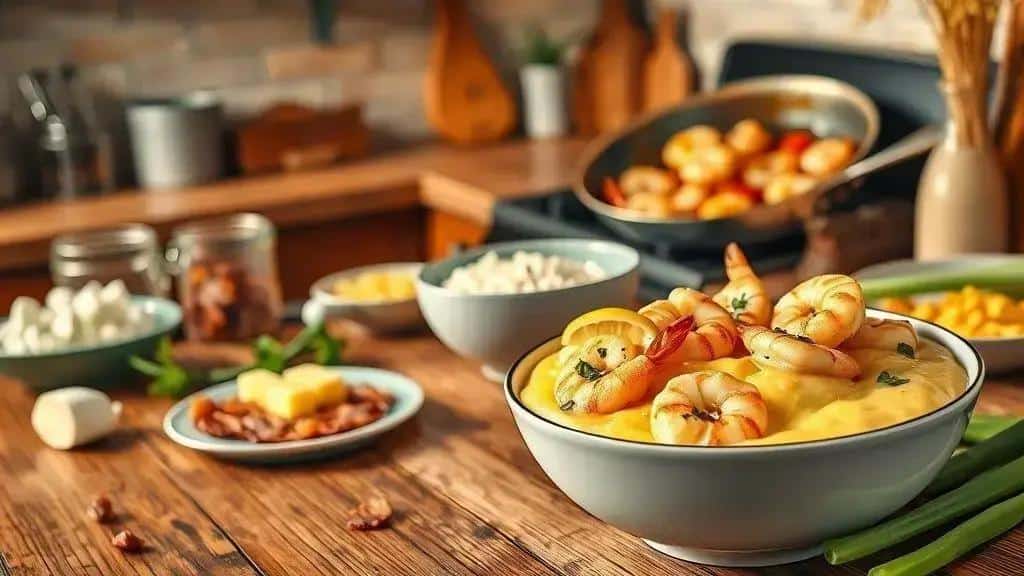
Follow these steps to make 4 portions of shrimp and creamy grits.
Cooking the grits
- Bring 800 ml of chicken stock to the boil in a medium saucepan over a medium heat.
- Turn the heat to low and gradually add 200 g of grits, whisking vigorously to prevent lumps.
- Cook over a low heat, stirring frequently, for 15–20 minutes until the grits are tender and creamy. For instant grits, reduce the cooking time to 5–7 minutes.
- Add 200 ml of whole milk, 50 g of butter and 100 g of grated Cheddar. Stir until combined. If the grits are too thick, add more stock a little at a time until they reach the consistency you like.
- Season to taste with salt and pepper. Leave over a very low heat with the lid ajar to keep warm.
Cooking the prawns and making the sauce
- Pat 400 g of medium prawns dry with kitchen paper. Season with salt, black pepper, 1 teaspoon of smoked paprika and a pinch of cayenne pepper.
- Heat a large frying pan over a medium heat and fry 100 g of diced bacon for about 6–8 minutes until crisp. Lift out the bacon and set aside on kitchen paper.
- Add 1 tablespoon of butter or olive oil to the bacon fat in the pan. Gently fry 1 chopped medium onion and 1 chopped small red pepper for 4–5 minutes until soft.
- Add 2 chopped garlic cloves and fry gently for 30 seconds, taking care not to let the garlic burn.
- Push the vegetables to one side of the pan and arrange the prawns in a single layer. Cook for 1.5–2 minutes on each side until opaque and firm, taking care not to overcook them.
- Return the bacon to the pan, squeeze in the juice of 1/2 lemon and add 1 tablespoon of butter to make a glossy sauce. Stir for 30–60 seconds, then taste and adjust the salt.
- Finish with chopped parsley or spring onions and, if you like, a little more pepper to bring out the flavour.
Plating and serving
- Spoon a generous helping of creamy grits onto the centre of a plate or into a warmed bowl.
- Arrange the prawns and sauce over the grits, then spoon over the pan juices for a glossy finish.
- Scatter over extra cheese or spring onions, add a slice of lemon on the side and serve straight away while the grits are hot and creamy.
Chef’s tips and techniques for silky grits and juicy prawns

A few simple techniques will help you get the texture of both the grits and the prawns just right.
Getting the texture of the grits right
- Use roughly 1 part grits to 4 parts liquid, for example 200 g of grits to 800 ml of stock.
- Bring the stock to the boil, lower the heat and gradually add the grits. Simmer gently for 15–20 minutes, stirring constantly.
- Stir frequently with a whisk or wooden spoon. This prevents lumps and helps release the starch that makes the grits creamy.
- Take the pan off the heat at the end and stir in the butter and cheese for a silky texture and fuller flavour.
- If the grits are too thick, add hot stock a little at a time. If they are too thin, cook them a little longer over a low heat.
- For instant grits, reduce the cooking time to 5–7 minutes. For a lighter version, replace some of the butter with olive oil.
How to keep the prawns juicy
- Pat the prawns dry with kitchen paper to remove excess moisture so they brown well in the pan.
- Season lightly with salt, pepper and paprika. Avoid adding too much salt before cooking, as this can make the prawns tough.
- To sear the prawns, heat the frying pan over a high heat until very hot. Cook the prawns in a single layer for 1.5–2 minutes on each side.
- To avoid overcooking the prawns, remove them from the pan as soon as they turn opaque and feel firm to the touch. They will continue to cook in the residual heat.
- Finish the sauce with butter and a little lemon juice for a velvety texture and a glossy sheen.
Plating for contrasting textures
- Start each serving with a bed of hot, creamy grits.
- Arrange the prawns over each portion of grits to keep them warm and preserve their texture.
- Top with crisp bacon or fried onions for crunch.
- Finish with parsley or spring onions and a few drops of lemon juice to balance the richness.
Common problems and quick fixes
- If the grits are lumpy, whisk vigorously or pass them through a sieve. Cooking them a little longer can also help.
- If the grits are too runny, simmer them uncovered over a low heat or stir in a little more cornmeal mixed with hot liquid.
- Rubbery prawns are a sign of overcooking. Shorten the cooking time and take them off the heat as soon as they are done.
- If the sauce looks dull, whisk in cold butter at the end to emulsify it. Add a drop of lemon juice or vinegar for gloss and balance.
Shrimp and grits variations from Brazil and classic versions from the American South

Try a Southern classic, a Brazilian twist, a vegan version or a spicier dish. In each variation, changing just a few ingredients gives the dish a different flavour.
Classic Southern version
- 200 g grits – cooked in 800 ml of chicken stock or water.
- 50 g butter – stir in at the end for a glossy finish and creamy texture.
- 100 g grated Cheddar – use Parmesan for a less sweet flavour.
- 400 g medium prawns – seasoned with salt, pepper and paprika.
- 100 g bacon – fry until golden for crunch and a smoky flavour.
Brazilian version
- 200 g cornmeal (a finer grind than for the classic version) – cook in 600 ml of stock and 200 ml of coconut milk for a tropical flavour.
- 1 tablespoon red palm oil (optional) – it gives the dish its distinctive aroma. Use olive oil if you prefer.
- 400 g prawns – season with garlic, coriander and either fragrant pimenta-de-cheiro chillies or hot malagueta chillies.
- 50 g queijo coalho (a firm Brazilian curd cheese) or requeijão (a creamy Brazilian cheese spread) – for a creamy finish. You can also use Catupiry.
Vegetarian or vegan version
- 200 g cornmeal or instant polenta – cooked in vegetable stock.
- 200 ml plant milk (almond or coconut) – for a creamy texture without lactose.
- 200–300 g mushrooms (shiitake or button) – sauté them to give the dish a bite similar to that of prawns.
- 1 tablespoon smoky sauce (optional) – for a smoky flavour without meat. Smoked paprika also works.
Spicy Creole version with andouille
- 100 g andouille sausage (or smoked Brazilian calabresa sausage) – sliced and browned.
- 1 medium tomato, chopped – for a tangier sauce.
- 1 teaspoon Creole or Cajun seasoning – for depth of flavour and heat.
- An extra pinch of cayenne pepper – adjust to suit your taste for heat.
Finishing touches and quick substitutions
- For crunch, add crisp bacon, fried onions or toasted breadcrumbs.
- For freshness, scatter chopped spring onions, parsley or coriander over the top.
- A few drops of fresh lemon juice or white wine vinegar balance the richness.
- Use Cheddar for the classic version, Parmesan for a saltier flavour or cream cheese for an extra-smooth texture.
- For a gluten-free dish, check that the grits and seasonings are free from gluten cross-contamination.
Quick cooking tips
- Add the liquid a little at a time. A little extra makes the grits creamier.
- Add the chilli gradually to control the heat, and taste before serving.
- Cook the prawns just until they turn opaque to keep them from becoming rubbery.
About shrimp and grits and the cornmeal that goes into it

Here are a few facts about shrimp and grits and the part cornmeal plays in the dish.
Origins and history
The dish began in the American South as a simple meal for fishers and farmers. Over time it became a symbol of Southern home cooking, and restaurants began serving more refined versions.
How grits differ from Brazilian cornmeal
Grits are made from coarsely ground maize and are typical of the American South. The closest Brazilian equivalent is cornmeal, known as fubá. The grind varies, so choose a coarser cornmeal for a similar texture.
A few quick facts
- The name ‘shrimp and grits’ simply describes what’s on the plate – prawns served with grits.
- Once eaten for breakfast, shrimp and grits is now also served as a main course at lunch and dinner.
- The dish brings together Indigenous, African and European traditions found in Southern cooking.
- Local variations include coconut milk, regional cheeses and smoked sausages.
Why the choice of cornmeal matters
The grind and the cooking liquid – stock, milk or water – make a big difference to the creaminess of the grits. Coarsely ground cornmeal gives them more body, while finely ground cornmeal gives a smoother finish.
What goes well with shrimp and grits?
- A few drops of lemon juice cut through the richness of the dish.
- Crisp bacon or fried onions add a contrasting crunch.
- A light beer or a young white wine pairs well with the flavour of the prawns.
Conclusion
Shrimp and grits brings together the bold flavours of the American South in a simple, delicious dish with a creamy base.
Follow these steps for silky grits and juicy prawns, even if you’re new to cooking.
Thanks for reading! Follow us on social media for easy recipes, tips and creative variations, and keep up with the Mestre das Receitas blog for the latest news and daily inspiration.
Frequently asked questions about shrimp and grits
What exactly is shrimp and grits?
It’s a traditional dish from the American South, with seasoned prawns served over creamy grits made from ground maize, usually enriched with butter and cheese.
Can I use ordinary cornmeal instead of grits?
Yes. Choose coarsely ground cornmeal for a similar texture, and adjust the amount of liquid and the cooking time until it’s creamy.
How do I stop the grits going lumpy?
Gradually add the grits to the hot liquid, stirring constantly with a whisk or wooden spoon until the cornmeal is evenly mixed in and there are no lumps.
What’s the secret to tender, juicy prawns?
Pat the prawns dry before cooking, sear them quickly over a high heat and take them off the heat as soon as they turn opaque to avoid overcooking.
What can I use instead of prawns for a vegetarian version?
Use sautéed shiitake or button mushrooms, or try hearts of palm. Season well and add a smoky ingredient such as smoked paprika to bring the flavour closer to the original.
What’s the best way to store and reheat leftovers?
Store the grits and prawns separately in the fridge for up to 2 days. Reheat the grits with a little stock or milk to make them creamy again. Warm the prawns briefly in a frying pan so they don’t dry out.