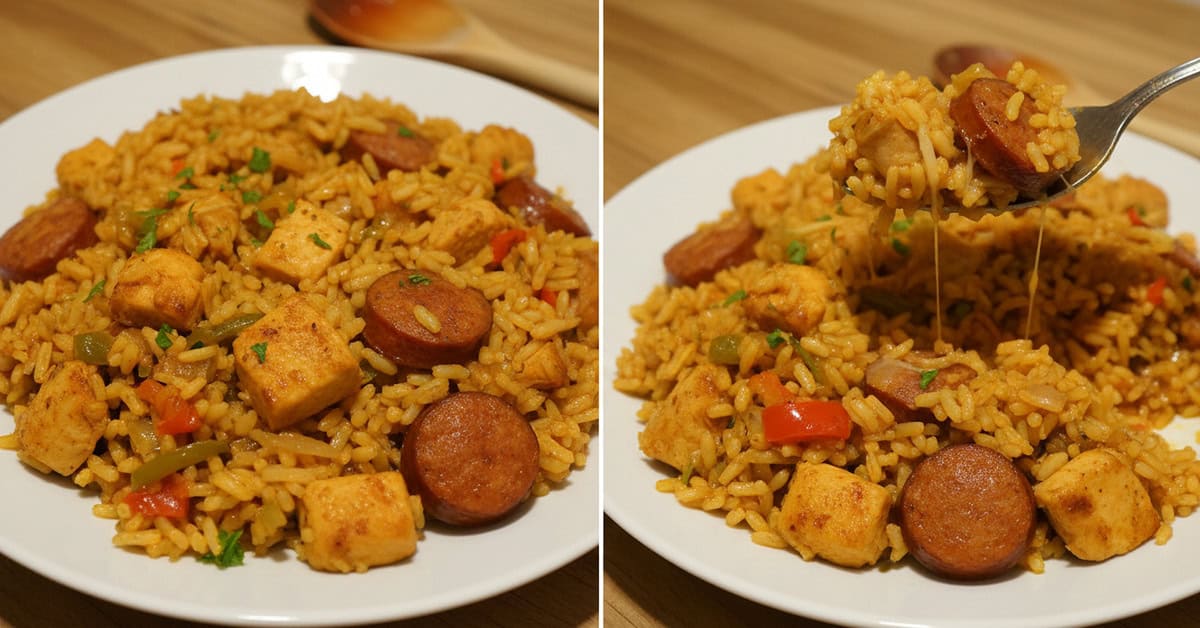

Classic jambalaya is a traditional Louisiana dish made with long-grain rice, chicken, smoked sausage, the ‘holy trinity’ of onion, pepper and celery, and a balanced blend of Cajun spices. Creole versions also include tomatoes. Browning the meat gives the dish depth of flavour, while using hot stock and letting the rice cook undisturbed help keep the grains separate.
Classic jambalaya brings the bold flavours of the American South together in one dish of rice, chicken and sausage. Want to learn the technique, adjust the seasoning to your taste and get the texture just right without any fuss? I’ll share practical tips and a few tricks of the trade that make a difference.
Ingredients for classic jambalaya
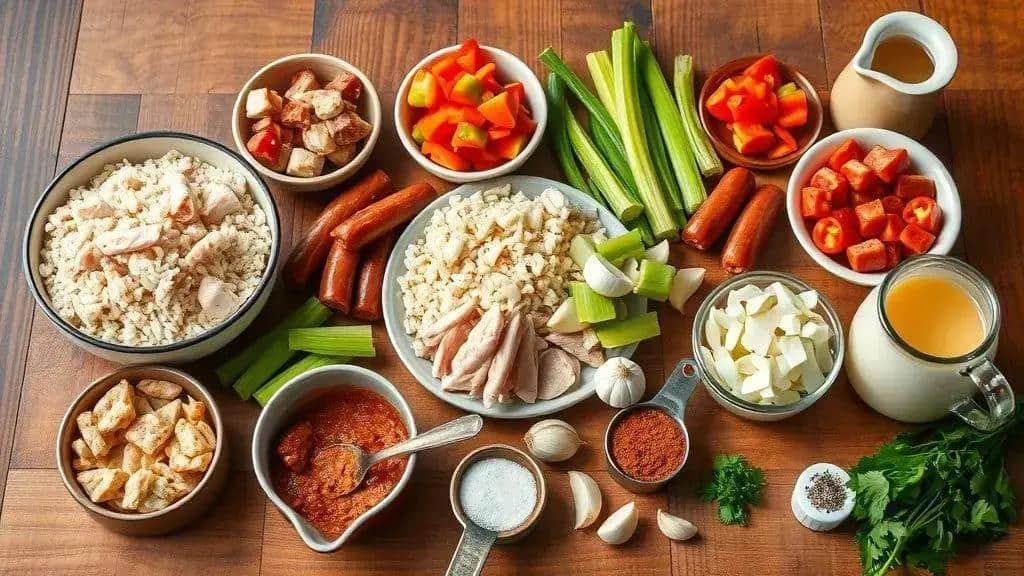
To make classic jambalaya, you’ll need the following ingredients in the quantities shown.
- 2 cups (360 g) long-grain rice, rinsed and drained. You can use parboiled rice instead, adjusting the amount of liquid.
- 400 g chicken breast, diced. For more flavour, you can use boneless chicken thigh.
- 300 g andouille or Brazilian calabresa sausage, sliced. Use another smoked sausage if needed.
- 1 medium onion, finely chopped.
- 1 red pepper, diced.
- 1 green pepper, diced.
- 2 celery sticks, chopped. Celery is part of the Cajun ‘holy trinity’.
- 3 garlic cloves, chopped or crushed.
- 1 tin (400 g) of peeled tomatoes, chopped, or 2 ripe fresh tomatoes, chopped.
- 4 cups (960 ml) hot chicken stock. Use vegetable stock for the vegetarian version.
- 2 tablespoons vegetable oil, or clarified butter for a richer flavour.
- 2 teaspoons Cajun seasoning, or to taste. You’ll find a homemade alternative below.
- 1 teaspoon dried thyme
- 2 bay leaves
- Salt and black pepper, to taste. Allow for the salt in the sausage.
- Chopped fresh parsley, to taste, to finish.
- For a Creole seafood version, add 200 g peeled prawns during the last few minutes of cooking, if you like.
Substitutions and practical tips
To make your own Cajun seasoning, mix 1 teaspoon smoked paprika, 1/2 teaspoon cayenne pepper, 1/2 teaspoon garlic powder, 1/2 teaspoon onion powder, 1/2 teaspoon dried oregano and 1/2 teaspoon thyme.
If you use brown rice, add more stock and allow extra cooking time. Parboiled rice usually needs less water.
Choose smoked sausage for a more intense flavour. Remove the skins from very thick sausages and cut the chicken into even pieces so they cook at the same rate.
When shopping, look for firm peppers, chicken with no noticeable odour and sausage from a trusted supplier. Fresh, good-quality ingredients give the best results.
How to make Cajun rice with chicken and sausage, step by step
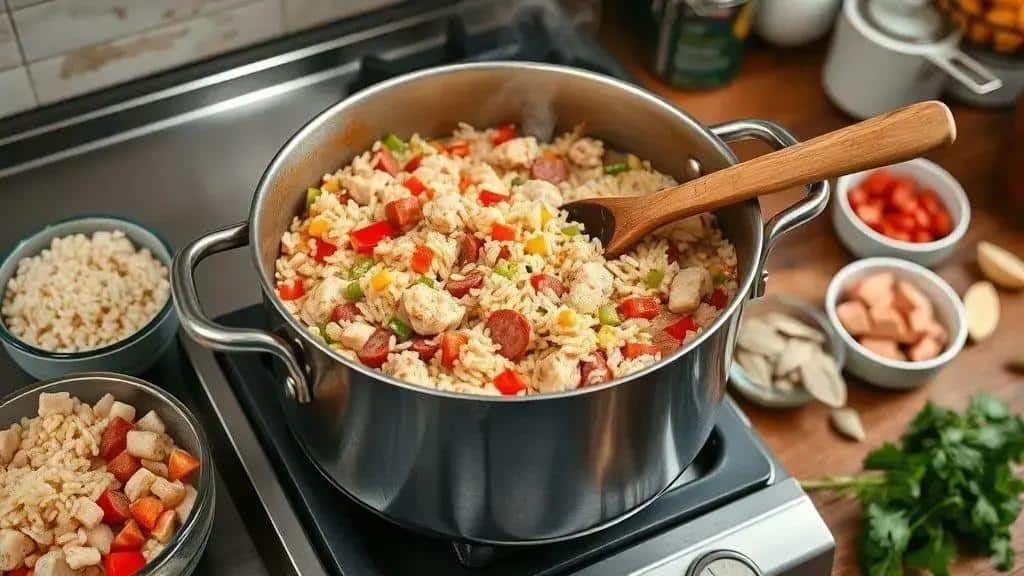
Before you start cooking the Cajun rice with chicken and sausage, measure out all the ingredients and make sure the stock is hot.
- Pat 400 g chicken breast dry, cut it into cubes and season with 1 teaspoon Cajun seasoning, salt and pepper.
- Heat 2 tablespoons oil in a large, heavy-based pan over a medium-high heat until it just begins to smoke.
- Add 300 g sliced sausage and fry until browned and crisp. Lift it out onto a plate and set aside.
- In the same pan, sear the chicken in batches until browned on all sides. Transfer to the plate with the sausage.
- For the ‘holy trinity’ base, turn the heat down to medium and add 1 chopped onion, 1 diced red pepper, 1 diced green pepper and 2 chopped celery sticks. Fry gently for 5–7 minutes until softened.
- Add 3 chopped garlic cloves and stir for 30 seconds, then add 2 cups (360 g) rice. Fry, stirring, for 1–2 minutes until the grains turn slightly translucent and take on the flavours in the pan.
- Return the chicken and sausage to the pan. Add 1 tin (400 g) of chopped peeled tomatoes, 1 teaspoon dried thyme and 2 bay leaves. Mix well.
- Pour in 4 cups (960 ml) hot chicken stock, stir just enough to spread the rice evenly, then turn up the heat and bring to the boil.
- Once boiling, turn the heat down to its lowest setting and partly cover the pan. Cook for 18–20 minutes, stirring as little as possible, until the rice is tender and has absorbed the liquid.
- If using 200 g prawns, add them for the last 4–5 minutes of cooking so they cook through without turning rubbery.
- Turn off the heat, cover the pan and leave to rest for 5–10 minutes so the rice firms up and the flavours settle.
- Fluff the rice with a fork, adjust the salt and pepper, scatter over the chopped fresh parsley and serve immediately.
Quick tips
- For parboiled rice, use a little less stock and follow the cooking time on the packet.
- For a milder dish, reduce the cayenne in the Cajun blend or use half the amount of seasoning.
- For a vegetarian version, replace the chicken and sausage with mushrooms and chickpeas, and use vegetable stock.
- Avoid stirring too much as the rice cooks. Stirring releases starch and can make the rice stodgy.
- The rice should be tender and moist, with grains that come apart easily. It should be neither dry nor watery.
Tips and techniques for getting the texture of jambalaya just right
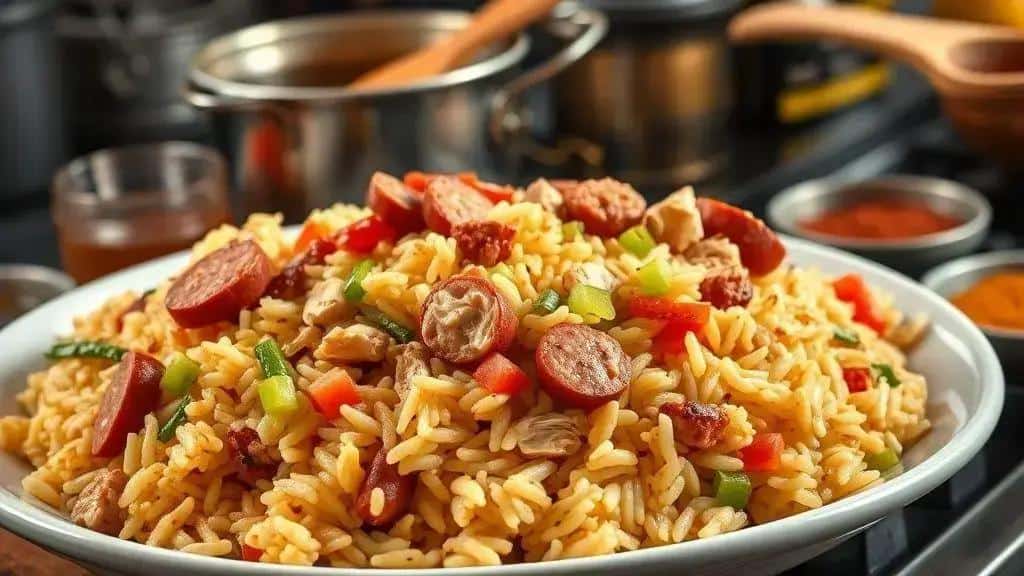
Getting the texture of classic jambalaya right comes down to three things – the rice you choose, the amount of liquid you add and how you cook it.
Essential techniques
- Choose long-grain rice (2 cups/360 g), as the grains separate more readily. Avoid instant rice or varieties with very short grains.
- Rinse the rice until the water runs almost clear. This removes excess starch and helps prevent the rice from becoming stodgy.
- Once the onion, peppers and celery have browned, add the rice and fry, stirring, for 1–2 minutes until the grains turn slightly translucent. Toasting the grains this way seals them and helps them stay separate.
- Always use hot stock when adding the 4 cups (960 ml). Cold stock slows down cooking and changes the texture of the rice.
- Stick to the liquid-to-rice ratio in the recipe. Only adjust it if you’re using parboiled or brown rice.
- Once the stock comes to the boil, turn down the heat, partly cover the pan and cook for 18–20 minutes without stirring. Stirring releases starch and makes the rice too creamy.
- It’s important to let the rice rest. Turn off the heat and leave the pan covered for 5–10 minutes so the grains firm up and the moisture distributes evenly.
Tips for fine-tuning your jambalaya
- Brown the chicken and sausage separately over a high heat to caramelise the surfaces, then set them aside. Return them to the pan just before adding the stock to keep the meat juicy and flavourful.
- Keep the heat low once the stock has come to the boil. Too much heat can scorch the bottom and dry out the rice in the middle.
- If you like a thin crust on the bottom, turn up the heat for the final 1–2 minutes, taking care not to burn the rice. The crisp layer contrasts nicely with the tender grains.
- If the rice is too wet and sticky, spread it out on a baking tray and put it in the oven at 180 °C for 5–8 minutes. Alternatively, leave the pan uncovered over a low heat to let the excess liquid evaporate.
- If the rice is dry, add 60–120 ml hot stock, cover and leave for 5 minutes before checking again.
- Use just enough oil to brown the ingredients. Too much at the frying stage leaves the rice greasy.
- Taste and adjust the Cajun seasoning once the rice has rested. Add it sparingly so excess salt doesn’t distract from the texture of the rice.
Quick serving tips
Fluff the rice with a fork and scatter over the chopped fresh parsley. Serve immediately for the best texture.
Classic jambalaya variations – Creole, Cajun and seafood
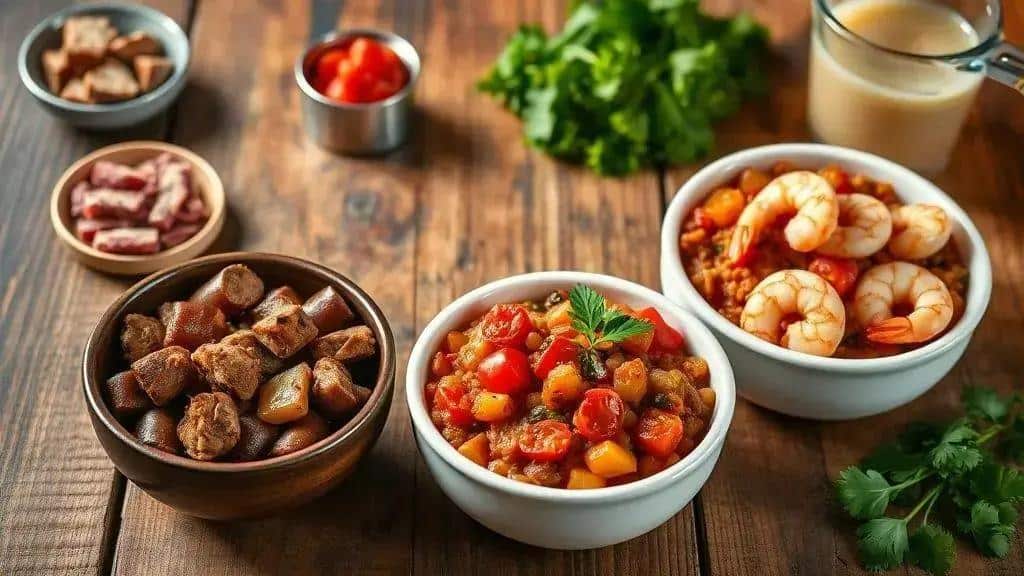
Jambalaya comes in several distinct styles, including brown Cajun jambalaya, Creole jambalaya with tomatoes, and seafood versions. Each calls for small changes to the ingredients and technique.
Cajun (brown jambalaya)
To make Cajun jambalaya, brown the meat and cook the rice in the same pan with all the browned bits and juices, without adding tomatoes. The result has a deep, smoky flavour.
- The rice absorbs the meat juices and takes on a darker colour.
- Typical meats include diced chicken and smoked sausage, such as andouille or calabresa.
- Sear the meat well over a high heat to caramelise the surface and capture that flavour in the pan.
- If you can’t find andouille, use smoked calabresa sausage.
Creole (with tomatoes)
Creole jambalaya includes tomatoes, which give it a lighter, tangier flavour. It’s common in cities such as New Orleans.
- The tomatoes give the dish a redder colour and a juicier texture.
- Use a milder Cajun spice blend and add fresh herbs at the end.
- Use tinned peeled tomatoes or chopped ripe fresh tomatoes.
- If the sausage is heavily seasoned, adjust the added salt so the dish doesn’t become too salty.
Seafood variations
Seafood versions use prawns, mussels or scallops. These usually go in towards the end so they don’t overcook.
- Add the prawns for the final 4–5 minutes of cooking.
- For 4 portions, 150–250 g prawns usually gives a good balance of seafood and rice.
- For a cheaper option, use surimi or chunks of firm fish, though the texture will be different.
- Peel the prawns and pat them thoroughly dry before adding them so they don’t dilute the stock.
Combining styles and adjusting the recipe
You can combine styles by pairing a Creole tomato base with smoked sausage. The acidity of the tomatoes balances the smokiness of the sausage. For less heat, reduce the cayenne or use half the amount of Cajun seasoning.
- For a vegetarian version, swap the meat for mushrooms and chickpeas and use concentrated vegetable stock.
- Rice is naturally gluten-free. For a gluten-free version, check the labels on the sausage, stock and seasonings you use.
- The basic recipe serves 4 and uses 2 cups of rice, 400 g chicken and 300 g sausage. Adjust the quantities to suit the variation.
Finishing and serving
For seafood versions, finish with fresh parsley and serve with lemon on the side. Serve hot so the rice keeps its texture.
Facts about jambalaya and Cajun seasoning
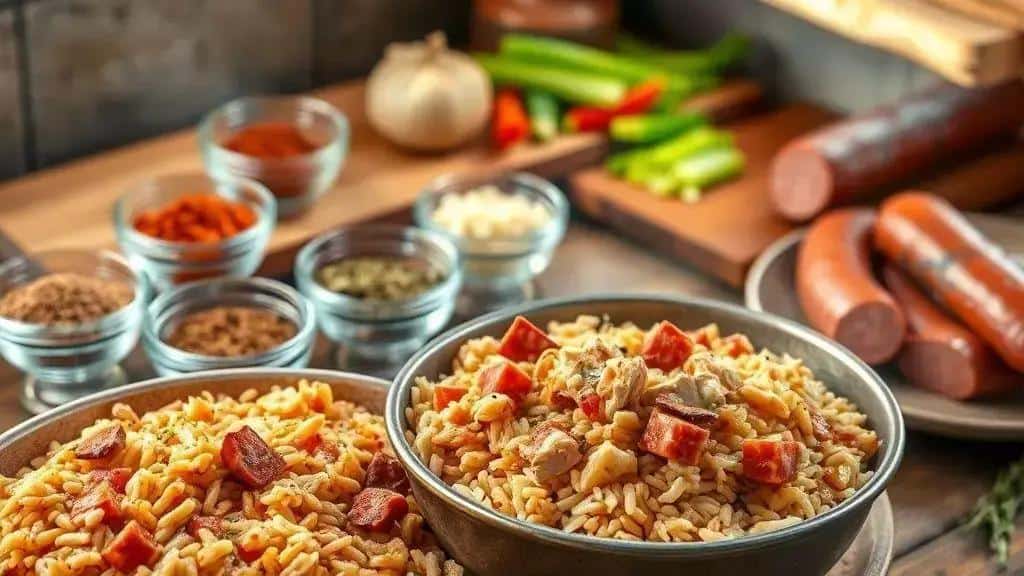
Jambalaya brings Spanish, French, African and Caribbean influences together in a dish of rice and meat.
Origins and history
Jambalaya began in Louisiana as a practical way to cook local ingredients together in one pot. Over time, it became a symbol of the region and a familiar sight at parties and celebrations.
The role of the seasoning
Cajun seasoning gets its flavour from a balance of paprika, garlic and herbs. Alongside the heat, these bring out the flavours of the meat and rice without overpowering them.
- A typical Cajun blend contains paprika (1 tablespoon), cayenne pepper (1/2 teaspoon), garlic powder (1 teaspoon), onion powder (1 teaspoon), dried thyme (1/2 teaspoon) and oregano (1/2 teaspoon).
- Every family has its own blend. Some add a little cumin or sugar.
Facts about the key ingredients
- Onion, pepper and celery form the ‘holy trinity’, the aromatic base of jambalaya, much as mirepoix forms the base of many French dishes.
- Andouille is a full-flavoured smoked sausage that gives jambalaya its distinctive character. If you can’t find it, use smoked calabresa sausage.
- Tomatoes feature in the Creole version, where their acidity balances the smoky flavour of the meat.
- Long-grain rice is the preferred choice because the grains stay separate. Rinsing removes excess starch and helps prevent the rice from becoming stodgy.
Traditions and practical tips
- Jambalaya is a dish for sharing. Large pots feed whole families and crowds at community celebrations.
- The name may come from Spanish words or local expressions. Historians still debate its exact origin.
- When ingredients were scarce, cooks used whatever sources of protein were available locally, giving rise to countless regional variations.
Quick tips
To preserve flavour, sear the meat over a high heat to caramelise the surface and add any seafood only at the end. Make any final adjustments to the seasoning once the rice has rested, as the flavours become more concentrated during the rest.
Conclusion
We hope these tips and step-by-step instructions make it easy to cook classic jambalaya in your own kitchen. Try the techniques and adjust the seasoning to your taste.
If you enjoyed this recipe, follow us on social media for more practical recipes, variations and chefs’ tips. You can also visit the Mestre das Receitas blog for fresh ideas.
Thanks for reading! Share your photos, comments and experiences – they inspire new recipes. See you soon, and enjoy your jambalaya!
Frequently asked questions about classic jambalaya and Cajun seasoning
What’s the difference between Cajun and Creole jambalaya?
Cajun or brown jambalaya contains no tomatoes and has a smokier flavour. Creole jambalaya includes tomatoes, which make it juicier and tangier.
Which rice should I use, and can I use a different type?
Use long-grain rice for grains that stay separate. Parboiled rice needs a little less liquid, while brown rice needs more stock and a longer cooking time.
How can I tone down the heat without losing flavour?
Use less cayenne in the Cajun blend, remove the seeds from any chillies or choose a milder sausage. Taste and adjust at the end if needed.
Can I make jambalaya ahead, and how should I reheat it?
Yes. Divide the rice into portions and cool it quickly, ideally within 1 hour. Refrigerate and eat within 24 hours. Reheat only once in a pan with a little stock until piping hot throughout. To freeze, cool the rice quickly and store it in the freezer for up to 2 months.
When should I add seafood such as prawns?
Add raw prawns for the last 4–5 minutes of cooking so they don’t overcook. Scallops and mussels also go in at the end.
Which sausage works best, and what can I use instead?
Smoked andouille is the traditional choice for its depth of flavour. If you can’t find it, use smoked calabresa sausage or kielbasa.