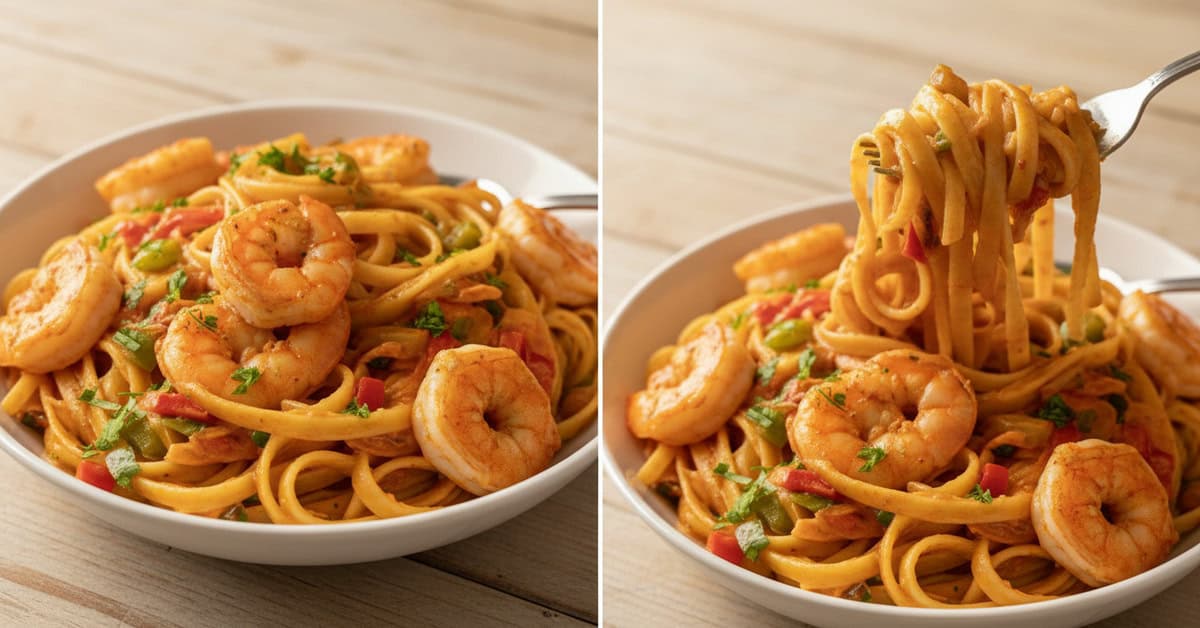

Cajun prawn pasta pairs a creamy sauce with prawns seasoned with paprika, garlic and chilli for a gentle kick. It’s ready in about 25–35 minutes, making it ideal for a quick dinner. You can adjust the heat to taste and swap the cream for a lactose-free alternative.
Cajun prawn pasta packs a surprising amount of flavour into a quick dish, with well-seasoned prawns, a creamy sauce and al dente pasta. Fancy making this blend of Cajun and Creole flavours at home without any fuss?
Ingredients for Cajun prawn pasta
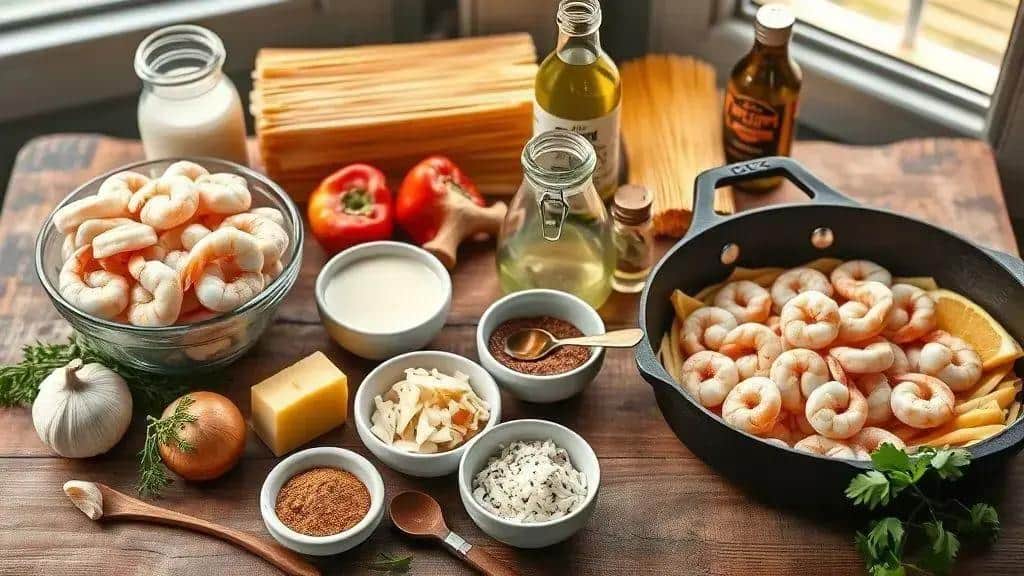
For Cajun prawn pasta, start with fresh ingredients and bold seasonings. Here’s what you’ll need, with quantities and suggested swaps.
- 500 g medium prawns, peeled and deveined, fresh or defrosted. You can also use large prawns cut into pieces.
- 400 g fettuccine or linguine. Cook the pasta until al dente. Penne or short lengths of spaghetti also work.
- 2 tablespoons butter, to brown the prawns and give them a glossy finish. You can use unsalted margarine instead.
- 2 tablespoons olive oil for sautéing, or use vegetable oil.
- 3 garlic cloves, finely chopped, for flavour.
- 1 small white or red onion, chopped, or use a shallot.
- 1 small red pepper, diced, for colour and sweetness. A yellow pepper works too.
- 2 tablespoons ready-made Cajun seasoning. To make your own, combine 1 tablespoon smoked paprika, 1 teaspoon cayenne pepper, 1 teaspoon garlic powder, 1 teaspoon onion powder and 1/2 teaspoon thyme, with salt and pepper to taste.
- 1 cup (240 ml) of cream for the sauce. You can use reduced-fat cream instead, or mix 150 ml of whole milk with 2 tablespoons of cream cheese.
- 1/2 cup (120 ml) chicken stock to adjust the consistency. You can use vegetable stock or 1/4 cup dry white wine instead.
- Juice of 1/2 a lemon (1 tablespoon) to balance the sauce. You can also use white wine vinegar.
- 2 tablespoons chopped fresh parsley to finish, or use chopped spring onions.
- Salt and black pepper to taste. Taste before adjusting the seasoning.
- 1/2 cup (50 g) grated Parmesan for an optional creamy finish. Pecorino also works.
Ingredient tips
Use fresh prawns if you can. The Cajun seasoning clings to them better and they stay juicy. If using frozen prawns, defrost them in the fridge and pat them dry before sautéing.
Cajun seasoning is aromatic and spicy. Start with a little, then taste and adjust. For a milder dish, use less cayenne or add more cream.
If you’re out of cream, whole milk mixed with cream cheese gives the sauce a similarly creamy texture.
How to make Cajun prawn pasta step by step
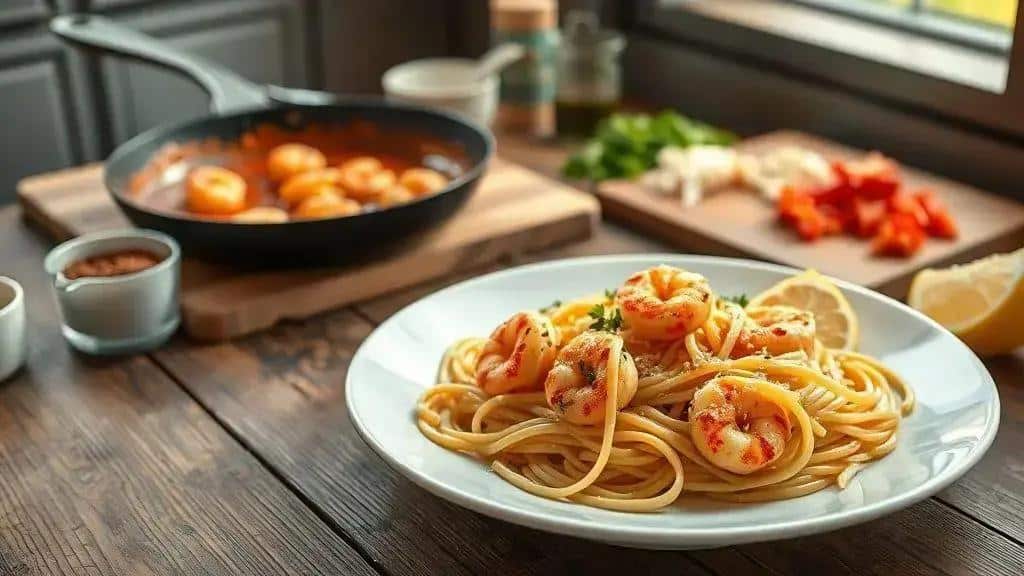
- Pat the 500 g of prawns dry with kitchen paper. Set aside some of the 2 tablespoons of Cajun seasoning for the vegetables and some of the juice of 1/2 a lemon for the finishing touch. Toss the prawns with the remaining seasoning and lemon juice and a pinch of salt. Leave in the fridge for 10 minutes.
- Bring a pan of salted water to the boil. Cook 400 g fettuccine for 1–2 minutes less than the time given on the packet for al dente pasta. Reserve 1 cup of the cooking water, then drain the pasta.
- Heat 2 tablespoons butter and 2 tablespoons olive oil in a frying pan over a medium-high heat until the butter melts and the fat starts to shimmer.
- Brown the prawns in a single layer for 1–2 minutes on each side, until pink and firm. Lift them out of the pan and set aside so they don’t overcook.
- Reduce the heat to medium. Add 1 small chopped onion, 1 diced red pepper and 3 finely chopped garlic cloves. Sauté for 2–3 minutes until the onion is translucent.
- Sprinkle the reserved Cajun seasoning over the vegetables and stir for 30 seconds to toast the spices.
- Pour in 1/2 cup chicken stock or 1/4 cup white wine. Use a wooden spoon to scrape up the browned bits from the base of the pan. Cook for 1–2 minutes until the liquid has reduced slightly.
- Stir in 1 cup cream and 1/2 cup of the reserved pasta water. Cook over a low heat for 2–3 minutes until the sauce thickens slightly and turns silky.
- Return the prawns to the pan and add the drained pasta. Toss until the sauce coats the pasta evenly, adding a little more cooking water if needed.
- To finish, stir in the reserved lemon juice, 2 tablespoons of chopped parsley and 1/2 cup of grated Parmesan. Taste and adjust the salt and pepper.
- Divide the pasta between plates and garnish with extra parsley and lemon slices. Serve straight away for the best texture, while the dish is still hot.
Practical tips
Take the prawns out of the pan as soon as they turn from translucent to opaque. Overcooking makes them rubbery.
Start with less Cajun seasoning and add more at the end if you’d like extra heat.
For a lighter sauce, replace the cream with 150 ml whole milk mixed with 2 tablespoons cream cheese. Use penne or spaghetti if you prefer.
How to season the prawns and pasta
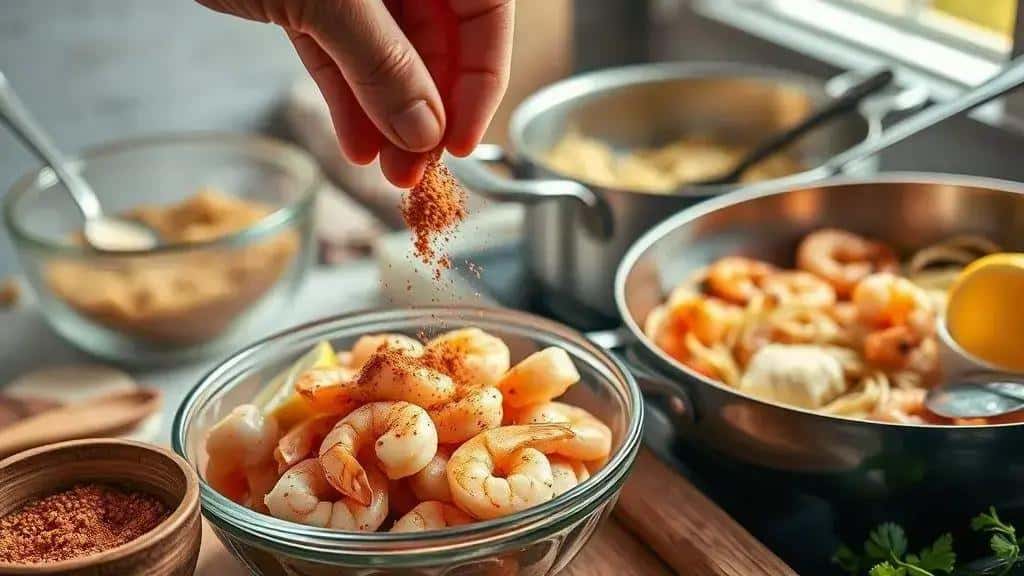
When seasoning the prawns and pasta, aim for a balance of salt, heat and acidity. These simple techniques help the prawns take on the seasoning while preserving their texture and the creaminess of the sauce.
Quick Cajun seasoning blend
- 2 tablespoons of paprika to give the blend its colour and form the base of its flavour.
- 1 tablespoon garlic powder to complement the prawns.
- 1 teaspoon onion powder for aroma.
- 1 teaspoon dried thyme for a herbal note.
- 1 teaspoon dried oregano for its aroma and slight bitterness.
- 1 teaspoon ground black pepper for a peppery base.
- 1 teaspoon salt. Adjust to taste at the end.
- 1/2 to 1 teaspoon cayenne pepper, depending on how much heat you like.
Techniques for preparing the prawns
- For an optional quick brine, dissolve 1/4 cup salt and 1/4 cup sugar in 1 litre of cold water. Soak the prawns for 8–10 minutes, then rinse and pat dry. This gives them a firmer texture.
- Always pat the prawns dry with kitchen paper before seasoning so they brown in the pan rather than steam.
- Sprinkle the Cajun seasoning evenly over the prawns and gently rub it in. Leave for 8–15 minutes to help the seasoning cling.
- To sear the prawns, heat 1 tablespoon oil and 1 tablespoon butter in a large frying pan over a high heat. Cook for 1–2 minutes on each side until opaque and firm, taking care not to overcook them.
- Remove the cooked prawns and deglaze the pan with 1/4 cup white wine or stock, scraping up the browned bits. Stir in cold butter to give the sauce a glossy finish.
How to season the pasta and sauce
- Use about 1 tablespoon salt for every 4 litres of pasta water, or adjust until the water tastes like the sea. This seasons the pasta all the way through.
- Before draining the pasta, reserve 1 cup of the cooking water to adjust the consistency of the sauce.
- When adding cream or cheese, toss the pasta directly in the frying pan. Add the cooking water a little at a time to bring the sauce together and give it a silky texture.
- To finish seasoning the dish, add salt, the juice of 1/2 a lemon for acidity and 1 tablespoon cold butter for shine. The lemon brings out the Cajun seasoning without making it hotter.
- To finish, stir in chopped parsley or spring onions and 1/2 cup of grated Parmesan for a salty note and a velvety texture.
Adjusting the heat and other practical tips
- For a milder dish, reduce the cayenne pepper in the seasoning or add more cream.
- Taste the sauce before adding the pasta and prawns. Adjust the salt and acidity a little at a time.
- Avoid crowding the pan. Cook the prawns in batches if needed so they brown evenly.
- A drizzle of good olive oil and a little lemon zest give the dish a fresh finish.
Cajun prawn pasta variations and substitutions
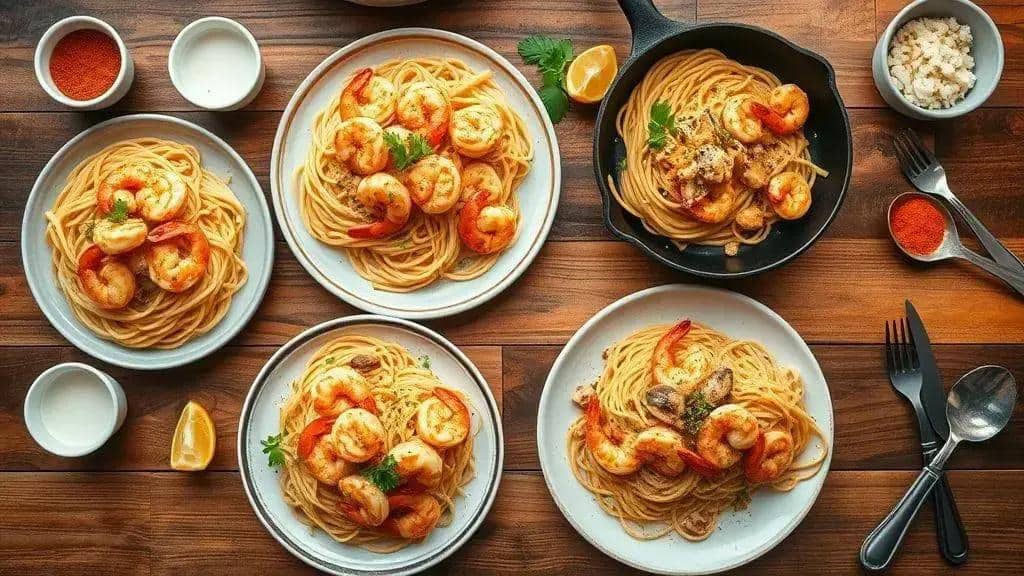
Adapt Cajun prawn pasta to suit what you have, how much heat you like and any dietary requirements. Try these variations, with quantities and quick cooking tips.
Alternatives to prawns
- For chicken, cut 500 g chicken breast into strips, season with the same Cajun blend and cook until golden and cooked through. It’s a good choice if you prefer white meat.
- For a protein-rich vegetarian version, press 400 g firm tofu and cut it into cubes. Marinate in the Cajun seasoning for 15 minutes, then grill until golden.
- For scallops, sear 300–400 g for 1–2 minutes on each side. Their delicate flavour goes well with the creamy sauce.
- For a vegetarian option with a meaty texture, sauté 400 g mixed mushrooms, such as shiitake and button mushrooms, until their liquid has evaporated.
Pasta shapes and alternatives
- 400 g fettuccine or linguine. Both are classic choices for a creamy sauce.
- 400 g penne. The tubes catch extra sauce in each bite.
- 400 g gluten-free pasta. Cook according to the packet instructions.
- For a low-carb version, spiralise 3 medium courgettes (about 400 g) and sauté the courgetti for 2–3 minutes.
Sauce variations and lactose-free options
- For a rich, silky sauce, use 240 ml fresh cream.
- In place of the cream, use 200–240 ml of coconut cream or 150 ml of lactose-free whole milk mixed with 2 tablespoons of lactose-free cream cheese. If the whole dish needs to be lactose-free, use butter and Parmesan labelled lactose-free or the suitable alternatives listed in the recipe.
- For a lighter sauce, mix 150 g plain Greek yoghurt with 50 ml hot stock. Stir it in at the end over a low heat to prevent curdling.
Adjusting the heat and seasoning
- For a very mild blend, reduce the cayenne in the Cajun seasoning to 1/4 teaspoon.
- For moderate heat, use 1/2 teaspoon cayenne and 1 teaspoon smoked paprika.
- For a smoky flavour, add 1/2 teaspoon smoked paprika or a pinch of chipotle powder.
- Finish with the juice of 1/2 a lemon (about 1 tablespoon) to balance the heat and bring out the aromas of the spices.
Serving ideas and quick variations
- For a lighter main course, replace half the pasta with courgetti to reduce the carbohydrates while keeping the portion just as generous.
- For a crispy topping, transfer the pasta to an ovenproof dish, sprinkle with 50–100 g Parmesan and place under the grill for 5 minutes.
- For a build-your-own spread, serve the sauce on the side and let everyone choose their protein and how spicy they’d like it.
Practical tips
Try substitutions gradually and taste as you go. If you replace the cream, adjust the salt and acidity to keep the flavours balanced.
Facts about chillies and Cajun flavours
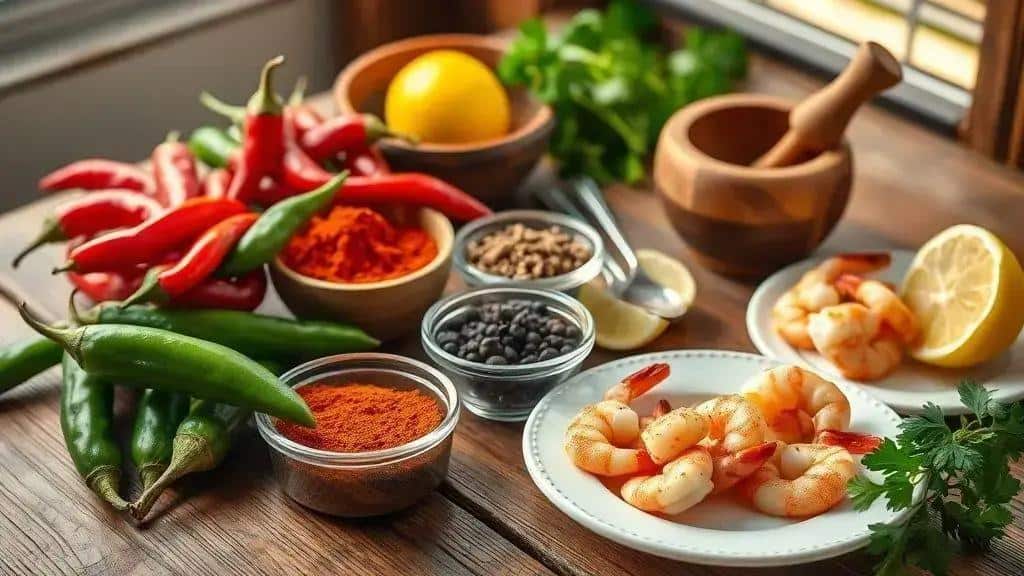
A closer look at chillies and Cajun seasoning shows how a few simple spices can give a dish its distinctive flavour. Understanding where the heat comes from and how it works helps you balance flavours as you cook.
Origins and cultural influences
Cajun seasoning grew out of the French cooking traditions of the Acadians and the local ingredients of Louisiana. Cajun and Creole cooking share roots, though Cajun cooking is more rustic and often centres on one-pot dishes.
Flavour profile
Cajun seasoning combines sweet or smoked paprika, garlic, onion, thyme and oregano with the heat of chilli. The result is earthy, lightly smoky and spicy, with more to it than heat alone.
Common peppers and their heat levels
Here’s how some common peppers typically rate on the Scoville scale.
- Paprika usually adds colour and a little sweetness without any heat.
- Cayenne (30,000–50,000 SHU) has a pronounced heat, so use it sparingly.
- Chipotle (2,500–8,000 SHU) is smoky with a medium heat.
- Fresh green jalapeños (2,500–8,000 SHU) have a moderate heat.
How to balance the heat in this dish
Dairy and acidity are the two best ways to balance the heat. Cream, yoghurt, butter and cheese mellow it, while lemon juice or vinegar brings out the flavours without increasing the heat. A little sugar can also round out the flavour.
Putting the spices to use
Use smoked paprika for depth, cayenne for background heat and garlic powder for a fuller flavour. To suit your guests’ tastes, add the seasoning gradually and taste as you go.
Buying and storing spices
Buy whole spices where possible and grind them just before use for a stronger aroma. Store dried chillies and ground spices in airtight jars away from light and heat to preserve their colour and flavour for longer.
Time to tuck in!
Try making Cajun prawn pasta at home and adjust the seasoning to your taste. Keep an eye on the prawns so they don’t overcook, and taste the sauce before serving.
Thanks for cooking along! Follow us on social media for more quick tips, variations and easy kitchen tricks. If you enjoyed the recipe, share it with friends and tell us in the comments how you made yours.
For more recipes and inspiration, visit Mestre das Receitas blog and catch up on our latest news. Until next time!
Frequently asked questions about Cajun prawn pasta
How long does Cajun prawn pasta usually take to make?
Allow about 25 to 35 minutes from start to finish, with 10 minutes to prepare the ingredients, 10–15 minutes to cook the pasta and prawns, and a few minutes to bring the sauce together.
How can I make the dish milder without losing flavour?
Use less cayenne pepper in the seasoning, add more cream or milk to the sauce and add lemon juice to balance the flavours without losing the aroma of the spices.
What can I use instead of cream for a lactose-free version?
In place of the cream, use 200–240 ml of coconut cream or 150 ml of lactose-free whole milk mixed with 2 tablespoons of lactose-free cream cheese. Check the labels on the butter and Parmesan used in the rest of the recipe too.
How do I keep the prawns from turning rubbery?
Pat the prawns dry before searing. Cook them over a high heat for 1–2 minutes on each side and take them out as soon as they turn opaque and firm.
Can I make the dish ahead and reheat it?
Yes. Prepare the sauce and prawns separately. Reheat the sauce over a low heat, then add the pasta and prawns at the end to preserve their texture and flavour.