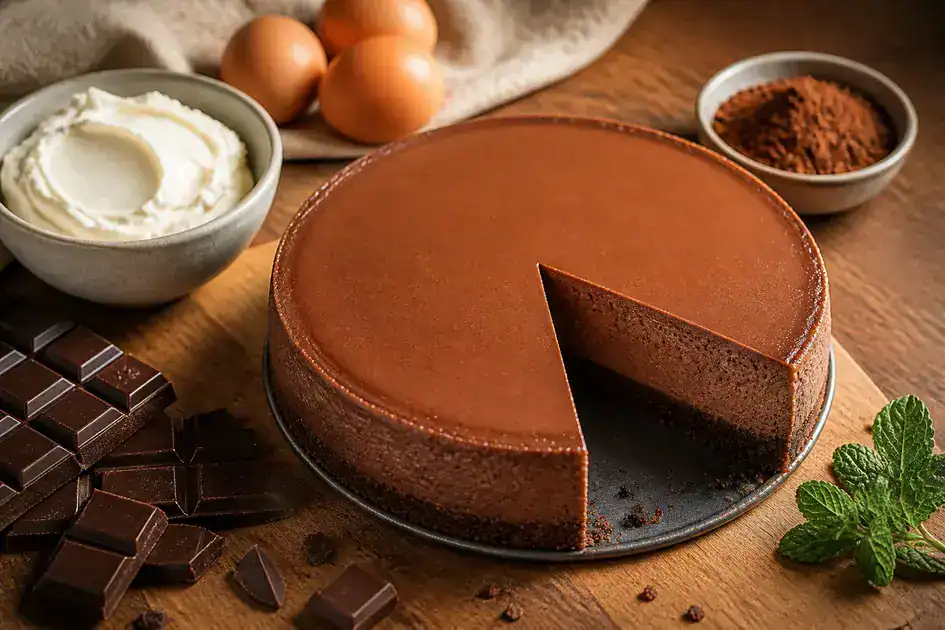

Chocolate cheesecake combines a chocolate-infused cream cheese filling and a chocolate or cookie crust to deliver a dense, silky dessert; precise room-temperature ingredients, gentle mixing, a water bath, and slow chilling ensure creamy texture, while variations include white chocolate, peanut butter, espresso, and vegan cashew-based options.
Chocolate cheesecake blends rich chocolate with silky cream cheese into a dessert that feels indulgent yet approachable. Want a reliably creamy slice? I’ll share practical steps, ingredient choices and small tricks that make a real difference at home.
Ingredients of chocolate cheesecake
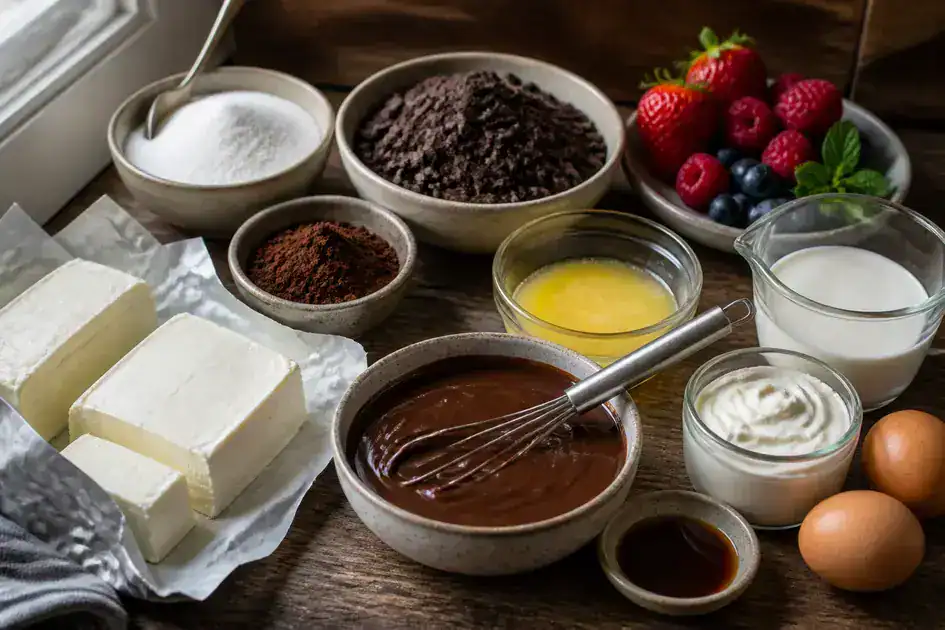
For a rich chocolate cheesecake, gather the ingredients below. Quantities fit a 9-inch (23 cm) springform pan.
- 2 cups (200 g) chocolate cookie crumbs – crushed (use Oreos or chocolate graham crackers). Substitute: 2 cups graham cracker or digestive crumbs.
- 5 tbsp (70 g) unsalted butter, melted – binds the crust. Substitute: coconut oil for a dairy-free option.
- 24 oz (680 g) cream cheese, softened – about 3 (8 oz) packages; bring to room temperature for a smooth filling.
- 1 cup (200 g) granulated sugar – balances the chocolate; substitute 3/4 cup (150 g) light brown sugar for a deeper note.
- 3 large eggs, room temperature – add structure and richness.
- 8 oz (225 g) semisweet or dark chocolate, chopped and melted – cooled slightly before folding into the batter.
- 1/4 cup (25 g) unsweetened cocoa powder – sift before adding to avoid lumps and boost chocolate flavor.
- 1 cup (240 ml) sour cream – adds creaminess and a slight tang; substitute full-fat Greek yogurt if preferred.
- 1/2 cup (120 ml) heavy cream – gives silkier texture; reserve some for an optional ganache.
- 2 tsp vanilla extract – enhances overall flavor.
- Pinch of fine salt – balances sweetness and intensifies chocolate.
- Optional topping: 4 oz (115 g) dark chocolate + 1/2 cup (120 ml) heavy cream – for a glossy ganache; or fresh berries and whipped cream for garnish.
Practical notes
Room temperature ingredients: make sure cream cheese and eggs are at room temperature to avoid lumps and ensure an even, creamy batter. Measuring by weight gives the best results—use a kitchen scale if available. Sifting the cocoa prevents streaks and clumps. If you need a lower-fat version, swap 1/2 cup heavy cream for extra sour cream, but texture will be slightly less silky.
How to prepare chocolate cheesecake
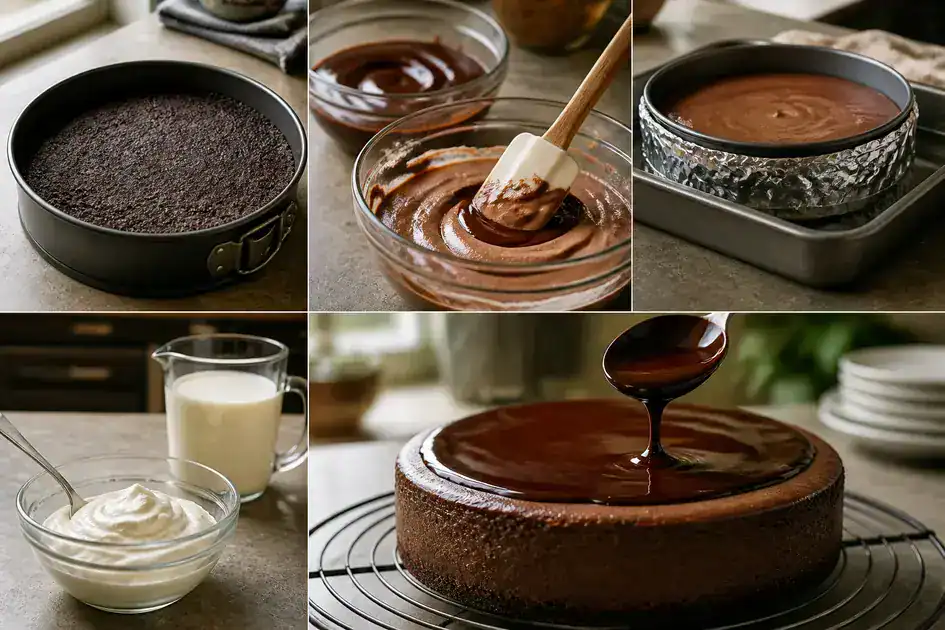
Follow these clear steps to make a smooth, crack-free chocolate cheesecake. Each step is simple and suited for home bakers.
- Preheat and prepare the pan: Preheat oven to 325°F (160°C). Wrap the outside of a 9-inch (23 cm) springform pan with heavy-duty foil to prevent water from leaking in during the water bath.
- Make and chill the crust: Mix 2 cups (200 g) chocolate cookie crumbs with 5 tbsp (70 g) melted unsalted butter. Press evenly into the pan bottom. Chill in the fridge for 10 minutes to set.
- Melt the chocolate: Chop 8 oz (225 g) semisweet chocolate. Melt gently in a double boiler or in the microwave in 20-second bursts, stirring between each. Let it cool until just warm.
- Beat the cream cheese and sugar: In a large bowl, beat 24 oz (680 g) softened cream cheese with 1 cup (200 g) sugar on medium speed until creamy and smooth, about 2–3 minutes. Scrape down the bowl sides as needed.
- Add eggs carefully: Add 3 room-temperature eggs one at a time, mixing on low speed and stopping as soon as each egg is incorporated to avoid adding air.
- Fold in chocolate and cocoa: Stir in the cooled melted chocolate and 1/4 cup (25 g) sifted unsweetened cocoa powder using a spatula until the color is even and no streaks remain.
- Finish the batter: Gently mix in 1 cup (240 ml) sour cream, 1/2 cup (120 ml) heavy cream, 2 tsp vanilla extract, and a pinch of salt. Mix just until smooth—overmixing can cause cracks.
- Set up the water bath and bake: Pour the batter over the chilled crust. Place the springform pan inside a larger roasting pan. Pour hot water into the outer pan until it reaches halfway up the sides of the springform. Bake for 50–65 minutes at 325°F (160°C) until the edges are set and the center still has a slight wobble.
- Cool gradually and chill: Turn off the oven and crack the door open; let the cheesecake cool inside for 1 hour. Remove from the water bath, run a knife around the edge, then refrigerate at least 6 hours or overnight for best texture.
- Optional ganache and finishing: For a glossy ganache, heat 1/2 cup (120 ml) heavy cream until steaming, pour over 4 oz (115 g) chopped dark chocolate, wait 1 minute, then stir until smooth. Pour over the chilled cheesecake and spread gently. Chill 30 minutes before serving.
- Serving tip: Dip a sharp knife in hot water, wipe dry, then slice for clean pieces. Garnish with fresh berries or whipped cream if desired.
Practical tips
- Room temperature ingredients: Use room-temp cream cheese and eggs to avoid lumps and ensure a smooth batter.
- Do not overmix: Mix only until combined after adding eggs to reduce air pockets and prevent cracks.
- Water bath: The hot water creates gentle, even heat and helps achieve a silky texture.
- Slow cooling: Gradual cooling prevents sudden shrinkage and cracking.
- Measure by weight: Use a kitchen scale for consistent results, especially with flourless batters like cheesecake.
Baking tips for perfect texture
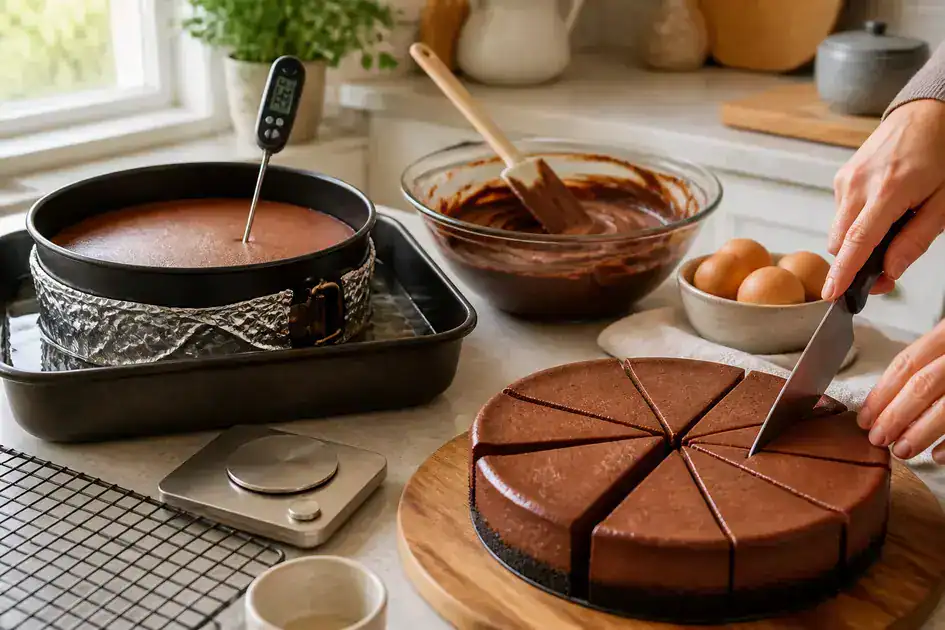
- Use room-temperature ingredients: Take cream cheese and eggs out 1–2 hours before baking so they blend smoothly and avoid lumps.
- Measure by weight: Weigh cream cheese, chocolate, and crumbs for consistent results—grams give better accuracy than cups.
- Prebake or chill the crust: Bake chocolate cookie crust 8–10 minutes or press and chill it well to prevent sogginess from the filling.
- Protect the pan: Wrap the springform pan in heavy-duty foil and place it in a larger roasting pan to create a reliable water bath.
- Low and steady oven temperature: Bake at 325°F (160°C). If using convection, reduce temperature by about 20°F (10°C) to avoid overbaking.
- Gentle mixing: Beat cream cheese until smooth, add eggs one at a time on low speed, and fold in melted chocolate with a spatula to limit air in the batter.
- Check doneness correctly: Look for set edges and a center that gently jiggles. For precision, aim for an internal temperature of 150–155°F (65–68°C).
- Cool slowly and chill: After baking, turn off the oven and crack the door, let the cake rest 1 hour inside, then refrigerate at least 6 hours or overnight.
- Clean slices every time: Dip a sharp knife in hot water, wipe dry, then slice; repeat between cuts for neat pieces.
Practical troubleshooting
- Cracked top: Often from overmixing or rapid cooling—avoid extra air and cool slowly with the oven door ajar.
- Sinking center: Usually underbaked; use the jiggle test and check internal temperature before removing.
- Grainy texture: Caused by overheated chocolate or curdled batter—temper chocolate gently and mix at low speed.
- Soggy crust: Bake crust briefly before filling or brush it with a thin layer of melted chocolate to seal it.
Variations of chocolate cheesecake
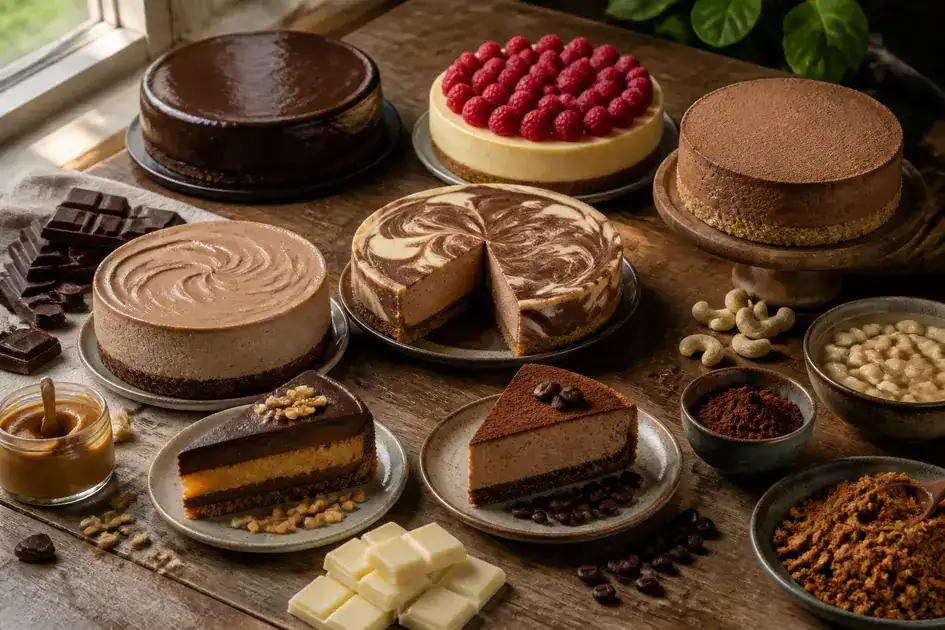
Classic dark chocolate cheesecake
This version uses high-quality dark chocolate for a deep, rich flavor. Use 8 oz (225 g) chopped dark chocolate melted and folded into the batter. Tip: reduce sugar by 2–3 tbsp if you prefer less sweetness. For a firmer set, bake until the edges are set and the center slightly wobbles.
White chocolate cheesecake
Swap dark chocolate for 8 oz (225 g) white chocolate and add 1 tsp vanilla to lift the flavor. White chocolate is sweeter, so use 3/4 cup (150 g) sugar or less. Garnish: fresh raspberries or a lemon zest to cut sweetness.
Chocolate swirl cheesecake
Make two batters: one plain and one chocolate. Dollop alternating spoonfuls into the pan and swirl with a skewer for a marbled look. Technique: swirl lightly—overmixing removes the pattern.
Chocolate mousse cheesecake
Fold whipped cream into the cooled chocolate cheesecake batter for a lighter texture. Chill the mousse-style cake longer—at least 8 hours—for best sliceability. Note: stabilize the whipped cream with 1 tsp powdered sugar if needed.
Peanut butter chocolate cheesecake
Stir 1/2 to 3/4 cup (120–180 g) creamy peanut butter into part of the batter or layer it between crust and filling. For a nut-free swap, use sunflower seed butter or almond butter. Crust idea: mix peanut butter with cookie crumbs for extra flavor.
Espresso chocolate cheesecake
Add 1–2 tsp instant espresso powder to the batter to amplify the chocolate notes without tasting like coffee. Alternatively, fold 2 tbsp cooled strong brewed espresso into the melted chocolate before adding. Pairing: serve with cacao nibs or a dusting of cocoa.
Vegan and gluten-free chocolate cheesecake
Use soaked raw cashews (2 cups/300 g) blended with 1/2 cup (120 ml) coconut cream and 6 oz (170 g) melted dairy-free dark chocolate for the filling. For the crust, use gluten-free chocolate cookies or toasted nuts with coconut oil. Swap: maple syrup or agave for sugar, and coconut yogurt for sour cream.
How to store and serve chocolate cheesecake
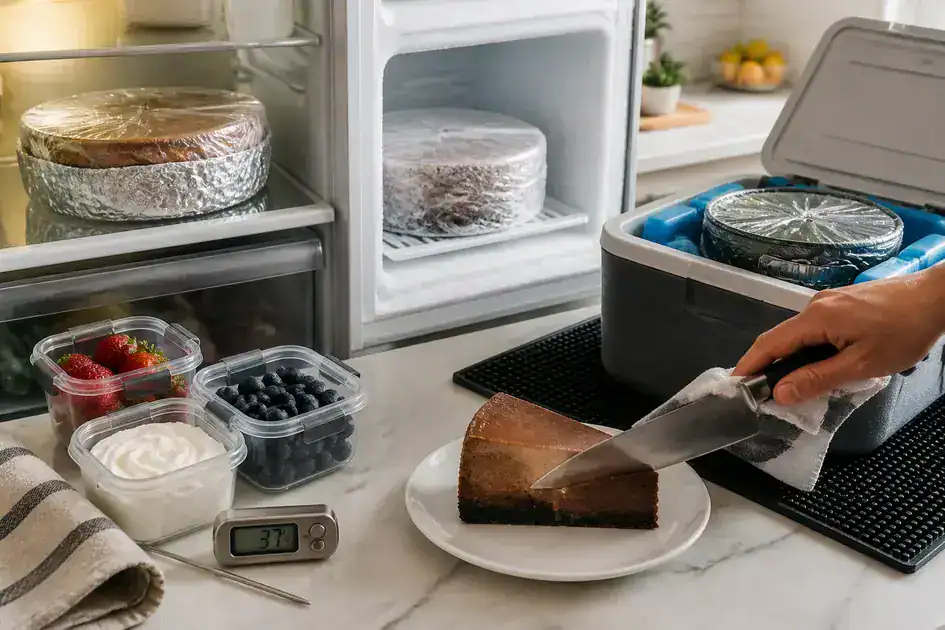
Store cheesecake correctly to keep its creaminess and flavor. Follow these practical steps for refrigeration, freezing, slicing, and serving.
Short-term refrigeration
- Wrap the top: Press plastic wrap directly onto the cheesecake surface to prevent a dry skin, then place in an airtight container or cover with foil.
- Storage time: Refrigerate at or below 40°F (4°C) for up to 4–5 days for best quality.
- Keep toppings separate: Store whipped cream, ganache, or fresh fruit in a separate container and add just before serving.
- Avoid odors: Place the cheesecake away from strong-smelling foods to preserve its flavor.
Freezing and thawing
- Pre-freeze (optional): Chill the cheesecake fully in the fridge for several hours first, then wrap tightly in plastic wrap, pressing the wrap to the surface.
- Double-wrap: Wrap again in heavy-duty foil or place the wrapped cake in a freezer-safe container to protect against freezer burn.
- Freeze time: Freeze for up to 2 months for best texture; longer storage may affect creaminess.
- Thaw safely: Move the cheesecake to the refrigerator and thaw slowly for 8–12 hours or overnight—do not thaw at room temperature.
- Finish before serving: Remove outer wrap, replace plastic directly on the surface if needed, then add fresh toppings after it is fully thawed.
- No refreeze: Avoid refreezing after thawing to preserve texture and safety.
Slicing and serving tips
- Warm the knife: Dip a sharp chef’s knife in hot water, wipe dry, then slice in one smooth motion for clean edges.
- Clean between cuts: Wipe the blade with a warm towel after each slice to prevent dragging.
- Serve temperature: Let chilled slices sit 10–15 minutes at room temperature for creamier mouthfeel, but not longer than 30 minutes.
- Portions: For rich cheesecake, plan smaller slices (about 1–1.5 inches wide) to keep servings satisfying.
- Garnish ideas: Fresh berries, a drizzle of ganache, a dollop of whipped cream, mint sprigs, or a dusting of cocoa powder add contrast and color.
Transport and presentation
- Use a cooler: For events, pack the cheesecake in a cooler with ice packs and keep it level to avoid shifting.
- Stabilize: Place a non-slip mat under the pan and pack snugly to prevent movement during transit.
- Assemble last: Add delicate garnishes on site to keep them fresh and vibrant.
Food safety reminders
- Room time limit: Do not leave cheesecake at room temperature more than 2 hours to prevent bacterial growth.
- Allergen note: Clearly note common allergens like dairy, eggs, nuts, or gluten when serving to guests.
Fun facts about chocolate cheesecake
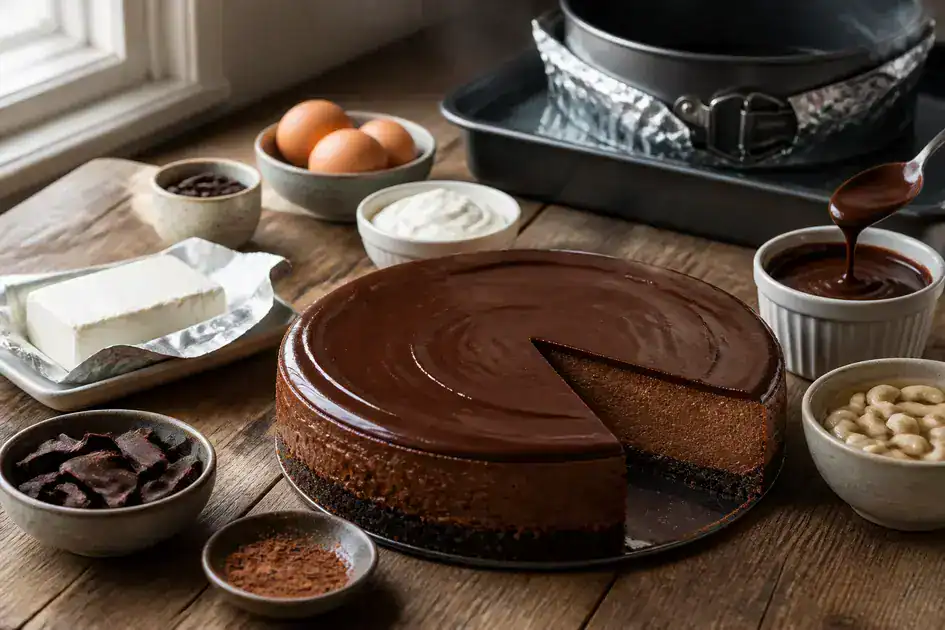
- Chocolate cheesecake blends cream cheese and melted chocolate for a rich, silky filling that differs from classic plain cheesecake.
- Cheesecake recipes date back to ancient Greece, but chocolate versions became common after chocolate was widely available in the 19th century.
- A high fat content in cream cheese and heavy cream creates the smooth, dense texture people expect from a great slice.
- Baking the cake in a water bath is a common trick to prevent cracks and keep the center creamy.
- Chocolate cookie crumbs or graham-style crusts both work; cookie crumbs give a more chocolate-forward base.
- Small additions like 1–2 tsp instant espresso amplify chocolate flavor without making the cake taste like coffee.
- Vegan chocolate cheesecakes often use soaked cashews and coconut cream to mimic the creamy texture of dairy.
- For clean slices, heat a sharp knife in hot water, wipe it dry, then slice in one smooth motion between cuts.
- Chocolate cheesecakes freeze well for up to 2 months, but slight texture changes can occur after thawing.
Baking and serving pointers
Room temperature ingredients, gentle mixing, and slow cooling improve texture. Chill the cake at least 6 hours before serving and add fresh toppings right before plating.
Fun facts about cocoa and cream cheese
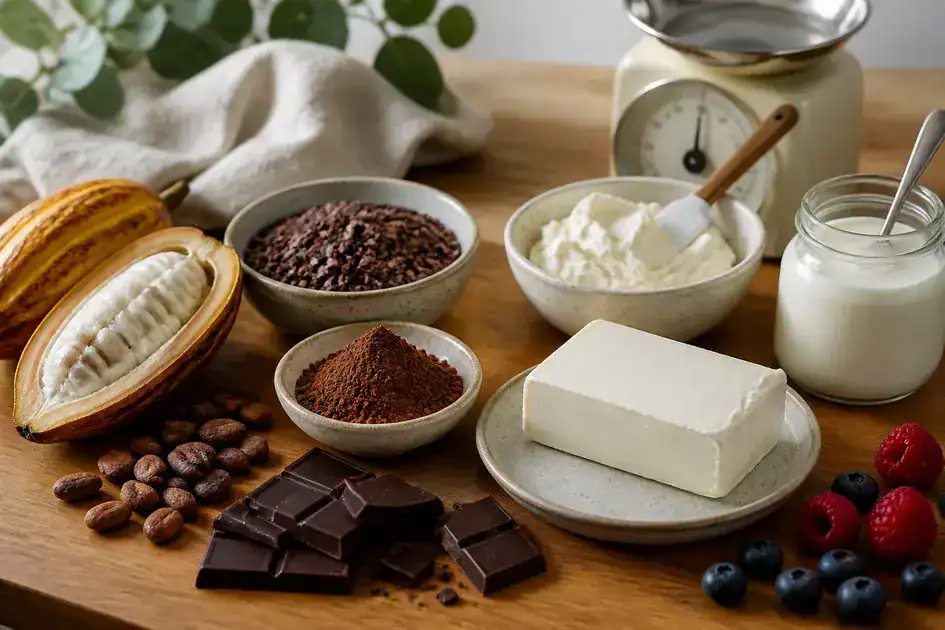
- Cocoa comes from the fermented seeds of the cacao tree; beans are dried, roasted, and ground into nibs, cocoa mass, or powder.
- Cacao vs cocoa: “cacao” often means raw or minimally processed beans, while “cocoa” usually refers to roasted and processed powder used in baking.
- Flavor concentration: Unsweetened cocoa powder has intense chocolate flavor; Dutch-processed cocoa is darker and milder, while natural cocoa is brighter and more acidic.
- Health note: Pure cocoa contains flavanols and antioxidants, but benefits depend on chocolate processing and added sugar or fat.
- Cream cheese origin: Modern cream cheese was developed in the 19th century; it’s a mild, high-fat fresh cheese made by acidifying and straining milk and cream.
- Texture role: Cream cheese adds density and creaminess to desserts; its fat and moisture help create the classic cheesecake mouthfeel.
- Types and swaps: Neufchâtel or reduced-fat cream cheese offers a lower-fat option; mascarpone gives a richer, silkier result as a substitute.
- Storage fact: Keep cream cheese refrigerated and use within its best-by window; once opened, store tightly wrapped to prevent odors.
- Shelf life of cocoa: Cocoa powder stays stable for many months if stored in a cool, dry place away from light and moisture.
Flavor pairing tips
- Salt and sugar balance: A pinch of fine salt brightens chocolate and rounds cream cheese sweetness.
- Acid contrast: Sour cream, lemon zest, or berries cut richness and lift chocolate notes.
- Boosters: A small amount of instant espresso or espresso powder intensifies chocolate without adding coffee flavor.
Handling and baking tips
- Room temperature: Use room-temp cream cheese and eggs for a smooth, lump-free batter.
- Sift cocoa: Sift unsweetened cocoa before mixing to avoid clumps and ensure even color.
- Measure by weight: Weigh cocoa, cream cheese, and chocolate for consistent results every bake.
- Gentle mixing: Mix on low speed and fold ingredients to limit air that can cause cracks.
- Experiment: Try swapping part of the cocoa for melted dark chocolate for a richer, less powdery taste.
Final thoughts
Chocolate cheesecake is a rich, satisfying dessert you can make at home with simple steps and small adjustments. Try different toppings and techniques to find the version you like best.
Thank you for reading! Follow us on social media for photos, quick tips, and baking help. Also follow the Mestre das Receitas Blog for more recipes, ideas, and step-by-step guides.
Happy baking — feel free to share your results and questions so others can enjoy your creations too.
FAQ – Chocolate Cheesecake
How do I prevent cracks on my chocolate cheesecake?
Use room-temperature ingredients, mix gently to avoid adding air, bake in a water bath at low temperature, and cool the cake slowly with the oven door cracked.
Can I make chocolate cheesecake ahead and freeze it?
Yes. Chill fully, wrap tightly in plastic and foil, freeze up to 2 months, and thaw slowly in the refrigerator overnight. Add fresh toppings after thawing.
What can I use instead of cream cheese?
For a richer result, use mascarpone. For lower fat, try Neufchâtel. For vegan versions, blend soaked cashews with coconut cream—texture will differ.
How do I keep the crust from getting soggy?
Prebake the chocolate cookie crust 8–10 minutes, press it firmly, or brush a thin layer of melted chocolate on the crust to seal before adding the filling.
How can I boost chocolate flavor without extra sweetness?
Use high-quality dark chocolate (70% cacao) and add 1-2 tsp instant espresso powder to intensify chocolate notes while keeping sugar low.
What’s the best way to slice cheesecake for clean pieces?
Dip a sharp knife in hot water, wipe it dry, then slice in one smooth motion. Wipe the blade between each cut and let slices warm 10–15 minutes for creamier texture.