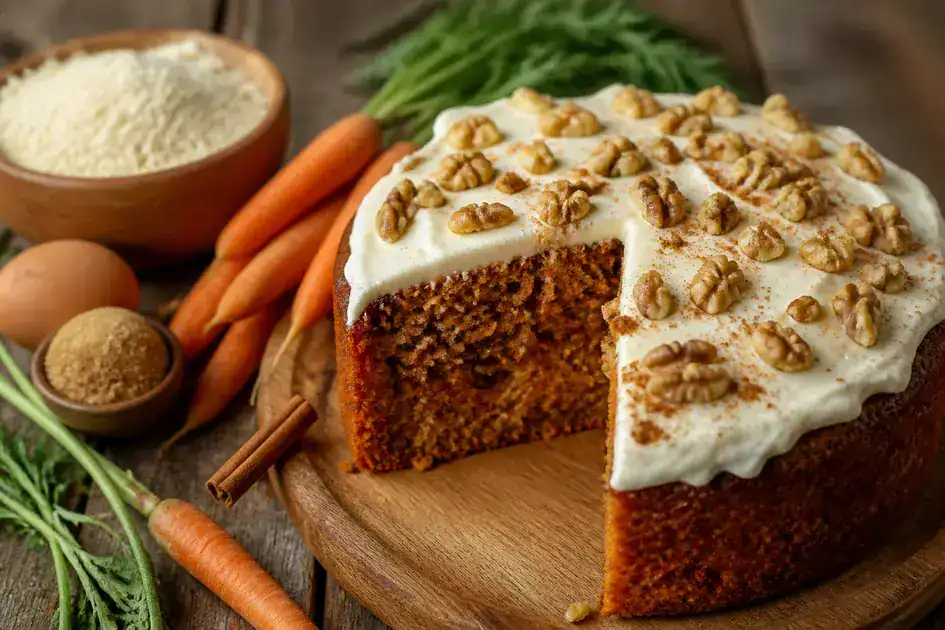

Gluten free carrot cake is a moist, spiced layer or sheet cake made with grated carrots and gluten-free flour blends, leavened with baking powder/soda, often enriched with oil, yogurt or pineapple for moisture, and finished with cream cheese frosting, offering adaptable variations for vegan, nut-free, or lower-sugar diets.
gluten free carrot cake doesn’t have to be dry or complicated. Want a moist, spiced cake that guests actually ask for seconds of? Here are easy steps, smart swaps, and practical tips to help you bake it confidently at home.
Ingredients of gluten-free carrot cake
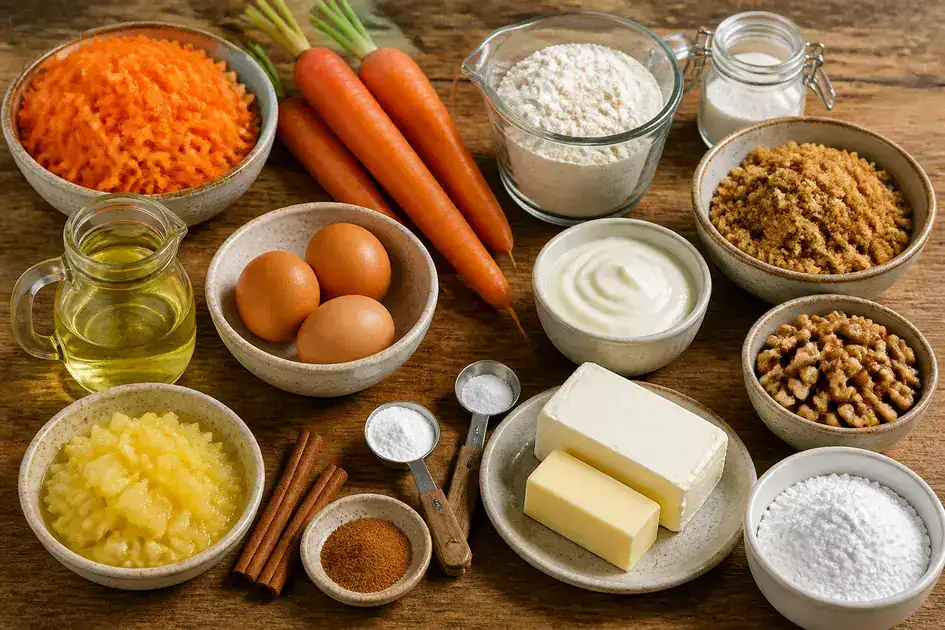
To bake a moist gluten-free carrot cake, gather the ingredients below. Measure carefully for consistent results.
- 2 cups (240 g) gluten-free all-purpose flour blend — use a 1:1 baking blend; if it lacks xanthan gum, add 1 tsp xanthan gum.
- 1 tsp xanthan gum (only if your flour blend doesn’t include it).
- 1 1/2 tsp baking powder — ensures rise and light crumb.
- 1 tsp baking soda — helps with lift and browning.
- 1/2 tsp fine salt — balances sweetness.
- 2 tsp ground cinnamon — core spice for classic flavor.
- 1/4 tsp ground nutmeg (optional) — adds warmth if desired.
- 1 cup (200 g) packed brown sugar — adds moisture and caramel notes; substitute coconut sugar 1:1 if preferred.
- 1/2 cup (100 g) granulated sugar (optional) — use for slightly lighter sweetness or omit for less sugar.
- 3 large eggs (room temperature) — or use 3/4 cup unsweetened applesauce for an egg-free option (note: texture will change).
- 1 cup (240 ml) vegetable oil — or melted coconut oil; swap up to 1/2 cup with applesauce to reduce fat.
- 1/2 cup (120 ml) plain yogurt or buttermilk — for tang and moisture; use dairy-free yogurt for lactose-free version.
- 2 tsp vanilla extract — enhances overall flavor.
- 2 cups (200 g) grated carrots (about 3 medium carrots) — pack lightly; do not over-grate.
- 1/2 cup (60 g) chopped walnuts or pecans (optional) — for crunch; use roasted sunflower seeds to make nut-free.
- 1/2 cup (80 g) crushed pineapple, drained (optional) — adds moisture and tang.
For the cream cheese frosting
- 8 oz (225 g) cream cheese — softened.
- 1/4 cup (60 g) unsalted butter — softened; use dairy-free butter for vegan version.
- 2 cups (240 g) powdered sugar — sifted for smooth frosting.
- 1 tsp vanilla extract — for flavor.
- Pinch of salt — balances sweetness.
Notes and substitutions
- Flour options: Use a reliable gluten-free 1:1 blend for best texture. If using single flours (almond or oat), expect differences in crumb; certified gluten-free oats work if tolerated.
- Sweetener swaps: Coconut sugar or 100 g maple syrup can replace brown sugar, but reduce other liquids slightly if using syrup.
- Moisture tips: Extra grated carrot or 2 tbsp applesauce can help keep the cake tender without altering flavor.
- Nuts and seeds: Toast nuts lightly for more flavor, or replace with seeds to avoid tree-nut allergens.
- Egg-free: Use flax eggs (3 tbsp ground flax + 9 tbsp water, rested 5 minutes) or applesauce, keeping in mind texture changes.
How to prepare gluten-free carrot cake
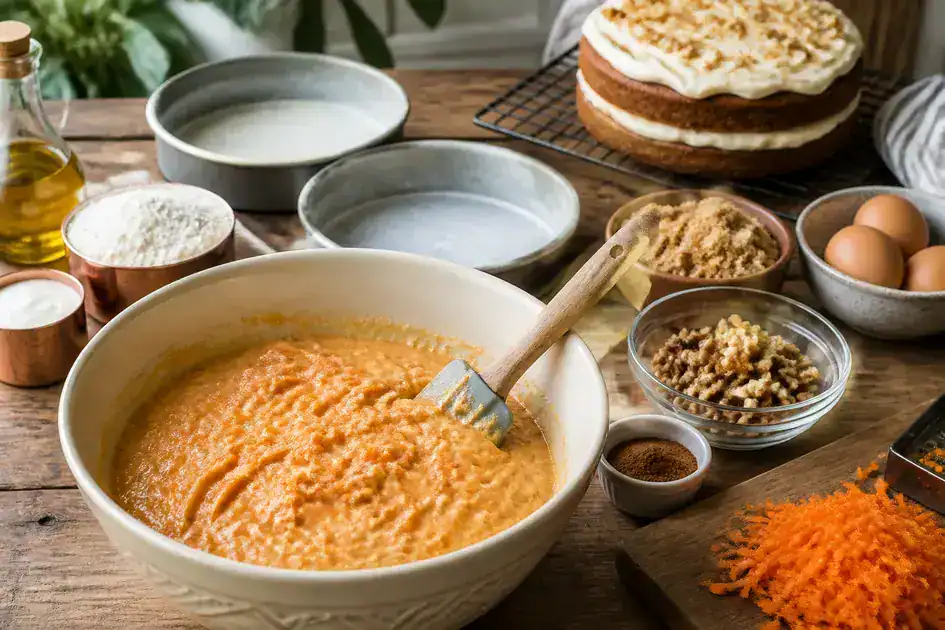
Follow these clear, step-by-step instructions to bake a moist gluten-free carrot cake. Read each step before you begin.
Preparation steps
- Preheat and prepare pans: Preheat the oven to 350°F (175°C). Grease and line two 8- or 9-inch round pans, or grease a 9×13-inch pan and line with parchment.
- Measure and mix dry ingredients: Weigh or measure 2 cups (240 g) gluten-free all-purpose flour, 1 tsp xanthan gum (if needed), 1 1/2 tsp baking powder, 1 tsp baking soda, 1/2 tsp salt, 2 tsp ground cinnamon and 1/4 tsp nutmeg. Whisk together in a medium bowl until even.
- Grate the carrots: Peel and grate about 3 medium carrots to get roughly 2 cups (200 g). Use a medium grater and shake off excess moisture if very wet.
- Mix wet ingredients: In a large bowl beat 3 large room-temperature eggs, 1 cup (240 ml) vegetable oil, 1 cup (200 g) packed brown sugar (and 1/2 cup granulated sugar if using). Add 1/2 cup (120 ml) plain yogurt or buttermilk and 2 tsp vanilla. Stir until smooth.
- Combine wet and dry: Add the dry mixture to the wet ingredients in thirds, folding gently with a spatula after each addition. Stop mixing as soon as the batter is uniform — do not overmix to avoid a dense cake.
- Fold in carrots and add-ins: Fold in the grated carrots and up to 1/2 cup chopped walnuts or pecans (optional). If using crushed pineapple, fold in 1/2 cup drained pineapple now.
- Fill pans and remove air: Divide batter evenly between prepared pans and smooth the tops. Tap each pan gently on the counter to release large air bubbles.
- Bake and test for doneness: Bake two round pans for 25–35 minutes, or a 9×13 pan for 35–45 minutes. Begin checking at the lower time. Insert a toothpick in the center — it should come out with a few moist crumbs, not wet batter.
- Cool in pans briefly: Let cakes cool in their pans on a wire rack for 10–15 minutes. Run a knife around the edges, then turn cakes out onto the rack to cool completely.
- Make the cream cheese frosting: Beat 8 oz (225 g) softened cream cheese with 1/4 cup (60 g) softened butter until smooth. Gradually add 2 cups (240 g) sifted powdered sugar and 1 tsp vanilla. Beat until creamy and chill 10–15 minutes if it feels too soft.
- Crumb coat and finish: Place one cooled layer on a board, spread a thin crumb coat of frosting and refrigerate 15 minutes. Apply the final layer of frosting smoothly and decorate with chopped nuts or carrot ribbons if desired.
- Slicing tips: For clean slices, use a serrated knife and wipe the blade between cuts. Chill the cake lightly for neater frosting edges prior to serving.
Quick baking tips
- Measure flour by weight for consistent texture (240 g for 2 cups).
- Don’t overmix once dry ingredients are added — fold gently.
- Avoid overbaking to keep the cake moist; start checking early.
Variations of gluten-free carrot cake
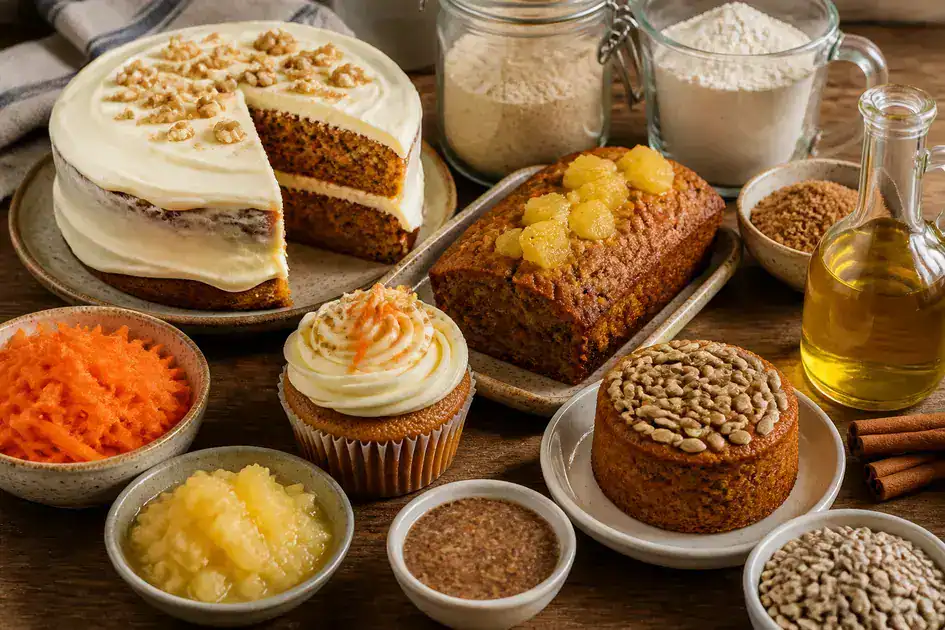
Here are practical ways to change your gluten-free carrot cake to suit taste, texture, allergies, or occasion without losing moistness.
Flavor and mix-in variations
- Pineapple carrot cake: Fold in 1/2 cup drained crushed pineapple for extra moisture and tang; reduce other liquids by 2 tbsp if batter seems loose.
- Apple‑spiced version: Add 1 cup finely grated apple and 1/2 tsp ground ginger for a fruitier, warmer flavor.
- Tropical coconut: Swap 1/2 cup flour for 1/2 cup finely shredded unsweetened coconut and add 1 tsp lime zest for bright notes.
- Chocolate carrot cake: Replace 1/3 cup (40 g) of the gluten-free flour with unsweetened cocoa powder and fold in 1/2 cup chocolate chips.
- Nut-free crunch: Replace chopped nuts with 1/2 cup toasted sunflower or pumpkin seeds for texture without tree nuts.
Flour and texture swaps
- 1:1 gluten-free blend: Use a tested 1:1 blend for easiest results; ensure it contains xanthan gum or add 1 tsp if missing.
- Almond flour: Use up to 1 cup almond flour mixed with 1 cup 1:1 blend for a moist, tender crumb — reduce oil by 2 tbsp.
- Oat flour: Certified gluten-free oat flour can replace up to half the flour for a denser, chewier texture.
- Binder tips: If using grain-free flours, add 2 tsp psyllium husk or 1 tbsp ground chia to improve structure.
Dietary adjustments (vegan, lower sugar, nut‑free)
- Vegan swap: Replace each egg with a flax egg (1 tbsp ground flax + 3 tbsp water, rest 5 minutes); use dairy-free yogurt and vegan butter/cream cheese.
- Lower sugar: Reduce brown sugar by 1/4 cup or use 3/4 cup maple syrup (reduce other liquids by 2–3 tbsp if using syrup).
- Nut‑free option: Omit nuts and add 1/2 cup toasted oats or seeds for texture; ensure cross-contact avoidance if needed.
Frosting and topping options
- Classic cream cheese: 8 oz cream cheese + 1/4 cup butter + 2 cups powdered sugar + 1 tsp vanilla.
- Lighter whipped topping: Fold 1 cup whipped cream into 4 oz whipped cream cheese for a lighter finish.
- Maple glaze: Mix 1 cup powdered sugar with 2–3 tbsp maple syrup and a splash of milk for a drizzled glaze.
- Crunchy garnish: Toasted pecans, crushed candied ginger, or finely shredded carrot curls add visual interest and texture.
Serving and presentation ideas
- Mini cakes or cupcakes: Bake in muffin tins for individual servings; reduce bake time to 18–22 minutes.
- Layer cake styling: Use a thin crumb coat, chill, then finish with a smooth top coat and scatter chopped nuts around the edge.
- Trifle or parfait: Layer crumbled cake with frosting and pineapple or whipped cream in glasses for an easy dessert station.
Baking method variations
- Sheet cake: Bake in a 9×13 pan for faster service and simpler slicing; watch for 35–45 minute bake time.
- Bundt cake: Increase mixing stability (do not overfold) and grease the pan thoroughly to prevent sticking.
- Steam or pressure bake notes: Not recommended for most gluten-free blends — conventional dry heat yields better crumb and browning.
Quick adaptation tips
- Measure by weight whenever possible for repeatable results (240 g for 2 cups gluten-free blend).
- Test doneness with a toothpick; expect a few moist crumbs for a tender cake.
- Adjust liquids when adding wet mix-ins (pineapple, applesauce): remove 1–2 tbsp liquid per 1/2 cup added to keep batter balanced.
Substitutions and choosing gluten-free flours
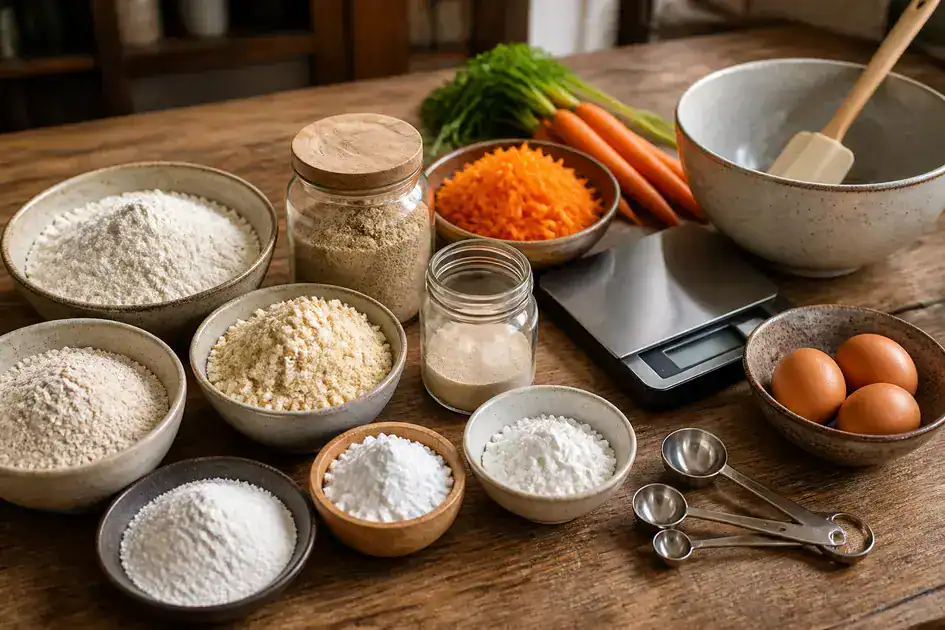
Choose the right flours to keep your gluten-free carrot cake moist and structured. Small swaps change texture, so follow these practical guidelines.
Common flour choices and why they work
- 1:1 gluten-free all-purpose blend — Easiest option. Designed to mimic wheat flour. Use as written for predictable results.
- Almond flour — Adds moistness and nuttiness. Best used for up to half the total flour in a cake; reduce oil by about 2 tablespoons per cup of almond flour used.
- Oat flour (certified gluten-free) — Gives a tender, slightly chewy crumb. Replace up to half the blend; add a little extra binder if you go higher.
- Rice flour — Neutral flavor but can feel gritty alone. Combine with starches (tapioca or potato) for a lighter texture.
- Tapioca or potato starch — Add spring and chew. Use 25–40% of the total flour weight to improve tenderness and browning.
- Sorghum or millet flour — Good for flavor depth; use in combination with lighter flours to avoid heaviness.
Binders and structure
- Xanthan gum — Use about 1/4–1/2 tsp per cup of flour for cakes to provide structure without chewiness. If your 1:1 blend already contains xanthan, don’t add more.
- Psyllium husk powder — Useful with grain-free mixes. Add about 1 tbsp psyllium per cup of non-gluten flours to improve elasticity and sliceability.
- Flax or chia eggs — For egg-free or extra binding, use 1 tbsp ground flax or chia + 3 tbsp water per egg equivalent.
How to build a reliable blend
- Start with a base: Use a 1:1 gluten-free blend when possible for simplest swap.
- If mixing flours: Try roughly 50% rice or sorghum + 30% starch (tapioca/potato) + 20% nut or oat flour for tenderness.
- Adjust binders: Add xanthan 0.25–0.5 tsp per cup or 1 tbsp psyllium per cup when increasing nut or oat flours.
Practical substitution examples
- Replace 2 cups 1:1 blend: Use 1 cup rice flour + 3/4 cup tapioca starch + 1/4 cup almond flour; add 1 tsp xanthan for the whole batch.
- Make it nut-free: Replace almond flour with extra oat flour and increase starch to keep the crumb light; add 1 tbsp psyllium for structure.
- Go grain-free: Use 1 cup almond flour + 1 cup coconut flour is not a straight swap — if using coconut, reduce total flour and increase liquids; instead, prefer almond + tapioca and add psyllium.
Troubleshooting and tips
- Weigh your flour: Use grams for repeatable results (e.g., 240 g for 2 cups of many blends).
- Hydration: Gluten-free flours absorb liquid differently. If batter is very thick, add 1–2 tablespoons milk or yogurt at a time until pourable.
- Rest the batter: Let batter rest 10–15 minutes before baking to hydrate flours; this often improves crumb.
- Do not overmix: Stir gently once dry ingredients are incorporated to avoid a dense cake.
- Test and note: Record which blend you used and any small adjustments so you can reproduce your best result.
Storage and shelf life
- Freshness: Store unused flours in airtight containers in a cool, dry place; nut flours last shorter and do best refrigerated.
- Made cake: Refrigerate frosted gluten-free carrot cake for up to 4–5 days; layer with parchment between slices if stacking.
Tips for a moist, fluffy gluten-free carrot cake
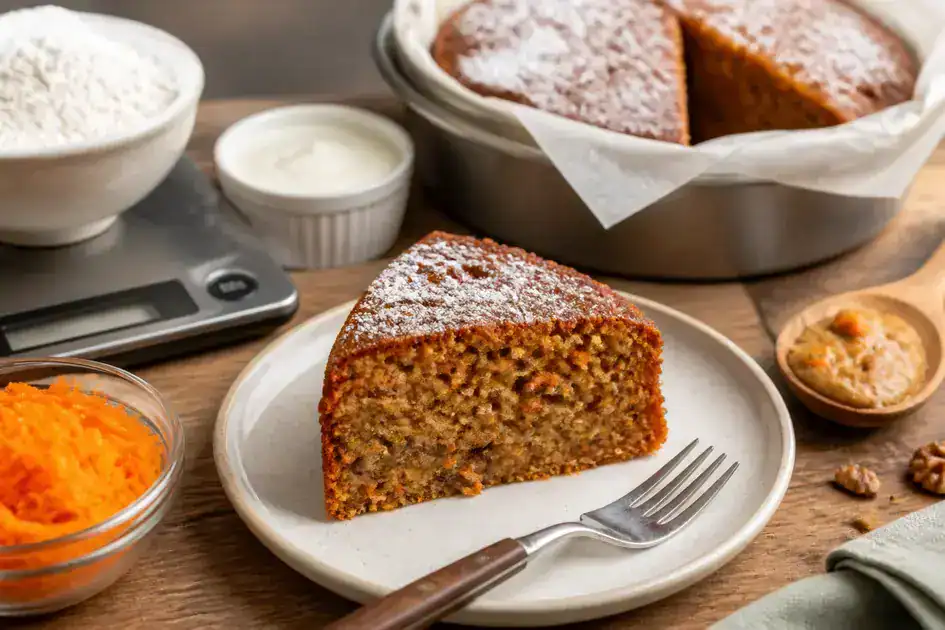
Use these practical, easy tips to keep your gluten-free carrot cake moist and fluffy every time.
Ingredient tips
- Measure by weight: Weigh flours and sugars for consistent results (240 g for 2 cups of many blends).
- Use the right flour blend: A 1:1 gluten-free all-purpose blend gives the most predictable texture.
- Add a tenderizer: Include 25–40% starch (tapioca or potato) in the flour mix to improve crumb and browning.
- Include a binder: Add 1/4–1/2 tsp xanthan gum per cup of flour if your blend lacks it, or 1 tbsp psyllium per cup for grain-free mixes.
Mixing and batter tips
- Don’t overmix: Fold dry ingredients into wet until just combined to avoid a dense cake.
- Hydrate the batter: Let the batter rest 10–15 minutes before baking so flours absorb liquids for better texture.
- Check consistency: Batter should be pourable but thick; add 1 Tbsp yogurt or milk at a time if too stiff.
- Warm ingredients: Use room-temperature eggs and yogurt for better emulsion and rise.
Baking tips
- Proper oven temp: Bake at 350°F (175°C); use an oven thermometer to ensure accuracy.
- Choose pan size: Use two 8–9 inch round pans or a 9×13 pan and adjust bake time accordingly.
- Test doneness: Insert a toothpick; look for a few moist crumbs, not raw batter.
- Protect top from overbrowning: Tent with foil in the last 10 minutes if crust darkens too fast.
Moisture boosters and swaps
- Oil over butter: Use oil (vegetable or light olive) for a moister crumb; replace up to 1/2 cup with applesauce to reduce fat.
- Extra carrot or pineapple: Add 2 tbsp extra grated carrot or 1/2 cup drained crushed pineapple for added moisture.
- Yogurt or buttermilk: 1/2 cup adds tenderness and slight tang; use dairy-free yogurt if needed.
Cooling, frosting and storage
- Cool properly: Let cakes sit 10–15 minutes in the pan, then turn onto a rack to finish cooling to avoid soggy bottoms.
- Crumb coat: Apply a thin crumb coat and chill 10–15 minutes before final frosting for a clean finish.
- Store right: Refrigerate frosted cake up to 4–5 days. For longer storage, freeze slices wrapped tightly for up to 2 months.
Troubleshooting
- If cake is dry: Brush layers with simple syrup or a light glaze, or serve with a dollop of whipped cream.
- If cake sinks: Avoid opening the oven early and ensure leavening amounts are correct and fresh.
- If crumb is gummy: Reduce added liquids slightly or increase bake time in small increments until set.
Storage, serving and reheating instructions
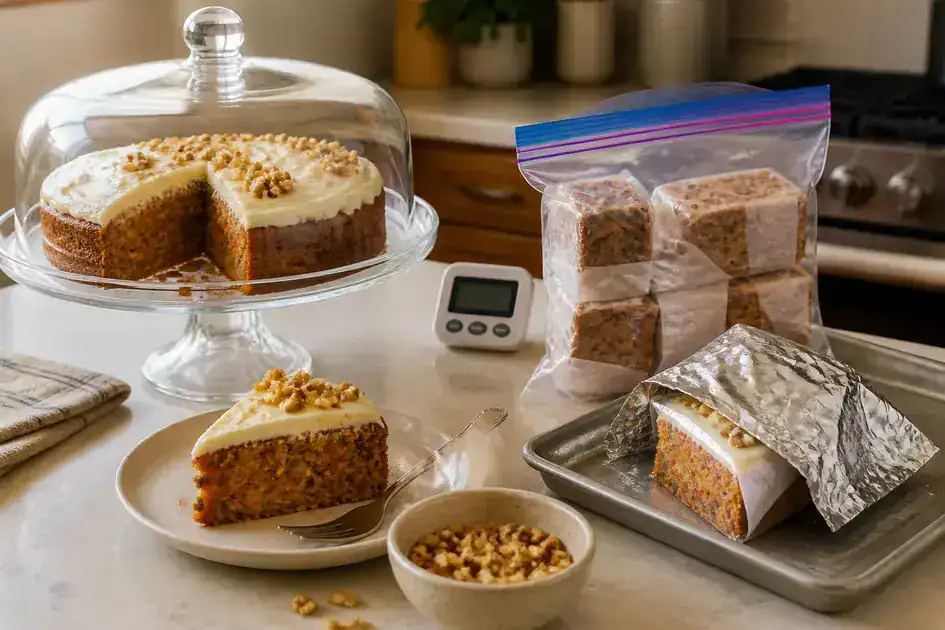
Keep your gluten-free carrot cake tasting fresh with simple storage, serving, and reheating steps below.
Storage
- Room temperature: Store unfrosted or lightly frosted cake in an airtight container for up to 24 hours in a cool area away from direct sunlight.
- Refrigeration: For frosted cake, place on a cake stand or plate, cover loosely with a dome or place in an airtight container, and refrigerate up to 4–5 days.
- Short-term slices: Wrap individual slices tightly in plastic wrap, then place in a resealable bag to prevent drying and odor transfer in the fridge.
- Freezing whole or slices: Freeze unfrosted layers or wrapped slices up to 2 months. For frosted cake, freeze briefly to set the frosting, then wrap tightly in plastic and foil to avoid freezer burn.
- Thawing: Thaw frozen slices in the refrigerator overnight or at room temperature for 1–2 hours for quicker serving.
Serving tips
- Bring to serving temp: Remove refrigerated cake 20–30 minutes before serving so flavors and texture soften slightly.
- Clean slices: Use a serrated knife and wipe the blade between cuts for neat slices and minimal frosting smears.
- Garnish ideas: Finish with a sprinkle of chopped nuts, a light dusting of cinnamon, or a few thin carrot ribbons for visual appeal.
- Portioning for gatherings: Chill the cake briefly for cleaner cuts, or serve as cupcakes/mini cakes to simplify portion control.
Reheating instructions
- Oven (best for slices): Preheat to 300°F (150°C). Place a slice on a foil-lined baking sheet, tent loosely with foil and warm for 8–12 minutes until slightly warm. Avoid direct heat on frosting to prevent melting.
- Toaster oven: Use same method as oven but check at 5–8 minutes; smaller spaces heat faster.
- Microwave (fastest): Place slice on a microwave-safe plate, heat at 50% power for 12–20 seconds, then check. Repeat in short bursts to avoid soggy texture or melted frosting.
- Steam-moist method: Warm a slice in the oven with a small oven-safe dish of hot water nearby to keep the cake moist while reheating.
- For whole cake: Avoid reheating a full frosted cake in the oven; instead, bring to room temperature or warm individual slices as needed.
Quick troubleshooting
- Dry slices: Brush with a thin sugar syrup or light glaze before serving to restore moisture.
- Melted frosting: If frosting softens too much, chill the cake briefly on a tray to firm it before serving.
Fun facts about carrot cake and carrots
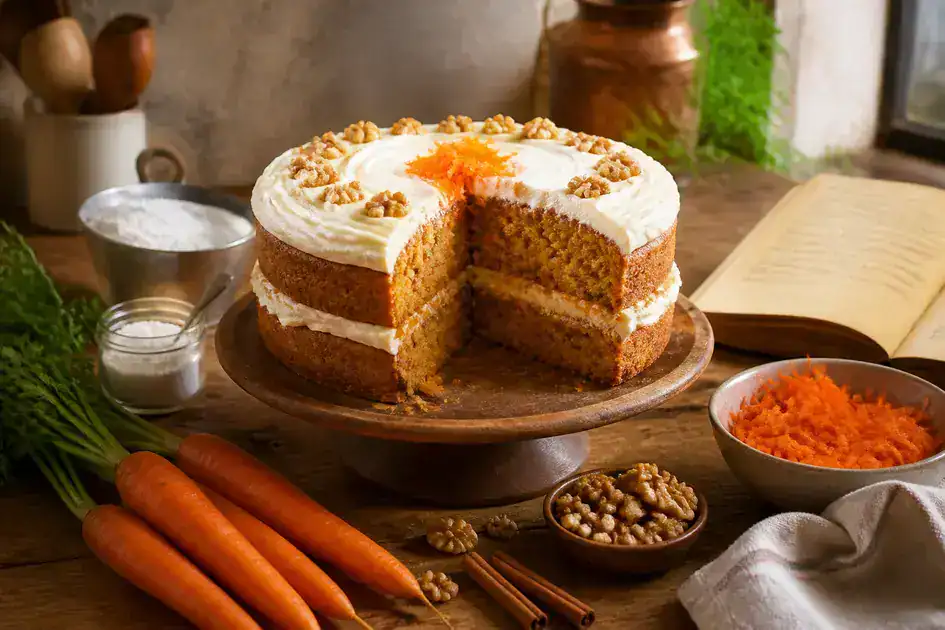
- Carrots as a sweetener: Historic cooks used carrots to sweeten desserts when sugar was scarce.
- Early carrot desserts: Older recipes were more like puddings than cakes and relied on carrots for moisture.
- Cream cheese match: Cream cheese frosting gained popularity because its tang balances the cake’s sweetness.
- Beta‑carotene glow: Carrots owe their bright orange to beta‑carotene, a nutrient the body converts to vitamin A.
- Gluten-free adaptation: Modern gluten-free carrot cake keeps moisture by using 1:1 blends, starches, or nut flours.
- Spices matter: Cinnamon, nutmeg, and ginger add warm flavor and help mask any grainy texture in gluten‑free mixes.
- Nut swaps: Walnuts and pecans add crunch; toasted seeds are a great nut‑free alternative.
Carrot facts
- Color variety: Carrots come in orange, purple, yellow, and white varieties with slightly different flavors.
- Simple storage tip: Keep carrots cool and slightly damp in the fridge to preserve crispness.
- Low calorie, high fiber: Carrots add natural sweetness, fiber, and a vitamin boost to baked goods.
Cake trivia
- Many forms: Carrot cake works as cupcakes, loafs, layer cakes, or trifle—each needs small time or temp tweaks.
- Moistness tricks: Adding a bit of crushed pineapple, extra grated carrot, or yogurt keeps the crumb tender.
- Presentation: Thin carrot ribbons, chopped nuts, or a dusting of cinnamon make slices look bakery‑ready.
Final thoughts
With a few smart swaps and simple steps, you can bake a tender, moist gluten-free carrot cake at home with confidence.
Thanks for reading — we hope you try this recipe! Follow us on social media and follow the Mestre das Receitas Cooking Blog for more tested gluten-free treats. Happy baking!
Share your photos, leave a comment with your results, and come back for new recipes soon.
FAQ – Gluten-Free Carrot Cake
What flour blend should I use for a reliable gluten-free carrot cake?
Use a tested 1:1 gluten-free all-purpose blend for the most predictable texture. If the blend lacks xanthan gum, add about 1 tsp per 2 cups of flour.
Can I make the cake egg-free or vegan?
Yes. Replace each egg with a flax egg (1 tbsp ground flax + 3 tbsp water, rest 5 minutes). Use dairy-free yogurt and vegan butter or cream cheese for frosting.
How do I keep the cake moist and fluffy?
Use oil instead of all butter, add 1/2 cup yogurt or buttermilk, avoid overmixing, and let the batter rest 10–15 minutes so flours hydrate properly.
What are good nut-free swaps for texture?
Replace chopped nuts with 1/2 cup toasted sunflower or pumpkin seeds, or use extra oats for chew. Confirm all ingredients are certified nut-free to prevent cross-contact.
How should I store and reheat leftovers?
Refrigerate frosted cake in an airtight container for 4–5 days. Reheat slices in a 300°F (150°C) oven for 8–12 minutes tented in foil, or microwave at 50% power for short 12–20 second bursts.