
Potato chowder is a traditional New England soup made with potatoes, stock and cream, often with bacon. It has a velvety broth with tender chunks of potato. Learn how to make, store and adapt it, including vegetarian and seafood versions.
With soft potatoes, crisp bacon and a creamy broth, potato chowder is easy to make and comforting on a winter day. Here’s how I cook this New England favorite and get just the right texture.
Ingredients for creamy New England potato chowder
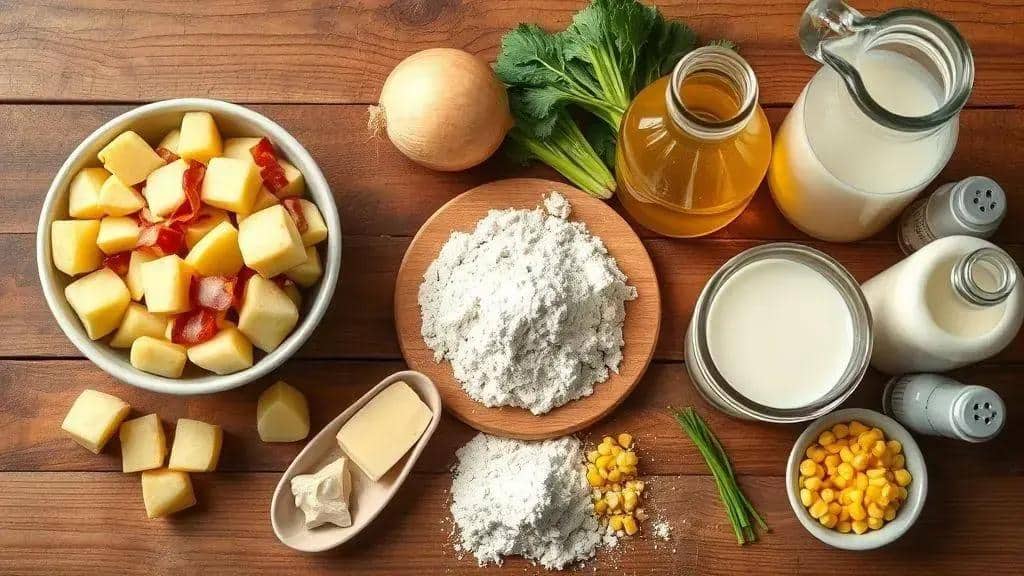
- 500 g Russet or Yukon Gold potatoes, peeled and cut into medium cubes. Red potatoes hold their shape better if you prefer firmer pieces.
- 150 g bacon, diced and fried until crisp. For a vegetarian alternative, use plant-based bacon or 1 teaspoon smoked paprika.
- 1 medium onion, finely chopped
- 2 celery stalks, finely diced
- 2 tablespoons butter for sautéing, or olive oil or margarine
- 2 tablespoons all-purpose flour to thicken the broth. For a gluten-free version, use 2 tablespoons cornstarch mixed with cold water.
- 800 ml hot chicken stock, or vegetable stock for a vegetarian soup
- 240 ml heavy cream for a rich texture, or plant-based cream or mild coconut milk for a different flavor
- 120 ml whole milk to adjust the consistency, or reduced-fat milk
- 1 bay leaf
- Salt and black pepper to taste
- 2 tablespoons chopped fresh chives, to finish
- Optional: 150 g fresh or frozen sweet corn for sweetness and texture
Substitutions and quick tips
For a vegetarian chowder, replace the bacon with smoked tofu or smoked paprika and use vegetable stock and plant-based cream. To thicken without flour, mash some cooked potatoes and return them to the pot. Adjust the liquid to taste. The chowder should be thick and velvety.
How to make creamy New England potato chowder
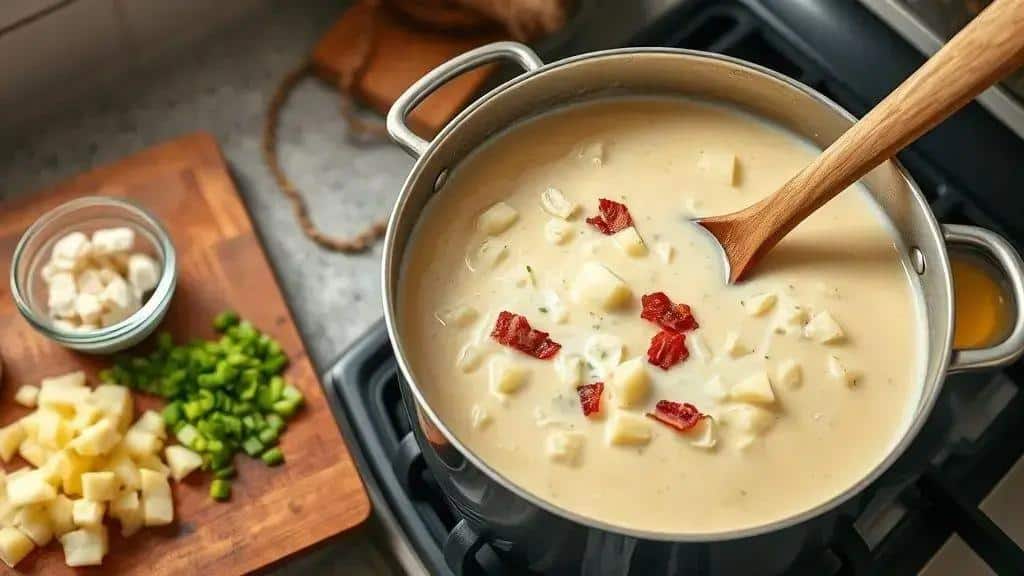
- Wash and peel 500 g potatoes and cut into medium cubes. Chop 1 onion and 2 celery stalks, measure 240 ml cream and 120 ml milk, and dice 150 g bacon.
- Heat a large pot over medium heat and fry the bacon until crisp. Lift it out with a slotted spoon, leaving 1–2 tablespoons of the drippings in the pot.
- Add 2 tablespoons butter to the drippings. Sauté the onion and celery for 3–4 minutes, until softened and the onion turns translucent.
- Sprinkle 2 tablespoons flour over the vegetables and stir for 1 minute to cook the flour and form a light roux.
- Pour in 800 ml hot chicken stock, stirring to blend in the flour. Add the cubed potatoes and 1 bay leaf.
- Bring to a boil, reduce the heat and simmer for 12–15 minutes, until a fork slides easily into the potatoes.
- Scoop out about 1 cup of cooked potatoes. Mash with a fork and return to the broth for body without extra flour.
- Turn the heat to low and stir in 240 ml cream and 120 ml whole milk. Heat gently without boiling to keep the broth smooth.
- Add the 150 g sweet corn, if using, and the reserved crisp bacon. Heat for 2–3 minutes so the flavors mingle.
- Discard the bay leaf, taste and add salt and black pepper a little at a time, especially if the stock and bacon are salty.
- Turn off the heat, scatter 2 tablespoons chopped chives over the top and serve hot with buttered bread or toast.
Chef’s techniques for a velvety texture
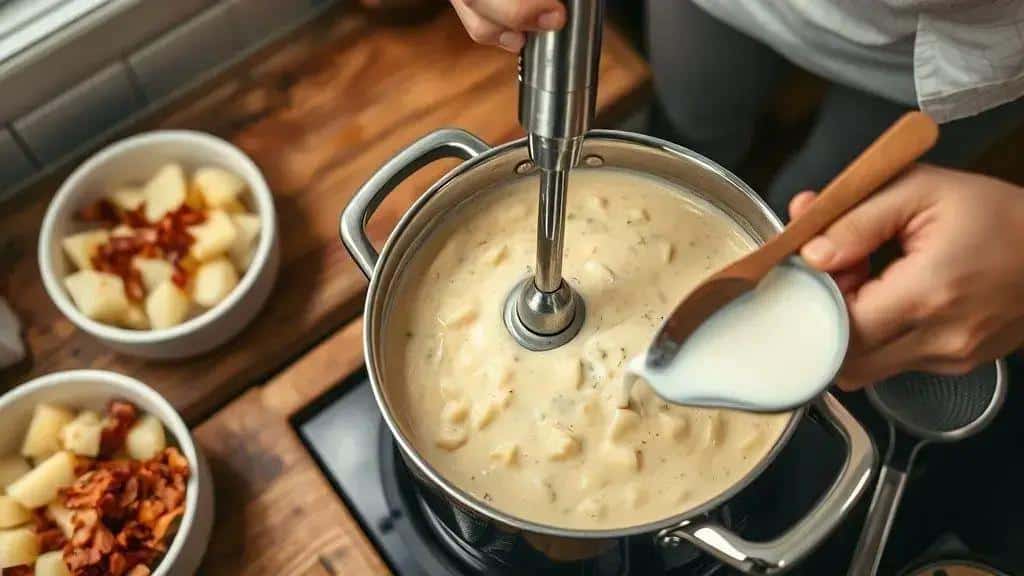
Small details make a difference in potato chowder. These techniques help you get a thick, smooth broth with tender pieces of potato.
- Use Russet or Yukon Gold potatoes for creaminess. Red potatoes retain more of their shape.
- Cut the potatoes into even cubes so they cook at the same rate and no pieces stay hard.
- Sauté the onion and celery until soft and the onion turns translucent. This builds the flavor base and improves the final texture.
- Use some bacon drippings or butter for a silky mouthfeel. The fat also helps disperse the starch.
- For thickening, use a light roux or mash some of the cooked potatoes and return them to the broth.
- Blend only half the soup with an immersion blender for a creamy base with whole pieces left in it.
- Once the cream is in, heat gently without boiling to prevent the soup from separating or turning grainy.
- Adjust the salt and pepper after adding the dairy, which mellows the seasoning.
- For gluten-free thickening, add a cornstarch slurry or mashed potato a little at a time.
- When reheating a portion, add a splash of liquid and stir over low heat until it reaches 165°F (74°C) throughout.
Helpful equipment
- An immersion blender lets you control how much of the soup you purée.
- A potato masher gives you a partly mashed texture without overworking the potatoes.
- A fine-mesh strainer can remove small lumps for a silkier broth.
Chef’s tip
Reserve 1 cup of the cooked potatoes, mash them with a fork and stir them back in. This gives the chowder body without adding more flour or masking the potato flavor.
Vegetarian and seafood potato chowders

These two variations take potato chowder in different directions. One has mushrooms and smoky paprika, the other fresh seafood and a light fish stock.
Vegetarian version
This chowder gets its appeal from a smoky flavor and creamy texture. To make it entirely plant-based, choose olive oil or vegan margarine and plant-based cream.
- 500 g Yukon Gold potatoes, cut into medium cubes
- 150 g cremini mushrooms, sliced, or 150 g smoked tofu for a firmer bite
- 1 medium onion, chopped
- 2 celery stalks, chopped
- 2 tablespoons butter or olive oil for sautéing, or vegan margarine
- 2 tablespoons all-purpose flour, or 2 tablespoons cornstarch for a gluten-free chowder
- 800 ml homemade or good-quality vegetable stock
- 240 ml plant-based cream, or mild coconut milk for a different flavor
- 150 g sweet corn, optional, for sweetness
- 1 teaspoon smoked paprika for a bacon-like smokiness without meat
- Salt, black pepper and fresh chives to taste
Quick tips
- Set aside some cooked potato cubes to mash and thicken the chowder.
- Brown the mushrooms well to bring out their savory flavor.
- Add the cream over low heat to prevent it from splitting.
Seafood version
Light fish stock and fresh seafood make a delicate chowder. Add the seafood toward the end so it stays tender.
- 500 g Russet potatoes, cut into medium cubes
- 200–250 g white fish fillets, such as cod or sea bass, cut into chunks. Substitute extra shrimp if you prefer.
- 150 g medium shrimp, peeled and deveined
- 200 g cleaned mussels or clams, optional
- 1 medium onion and 2 celery stalks, chopped
- 2 tablespoons butter for sautéing
- 800 ml fish stock or vegetable stock. Choose a light fish stock for a delicate seafood flavor.
- 200 ml cream, to finish
- Lemon zest and fresh parsley, to finish and brighten the flavors
- Salt and black pepper, adjusted at the end
Essential techniques
- If available, strain the shellfish cooking liquid and use it for part of the base to deepen the flavor.
- Add the fish and shrimp toward the end and start checking after 3–5 minutes. The fish should reach 145°F (63°C) at the thickest point, and the shrimp should be firm, pearly and opaque.
- If using shell-on mussels or clams, cook them separately for 4–9 minutes in an already steaming basket. Discard any that stay closed and strain the cooking liquid to add to the stock.
Serving suggestions
- Buttered crusty bread goes well with either version.
- Serve lemon wedges with the seafood chowder.
- Chives or fresh parsley add color and aroma.
The history of New England potato chowder

New England potato chowder has humble roots. For fishermen and coastal settlers, a pot of soup made practical use of ingredients that kept well and could be cooked at sea or on shore.
Origins and the name
The name “chowder” is often linked to French terms such as chaudrée and chaudière, the cooking pot. European settlers adapted local and Indigenous cooking traditions, making thick soups with fish, salt meat and vegetables.
Traditional ingredients and how they evolved
- Salt pork or bacon supplied flavor and cooking fat before milk became a regular ingredient.
- Potatoes provided body. Cooks mashed some of them to thicken the broth.
- Milk and cream became more common as dairy products became easier to obtain and came to define the New England style.
- Flour, crackers and mashed potatoes have all been used for thickening, depending on what was available locally.
Regional differences
In the United States, creamy New England chowder made with milk or cream contrasts with tomato-based Manhattan chowder. Other local versions feature different seafood or vegetables, and some leave out the meat.
Chowder in coastal communities
- Chowder was an economical way to feed a crowd at fishing gatherings, markets and coastal festivals.
- Families in coastal communities pass their recipes down through generations, with small differences from one kitchen to the next.
- Some historical recipes called for large kettles over open fires to make enough for a group.
The details that make a difference
Bacon or salt pork gives chowder its characteristic richness, while a few mashed potatoes thicken the broth. Together they keep the soup rustic and velvety.
How to store, reheat and serve the soup
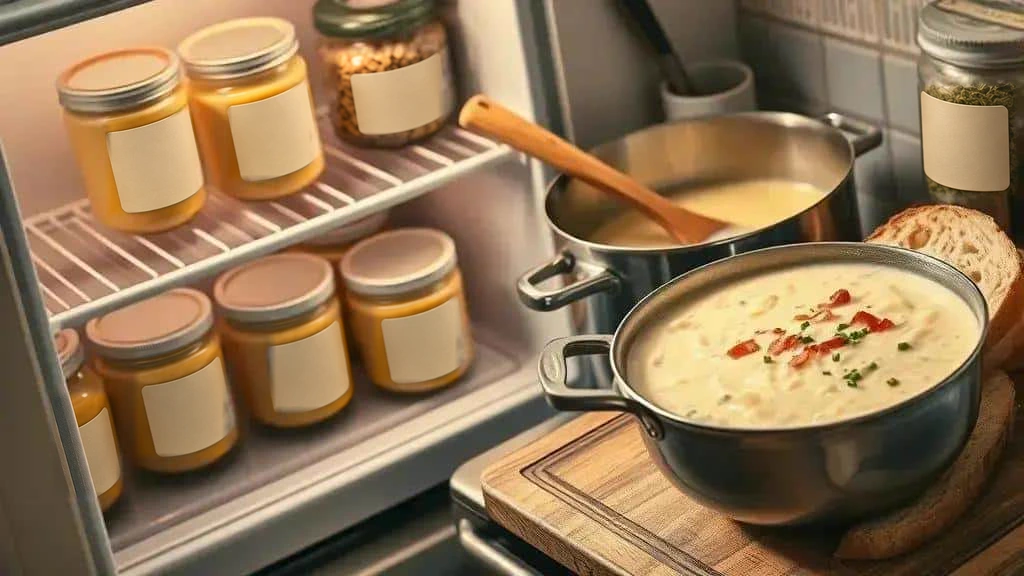
Proper cooling and gentle reheating help keep potato chowder smooth and prevent the cream from separating.
Safe storage
- Divide the soup into shallow containers and refrigerate within 2 hours of cooking, or within 1 hour if it is above 90°F (32°C). There is no need to leave the whole pot on the counter to cool.
- Choose airtight glass or BPA-free plastic containers. Several smaller containers cool the soup more evenly than one large one.
- Refrigerate for up to 3–4 days and label the containers with the date.
- Freeze for up to 2–3 months. For the best texture, freeze the base before adding the cream, and leave room for expansion.
- Freeze individual portions to simplify thawing and reduce waste.
How to thaw the soup
- Move the soup from the freezer to the refrigerator 12–24 hours before you need it.
- For quicker thawing, use the microwave defrost setting in short bursts, stirring in between, or immerse the sealed container in cold water, changing the water every 30 minutes. Reheat promptly.
Step-by-step reheating
- Put the soup in a saucepan over low heat and stir frequently to keep it from sticking.
- If the thawed soup is too thick, stir in 2–4 tablespoons milk or stock per cup of soup, to taste.
- Stir until leftovers reach 165°F (74°C) throughout. Avoid prolonged boiling once the cream is in.
- In the microwave, heat at medium power for 60–90 seconds, stir well and continue in short intervals until the soup reaches 165°F (74°C) throughout.
- To heat from frozen, use a covered pan over low heat, stirring and adding liquid as needed. Check that the center reaches 165°F (74°C).
Serving and finishing touches
- Top with crisp bacon, chopped chives, parsley, freshly ground black pepper or a spoonful of cream.
- Serve with buttered crusty bread, toast, croutons or a grilled cheese sandwich.
- Warm the bowls first to keep the chowder hot for longer.
Safety and quality
- Discard soup that smells or looks unusual or has exceeded the recommended storage time. Never taste it to check whether it is safe.
- Reheat only the portion you will eat to avoid repeated cooling and reheating.
- When possible, freeze the base without the cream and add fresh cream during reheating for a smoother texture.
To finish
This creamy New England potato chowder is simple, full of flavor and particularly welcome on a cold day.
Thanks for reading! Follow us on social media for more everyday recipes, tips and variations. Be sure to visit the Mestre das Receitas food blog for more recipes and cooking stories.
Try the recipe, tag someone who would enjoy it and come back to tell us how it turned out.
Frequently asked questions about potato chowder
Can I make this soup without bacon?
Yes. Smoked tofu, browned mushrooms or 1 teaspoon smoked paprika give it a savory or smoky flavor without meat.
Can I freeze chowder?
Yes. Freeze the soup in individual portions before adding the cream for up to 2–3 months. Stir in fresh cream when reheating to preserve its texture.
How do I stop the cream from splitting when reheating?
Use low heat and stir frequently until leftovers reach 165°F (74°C) throughout. Avoid prolonged boiling after adding the cream. A splash of milk or stock can loosen the soup if needed.
Which potatoes are best for a creamy chowder?
Russets provide starch to thicken the soup, while Yukon Golds have a buttery texture. Red potatoes stay in more distinct pieces.
How can I thicken chowder without flour?
Mash 1 cup of the cooked potatoes and return them to the pot. You can also add instant mashed potatoes or gently reduce the broth to the consistency you like.
Can I make a seafood version?
Yes. Use a light fish stock and add fish and shrimp toward the end. Start checking after 3–5 minutes. The fish should reach 145°F (63°C) and the shrimp should be firm, pearly and opaque. Finish with lemon zest and parsley.