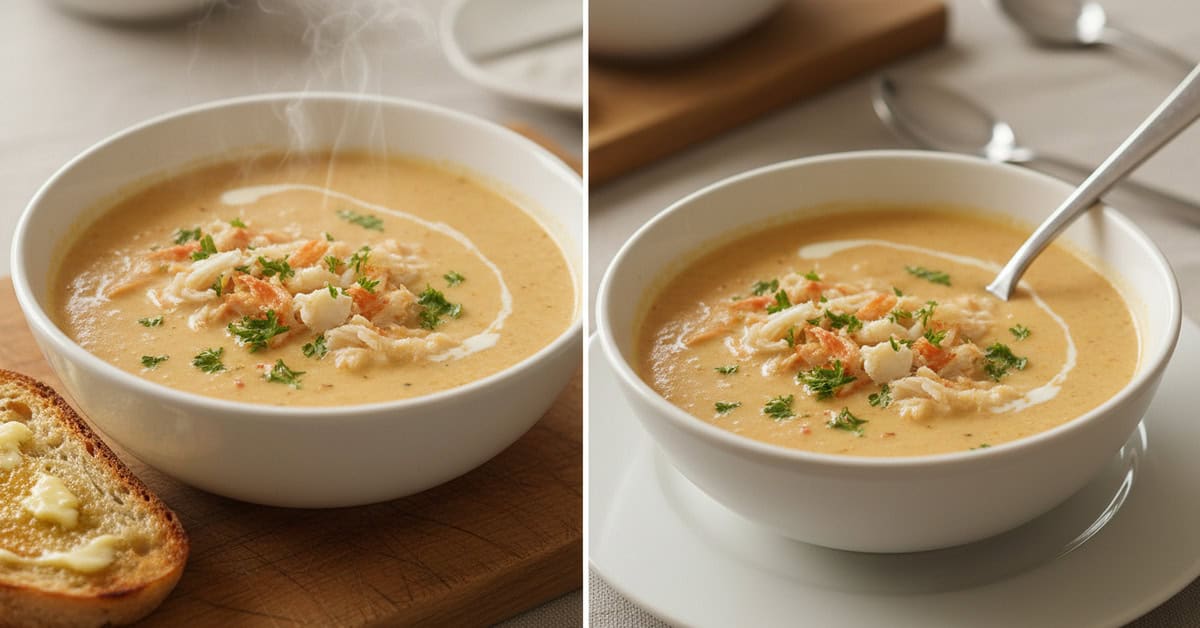

Crab soup is a popular Brazilian speciality, full of flavour and nutrients. It is made with crab, onion, garlic and coconut milk. This healthy, traditional dish reflects Brazil’s coastal culture and is often served at parties and family gatherings.
Crab soup is a distinctive Brazilian speciality, particularly prized along the coast, where crab is plentiful. With its bold flavour and aroma of the sea, it can be the centrepiece of a special lunch or a comforting meal on a rainy day. Join us as we explore the traditional recipe, its variations and what makes this soup such a favourite.
Ingredients for crab soup

To make this delicious crab soup, you’ll need the following ingredients:
- 500 g crab (fresh or frozen)
- 1 medium onion, chopped
- 2 garlic cloves, chopped
- 1 tomato, peeled and chopped
- 1 green pepper, chopped
- 1 litre of water
- 200 ml coconut milk
- 2 tablespoons red palm oil
- Salt and pepper to taste
- Fresh coriander to taste, to finish
These ingredients work beautifully together in a traditional soup that brings the best flavours of the sea to your table. Choose good-quality crab, as it’s the star of the dish!
How to make crab soup

Follow these steps to make the crab soup:
- Soften the onion and garlic. Heat the red palm oil in a large saucepan over a medium heat. Add the chopped onion and garlic and fry gently until the onion is translucent.
- Add the tomato and green pepper. Stir in the chopped tomato and green pepper and cook for a further 3 to 4 minutes, stirring constantly.
- Add the crab. Stir it into the mixture and cook for about 5 minutes to let the flavour of the crab meat come through.
- Add the water. Pour the litre of water into the pan, cover and simmer over a low heat for about 15 minutes.
- Add the coconut milk. After the 15 minutes, stir in the coconut milk and season with salt and pepper to taste. Cook for a further 10 minutes.
- Finish and serve. Turn off the heat and stir in chopped fresh coriander to taste. Serve the soup hot, with a little extra coriander if you like.
Your gourmet crab soup is ready to enjoy!
A closer look at Brazilian crab soup

There are plenty of stories behind Brazilian crab soup. Here are a few things worth knowing about the dish:
- Regional origins. This soup is a speciality of Brazil’s coastal regions, particularly in areas with a strong fishing tradition, such as Bahia.
- Crab meat supplies protein, vitamin B12 and minerals such as zinc and selenium.
- Recipe variations. The traditional recipe is popular, and there are plenty of variations. Some cooks add sweet potato or cassava, or choose different seasonings to give the soup their own touch.
- Culture and tradition. The soup is often served at festivals and celebrations, bringing family and friends together around the table to share a good meal.
- Family stories. Many families have their own crab soup recipe, handed down through the generations, and each recipe holds a family secret.
- The local crab trade. Crab fishing is a tradition in many communities, and making this soup helps support the local economy.
Crab soup is much more than a dish. It brings culture, tradition and flavour together in a way that wins people over.
Tips for serving crab soup

A few finishing touches can bring out the flavour of crab soup and make it look even more appetising. Try these serving tips:
- Serve it piping hot. This brings out the flavours and makes the soup even more enjoyable.
- Choose your accompaniments. Serve the soup with fresh bread or cassava flour. Both add texture and complement the flavour of the dish.
- Finish with fresh herbs. Scatter chopped fresh coriander over each portion for extra flavour and a splash of colour.
- Choose your bowls. Serve the soup in individual bowls or use earthenware bowls to give the table a warm, rustic feel.
- Add a finishing drizzle. Just before serving, drizzle a little red palm oil over the soup for a splash of vibrant colour and an inviting aroma.
- Offer extra heat. Serve fresh chillies or chilli sauce on the side so guests can make their soup as spicy as they like.
These finishing touches will help you serve your guests a crab soup to remember.
Crab soup variations

Crab soup is a versatile dish. Here are a few ways to vary the recipe:
- Crab soup with sweet potato. Add diced sweet potato to the original recipe for a hint of sweetness and a creamier texture.
- Crab soup with cassava: Peel the sweet cassava and boil it separately in water until tender. Discard the cooking water. Blend the cassava with some of the fresh water called for in the recipe, then stir the purée into the soup.
- Spicy crab soup. If you like a little heat, add dedo-de-moça chilli or a little chilli sauce as the soup cooks. This brings out the other flavours in the soup.
- Crab soup with extra coconut milk. Increase the amount of coconut milk for a more pronounced tropical flavour and a creamy consistency. You can also add herbs such as basil and coriander.
- Northern and north-eastern Brazilian-style crab soup. Add ingredients such as maize meal or prawns for a rich, satisfying soup inspired by the culinary traditions of northern and north-eastern Brazil.
- Vegetarian crab-style soup. For a seafood-free version, replace the crab with mushrooms such as shiitake, which give the soup a rich umami flavour.
These variations give your crab soup different flavours and textures, so you can tailor it to different tastes.
The nutritional benefits of crab soup

What does each ingredient bring to this crab soup?
- Protein: Crab meat provides protein and has a delicate texture.
- Energy per serving: This varies with the coconut milk you use and the size of the serving.
- Fat: Crab meat contains small amounts of fat, including polyunsaturated fatty acids. Coconut milk also contributes to the fat content of the soup.
- Vitamins and minerals: Crab meat contains vitamin B12, zinc and selenium.
- The litre of water in the recipe forms the base of the broth and takes on the flavour of the seasonings and crab.
- Onion and garlic: Gently frying them at the start gives the broth both aroma and flavour.
Crab soup brings plenty of flavour to the table and adds nutritional value to your diet.
The history and traditions of Brazilian crab soup

Crab soup has a long history in Brazilian cooking, particularly along the coast. Its combination of local ingredients and cultural influences reflects the diversity of the Brazilian people.
For families living by the sea, fresh crab can be the starting point for a homemade soup. The seasonings and the thickness of the broth vary from one kitchen to the next.
This version pairs crab meat with coconut milk and coriander, a combination found in Bahian cooking.
Crab soup is a delicacy and a symbol of the way families and friends come together around the table to celebrate local culture and traditions. In many homes, the recipe is handed down from one generation to the next, with each family adding its own touch.
With its distinctive flavour and the stories it carries, crab soup remains a much-loved dish and a treasure of Brazilian cooking.
Thank you for joining us!
Crab soup is a gem of Brazilian cooking, full of flavour and tradition, and a pleasure to share. We hope you’ve enjoyed getting to know this delicious recipe and its variations.
If you enjoyed this article, follow us on social media and keep up with the latest from the Mestre das Receitas cooking website. Discover more delicious recipes and tips to help you shine in the kitchen!
Join us as we explore more recipes, and share your own creations. We look forward to seeing you there!
Frequently asked questions about crab soup
What are the main ingredients in crab soup?
The main ingredients are fresh crab, onion, garlic, tomato and green pepper, along with coconut milk and seasoning to taste.
How can I make crab soup creamier?
For a creamier soup, try adding coconut milk, cooked sweet potato or peeled sweet cassava that you have boiled separately and drained.
Is crab soup healthy?
Crab meat provides protein, vitamin B12, zinc and selenium. The nutritional value of the soup also depends on the coconut milk, the other ingredients and the serving size.
Can I use a different type of shellfish instead of crab?
Yes, you can use prawns or other seafood in place of the crab and keep the same soup base.
How can I make serving crab soup feel special?
Serve the soup in rustic bowls, scatter fresh coriander over the top and offer fresh bread or cassava flour alongside.
Can I freeze crab soup?
Yes, you can freeze the soup. For the best texture, add the coconut milk only when you’re ready to serve.