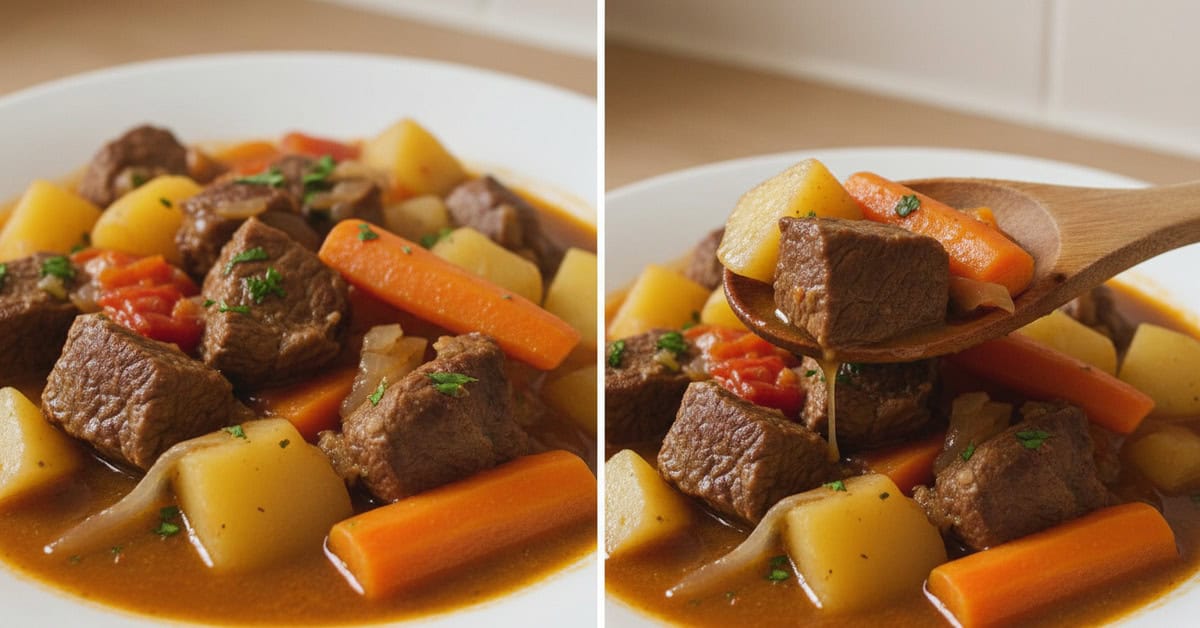

Beef stew is a traditional dish of beef and vegetables, such as potatoes and carrots, simmered slowly in a fragrant stock. Collagen-rich cuts give the sauce body, browning the beef builds flavour, and reducing the stock thickens the sauce. You can also use a slow cooker or pressure cooker, or adapt the recipe for a vegetarian stew.
Beef stew is a simple, comforting dish of tender chunks of beef and vegetables in a rich broth. Fancy making a Midwestern version with all the flavour of a home-cooked stew? I’ll take you through it step by step, with easy techniques and a few chef’s tips along the way.
Ingredients for Midwestern beef and vegetable stew
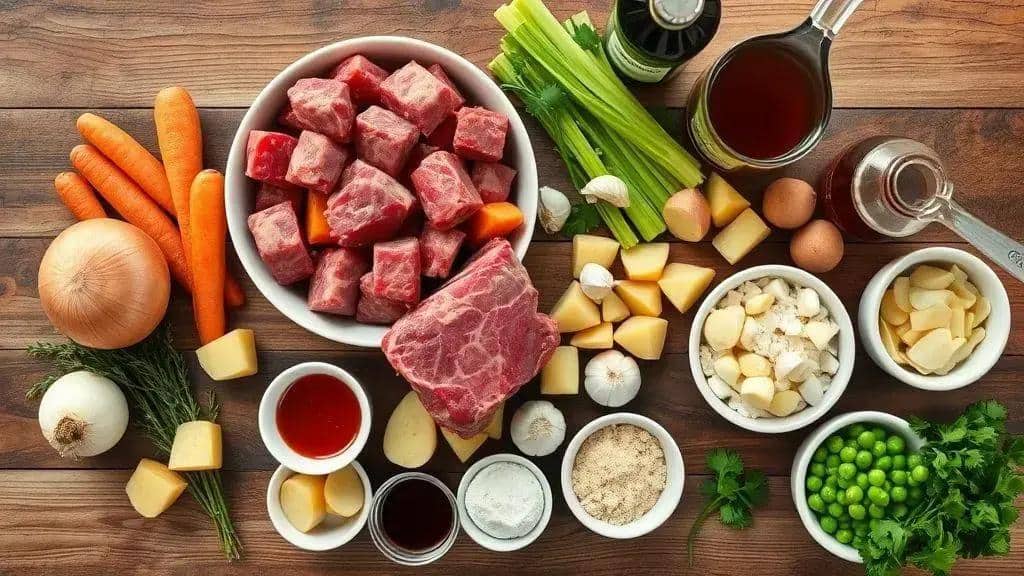
For this Midwestern beef and vegetable stew, you’ll need the following ingredients.
- 1 kg beef chuck, cut into 3 cm cubes. Beef shoulder or shin also works well.
- 2 tablespoons (30 ml) vegetable oil for browning the beef. You can also use olive oil.
- 2 tablespoons (18 g) plain flour to thicken the stock. Alternatively, use 2 tablespoons of cornflour mixed with cold water.
- 2 tablespoons (30 g) tomato purée for flavour and colour. You can use 4 tablespoons of crushed peeled tomatoes instead.
- 750 ml beef stock, preferably homemade or low in salt. Use vegetable stock for the vegetarian version.
- 200 ml red wine (optional) for depth of flavour. Alternatively, use extra stock with 1 tablespoon of balsamic vinegar.
- 3 medium carrots (about 300 g), cut into rounds or chunks.
- 4 medium potatoes (about 600 g), peeled and cubed.
- 1 large onion, roughly chopped.
- 2 celery sticks, thinly sliced.
- 3 garlic cloves, chopped or crushed.
- 2 bay leaves
- 1 teaspoon dried thyme (or 1 tablespoon fresh thyme)
- 2 tablespoons Worcestershire sauce
- 2 tablespoons butter (optional), to give the sauce a glossy finish.
- Salt and black pepper to taste
- Fresh parsley, to finish and garnish the stew.
- 200 g pearl onions (optional), for texture and presentation.
- 100 g frozen peas (optional), added at the end for colour and freshness.
Useful substitutions
Chuck, shoulder and shin all stand up well to long, slow cooking. Leaner cuts can dry out.
Flour gives the sauce a more opaque finish, while cornflour keeps it more translucent.
For a lighter flavour, use vegetable or chicken stock in place of beef stock.
The red wine is optional. Stock with a splash of balsamic vinegar will retain a little acidity.
For a different flavour, try sweet potatoes, swede or turnips in place of the potatoes.
How to make Midwestern beef and vegetable stew
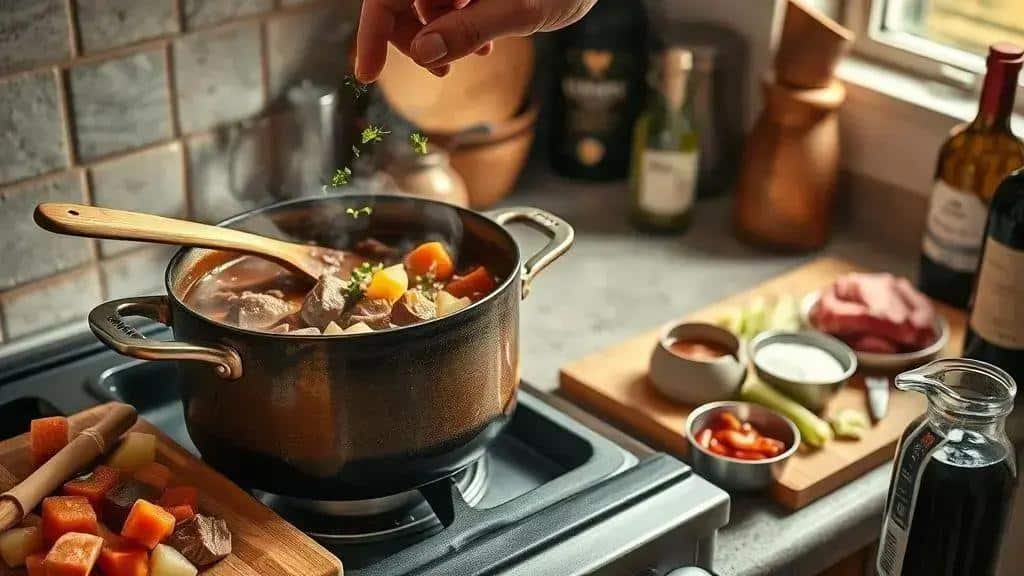
Follow these steps to make Midwestern beef and vegetable stew.
- Prepare the ingredients. Cut 1 kg of beef chuck into 3 cm cubes. Peel and cube 4 potatoes, slice 3 carrots into rounds and chop 1 onion and 2 celery sticks. Measure out 750 ml of stock and 2 tablespoons of tomato purée.
- Season the beef cubes with salt and pepper to taste, sprinkle with 2 tablespoons of plain flour and toss gently to coat.
- Heat 2 tablespoons of oil in a large pan or cast-iron casserole. Brown the beef in batches, leaving space between the pieces. Allow about 2–3 minutes per side until well browned, then set aside on a plate.
- Lower the heat and add the chopped onion and 3 chopped garlic cloves. Sauté until the onion is translucent, scraping up the browned bits from the bottom of the pan.
- If using wine, pour in 200 ml of red wine to deglaze the pan and let it reduce for 1–2 minutes. Add the tomato purée and stir it in.
- Return the beef to the pan and pour in 750 ml of beef stock. Add 2 bay leaves, 1 teaspoon of thyme and 2 tablespoons of Worcestershire sauce, then bring to the boil.
- Turn down the heat, partly cover the pan and simmer for 1.5–2 hours until the beef is tender. Check occasionally and skim off any scum that rises to the surface.
- Add the potatoes and carrots, along with 200 g of pearl onions if using. Simmer for a further 20–30 minutes, until a fork slips easily into the vegetables.
- For a thicker sauce, blend 2 tablespoons of cornflour with 2 tablespoons of cold water. Stir into the stew and keep stirring until the sauce thickens. Alternatively, use a mixture of flour and hot stock.
- Taste and adjust the salt and pepper. Stir in 2 tablespoons of butter for a glossy finish and add 100 g of frozen peas in the last 2 minutes for colour and freshness.
- Turn off the heat and leave the stew to rest for 10 minutes with the lid ajar to let the flavours settle. Finish with chopped fresh parsley.
- To save time, use a pressure cooker and cook for 35–40 minutes once it reaches pressure. For an alcohol-free stew, replace the wine with 1 tablespoon of balsamic vinegar.
Tips for tender beef
Leave space between the pieces when browning so the meat develops a deep golden crust without steaming. Give the beef plenty of time over a low heat and it will become tender enough to fall apart. If you’re using a leaner cut, shorten the cooking time to keep it from drying out.
The best cuts of beef for stew and how to choose them
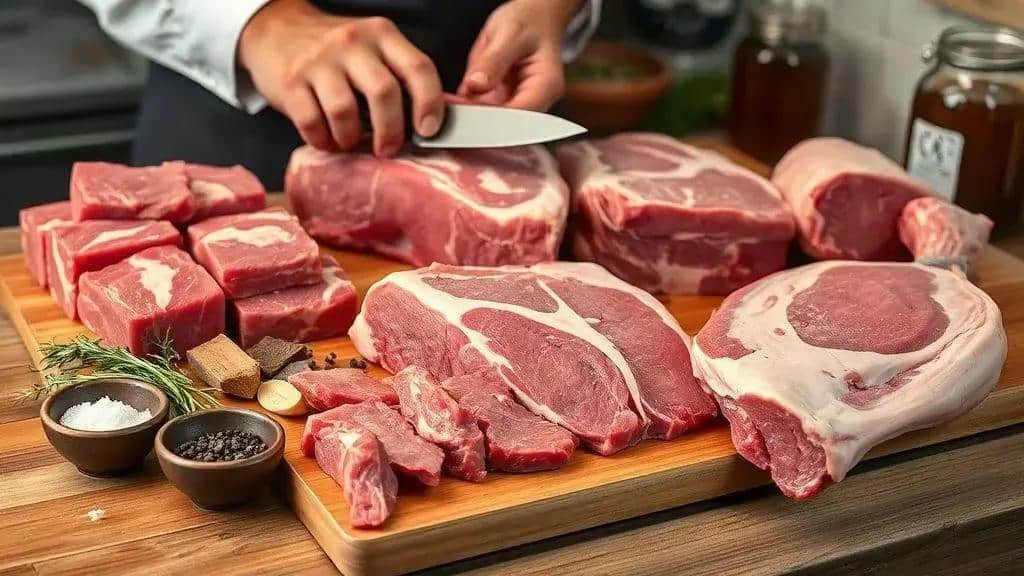
For a succulent stew, choose cuts with some fat and plenty of collagen. As the fat renders and the collagen breaks down during slow cooking, the beef becomes tender and full of flavour.
Recommended cuts
- Beef chuck — 1 kg. Its balance of fat and connective tissue makes it ideal for chunks that become tender enough to fall apart.
- Beef shoulder — 1 kg. This good-value cut has a coarse grain that softens with long, slow cooking.
- Beef shin (shank) — 800 g. Rich in collagen, it makes a full-flavoured, gelatinous stock.
- Beef silverside — 800 g. This leaner cut needs careful cooking to keep it from drying out.
- A bone-in cut is optional. The bone adds flavour to the stock, so allow for a change in cooking time if you use one.
What to look for when buying beef
- Look for bright red meat with white fat. Avoid yellowish fat.
- The meat should smell fresh. Avoid beef with a strong or sour smell.
- Look for marbling. Fine flecks of fat running through the muscle help keep the meat juicy as it cooks.
- The beef should feel firm to the touch. Very soft meat can be a sign of poor quality.
- Ask your butcher to cut the beef into 2–3 cm cubes for stewing and trim away only the excess fat.
Preparing the beef before cooking
- Pat the beef dry with kitchen paper to help it brown.
- You can season the beef with salt and pepper 30 minutes before cooking to give the seasoning time to penetrate.
- A light dusting of flour helps the beef brown and thickens the sauce. Alternatively, add cornflour at the end.
- Leave a thin layer of fat for flavour and trim off only the visible excess.
- If the beef is frozen, put it in the fridge to defrost 24 hours before cooking. Avoid defrosting it at room temperature to preserve its texture.
Substitutions and adaptations
- For a boneless option, use chuck or shoulder. Adjust the cooking time as needed so the beef is tender.
- For a leaner stew, choose beef silverside and use a rich stock to make up for the lower fat content.
- For a budget-friendly stew, choose beef shin. It’s inexpensive and develops plenty of flavour as it slowly cooks.
How to sear and brown the beef
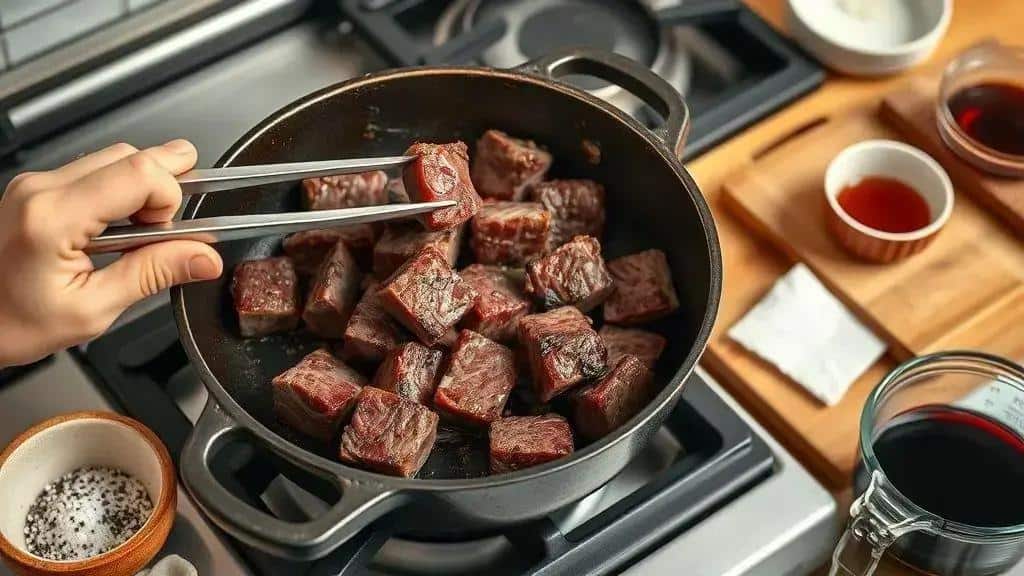
A hot pan, dry meat and a little patience give each piece a flavourful crust. A good sear adds depth to the whole stew.
- Pat the cubes with kitchen paper until no more moisture comes away. Dry beef sears more readily and browns faster.
- Salt the beef just before it goes into the pan. Too much salt applied well in advance can draw out moisture.
- Choose a heavy cast-iron or stainless-steel frying pan for even heat.
- Preheat the pan over a medium-high heat for a few minutes until thoroughly hot, then add the oil.
- Use a little oil with a high smoke point, such as rapeseed, sunflower or grapeseed oil. Heat it until it shimmers, taking care that it doesn’t burn.
- Sear the beef in batches, leaving space between the cubes. Too much meat cools the pan and causes the beef to steam.
- Give the meat 2–4 minutes to form a crust before turning it. The browned crust is a sign of the Maillard reaction, which gives seared beef its deep flavour.
- Turn the pieces with tongs. Piercing them with a fork can let the juices escape.
- After searing, lift out the beef and deglaze the pan with wine or hot stock. Scrape up the browned bits, known as the fond, to work their flavour into the stew.
- Once the beef is browned, finish cooking it slowly over a low heat or in the oven. This tenderises the meat while preserving the flavour of the seared crust.
Quick tips
- Start with a high heat for browning, then turn it down for slow cooking.
- A light dusting of flour before searing helps the beef brown and the sauce thicken.
- For large cuts, a meat thermometer helps you judge doneness from the internal temperature. For a long-simmered stew, judge the beef by its tenderness.
Common mistakes
- Overcrowding the pan prevents a crust from forming.
- Adding liquid too soon stops the meat browning.
- Using an oil with a low smoke point can leave a bitter taste if it burns.
How to thicken the broth and adjust its flavour
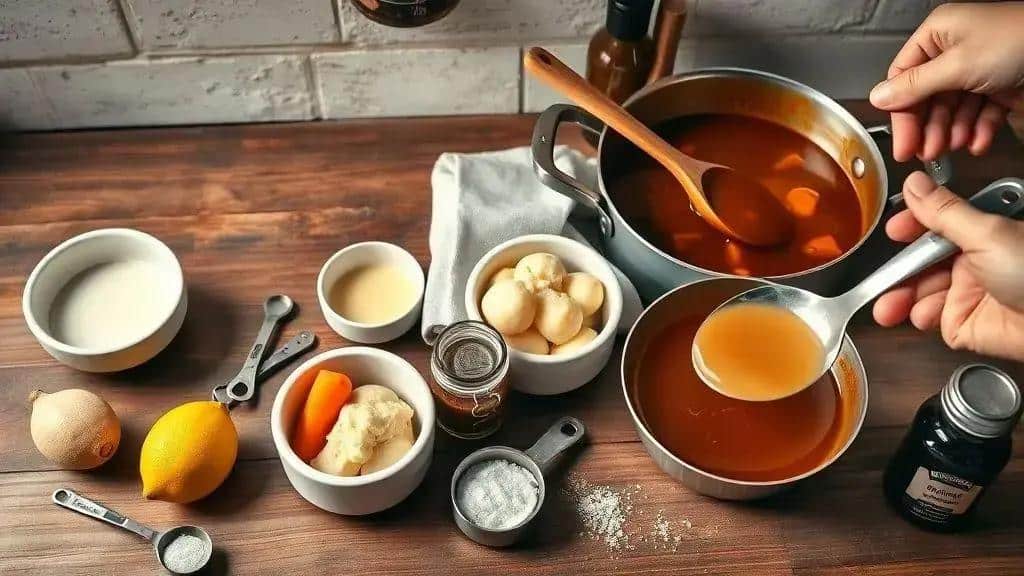
You can adjust both the texture and the flavour of the broth as it cooks. Choose a method to suit the finish you want, whether that’s a thicker sauce, a glossy finish or more body while retaining the flavour.
A quick thickener made with a cornflour slurry
Cornflour works quickly and gives a translucent finish when mixed in properly. It’s ideal for thickening the broth while keeping it clear.
- Mix 1–2 tablespoons of cornflour with 2 tablespoons of cold water until smooth.
- Add the mixture to the hot broth a little at a time, stirring constantly to prevent lumps.
- Cook for 1–2 minutes after adding the cornflour. The broth will thicken further as it cools a little.
A classic flour-based roux
A roux adds body and flavour to the sauce and gives it a more opaque finish. Use it for stews where you want a rich texture.
- Melt 1–2 tablespoons of butter over a medium heat.
- Stir in 1–2 tablespoons of flour and cook, stirring, for 1–2 minutes until lightly golden.
- Pour the stock in gradually in a thin stream, stirring until smooth, then cook until thickened.
Thickening by reduction
Reducing the broth concentrates its flavour without adding a thickener. It’s a good way to get a more intensely flavoured, glossy sauce.
- Bring the broth to the boil in an uncovered pan over a medium-high heat.
- Keep it at a gentle boil, stirring occasionally, until the volume has reduced by 20–40%, depending on how concentrated you want the flavour.
- Taste before adjusting the salt, as the sodium becomes more concentrated as the broth reduces.
Beurre manié and finishing with butter
Beurre manié, a paste of butter and flour, and a little butter stirred in at the end give the sauce a gloss and a velvety texture.
- Mix equal parts softened butter and flour into a paste.
- Add the paste to the hot broth a little at a time, stirring until incorporated and slightly thickened.
- Finish with 1 tablespoon of cold butter for a glossy sauce.
Thickening naturally with puréed vegetables or potatoes
Puréed vegetables or potatoes naturally thicken the broth and give it a more rustic flavour.
- Cook some of the vegetables, such as potato, carrot or turnip, until tender.
- Mash them or blend in a food processor, then stir into the broth until it reaches the consistency you want.
Alternative thickeners
Arrowroot and xanthan gum are gluten-free options that can also be used in small amounts.
- Mix 1 tablespoon of arrowroot with cold water and stir it in at the end. Avoid prolonged cooking at high temperatures.
- For xanthan gum, use a pinch (¼ teaspoon). Dilute it and add it a little at a time to prevent lumps.
Adjusting the flavour after thickening
- Adjust the salt at the end, a small pinch at a time, as thickening and reducing the sauce can intensify its saltiness.
- For acidity, add a splash of vinegar, a squeeze of lemon juice or a tablespoon of red wine to balance and brighten the flavour.
- For more savoury depth, stir in 1 teaspoon of Worcestershire sauce, ½ teaspoon of dissolved miso or a tablespoon of tomato purée.
- A pinch of sugar or a little extra carrot can balance excessive acidity.
- A tablespoon of butter or good-quality oil stirred in at the end improves the texture and flavour.
- Fresh herbs and freshly ground pepper add contrast. Stir them in just before serving.
Practical tips
- Try any adjustment on a small portion before changing the whole stew.
- Note the quantities that work so you can repeat the result.
- Wait 5–10 minutes after thickening to judge the final consistency, as the sauce may firm up as it cools.
Variations and substitutions for Midwestern beef stew
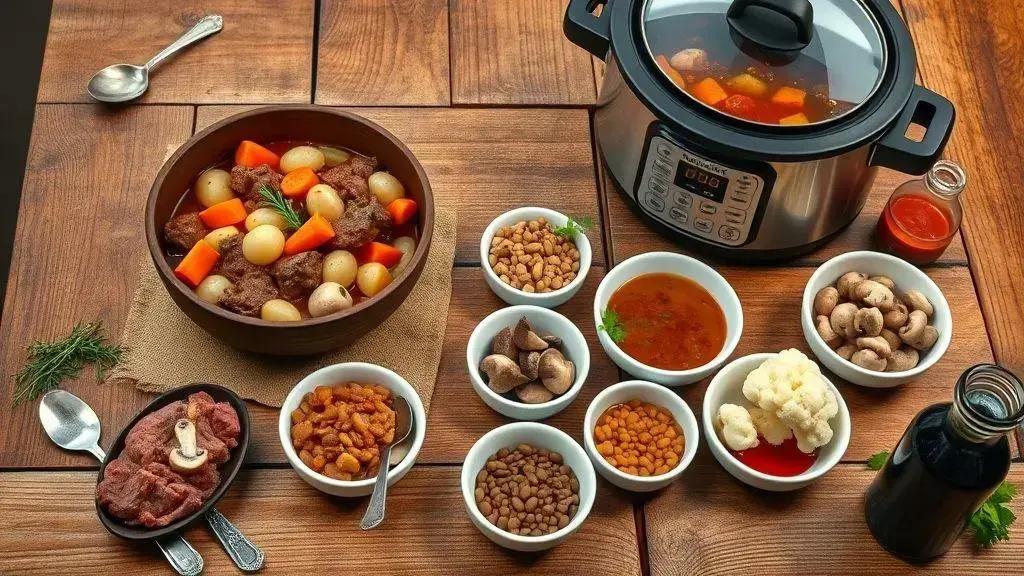
Slow cooker version
On days when you have time to let the stew cook slowly, put everything in the slow cooker for tender beef and a rich, concentrated broth with very little effort.
- Sear the beef briefly in a frying pan for extra flavour, or put it straight into the slow cooker raw to save time.
- Layer the beef, onion, carrots, potatoes, celery and seasonings in the slow cooker.
- Add 750 ml of stock and 2 tablespoons of tomato purée, then put the lid on.
- Cook for about 6–8 hours on low or 4–5 hours on high, until the beef falls apart.
- Finish with fresh herbs, then taste and add salt if needed before serving.
Pressure cooker version
When time is short, a pressure cooker cuts the cooking time while keeping the stew full of flavour.
- Brown the beef in batches in the pressure cooker, using the sauté setting if it has one.
- Add the liquids and seasonings, then close the lid.
- Cook under pressure for 35–45 minutes, depending on the cut.
- Release the pressure according to the manufacturer’s instructions and check that the vegetables and beef are tender.
Vegetarian or vegan version
Choose ingredients with a hearty texture to take the place of beef and use a full-flavoured stock.
- 400 g chestnut or portobello mushrooms, cut into large pieces for a meaty texture.
- 200 g cooked lentils for body and protein.
- 200 g seitan or firm tofu (optional), for a chewier texture.
- 750 ml concentrated vegetable stock. Add diluted miso or soy sauce for umami.
Brown the mushrooms before stewing them to intensify their flavour, and add a teaspoon of liquid smoke for a deeper, smoky flavour.
Alternative cuts of meat
- Replace beef chuck with the same quantity of shoulder or shin and allow the same long cooking time.
- Beef shin makes a gelatinous broth and is a good choice for a sauce with more body.
- Silverside is a leaner cut. Shorten the cooking time or add a little butter at the end.
- For a chicken version, use boneless thighs. Follow the pressure cooker manual’s cooking time for defrosted thighs of the size and quantity you’re using. Observe the minimum liquid requirement and use the specified pressure-release method. Once the pressure has fully released, open the lid and check that the centre of the thickest piece has reached 74 °C. If necessary, continue cooking until it reaches that temperature.
Adjustments for specific diets
- For a gluten-free thickener, replace the flour with cornflour or arrowroot.
- For less sodium, use low-salt stock and adjust the salt only at the end.
- For a lower-fat stew, trim off visible fat, use less oil when searing and finish with herbs for flavour.
- For a low-carb version, replace the potatoes with cauliflower or diced turnip.
Optional flavourings and ingredients
- Use 150–200 ml of red wine to deglaze the pan and add depth of flavour. For an alcohol-free version, use diluted balsamic vinegar.
- Add 1–2 tablespoons of tomato purée for colour and umami. Crushed peeled tomatoes also work.
- Fresh thyme and parsley are classic choices. Add them at the end to keep their flavour fresh.
- Try black pepper, smoked paprika or a pinch of cumin to vary the seasoning.
How to test and adapt a variation
- Try the adjustment on a small portion before changing the whole recipe.
- Make a note of the substitutions and timings that work so you can use them again.
- Taste as the stew cooks and adjust the salt, acidity and consistency a little at a time.
Storing, reheating and using up leftovers
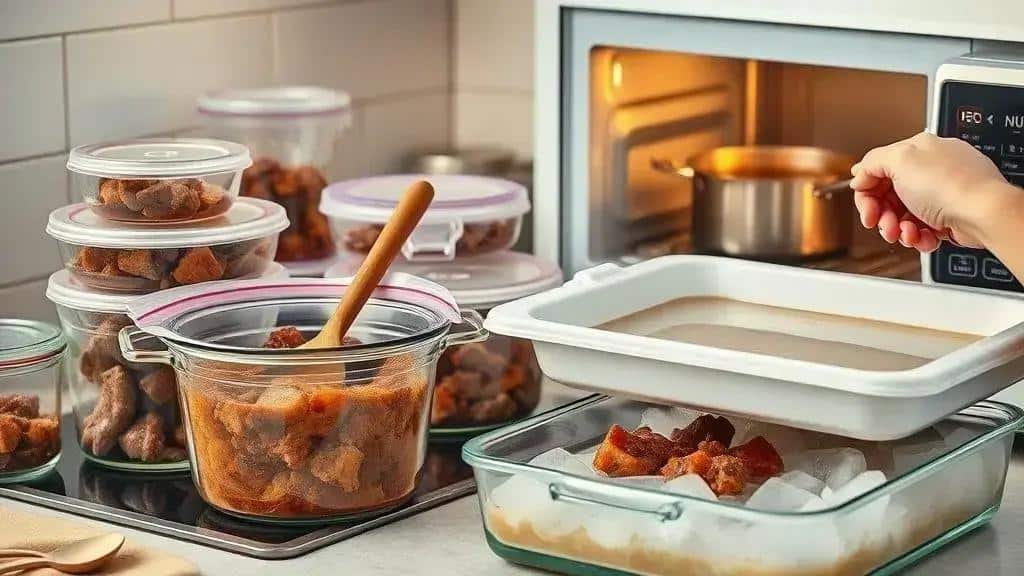
Storing and reheating the stew properly reduces waste and preserves its flavour. Here’s how to refrigerate, freeze, defrost and reheat it.
Storing the stew in the fridge
- Keep at 4 °C or below and eat within 3–4 days.
- Use airtight containers made of glass or food-safe plastic.
- Divide the stew into smaller portions so it cools quickly, then refrigerate within 2 hours.
Freezing the stew
- Pack the stew in portions of 300–500 g so you can defrost just what you need.
- Use freezer bags with as much air pressed out as possible, or airtight freezer-safe containers.
- For the best quality, freeze for up to 3 months.
- Peas and pearl onions can go soft when frozen. Leave them out when freezing the stew and add fresh ones when reheating it.
How to defrost the stew safely
- The recommended method is to put the portion in the fridge for 12–24 hours.
- For quicker defrosting, immerse the sealed bag in cold water. Change the water every 30 minutes until the stew has thawed.
- If using a microwave, use the defrost setting and reheat the stew immediately afterwards.
Reheating while preserving the texture
Reheat the stew until both the pieces of beef and the centre of the portion reach 74 °C. Stir the stew and keep the broth boiling as it reheats.
On the hob for the best texture
- Put the stew in a medium saucepan over a low to medium heat.
- If the sauce is too thick, add 2–4 tablespoons of stock or water.
- Stir occasionally. Bring the broth to the boil and check that both the centre of the portion and the pieces of beef have reached 74 °C.
In the oven
- Preheat the oven to 165–180 °C.
- Transfer the stew to a roasting tin or a lidded casserole dish. Start checking after 20–30 minutes and continue heating until the centre of the portion reaches 74 °C.
- Stir halfway through and cover with foil if the surface starts to dry out.
In the microwave for speed
- Use a microwave-safe container and cover loosely to prevent splashes.
- Heat in bursts of 1–2 minutes, stirring between each burst so the stew heats evenly.
- Check the temperature and continue heating until it reaches 74 °C.
Keeping the stew hot in a slow cooker for serving
- Reheat the defrosted stew on the hob or in the microwave until it reaches 74 °C. Transfer it, still piping hot, to a preheated slow cooker.
- Use the slow cooker only to keep the stew hot once it has been reheated. Check that the stew stays at 60 °C or above while you serve it.
Using up leftover stew
- For a savoury pie, adjust the thickness of the stew to make a filling, then bake it in puff pastry.
- For a shepherd’s pie-style topping, cover the stew with mashed potatoes and bake until golden.
- For a pasta sauce, reduce the broth and toss with cooked pasta.
- Croquettes or fritters: mix the leftover stew with flour or bread, shape into croquettes or fritters, then coat in breadcrumbs and fry or bake.
- Empanada filling: adjust the seasoning and use the stew as a filling, either cold or warmed through.
- Topping for rice or polenta: heat the stew through and spoon it over plain white rice or creamy polenta.
Final practical tips
- If you defrost the stew in the fridge and keep it at 4 °C or below, you can refreeze it within the recommended fridge storage period. If you defrost it in cold water or in the microwave, reheat it immediately to 74 °C before eating it or cooling it quickly and refreezing it.
- Date the containers to keep track of how long the stew has been stored, or use visual labels with no legible text in the photo.
- Taste the stew after reheating and adjust the salt and acidity. The flavours can become more concentrated as the liquid reduces.
- Make a note of the portion sizes that worked well so you can use them again and avoid waste.
Conclusion
Midwestern beef and vegetable stew is a practical, comforting choice for a family meal. With the right cuts of beef and a few simple techniques, you’ll get tender meat and a flavoursome broth.
Try the variations, adjust the seasoning and find creative ways to use the leftovers. Small changes can make a big difference.
Thank you for reading! Follow us on social media for more recipes, tips and step-by-step videos. Visit the Mestre das Receitas blog and keep up with all our latest news.
Frequently asked questions about Midwestern beef and vegetable stew
What’s the best cut of beef for the stew?
Choose cuts rich in collagen, such as chuck, shoulder or shin. They become tender when cooked slowly and add flavour to the broth.
How long does the beef take to become tender?
Cook over a low heat for 1.5 to 2 hours. In a pressure cooker, allow about 35–45 minutes once it reaches pressure.
How can I thicken the broth without losing flavour?
For a quick result, stir in a little cornflour mixed with cold water. A roux gives the broth a thicker, more opaque finish, while reducing it slowly concentrates the flavour.
Can I make the stew in a slow cooker?
Yes. Put the ingredients in the slow cooker, add the stock and cook for 6–8 hours on low or 4–5 hours on high. Browning the beef first gives the stew more flavour.
How should I store and reheat the leftovers?
Refrigerate the leftovers in airtight containers within 2 hours and keep them for 3–4 days, or freeze them for up to 3 months. Reheat to 74 °C on the hob, in the oven or in the microwave.
Which substitutions work for special diets?
For a vegetarian version, use mushrooms and lentils. For a gluten-free stew, replace the flour with cornflour or arrowroot. For a low-carb version, use cauliflower in place of the potatoes.