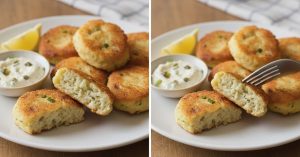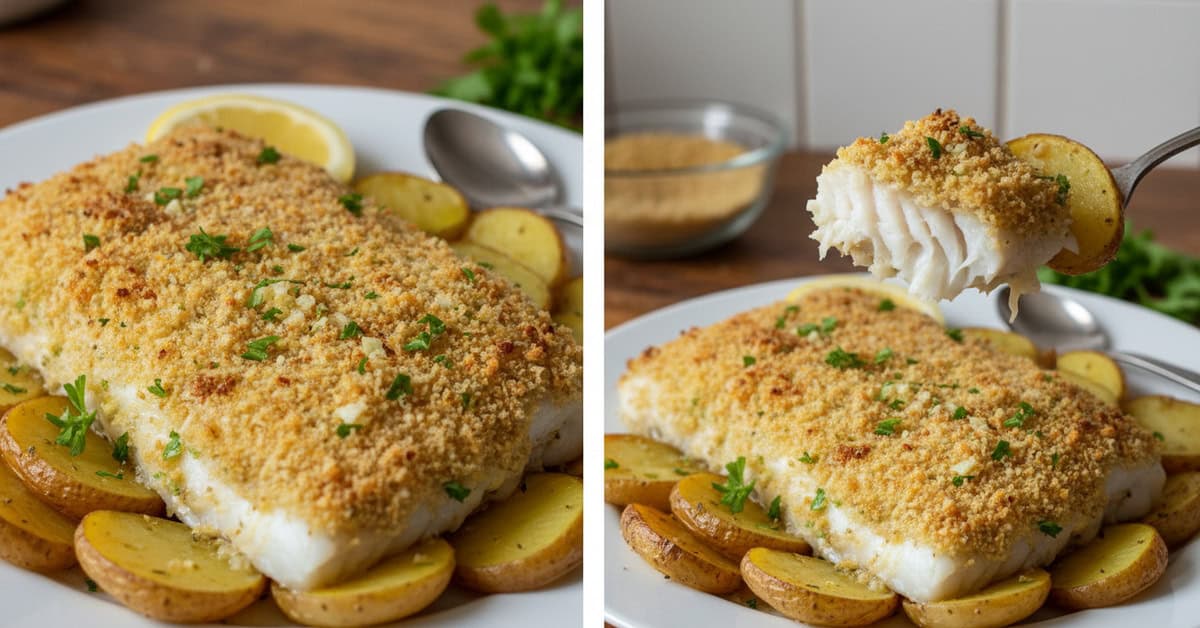

New England baked cod has a crisp breadcrumb crust and juicy, flaky fish underneath. The recipe covers desalting salt cod, coating fillets with panko and butter or olive oil, timing the bake, and choosing light side dishes.
This simple New England baked cod pairs a crunchy topping with a tender center. I’ll show you how to get that contrast, with practical tips and variations.
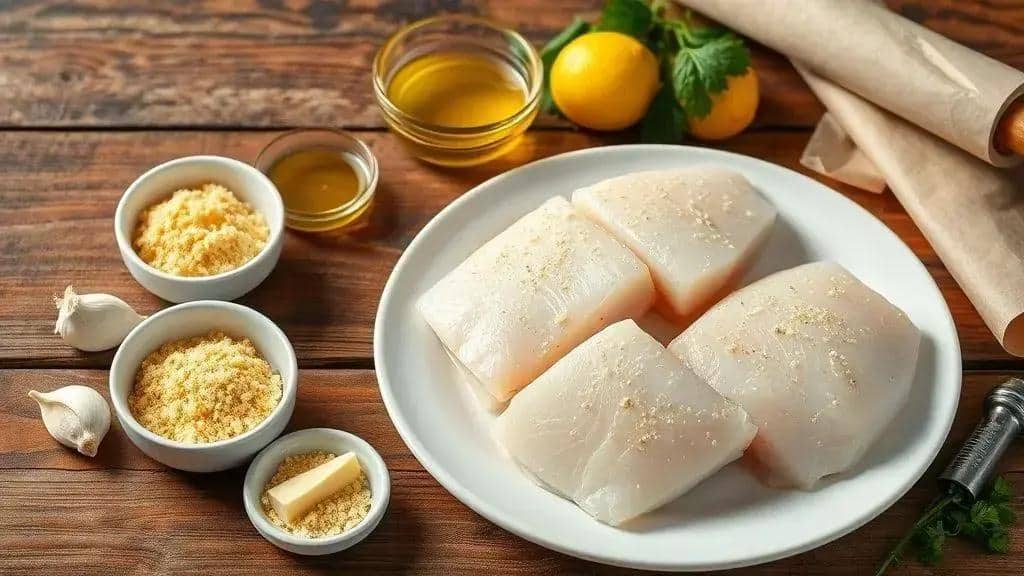
- 800 g desalted cod fillets, about four 200 g pieces. If using salt cod, desalt it in advance.
- 1 cup (120 g) panko breadcrumbs for an especially crisp crust, or regular breadcrumbs
- ¼ cup (25 g) grated Parmesan, optional, for a savory note. Use pecorino instead or omit for a lighter dish.
- 3 tablespoons melted butter for moisture and flavor, or 3 tablespoons olive oil
- 2 tablespoons extra-virgin olive oil to help the crust brown and shine
- 3 garlic cloves, minced, or 1 teaspoon garlic powder
- Zest of 1 lemon and juice of ½ lemon for brightness, or a splash of white wine vinegar
- 2 tablespoons chopped fresh parsley to finish. Chives or cilantro also work.
- Salt and black pepper to taste. Add salt cautiously when using desalted fish.
- ½ cup (120 ml) dry white wine or fish stock, optional, for basting as the fish bakes. Vegetable stock works too.
- Parchment paper or olive oil for the baking sheet to prevent sticking
Substitutions and practical notes
For salt cod, soak in cold water in the refrigerator for 24–48 hours, changing the water every 6–8 hours. With fresh cod, use less added salt.
Panko makes a light, crunchy topping. Regular breadcrumbs can pack more tightly and brown faster.
Butter gives a rich flavor. Olive oil has a lighter finish and is a lactose-free alternative to butter.
Parmesan is optional but adds depth. To avoid dairy, omit it or use nutritional yeast for a savory note.
To check how much salt remains, cook a small piece of cod to 145°F (63°C) before tasting it. Add more salt only as needed.
- Preheat the oven to 390°F (200°C) with a rack in the center. A properly heated oven helps brown the crust without drying the middle.
- Line the baking sheet with parchment or lightly oil it to prevent sticking.
- Mix 1 cup (120 g) panko, ¼ cup (25 g) grated Parmesan, zest of 1 lemon, 3 tablespoons melted butter, 2 tablespoons olive oil, 3 minced garlic cloves, 2 tablespoons chopped parsley, ½ teaspoon salt and ¼ teaspoon black pepper until evenly combined. Adjust the salt for the fish.
- Pat 800 g cod fillets dry, remove any pin bones and season lightly. Brush the fillets with the juice of ½ lemon or 2 tablespoons white wine in total.
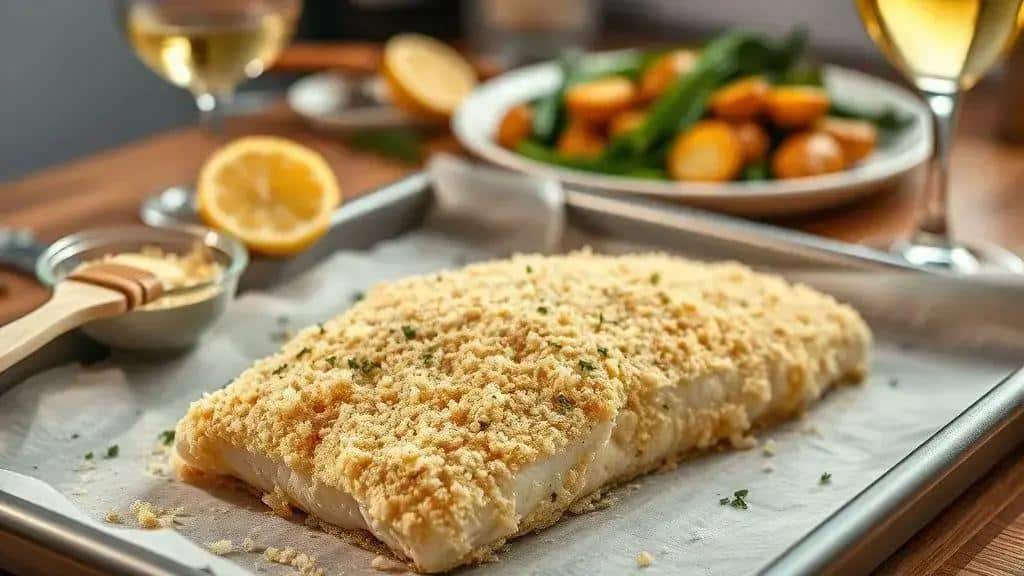
- Press the panko mixture onto the tops. Use the back of a spoon to make a uniform crust.
- Arrange the fillets crust-side up with space around them for the hot air to circulate.
- Bake for about 12–16 minutes according to thickness. For fillets about 2 cm thick, start checking at 12 minutes. The crust should brown and the thickest part of the fish should reach 145°F (63°C).
- If desired, baste with 1–2 tablespoons white wine or melted butter halfway through for extra moisture.
- Check the thickest part with a thermometer. At 145°F (63°C), the fish should separate into moist flakes. Remove promptly to keep it juicy.
- Rest for 2–3 minutes and finish with fresh lemon juice and chopped parsley. Serve immediately with your chosen sides.
Practical tips
- Thicker fillets can need an extra 4–6 minutes, so adjust for thickness.
- Use regular breadcrumbs if panko is unavailable. For a dairy-free version use nutritional yeast instead of Parmesan and olive oil in place of butter.
- Desalted cod can be quite wet. Pat it thoroughly dry before adding the crumbs for a crisp finish.
- In a convection oven, reduce the temperature by 10–20°C because the circulating air speeds up browning.
Chef’s tips for juicy fish and a crisp crust

Pat the fish dry with paper towels. Removing surface moisture is the simplest way to keep the crumbs crisp.
- Preheat to 390°F (200°C), or 180–190°C for convection to prevent premature browning.
- For an airy crunch use panko. Mix with ¼ cup grated Parmesan for extra flavor, or use nutritional yeast for a dairy-free topping.
- Brush the topping with melted butter or olive oil before baking. For a citrus note, stir lemon zest into the butter.
- Press the crumbs firmly onto the fish and refrigerate for 10 minutes to help the coating set.
- Insert a thermometer at the center of the thickest part and remove the cod once it reaches 145°F (63°C). Do not take it out below that temperature expecting carryover heat to finish it.
- If the crust needs more color, broil for 1–2 minutes, watching closely so it does not burn.
- Salt desalted cod sparingly. If you want to taste it first, cook a small piece separately to 145°F (63°C).
- Leave space between fillets and avoid overlap so air can circulate and brown the crust.
- For a moister center, quickly baste halfway through with 1 tablespoon melted butter or 1–2 tablespoons white wine.
- Rest for 2–3 minutes out of the oven. Add fresh lemon juice and chopped parsley before serving.
Helpful tools and habits
- An instant-read thermometer lets you check the center quickly without repeatedly opening the oven.
- Use a pastry brush for butter and a wide spatula to lift the fish without breaking it.
- Parchment paper prevents sticking and makes cleanup easier.
- Taste the cooked fish and adjust salt and acidity at the end. A little lemon lifts the flavor without masking it.
Low-carb, herb and Parmesan variations
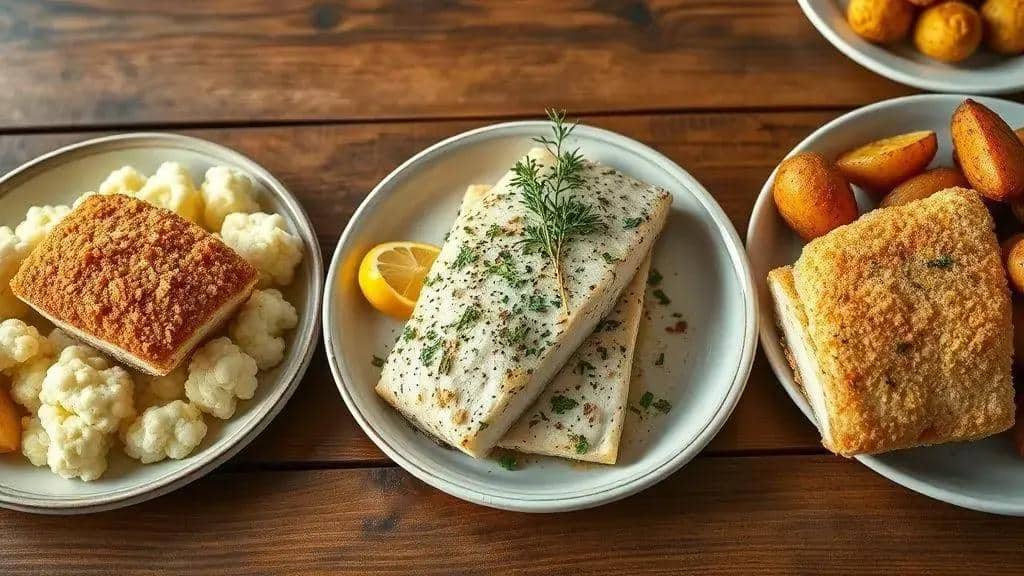
Choose a low-carb coating to reduce carbohydrates, fresh herbs for a bright flavor, or Parmesan for a richer crust.
Low-carb version
Replace the breadcrumbs with a lower-carb option that still provides crunch.
- Use 800 g cod fillets, 1 cup (100 g) almond flour or 1 cup (80 g) crushed pork rinds, 3 tablespoons melted butter or olive oil, zest of 1 lemon, 2 tablespoons chopped parsley, salt and pepper.
- Pat the fillets dry and season lightly with salt and pepper.
- Mix the almond flour or crushed pork rinds with zest and parsley. Add melted butter to help the crust brown.
- Press onto the fish and refrigerate for 10 minutes to set.
- Bake at 390°F (200°C) for about 12–16 minutes according to thickness, checking for 145°F (63°C) in the center.
Herb crust
Fresh herbs give the crust a light, fragrant finish.
- Use 1 cup (120 g) panko, ¼ cup (25 g) optional Parmesan, 2 tablespoons chopped fresh thyme, 2 tablespoons dill or parsley, 1 tablespoon chopped chives, 3 tablespoons melted butter and juice of ½ lemon.
- Mix panko, Parmesan, thyme, dill and chives. Stir in melted butter until the crumbs are moist.
- Brush the fillets with lemon juice and season with a pinch of salt.
- Press on the herb mixture and bake at 390°F (200°C) for about 12–16 minutes, until the crust is golden and the fish reaches 145°F (63°C).
Parmesan crust
Parmesan browns into a rich crust on its own or mixed with panko.
- Use 1 cup (120 g) panko, ½ cup (50 g) finely grated Parmesan, 3 tablespoons melted butter, zest of 1 lemon and black pepper. For dairy-free cooking, use 3 tablespoons nutritional yeast and olive oil instead of cheese and butter.
- Combine panko and Parmesan, then stir in the butter to moisten the crumbs.
- Spread the mixture over the fish and press firmly so it adheres.
- Bake at 390°F (200°C) for about 12–16 minutes. If needed, broil for 1–2 minutes at the end, watching closely, and check the fish reaches 145°F (63°C).
Quick serving ideas
- Serve the low-carb version with cauliflower mash and steamed broccoli.
- Pair the herb crust with green salad and roasted potatoes.
- Serve the Parmesan version with lemon rice and grilled asparagus.
Sides and drink pairings
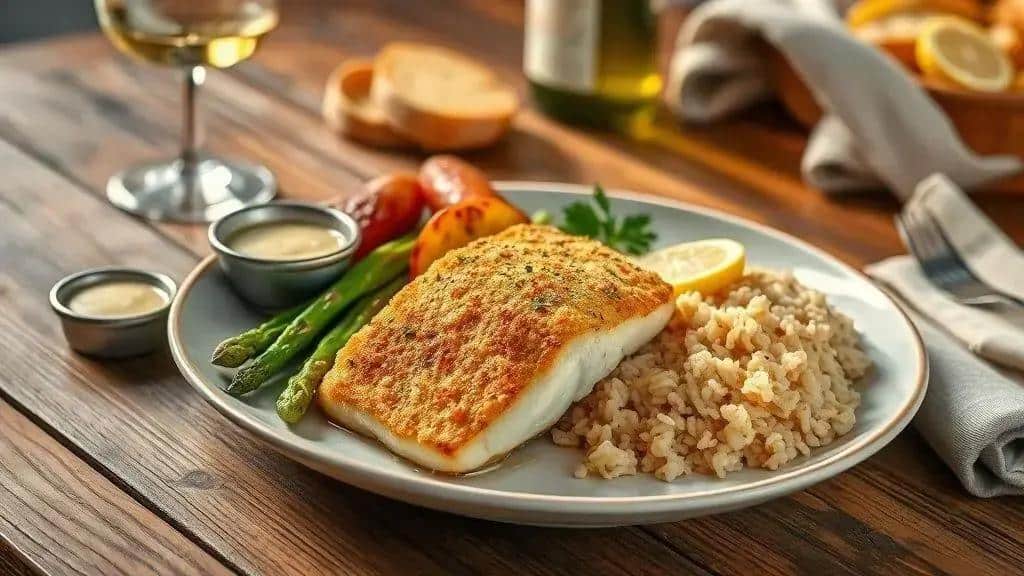
Choose light sides that highlight the crisp crust and citrus without overwhelming the cod.
Suggested sides
- Roast 600 g diced potatoes with olive oil, rosemary and coarse salt. Their crisp edges contrast with the fish.
- Make lemon rice with 2 cups cooked white rice, lemon zest and parsley for a light, fragrant side.
- Grill or quickly sauté 300 g asparagus with olive oil and garlic to retain color and texture.
- For a refreshing salad, toss arugula, lettuce and cherry tomatoes with lemon vinaigrette.
- Cauliflower mash (500 g) makes a mild, creamy, low-carb alternative to mashed potatoes.
- Slice rustic bread for soaking up the sauces and adding texture to the meal.
Sauces and finishing touches
- Simple lemon butter: combine melted butter with lemon juice and zest, then drizzle over the fish at serving.
- Gremolata combines parsley, garlic and lemon zest for freshness and color.
- A quick sauce of plain yogurt, lemon and chives adds lightness and tang.
Drink pairings
- Serve a dry Sauvignon Blanc or Albariño at 46–50°F (8–10°C) for a fresh match for the cod.
- Unoaked Chardonnay has enough body for a cheese crust without overwhelming the fish.
- A light lager or witbier refreshes the palate between bites.
- For an alcohol-free pairing, offer sparkling water with lemon slices or chilled herbal tea.
Portions and plating
- Allow 180–220 g fish per person for a main course.
- Balance a crunchy element with a purée or starch and green vegetables for color and texture.
- Add a little lemon juice and chopped parsley just before serving.
Cod and its New England history

Cod has helped shape the history of fishing, commerce and food on both sides of the Atlantic.
- Drying and salting made cod suitable for long voyages and trade between Europe and the Americas from the 16th century onward.
- Atlantic cod (Gadus morhua) is the species most associated with New England tradition and the Grand Banks fishery.
- For centuries, cod sustained coastal communities and shaped trade routes and settlements.
- Careful desalting balances flavor and texture before salt cod goes into the oven.
- Cod provides lean protein, vitamin B12 and minerals and can fit into a varied diet.
- Some stocks have suffered from overfishing. Responsible fishing practices and sourcing help support their recovery.
New England and cod culture
New England’s connection to cod reaches back to Atlantic fishing voyages. European crews worked the Grand Banks for their once-abundant catch, and fishing shaped regional cooking.
- Fishing villages and ports grew around the cod trade, shaping local markets and festivals.
- Alongside baked cod, fish chowder and fish and chips have regional versions made with cod.
- Portuguese immigrants and other newcomers brought techniques and recipes that enriched New England cooking.
- Cod appears in stories, books and historical menus as an emblem of coastal food.
A few quick facts
- The Grand Banks, off the coast of Canada, were famous for rich marine life that drew fishing and whaling crews centuries ago.
- Portuguese “bacalhau” is commonly translated as “cod.” Regional names and preserved forms vary.
- Desalting can take 12–48 hours depending on the cut and degree of salting.
- Cod can be baked, poached, fried or cooked in stews. Each method gives it a different texture and flavor.
To finish
Breadcrumb-crusted cod is simple to make. Adjust the baking time to the thickness for a crisp crust and juicy fish. Try the variations and light sides that bring out its flavor.
Thanks for reading! Follow us on social media for more easy recipes and quick tips, and visit the Mestre das Receitas food blog for fresh ideas and updates.
Try the recipe, share your photos and tell us in the comments how it turned out. We love seeing your versions.
How do I desalt salt cod?
Soak in cold water in the refrigerator for 24–48 hours, changing the water every 6–8 hours. Portion it first to speed up desalting. To check the salt, cook a small piece to 145°F (63°C) before tasting.
Can I use fresh cod instead of desalted fish?
Yes. Fresh cod does not need soaking. Reduce or omit added salt and check for doneness early, as cooking times can vary.
How do I keep the crust crisp at serving time?
Pat the fillets dry, press the panko on firmly and bake in an oven preheated to 390°F (200°C). Serve after 2–3 minutes’ rest without covering the fillets.
What can I use instead of panko and Parmesan?
Use regular breadcrumbs, or choose almond flour or crushed pork rinds for a low-carb topping. Nutritional yeast takes the place of Parmesan in a dairy-free version.
How should I store and reheat leftovers without softening the crust?
Refrigerate in a closed container for up to 48 hours. Reheat on a baking sheet at 355°F (180°C). Start checking after 8–12 minutes and continue until the center reaches 165°F (74°C). The oven keeps the crust crisper than the microwave.