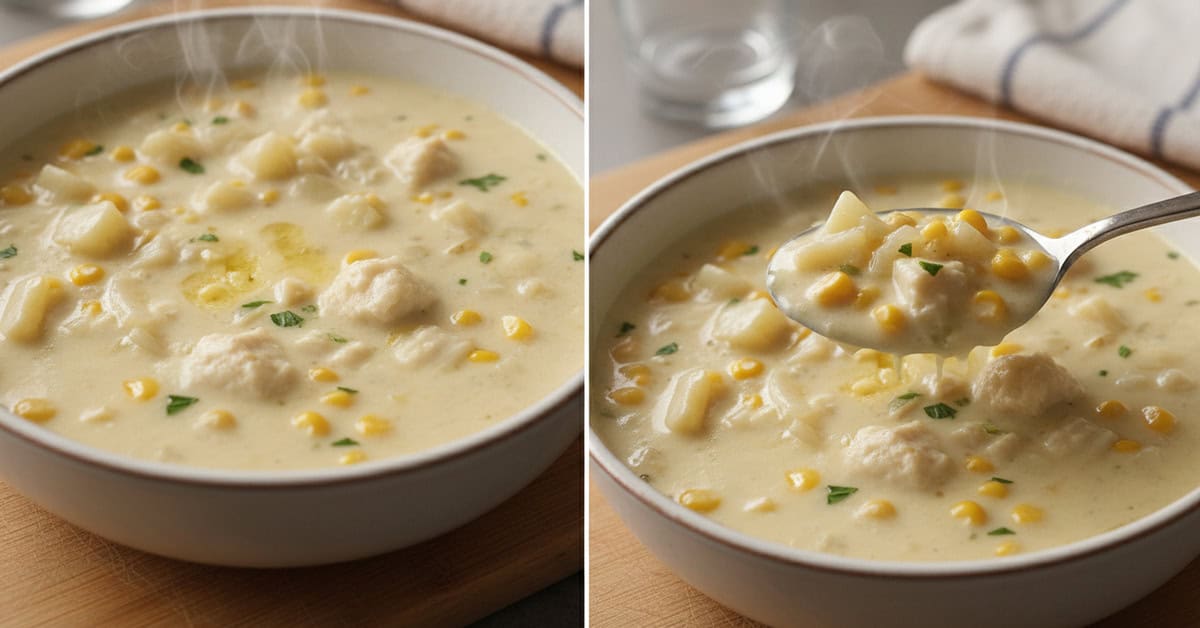

New England fish chowder is a traditional creamy soup of firm white fish, potatoes, stock and cream. Bacon or its drippings and mild seasonings give it depth. A light roux or tempered cream makes the broth velvety while the fish stays in pieces.
New England fish chowder is just the thing on a cold day. Want to make it at home? I’ll walk you through the essential ingredients, the secrets of a creamy broth and variations to try.
Ingredients for New England fish chowder
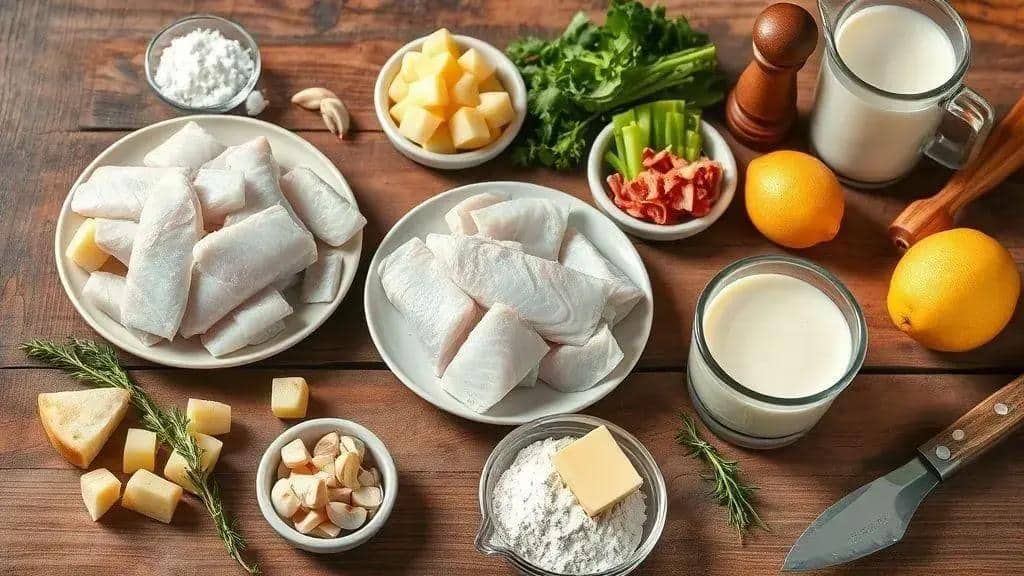
Choose fresh ingredients. The quantities and suggested substitutions are below.
- 600 g white fish fillets, such as cod or haddock, diced. Halibut, hake or sole also work.
- 100 g sliced bacon, chopped and fried for flavor. For a pork-free version use 1 tablespoon olive oil or extra butter.
- 2 tablespoons butter for sautéing, or lactose-free butter or neutral oil.
- 1 medium onion (150 g), finely chopped.
- 2 celery stalks, chopped.
- 500 g potatoes, such as Asterix or Yukon, peeled and cut into roughly 2 cm cubes. Sweet potato gives a sweeter flavor.
- 2 garlic cloves, minced or crushed.
- 3 tablespoons wheat flour to thicken. For gluten-free chowder use 2 tablespoons cornstarch mixed with water.
- 750 ml fish or vegetable stock, preferably homemade. Light chicken stock also works.
- 250 ml heavy cream, or 200 ml whole milk for a lighter soup. For lactose-free chowder use plain soy cream or unsweetened coconut milk, which changes the flavor.
- 125 ml dry white wine (optional) for deglazing.
- 1 bay leaf and 1 thyme sprig. Use 1 teaspoon dried thyme in place of the fresh thyme.
- Salt and freshly ground black pepper. Salt sparingly with store-bought stock.
- 2 tablespoons chopped chives or parsley for a fresh finish.
- Juice of half a lemon (optional) to bring out the fish flavor.
Quick tips
Choose firm, fresh fillets and pat them dry. Add cream at the end and heat gently to keep it from splitting. Thaw frozen fish completely in the refrigerator and drain well.
Making New England fish chowder step by step
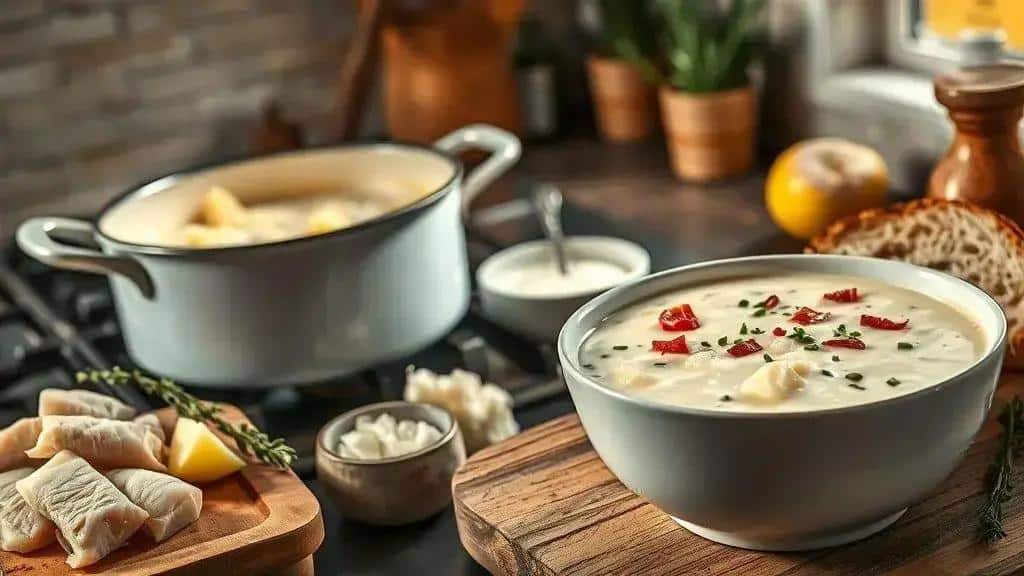
Measure out the ingredients and keep them within reach before starting the chowder.
- Cut 600 g fish into 3 cm cubes. Peel and dice 500 g potatoes. Chop the onion, 2 celery stalks and 2 garlic cloves. Set aside 100 g chopped bacon and measure 750 ml stock and 250 ml cream.
- In a large pot over medium heat, fry the bacon for 4–6 minutes until crisp. Remove it and leave 1–2 tablespoons drippings in the pot. Reserve or discard the excess.
- Add 2 tablespoons butter to the bacon fat and cook the onion and celery over medium heat for 4 minutes until translucent. Add garlic and cook 30 seconds more.
- Sprinkle 3 tablespoons flour over the vegetables and stir for 1 minute to cook off its raw flavor and thicken the stock.
- If using wine, pour in 125 ml and scrape up the browned bits. Add 750 ml fish or vegetable stock and stir until smooth.
- Add the potatoes, bay leaf and thyme. Bring to a boil, reduce to medium-low and simmer for 12–15 minutes, until the potatoes are nearly fork-tender.
- Gently add the fish and simmer for about 5–7 minutes. Check that the thickest piece reaches 63°C. Its flesh should be opaque and flake easily.
- Turn the heat to low. Add 250 ml cream and heat without boiling (60–80°C) for 2–3 minutes, stirring gently to prevent splitting.
- Remove the bay leaf and thyme sprig. Add the crisp bacon, salt and pepper. Finish with the optional juice of half a lemon and 2 tablespoons chopped chives.
- Serve in warmed bowls with crusty bread. Keep the chowder hot without boiling after adding the cream to preserve its texture.
Practical tips
- Frozen fish: thaw fully in the refrigerator and pat dry so it does not water down the broth.
- Gluten-free: use 2 tablespoons cornstarch instead of flour. Dissolve in cold water and stir into the broth near the end.
- Heat control: poach the fish gently to keep the pieces intact.
Techniques for a creamy, flavorful chowder
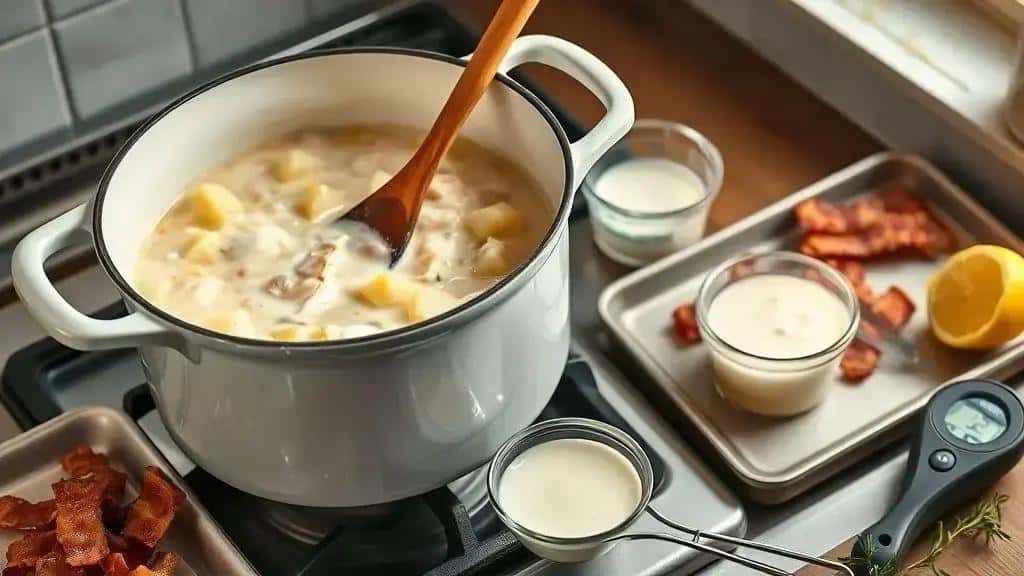
- Choose firm, fresh fillets such as cod, haddock or sole. Thaw frozen fillets completely in the refrigerator and dry with paper towels.
- Render 100 g bacon until crisp and set aside. Use 1–2 tablespoons of the fat to sauté the vegetables for a richer broth.
- Sweat the onion and celery in butter or the reserved fat over medium-low heat until translucent. Avoid browning for a mild flavor.
- For a light roux, melt 2 tablespoons butter, sprinkle in 3 tablespoons flour and stir for 1 minute. Gradually stir in the stock to prevent lumps.
- For a gluten-free slurry, mix 2 tablespoons cornstarch with 60 ml cold water. Add near the end and cook for 1–2 minutes to thicken.
Managing heat and adding cream
Stir 250 ml cream into the chowder at the end, over low heat. Warm to about 60–80°C without boiling so the cream stays smooth.
Taste the broth before salting. If using reduced stock, season gradually and finish with the juice of half a lemon for brightness.
- Temper the cream with a ladleful of hot broth before stirring it back into the pot. This helps prevent splitting.
- Gently whisk the liquid at the end to emulsify the fat and give the broth a silky finish.
Finishing and texture
Cook the potatoes just until tender but still intact. Overcooked potatoes release excess starch and can make the broth sticky.
Optional beurre manié: knead equal parts butter and flour. Stir small knobs into the stock and cook for a few minutes before adding the fish and cream so the flour cooks through.
- For a very smooth broth, strain the soup base through a fine sieve or carefully blend it before adding the fish.
- Let the chowder stand off the heat for 3–5 minutes so the flavors settle and the broth thickens slightly.
Avoid boiling after adding the cream, adding too much salt early or overcooking the fish. Taste and adjust gradually.
Vegan and seafood chowder variations
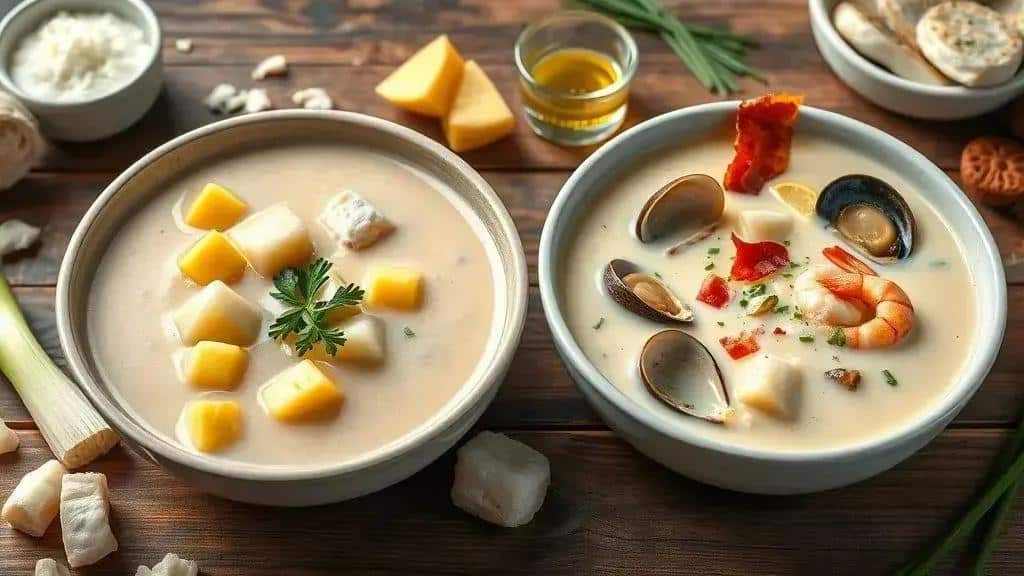
You can keep the creamy character of New England chowder while changing the base to vegetables or adding more shellfish.
Vegan version
This dairy-free, fish-free version gets its creamy texture and hint of the sea from plant ingredients.
- 500 g diced potatoes to give the broth body.
- 1 medium leek, sliced, or 1 large onion.
- 2 celery stalks, chopped.
- 2 garlic cloves, crushed.
- 2 tablespoons olive oil or 1 tablespoon vegan butter.
- 750 ml vegetable stock, preferably homemade or unsalted.
- 200 ml unsweetened coconut cream or plain soy cream for a milder flavor.
- 1 cup fresh or frozen corn kernels (optional).
- 1 teaspoon finely crushed nori or kelp (optional) for a hint of the sea.
- Salt, pepper and parsley to finish.
Making the vegan chowder
- Heat the olive oil over medium heat. Add the leek, celery and garlic and cook for 4 minutes until soft.
- Add the potatoes, optional corn and 750 ml stock. Bring to a boil, then simmer over medium-low heat for 12–15 minutes until both are cooked. For frozen corn, also follow the package directions.
- Scoop out a ladleful of potatoes and broth, mash or blend, then return it to the pot for creaminess.
- Stir in the coconut cream and warm over low heat for 2–3 minutes without boiling.
- Add powdered seaweed if using, season with salt and pepper and finish with chopped parsley.
Seafood version
Pair white fish with shellfish or shrimp for a richer seafood broth.
- 400 g diced white fish fillets, such as cod, haddock or sole.
- 200–300 g cleaned mussels or clams, plus 200 g peeled medium shrimp if desired.
- 100 g chopped bacon (optional), or olive oil for a pork-free soup.
- 2 tablespoons butter or lactose-free butter.
- 500 g potatoes, diced.
- 750 ml fish stock, or vegetable stock for a gentler flavor.
- 200–250 ml cream for the classic texture, or whole milk for a lighter soup.
- 1 bay leaf, thyme and chives to finish.
- Salt and black pepper to taste.
Making the seafood chowder
- Fry the bacon until crisp and reserve it. Add butter to the drippings and cook the onion and celery until translucent.
- For a light roux, sprinkle flour over the vegetables and stir for 1 minute. Slowly pour in the stock, stirring to prevent lumps.
- Add the potatoes and bay leaf and simmer until the potatoes are tender, about 12–15 minutes.
- In a separate pot, add the live, cleaned mussels or clams in their shells to boiling water. Once their shells open, boil for another 3–5 minutes. Discard any that stay closed and reserve the cooked shellfish for the chowder.
- Add the fish cubes and optional peeled shrimp to the broth. Cook for about 4–6 minutes until the fish reaches 63°C in the center and the shrimp are firm, pearly and opaque. Add the cooked shellfish and cream and heat gently.
- Remove bay leaf and thyme, adjust salt and pepper, add crisp bacon and finish with chives and a squeeze of lemon if desired.
Adapting the chowder
- Lactose-free: use plant-based cream or coconut milk in place of cream and choose lactose-free butter.
- For a lighter soup, use whole milk and less fat.
- For a silkier texture, blend some potatoes and return them to the pot.
Storing and reheating without losing texture

Cool, store and reheat the chowder properly to preserve its flavor and texture and handle leftovers safely.
Cooling and refrigeration
- Transfer the soup to shallow containers. Use an ice bath to speed cooling if desired and refrigerate within 2 hours of cooking.
- Use airtight containers or freezer bags. Squeeze excess air out of the bags.
- Store individual portions so you reheat only what you need.
- Use refrigerated chowder within 48–72 hours.
- Label each container with the date and contents.
Freezing
- For best flavor, freeze for up to 8 weeks. Quality can decline over time.
- For the best texture, freeze before adding the cream or use less of it. Stir in fresh cream as you reheat.
- Thaw in the refrigerator for 12–24 hours before reheating. Avoid thawing on the counter.
Reheating without splitting the cream
- Thaw frozen chowder in the refrigerator. Have chilled soup ready about 10–15 minutes before reheating.
- Heat gently in a medium pot over medium-low heat, stirring often to distribute the heat.
- If the cream was kept separate, stir a ladleful of hot broth into it before adding it to the soup.
- Stir as you reheat until the entire portion reaches 74°C. Check with a thermometer, including the centers of fish and potato pieces. Heat the cream gently to keep it smooth.
- In the microwave, use a microwave-safe cover and medium power in 30–60 second intervals. Stir between intervals until the entire portion reaches 74°C.
- Adjust salt and pepper at the end and finish with chives and crisp bacon.
Preserving the texture
- If you refrigerated the cooked fish separately, add it early enough during reheating for the center of the pieces to reach 74°C as well.
- If the soup needs thickening, use a small amount of cornstarch slurry or kneaded butter and allow time for the starch or flour to cook.
- If the broth appears separated, add 1–2 tablespoons cream or milk and whisk gently over low heat.
- Fry the bacon separately. Refrigerate it if you are not serving it immediately. Add it near the end and heat refrigerated ingredients to 74°C.
Food safety tips
- Do not leave the soup at room temperature for more than 2 hours.
- Reheat the entire portion to 74°C and serve promptly.
New England fish chowder and its ingredients

A few facts about the ingredients that give this chowder its flavor and its place in New England cooking.
- This soup has roots in New England’s coastal fishing communities, where cooks used what was available.
- Manhattan clam chowder has a tomato base. New England chowder uses milk or cream for a creamy broth.
- Potatoes add substance and release starch that helps thicken the broth naturally.
- A small amount of bacon or pork fat adds depth. Plant-based variations use olive oil and seaweed for a marine note.
- Cod, haddock and sole are popular choices because their pieces hold together when cooked gently.
- Serve with crusty bread or small savory oyster crackers for contrast with the creamy broth.
Historical notes
In the 18th and 19th centuries, fishing communities along the North American coast cooked stews in large pots. Chowder evolved over time, with dairy becoming more accessible and flour used as a thickener.
How the ingredients affect the chowder
- Cream makes a richer broth. Milk makes a lighter, milder soup but should be heated gently without boiling.
- Firm potatoes such as Yukon or Asterix hold their shape, while starchier varieties make the broth thicker.
- Fresh fish has a clean aroma and flavor. Pat thawed fish dry to avoid diluting the broth.
- Thyme, bay and a squeeze of lemon bring out the fish flavor without overwhelming it.
Chowder in local culture
Some New England towns celebrate chowder at local festivals. Family recipes are passed down, and the simple ingredients lend themselves to many regional and modern variations.
Finishing thoughts
New England fish chowder combines fish, potatoes and cream in a comforting, velvety soup. Gentle heat keeps the fish in tender pieces and the broth smooth.
Try the variations, adjust the seasoning gradually and store leftovers carefully to preserve their texture. Take your time and taste as you go.
Thanks for reading! Follow us on social media for more recipes and cooking tips and visit the Mestre das Receitas cooking blog for more kitchen inspiration.
Frequently asked questions about New England fish chowder
How does New England fish chowder differ from Manhattan clam chowder?
New England fish chowder has a creamy milk or cream base. Manhattan clam chowder uses tomatoes for a lighter, tangier broth.
Can I use frozen fish?
Yes. Thaw completely in the refrigerator and pat dry with paper towels to avoid watering down the broth. Firm fillets such as cod or haddock work well.
How do I keep the cream from splitting when reheating?
Stir over low heat. Mix a ladleful of hot broth into the cream before adding it to the pot. When reheating leftovers, check that the entire portion reaches 74°C.
Can I freeze chowder, and what is the best way?
Yes. Freeze for up to 8 weeks, preferably without the cream or with less of it. Add fresh cream when reheating. Thaw in the refrigerator for 12–24 hours.
How can I thicken the chowder without using a lot of cream?
Mash some cooked potatoes into the broth, use a light roux or add a small cornstarch slurry near the end and cook until thickened to taste.